
How to Get a Block Party Permit in Any Major US City
The permit is not the hard part. I want to say that first, because the number of block parties that die at the "wait, do we need a permit?" stage is genuinely depressing, and the answer in half the biggest cities in America is that it's free and takes twenty minutes.
Then there's Houston, where a neighborhood potluck legally requires a million dollars of liability insurance and certified peace officers posted at every barricade.
That gap is the whole story. We looked up how to get a block party permit in each of the 30 largest US cities, went to the actual municipal sources, and found almost no agreement on anything. Not the price, not the deadline, not how many neighbors have to sign, not even whether you're allowed to park your own car across the road to close it.
What a block party permit actually is
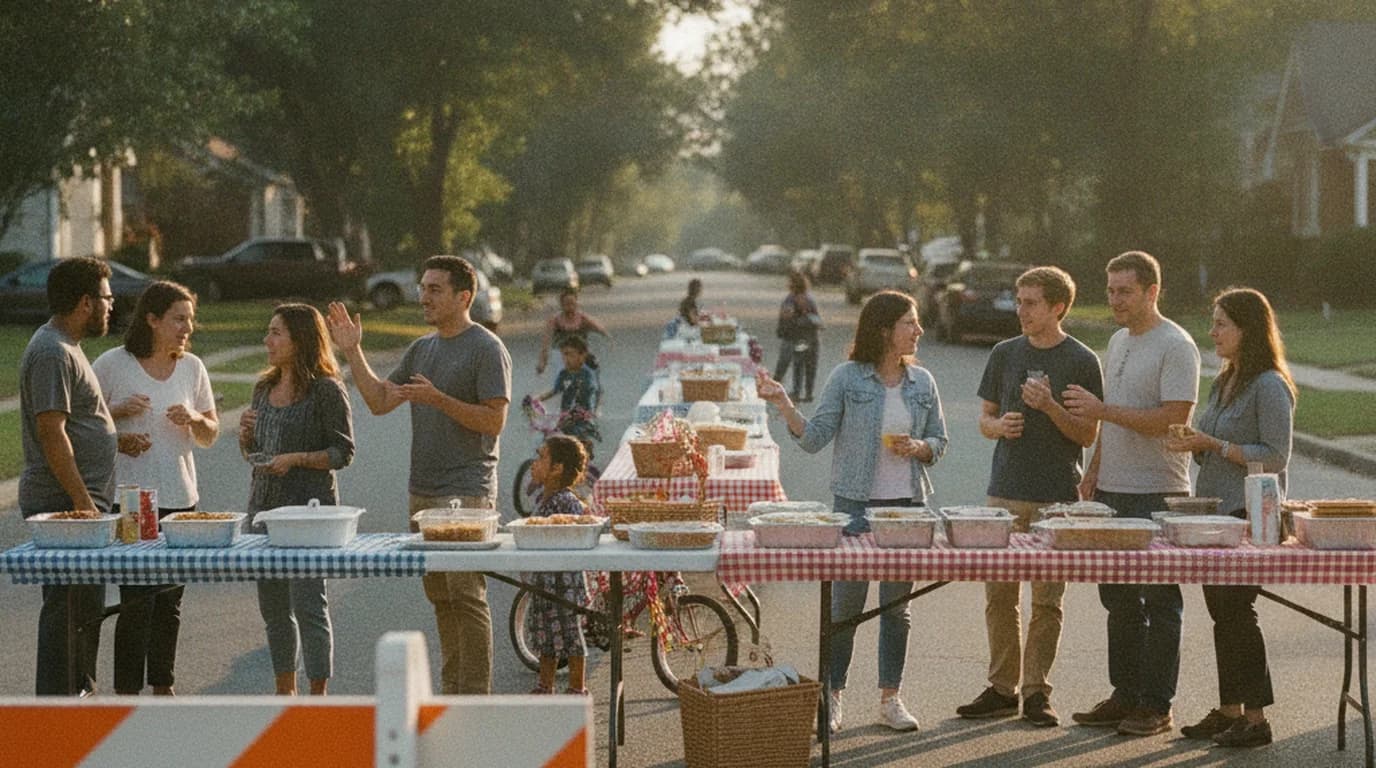
You are asking your city for temporary permission to close a public street to traffic. That's it. The street belongs to everyone and you want it for an afternoon. In exchange the city wants to know that an ambulance can still get down it, and that your neighbors won't be trapped in their own driveways.
Every city dresses this up differently. Almost none of them call it a block party permit, which is the first reason people give up. In Houston it's a Street Function Permit. In Boston it's a Play Street Closing Permit. In El Paso it's a Temporary Event. Oklahoma City issues an Administrative Revocable Permit for a "Minor Event." Philadelphia renamed its form the Street Event Application. Los Angeles has no such document at all, and treats a block party as one line item under a Special Event Permit.
So if you search your city's website for "block party permit" and get nothing, you haven't hit a dead end. You've hit a vocabulary problem.
The 30 largest US cities, compared
Fees and deadlines below are for a standard residential block party. Click through for the full walkthrough for your city, including the neighbor-signature rules and the official application links.
| City | Who issues it | Permit fee | Apply by |
|---|---|---|---|
| New York City | SAPO, Mayor's Office of Citywide Event Coordination | $25 | 60 days |
| Los Angeles | Bureau of Street Services | $312 | 45 days |
| Chicago | CDOT, through your alderperson's ward office | Free | 30 days |
| Houston | Mayor's Office of Special Events | $67.13 | 40 days |
| Phoenix | Street Transportation Department | Free | 21 days |
| Philadelphia | Streets Department, Right-of-Way Unit | $25 | 21 days |
| San Antonio | Public Works, Right-of-Way Management | $100 per block, per day | 30 days |
| San Diego | SDPD Traffic Division | Free | 10 days |
| Dallas | Transportation & Public Works | Free | 10 business days |
| Fort Worth | Office of Outdoor Events | Free | 15 days |
| Jacksonville | Public Works, Traffic Engineering | Free | 30 days |
| Austin | Transportation & Public Works | $52 | 15 days |
| San Jose | SJPD Permits Unit | Free | 10 business days |
| Charlotte | Charlotte DOT | Not published | 30 days |
| Columbus | Recreation & Parks, Office of Special Events | $75 | 30 days |
| Indianapolis | Business & Neighborhood Services | Free | 30 days |
| San Francisco | SFMTA | $58 at 90+ days, rising to $250 | 30 days |
| Seattle | SDOT Street Use | Free | 14 days |
| Denver | DOTI Permit Operations | Free | 5 working days |
| Nashville | NDOT Open Streets | Free | 14 days |
| Oklahoma City | Office of Special Events | $100 | 30 days |
| Washington, DC | DDOT, Public Space Regulation | Free | 30 business days |
| El Paso | Planning & Inspections | $137 | 30 days |
| Las Vegas | City Department of Public Works | Free | 5 days |
| Boston | Boston Transportation Department | Not published | 30 days |
| Detroit | Your local police precinct | Free | 45 business days |
| Louisville | Metro Office of Special Events | $40 | 60 days |
| Portland | PBOT, Portland in the Streets | Free | 15 business days |
| Memphis | City of Memphis Permits Office | $150 | 90 days |
| Baltimore | BCDOT Special Events | $50 at 8+ weeks | 4 weeks |
Charlotte and Boston are the two genuine unknowns. Both cities publish the permit and the process while staying silent on the fee, even though their sibling special-event permits state costs plainly. Free is a reasonable guess in both. Neither city says so.
What jumps out when you line them all up
Fourteen of the thirty are free. Chicago, Phoenix, San Diego, Dallas, Jacksonville, San Jose, Seattle, Denver, Nashville, Washington DC, Las Vegas, Detroit, Portland and Indianapolis all charge nothing. Fort Worth is almost certainly a fifteenth, though its own website contradicts itself on this.
Among the cities that do charge, the spread is twelve to one. New York and Philadelphia sit at $25. Los Angeles charges $312, and then charges another $312 if you file inside 21 days. The most expensive city in America to do nearly anything issues its block party permit for twenty-five dollars, with insurance waived by rule. Nothing about this is intuitive.
Read the deadline units carefully. Detroit wants 45 business days, which is about nine calendar weeks. DC's 30 business days is roughly six. If you read Detroit's number as calendar days you will miss by three weeks and not find out until it's too late to fix.
Five cities price the deadline instead of enforcing it. San Francisco charges $58 at 90 days out, $122 at 60, and $250 inside 30. That's a 4.3x penalty for planning late. Baltimore, Philadelphia, Columbus and El Paso all do smaller versions of the same thing. Filing early is the cheapest decision available to you in a third of these cities.
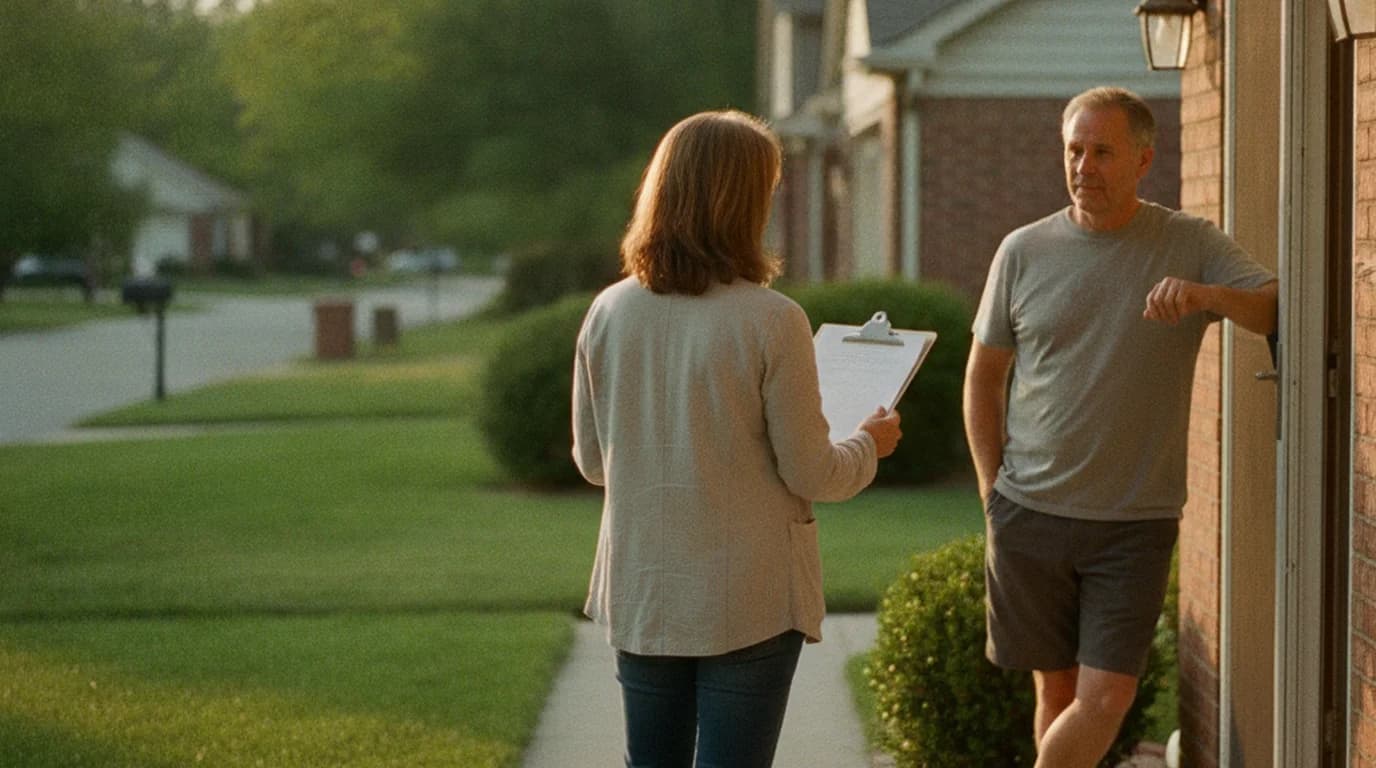
Twenty-one cities want neighbor signatures. Nine want nothing. The thresholds run from Fort Worth's simple majority up through Austin at 60%, Nashville at 66%, Philadelphia and Denver and Detroit at 75%, San Diego and Columbus and Las Vegas at 80%, all the way to Dallas and San Jose, which require 100%. In Dallas, one holdout neighbor kills the permit outright and the city publishes no waiver. Meanwhile Seattle asks for no petition of any kind.
Most cities don't ask for insurance at all. Only Los Angeles, Houston, Memphis and Indianapolis require a certificate for an ordinary residential block party. Where it is required, the number is always $1,000,000 per occurrence with the city named as an additional insured. Indianapolis is the strange one: its ordinance requires a certificate but leaves the amount to unpublished regulation, so a resident cannot learn their own requirement from any city source.
The add-on permit often costs more than the block party permit. San Francisco's permit is $58 and its amplified sound permit is $586. Portland's permit is free and its noise variance is $196. New York's $25 fee sits next to a separate $45 NYPD sound permit that you file in person at the precinct with a money order. And in Phoenix, San Jose, Denver and Dallas, amplified sound isn't a permit question at all. It disqualifies you from the block party permit and pushes you into a different, slower, more expensive process.
One city's official apply button currently sends you to a different city's application. As of this writing, the "Apply for a Permit Online" link on San Jose's own police department permits page lands on a portal serving the City of Philadelphia's Street Event Application, complete with Philadelphia's petition thresholds, Philadelphia's fees and a phila.gov contact address. A San Jose resident following their city's instructions ends up reading Pennsylvania's rules. Check that the page you land on names your city before you fill anything in.
Cities cannot agree on whether your car is a barricade. Washington DC tells you to close the street using your own vehicles. Philadelphia, Boston, Baltimore, Detroit, Denver and Columbus specifically forbid it. Seattle and Portland both allow household trash bins, and Portland publishes an actual PDF titled "MUTCD Garbage Can Justification" with retroreflective tape specifications. Denver wants two Type 3 barricades plus four saw-horses from a rental company.
The process, wherever you live
Every city's version reduces to roughly the same shape.
1. Work out which government owns your street. This is step zero far more often than you'd think, and getting it wrong invalidates everything after it. A Las Vegas mailing address usually means unincorporated Clark County, which is a different government with a one-month deadline, mandatory insurance and a professional traffic control plan, versus five days and free inside city limits. The same trap exists in Houston, Phoenix, San Diego, Jacksonville, Nashville and Louisville.
2. Check the street qualifies. You want a residential or local classification, with no bus route, and usually no traffic signal or metered parking. Nineteen of the thirty exclude arterials outright. Seattle offers the most useful field test I found anywhere: if there's no solid or dashed centerline painted down the middle, it's probably non-arterial.
3. Check the event qualifies. Attendance caps are the invisible cliff here, and Nashville's is the lowest at 75 people in the street at once. Seattle and Portland cap at 100. Dallas and Baltimore at 200. Cross the line and you don't get a bigger permit, you get a different and much slower one. Dallas simply tells you to leave the neighborhood and relocate to a park.
4. Lock the date, hours and exact closure limits first. Closures normally run cross street to cross street. Mid-block is usually refused outright. And the petition you're about to walk around typically freezes whatever date and times you write at the top of it, so decide before you knock on the first door. If you want help picking, our guide to timing party invitations applies here with an extra few weeks bolted on the front.
5. Canvass the block. This is the step that varies most between cities, and it's also the step that determines whether the party is any good. A block that signed enthusiastically shows up. A block that signed to make you go away does not.
6. Draw the site plan. Mark your barricade positions at each end and everything you intend to put in the roadway. Then mark the continuous unobstructed emergency lane, which is a hard requirement everywhere it's specified. Twenty feet is the most common figure, though it ranges from 12 feet in Fort Worth and Portland up to 25 feet on Austin dead ends.
7. Line up barricades and a person to stand at each one. Most cities supply nothing and will not tow cars for you. Several require an adult at each barricade for the whole closure, ready to move it for an ambulance or for a neighbor who needs to get out. Four cities are more generous: Detroit lends barricades against a refundable $75 deposit, Austin's free kit includes walkie-talkies, and Chicago will lend you a bounce house through the city's Jumping Jack program, which sells out by summer.
8. File, pay, and chase the separate permits. Sound, alcohol, food, inflatables and tents are nearly always a different form from a different agency, often on a shorter clock than the closure itself.
The hardest and easiest cities
Hardest: Houston. It's the only city in the set with no lightweight residential path. A block party goes through the full special event pipeline. That means $1M insurance naming the city, a security control plan approved by HPD, and certified peace officers hired for every closure point across the entire event including load-in and load-out. The $67.13 application fee is by far the smallest number in the process.
Runner-up: Memphis, where a neighborhood potluck uses the same notarized, insured, $150 application as a downtown parade, and a port-a-potty in the street requires going before City Council.
Easiest: Seattle. Free, confirmed twice in city documents. Fourteen days' notice, no petition of any kind, no insurance, and your own trash cans are acceptable barricades.
Runner-up: Portland, which asks for notification rather than consent, and will draw you a traffic control plan free of charge if your block touches an arterial.
Denver deserves a special mention for having the shortest lead time in the country at five working days, and also one of the narrowest permits: no amplified music, no bounce houses, no stages, and, oddly, no birthday parties or graduations. Easy to get, hard to use.
The part no city has a form for
Once the permit clears you have a closed street and a date, and absolutely no guarantee that anyone will come.
A flyer under a windshield wiper tells you nothing about headcount. A group text works only for the neighbors whose numbers you already have, which is usually the ones who'd come anyway. And the neighbors you most want at a block party are precisely the ones you don't have a number for yet.
Get the permit filed early. Get the invitation out three weeks ahead. The barricades are the easy part.
Whatever your city charges, the permit only reserves the pavement. The last step in a block party that actually works is publicizing it and then being able to reach the people who said yes. Describe your party to Lemonvite and it designs the invitation, sendable by text. Publishing gives you a public RSVP link with a downloadable QR code, which is the piece built for exactly this: print it on a flyer, put it on the poles and the doors, and let neighbors you have never met scan and RSVP without exchanging a number. The replies collect in one place so you know how many to feed, and one message reaches everyone attending when the time, the food, or the weather changes.