
How to Get a Block Party Permit in San Francisco
Search for how to close your street in San Francisco and the first thing you hit is an acronym. ISCOTT: the Interdepartmental Staff Committee on Traffic and Transportation. Seven city departments sit on it, including the police, the fire department, public health, and city planning. It meets twice a month on Thursday mornings over Microsoft Teams.
You want to put four folding tables in the road and grill some hot dogs.
Your party never goes in front of that committee. A block party permit in San Francisco is a desk review by SFMTA staff. No hearing, no presentation. Nobody is going to question your cornhole placement on a Thursday morning.
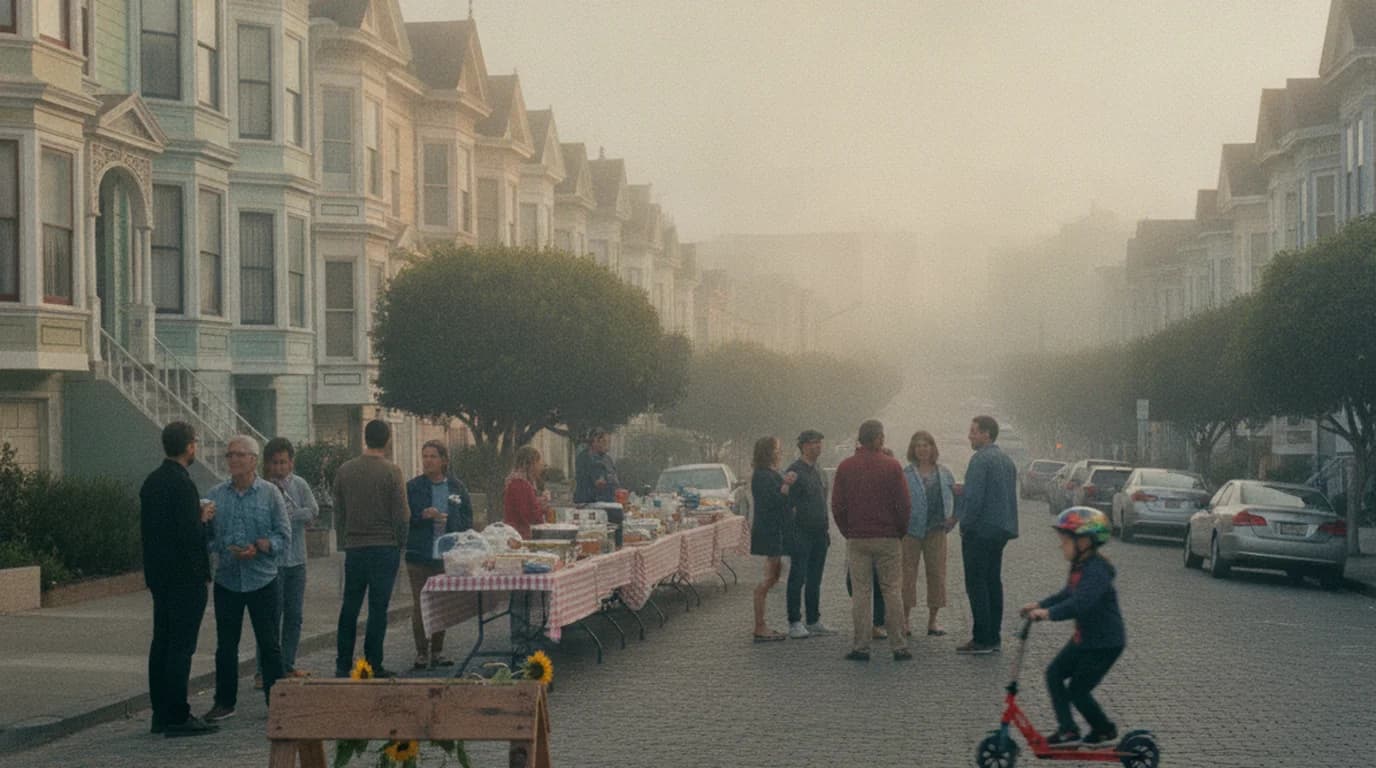
What a block party permit in San Francisco is actually called
There is no document called a block party permit. What you're applying for is a Temporary Street Closure permit, filed under SFMTA's Neighborhood Block Party track. The city's process page is titled Host a neighborhood block party and the form you eventually fill out is titled "Temporary Street Closure Request." Same permit. Old sfmta.com application URLs now redirect to sf.gov, so a guide still pointing you at those is out of date.
SFMTA owns the process. Public Works appears only if you rent barricades from them, the Entertainment Commission only if you want amplified sound.
ISCOTT keeps showing up in older write-ups because the committee really does review street closures, just not one-block residential ones. Your event goes to a public hearing unless it:
- stays within three blocks,
- closes no intersections, and
- requires no rerouting of SFMTA vehicles.
A single residential block passes all three by definition. Plenty of guides still tell San Franciscans to prepare for a hearing. Ignore them.
The fee depends entirely on how early you file
| When you apply | Permit fee |
|---|---|
| 90 or more days before | $58 |
| 60 to 89 days before | $122 |
| 30 to 59 days before | $250 |
Those fees run from July 1, 2026 through June 30, 2027 and go up every July 1. Drifting from the 90-day window into the 30-day window costs you an extra $192, which buys a lot of hot dogs. Everything is non-refundable and non-transferable.
One warning that will save you a phone call: the city's block party page headlines this step as "Cost: $56 to $240" and then lists the $58 / $122 / $250 tiers directly underneath it. The summary line is last fiscal year's. Trust the official fee schedule, which gets updated first. Older prices linger on the narrative pages elsewhere on sf.gov too.
The rest of the money:
- Amplified sound means a separate Entertainment Commission permit at $586, plus $403 if you amend the application later. The city flags this as uncommon for block parties.
- Temporary "No Parking" signs start at $357 for one to four, plus $11 per sign to post them yourself. Filing inside 14 days adds $140.
- Barricades cost whatever a vendor quotes you. They're mandatory and no official page publishes a price, so you email Public Works or a private traffic-control company for a quote. It's the one number I can't give you, and probably your biggest expense after the permit.
- Fee waivers exist and probably don't cover you. They're for nonprofit arts groups, nearby small businesses, merchant groups, Community Benefit Districts, and resident associations. Homeowners associations are explicitly excluded, and so is one person throwing a potluck.
Skip the No Parking signs unless you have a specific reason. That's SFMTA's own recommendation, meant to spare you the cost and keep your neighbors' cars from getting towed. Flyer the block instead and ask people to move voluntarily. Signs earn their money on a narrow street, or for a bounce house.
Check for Muni before you spend a dollar
The hard disqualifier is transit. The eligibility rule is one line: there is no Muni use of the block. A bus or rail line on your street knocks you off this track entirely and onto the full special-event street closure, which runs $1,331 to $2,441. More than twenty times the price for the same party.
The other boundaries:
- One residential block. Multi-block gatherings go to the expensive track.
- You have to live on it, or represent the neighborhood association for that area. No outside organizers.
- The event has to be at least 30 days away. Thirty days is a floor, and inside it the track closes.
- Under 8 hours, somewhere between 7am and 10pm. Setup and cleanup count against the 8, which people forget until they're hauling tables at 6:45am.
The eligibility rules say nothing about grade, which matters if you're eyeing one of the dramatic blocks. San Francisco won't disqualify you for being steep. The hill is your own problem, and the barricade spacing rule (no gap wide enough for a car to drive through) deserves extra respect when gravity is on the car's side.
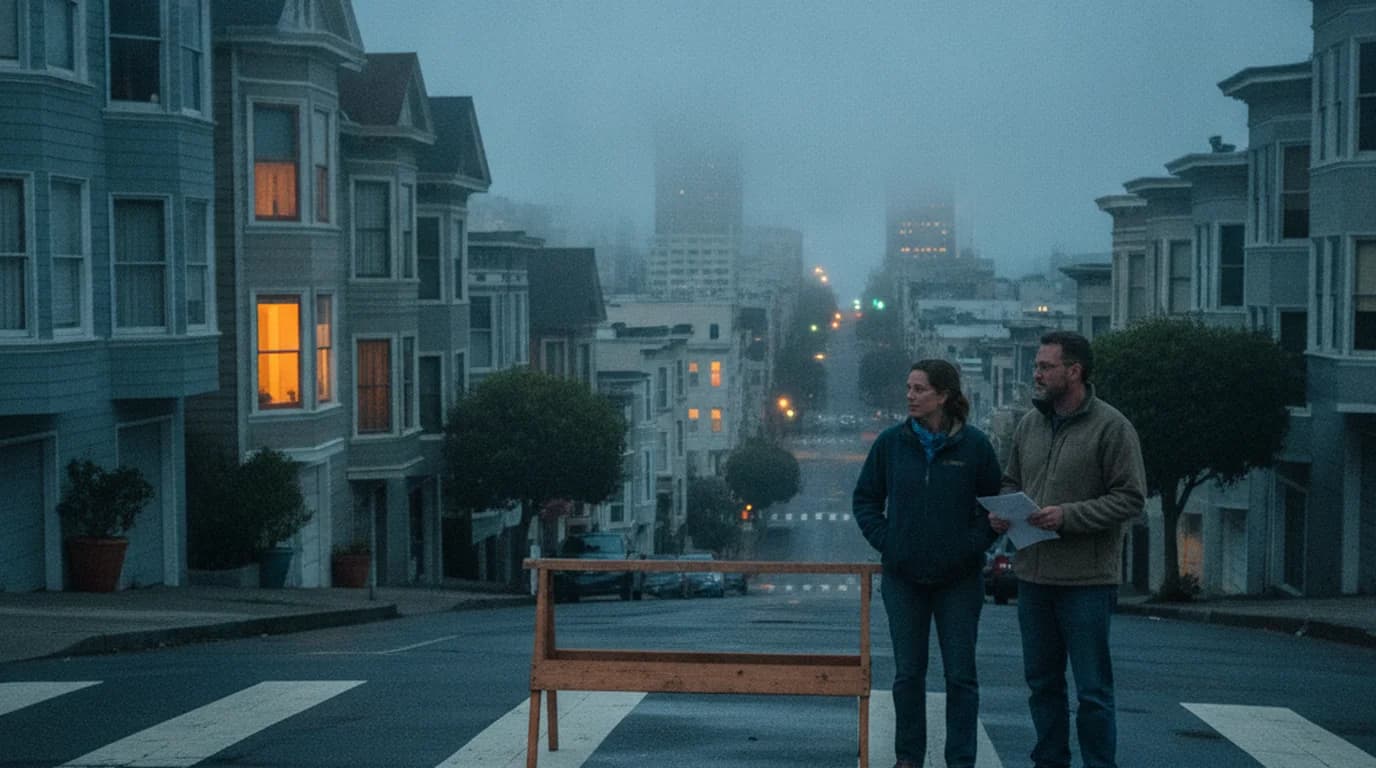
Seven days of notice instead of a petition
Most big American cities make you collect signatures from some percentage of the block. San Francisco asks for no signatures at all, and sets no consent threshold.
What happens instead: SFMTA emails you an official notice to post on the street, and that notice carries contact information so anyone on the block can call the city with concerns. It stays up for seven days. Then you photograph it and email the photos to Special Events staff with a signed declaration confirming you posted it. Taking the notices down afterward is your job too.
You should still talk to your neighbors before you file. The city recommends it and common sense demands it. But the formal requirement stops at notice, which puts the burden on an objector to speak up rather than on you to chase forty signatures.
What you can and can't do on the block
The eligibility list is short and a couple of items surprise people.
No alcohol. Flat prohibition, and no cooler tucked under the table either. It's the rule most likely to reshape your plans, so read it before you promise anyone anything. No stages either. Nothing for sale, and you can't use the event to promote a business.
Bounce houses are allowed if they fit safely. One permitted food truck is allowed too.
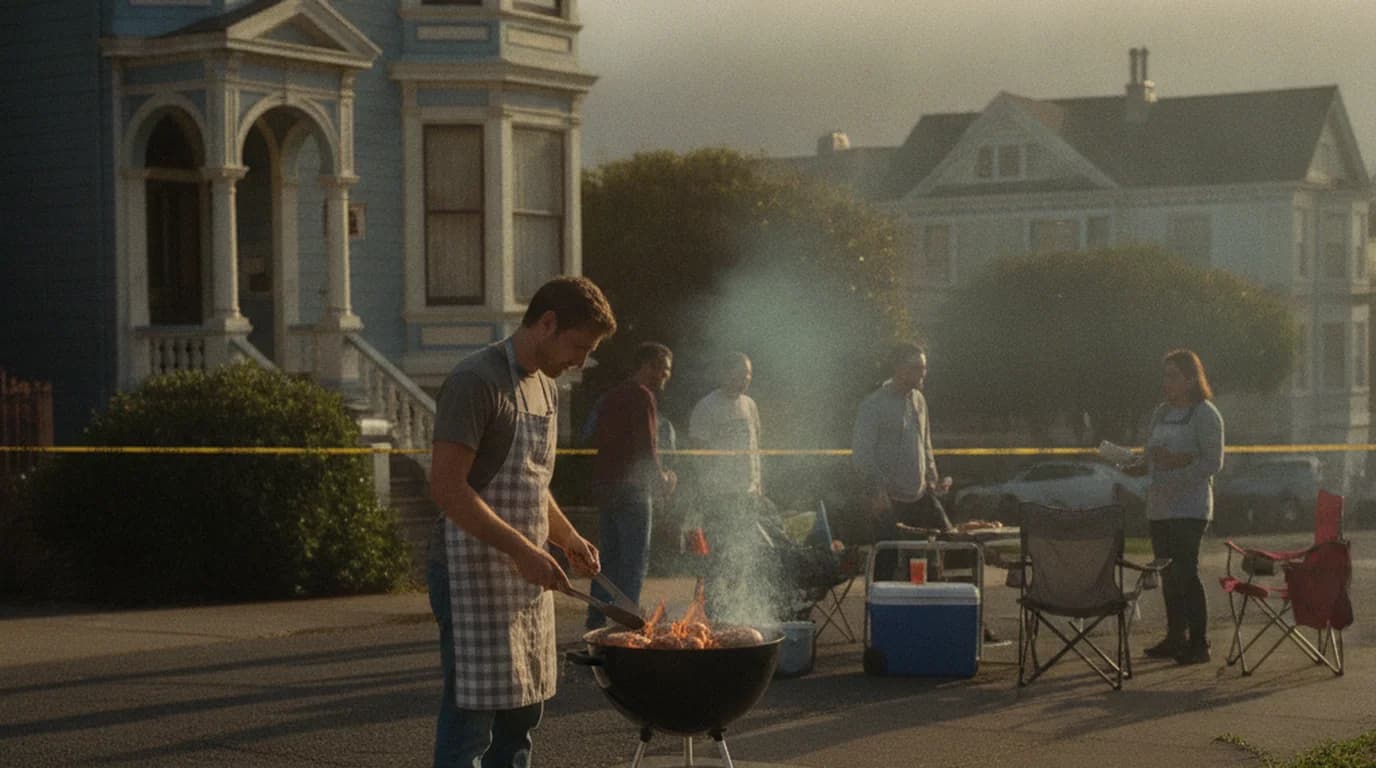
Grills go on private property. Small rule, big consequence. Put the BBQ on your driveway or your front steps and you're done thinking about it. Put it in the roadway and you've pulled the Fire Department into your permit.
One condition reads oddly until you understand who this permit is for: don't advertise the event beyond your neighborhood. Public listings are out, and so is the Instagram post inviting the city.
Ten steps, roughly in order
- Run the eligibility check against the rules above, and start the informal neighbor conversations now.
- Draw a site plan only if something lands in the traffic lanes. Tables where cars would normally park don't count, and the city's own example of an event needing no site plan is a potluck in the parking lane. Hand-drawn is fine.
- Submit the free intake form. Staff review it within two business days and email you a personalized checklist of the permits your event actually needs. Upload the site plan here.
- File the Temporary Street Closure Request with SFMTA and pay $58, $122, or $250 depending on lead time. Email SpecialEvents@sfmta.com to pay by check or money order.
- Apply for the entertainment permit if you're having live music or amplified sound, at least two weeks ahead. That stretches to 45 days if the sound runs more than six hours a day or outside 9am to 10pm.
- Post the notice for seven days, then send back the photos and the signed declaration form.
- Wait for the permit. It arrives by email in five to ten business days.
- Line up barricades once you're approved. A-frames no more than six feet apart from curb to curb, with no gap a car could squeeze through, set on the side of the crosswalk closest to the intersection, "Road Closed" facing oncoming traffic. Flashing lights if you're running past dark.
- Put an adult at each barricade. On a short block, one person can cover both ends. They carry a copy of the permit and have to be able to move a barricade fast for an ambulance. Emergency vehicles and paratransit always get through. Driveways and garages stay accessible, and you walk residents' cars out through the barricade rather than turning them away.
- Clean up. Leaving the block clear is written into the permit, and it's how you get invited to do this again next year.
Two things the city stays quiet about. Insurance never comes up in the block party process, though the general street-closure page sets a $500,000 general liability standard for street fairs and Entertainment Zone events. Whether SFMTA asks a one-block potluck for a certificate isn't published, so ask when you file. And the Public Works barricade email is printed two ways on two official pages. Try dpw-eventrequest@sfdpw.org first, since it's on the barricade guide, and fall back to dpweventrequest@sfdpw.org. Public Works' main line is 415-558-3200. General special-event questions go to SpecialEventSF@sfgov.org.
Forty households and a wind problem
ISCOTT never sees your party, and neither does anybody else unless you tell them. What you have is a block of people who wave at each other and have never once eaten together.
Keep the food simple, because everything cooks on a driveway and nothing stays hot in that wind. A potluck with real assignments beats an open-ended "bring something," which in San Francisco reliably produces four kinds of hummus and no plates. Afternoon sun on a Sunset block can go gray and 58 degrees by four o'clock, so borrow patio heaters and keep a weather fallback in your pocket. If your next block is in another city, the rest of the series covers those permits too.
Your permit takes 30 days. This part takes an evening.
The committee never sees your party, which means nobody but you is going to publicize it. Describe the block party to Lemonvite and the invitation gets designed around it, then sent by text. Publishing hands you a public RSVP link and a downloadable QR code, ideal for a flyer taped inside the entry of every building on a block of flats. One scan, one RSVP, no phone numbers exchanged. Then message everyone coming when the fog decides your start time for you.