
How to Get a Block Party Permit in Columbus
Seventy-five dollars. That is what the City of Columbus charges to close your street for an afternoon, and it is the number almost nobody on your block will guess right. A block party permit in Columbus is a single $75 fee, with no per-hour charge and no deposit. File inside 30 days of the party and it climbs to $125.
Half your neighbors assume the city closes streets for free. The other half never looked it up, because years ago they decided a street closure costs about what a wedding tent costs. Both guesses cause problems, because the permit is the cheap part of this. The barricades are where the money actually goes, and the city is emphatic that barricades are your problem.
So, the budget, roughly in the order you'll spend it.
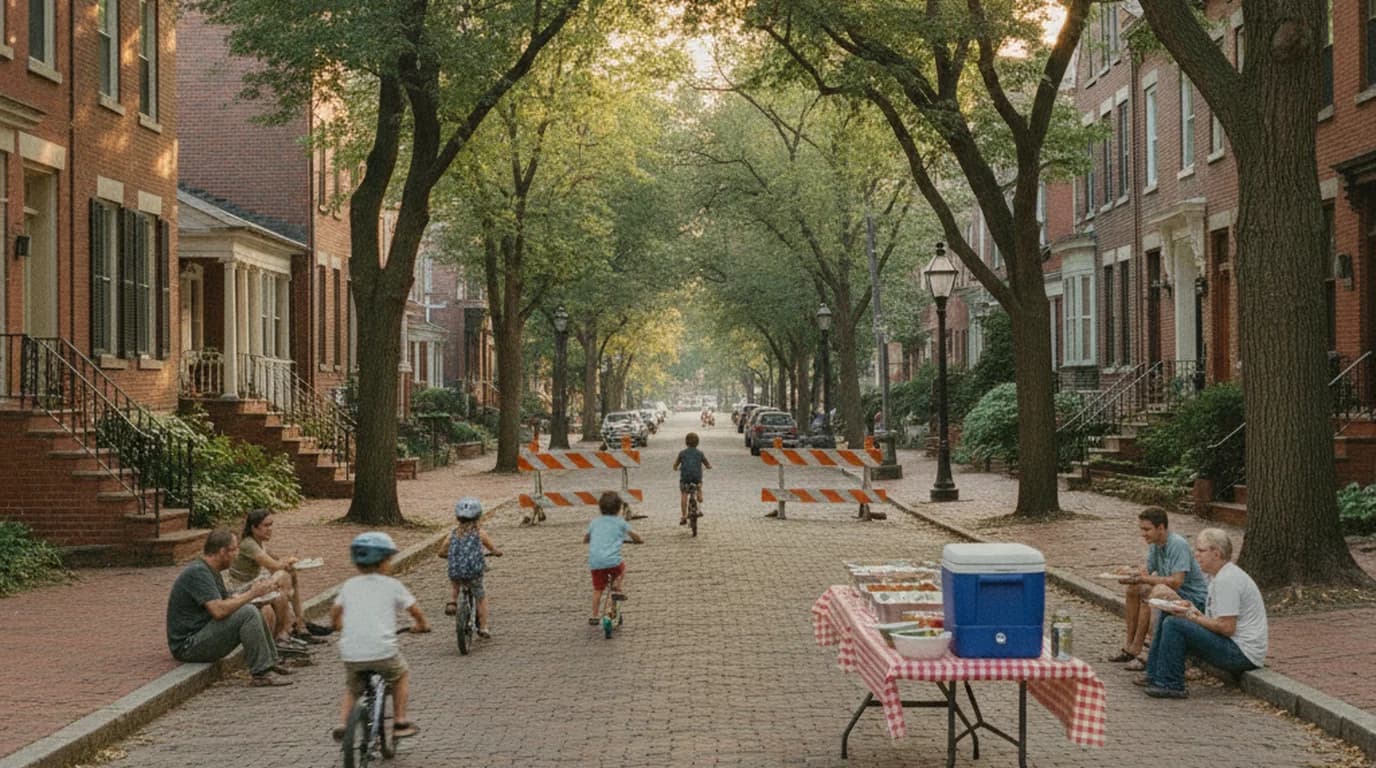
Recreation and Parks, of all departments
The Block Party Permit comes from the City of Columbus Office of Special Events, a unit of the Columbus Recreation and Parks Department. The police don't issue it, and neither does the Department of Public Service, which is where most people look first on the theory that Public Service owns the pavement.
You apply through the city's permitting portal at specialeventapplication.columbus.gov, and the rules live in the 2026 Block Party Planning Guide. Read that guide before you talk to a single neighbor, because it governs the petition and the petition governs everything else. The permit landing page has the short version plus every document you'll upload.
Budgeting a block party permit in Columbus, line by line
| Line item | Cost |
|---|---|
| Block Party Permit | $75 |
| Late fee, filed less than 30 days out | +$50 |
| Barricades | vendor's price, city supplies none |
| $1,000,000 liability insurance | only with a bounce house on the street |
| Special duty police | $71/hr officer, 3-hour minimum, if the city asks |
The $75 and the $50 are both non-refundable. Applications are accepted up to a year in advance. Inside the 30-day window the city says an application "will not be guaranteed approval and will incur late fees," so the extra $50 buys you a maybe, and a denied late application does not come with your money back.
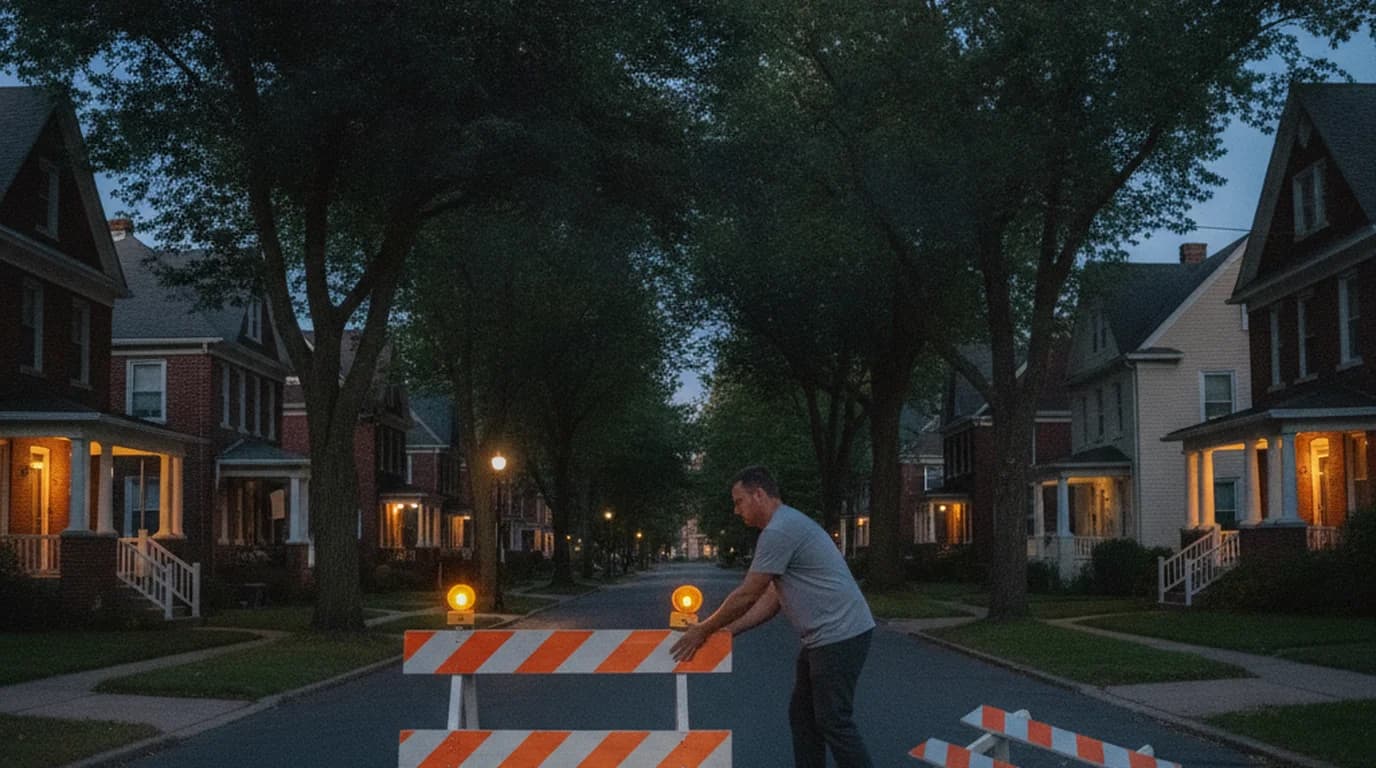
Barricades are the line item nobody budgets for. The guide says it flatly: the City of Columbus does not supply barricades. You rent them or you own compliant ones. Parked cars, traffic cones, and caution tape are all specifically rejected as substitutes, which kills the improvisation every block tries first. Whatever you use has to be lit after sundown, and if you aren't renting from a traffic control company you'll upload a photo of it. The guide names five rental outfits (Paul Peterson Company, H5 Traffic Safety, D&M Distributors, Road Safe Traffic Systems, Safety Service Products) without requiring any of them, and nobody, the city included, publishes a rate for a one-day residential closure. Call two vendors the week you start collecting signatures, so the real number lands in your budget before you've promised anybody a party.
Insurance only shows up if something inflates. A bounce house or other amusement apparatus on the street triggers a $1,000,000 liability certificate naming the City of Columbus as additional insured. Put the identical bounce house in somebody's front yard and the requirement vanishes. Easiest cost on this list to avoid outright, and grass is a softer landing anyway.
Police probably cost you nothing. The 2026 fee schedule lists special duty rates at $71 an hour for an officer, $84 for a sergeant, and $99 for a lieutenant, all with three-hour minimums. But the block party guide never says officers are required for a residential block party, so don't pad your budget on a rumor. If the city says otherwise during review, believe the city.
Then there's the money Columbus has nothing to do with. Food for however many houses turn up, a rented folding table or two, ice, cups, the canopy somebody swears is in their garage. And the neighbor who offers to "handle drinks," which in Columbus means a cooler parked in a driveway, since alcohol is not permitted in the roadway. Divide those categories by household early. Our guide to setting a party budget has a split that works well here, and a block party is the easiest kind to split, because everyone you're splitting with lives within shouting distance.
The petition wants 80%, one signature per address
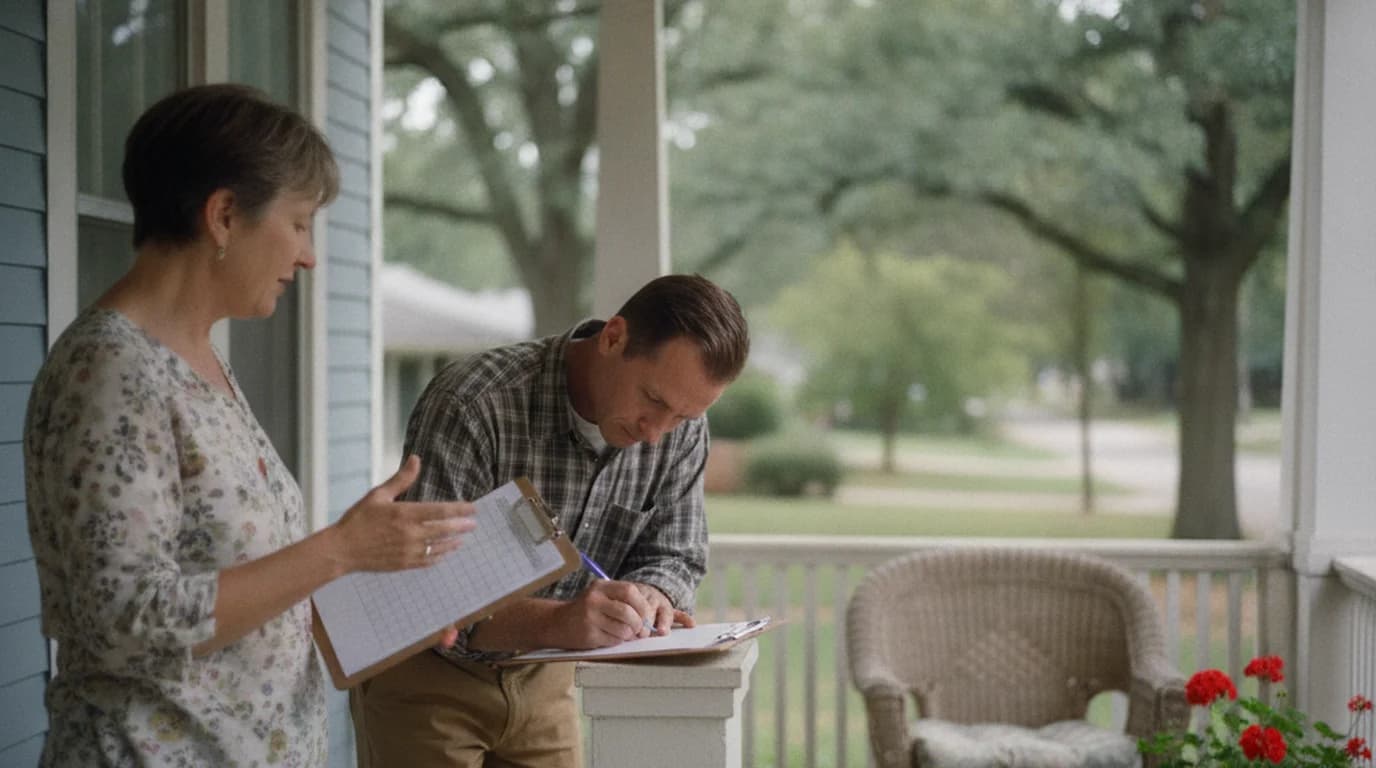
Columbus wants signatures from at least 80% of the property owners, building managers, or tenants whose property adjoins the street you're closing. One signature per residence or business. Every signer has to be 18 or older.
A few rules that decide how long this takes:
- A vacant property still counts toward your 80% as long as you note it as vacant on the petition.
- There's a Refused column, and using it is fine. Refusals happen.
- For anyone you can't reach, "multiple attempts" means at least three different dates, written on the petition page.
That last rule is a multi-day exercise all by itself, and it's the thing that eats a 30-day window. Start the petition the same week you pick your date.
The sheet also has to carry the event name, the street with its connecting intersections, the date, and the start and end times before anybody signs it. The city puts it bluntly: the application and petition page must correlate, and no permit issues for dates or times that aren't on the page your neighbors signed. Which sets up the mistake that costs the most to undo. A rain date has to be on the petition before the first signature. Retrofitting one means walking the block again with a fresh sheet.
A short list that disqualifies more people than the fee does
You have to live on the block you're asking to close, and it has to be a zoned residential public street. The closure runs the entire block, intersection to intersection. Mid-block requests get rejected outright, and a closure that terminates at an alleyway is not an acceptable closure location.
The permit is also only for neighborhood gatherings. Church festivals, fairs, community picnics, and anything business-sponsored get pushed to the Special Event application instead, which runs on a 60-day deadline and a $100 to $300 application fee. If your block party is drifting toward a neighborhood festival with a food truck, you've changed permits without noticing.
And residents inside the closure cannot be refused entry to or exit from their homes. Somebody on your block leaves for a shift at 4 p.m. Lay out the tables so that works.
Hours, alcohol, and the twenty-foot lane
Hours. No activities between 12:01 a.m. and 8:00 a.m.
Alcohol. Sales are prohibited outright, and the city states plainly that alcohol is not permitted on the streets of a residential block party. It stays in the yard or the driveway.
Fireworks. No.
Food and beverage vending. Prohibited. The guide's reasoning is that this permit is meant for neighborhood gatherings rather than for-profit events, so the food truck is out and so is a bake sale for the school. Which makes your block party a potluck by definition, and a potluck across eleven households is exactly the situation that produces five desserts and nothing to eat before them. The potluck guide has the assignment structure that prevents it.
Not open to the public. Residents of the block and their families. No marketing or community advertising.
A continuous 20-foot fire lane, kept clear the entire time, with nothing within three feet of a hydrant. On a typical Columbus residential street, 20 clear feet is most of the pavement, so tables hug the curb and the middle stays open.
Two Columbus specifics that catch people
The University Area District needs a second approval. Street closures inside it have to be approved by the University Area Commission on top of your city permit. The district runs from Glen Echo Ravine on the north to Fifth Avenue on the south, and from the railroad tracks on the east to Olentangy River Road on the west, which covers much of the neighborhood around Ohio State. The 2026 guide lists the Commission at 614-441-8174. (An older city petition PDF still lists a different number. Trust the current guide.)
The CLOSE form is easy to miss entirely. If your party closes a single lane or more for an hour or longer, you also file the Department of Public Service CLOSE form. It's a different form at a different department, and it requires your Block Party application ID, so it can only happen after you've applied. Plenty of people submit the permit, feel finished, and never touch it.
One small warning the city posts itself: use Chrome for the uploads. Safari users have problems with the portal.
The order of operations
- Confirm you qualify and read the 2026 Block Party Planning Guide cover to cover.
- Lock the date, the rain date, the street segment, and the start and end times. All of it goes on the petition before signatures.
- Print the Street Closure Petition and collect your 80%. Note vacancies, log refusals, record three separate attempt dates for anyone you can't reach.
- Draw the site plan using the city's sample map. It needs barricade locations, total street width, the 20-foot fire lane marked clearly, every tent or inflatable labeled, and a north arrow.
- Fill out the Event Safety Plan Form from Columbus Fire.
- Arrange barricades, including how you'll light them after sundown.
- Get the $1,000,000 certificate of insurance naming the City of Columbus as additional insured, if a bounce house is going on the street.
- Get University Area Commission approval first if your street sits inside that district.
- Apply at specialeventapplication.columbus.gov at least 30 days out, uploading the petition, site plan, safety plan, barricade proof, and the certificate if it applies. The official submission date is the date the completed application is received, so an incomplete package holds no place in line.
- Pay the $75, or $125 if you're inside 30 days.
- File the Public Service CLOSE form using your application ID.
- Run the party between 8:00 a.m. and midnight, fire lane clear throughout.
Questions go to the CRPD Office of Special Events at 614-645-3800 or specialevents@columbus.gov. The office is at 1111 East Broad Street, Suite 101.
What the guide doesn't tell you
One gap is worth flagging, because guessing here is how you end up with a complaint from the one neighbor who didn't sign.
Amplified sound, music, grills, and open flame go unmentioned in the 2026 Block Party Planning Guide. I searched the whole document for all of them and came up empty. The city has written no rule either way for this permit type. Anyone quoting you a Columbus block party sound limit is repeating something from the Special Event materials, which govern a different permit with different triggers. So if you're putting a speaker on a porch or a grill at the curb, call 614-645-3800 and ask the office that issues your permit.
The rules change completely from one city to the next, which is why we wrote a city-by-city walkthrough rather than one generic guide.
Forty households, one start time
Permit approved, barricades reserved. Now forty households need to know what time to come outside, and the block's group text is where a start time goes to die underneath a thread about somebody's mailbox.
You already talked 80% of the block into signing something. Getting them to eat is easier.
Seventy-five dollars buys asphalt. Filling it is the part left. Give Lemonvite a sentence about the party and it draws the invitation, which sends by text so it actually gets read. Publishing also opens an RSVP page with a printable QR: put it on a quarter-page flyer, walk the forty households you already petitioned, and let people scan instead of hunting for your number. The RSVPs land in one place, and you can message everyone coming when the barricades are confirmed.