
How to Get a Block Party Permit in Indianapolis
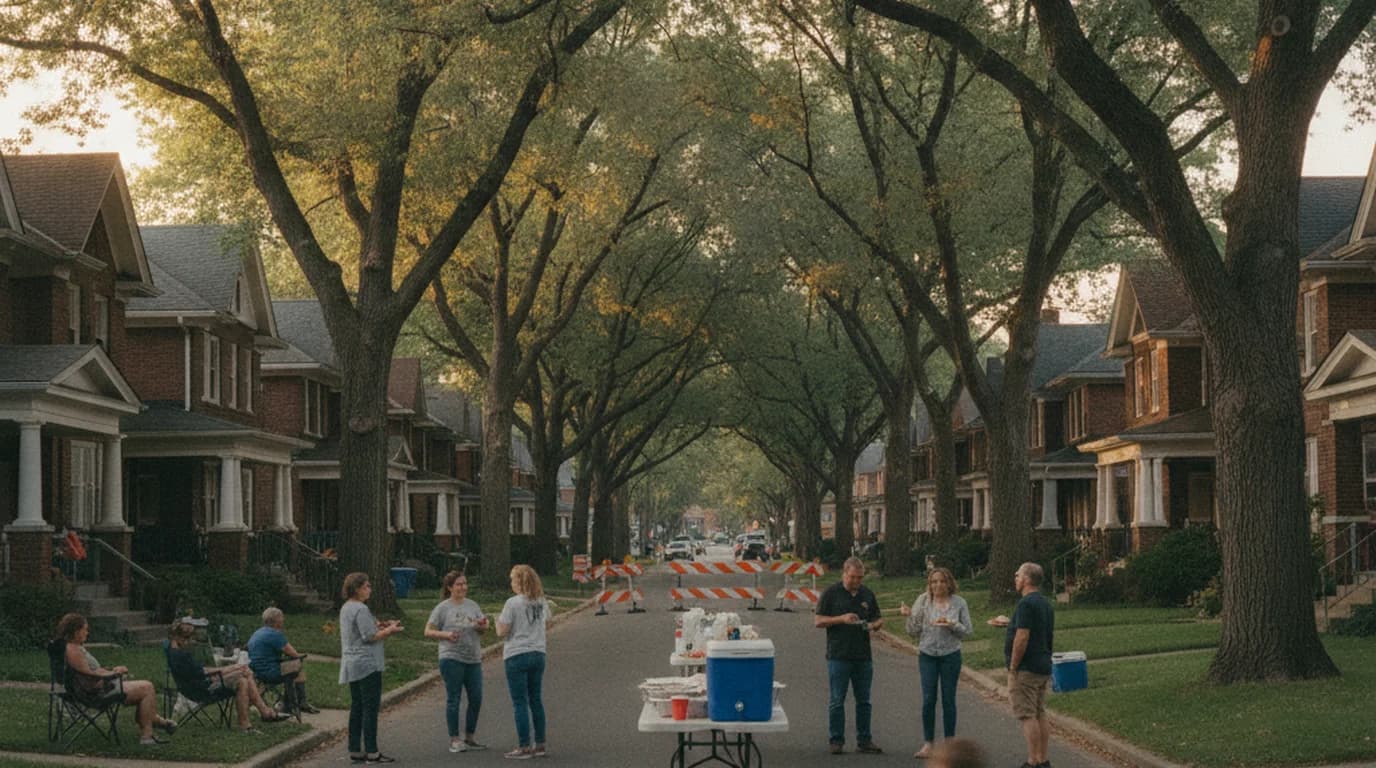
By eight o'clock on a July evening, half an Indianapolis street is already having a party that nobody organized. A cooler appears at the bottom of a driveway. Somebody's kid abandons a scooter in the road because no car has come through since dinner. Porch lights click on and the conversation spreads house to house, under maples doing most of the decorating.
What none of that gets you is the pavement itself. For that you need a block party permit in Indianapolis, which is free and requires no signatures from anyone on your block. It has more moving parts than the price suggests, starting with the one that decides whether you're applying to the right city.
First, confirm Indianapolis is your city
Indianapolis and Marion County consolidated in 1970 under Unigov, which is why one department closes streets across what looks like an entire county. The merger left holes in itself. Indiana Code 36-3-1-7 carves out excluded cities, and four inside Marion County still run their own governments: Beech Grove, Lawrence, Southport, and the town of Speedway.
These are not neighborhoods with a nickname. Lawrence has its own mayor and its own public works department handling its streets, at (317) 545-6191. Beech Grove runs its own permits office.
Your mailing address is no help, since plenty of homes in those cities say Indianapolis on the envelope, and the special events page never mentions the split. If you live in one of the four, call your own city hall first.
The permit is a Special Event Permit, and yours is the free version
The Department of Business and Neighborhood Services issues it. The city writes the name DBNS on some pages and BNS on others. Same office.
Nothing is literally named a block party permit. You're applying for a Special Event Permit under Chapter 986 of the city-county code, where a block party is a named category. That category is what makes it free. Sec. 986-101:
Block party means a distinct event held by and for the residents of a specific neighborhood or group of neighborhoods for a period of one (1) day or less.
Two constraints hide there. By and for residents, so a fundraiser open to the public is a different animal. One day or less, so a two-day festival pays the ordinary fee.
The rules live on the city's special events permits page, and the application runs through a mapping portal at indianapolis.dotmapsapp.com. Public Works gets consulted during review, but you apply to BNS.
A block party permit in Indianapolis is free, with one asterisk
Sec. 986-103(b) says "a block party as defined and licensed under this chapter shall be exempt from paying the special event license fee," and indy.gov puts it in six words: "No fee is required for a block party."
One caveat before you plan around that. The fee schedule effective January 5, 2026 attaches a $40 per application charge to both of its Special Event Permit rows, and lists no block party row at all. The ordinance exempts you from the license fee, which may not be the same thing as an application fee. Email specialevents@indy.gov and ask. Fees rose across the board that January, so anything written earlier about Indianapolis permit costs is stale.
| Line item | Cost |
|---|---|
| Block party permit | $0 |
| Application fee | $40, possibly (see above) |
| Blocked parking meters | $27 to $32 per meter per day, by zone |
| Barricades, and a certified officer if downtown | not published |
Barricades are the real budget hole. The city requires state-approved barricades and publishes nothing about sourcing or cost. Mirror Indy, a local newsroom, reported in March that the city lends them free but can't supply them in May or on the weekends of Indiana Black Expo, the Brickyard 400, MotoGP, and the Circle City Classic. That's reporting rather than city policy, so confirm it with BNS.
Downtown is where a free permit stops being free: "If in the downtown area, an Indiana Law Enforcement Certified Officer must man the barricades." Anywhere else an adult volunteer can stand there. Downtown you're hiring an officer for the whole closure, at a rate the city doesn't publish. If your block is splitting costs, our party budget guide has a structure that survives eleven households.
Two deadlines, plus a number circulating that is wrong
Apply at least 30 days out. Sec. 986-105(a): "An application for a special event license shall be filed at least thirty (30) days prior to the start of the event."
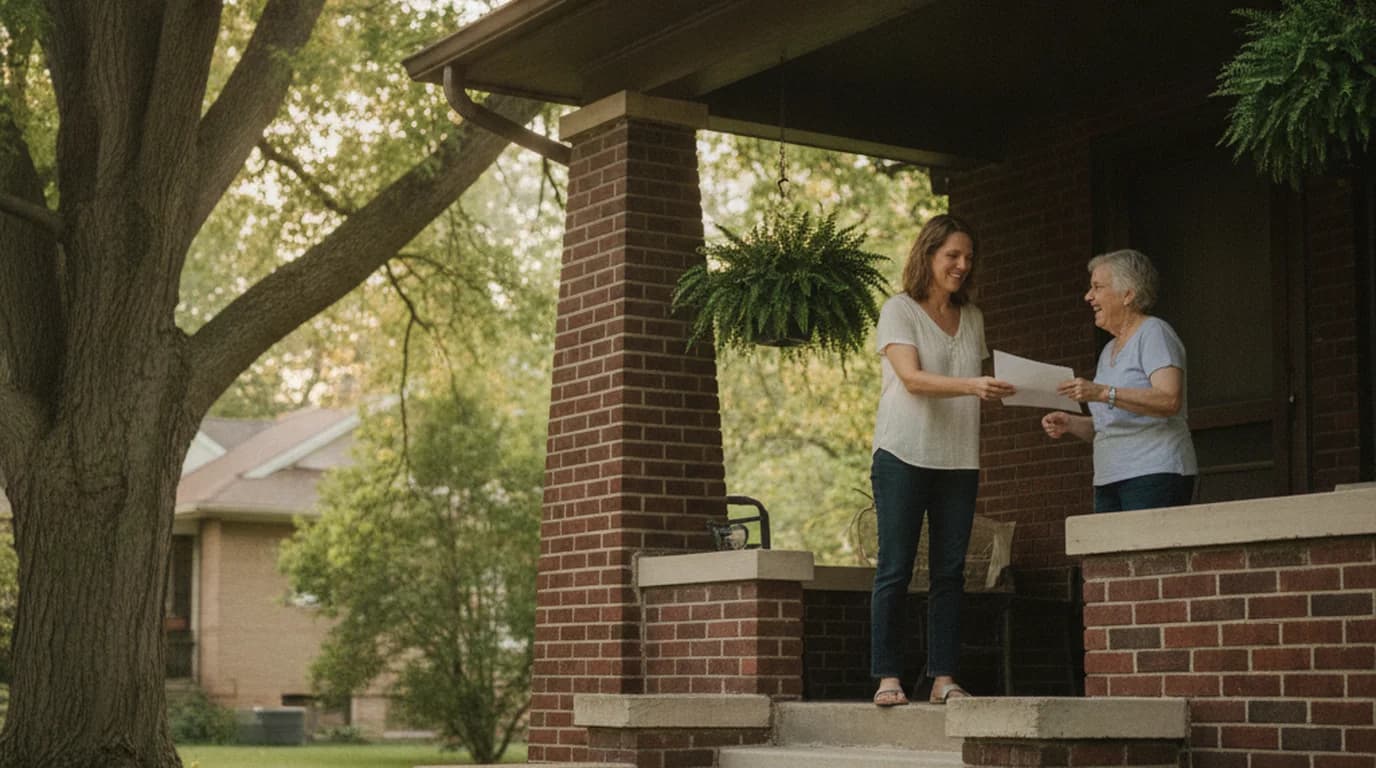
Notify neighbors at least two weeks out. The city's wording: "You must notify all residents and businesses in and around your event zone two weeks in advance. If done with flyers, include a phone number for questions. Times should include setup and tear-down."
You'll run into a widely repeated claim that Indianapolis wants 45 days for the application and 30 days of neighbor notice, which Mirror Indy published in March 2026 and other outlets picked up. The ordinance and the city's own page both say 30 days and two weeks. Use the official numbers, and treat 45 days as prudent anyway, because 30 days is a floor rather than a service promise. Nothing promises your block party a decision date at all.
Nobody on your block has to sign anything
Save yourself the clipboard.
Chicago blocks need a majority to approve, and Columbus wants 80 percent of adjoining owners. Indianapolis asks only that you notify people. No percentage, no signature sheet, and no petition form appears anywhere in Chapter 986. No lottery either, and no cap on parties per year.
You do still have to tell everyone. Flyer every house and business in and around the event zone two weeks out, with a phone number on it, and list your setup and teardown hours alongside the party itself. The neighbor who has to back a car out at 3 p.m. is the one who calls in a complaint at 6. Go door to door even though the city doesn't make you.
Which streets, and what happens on them
No street type is banned outright. Sec. 986-107 hands the license administrator discretion instead, requiring findings that your closure meets DPW and IMPD requirements for safe traffic movement. Indy.gov's plainer version: "When closing a street, consider the effects on traffic, emergency vehicles, businesses, and residents."
In practice a residential segment sails through and a thoroughfare doesn't. The Block Party Information sheet shows the expected shape: one street, plus Cross Street #1 and Cross Street #2.
On the day:
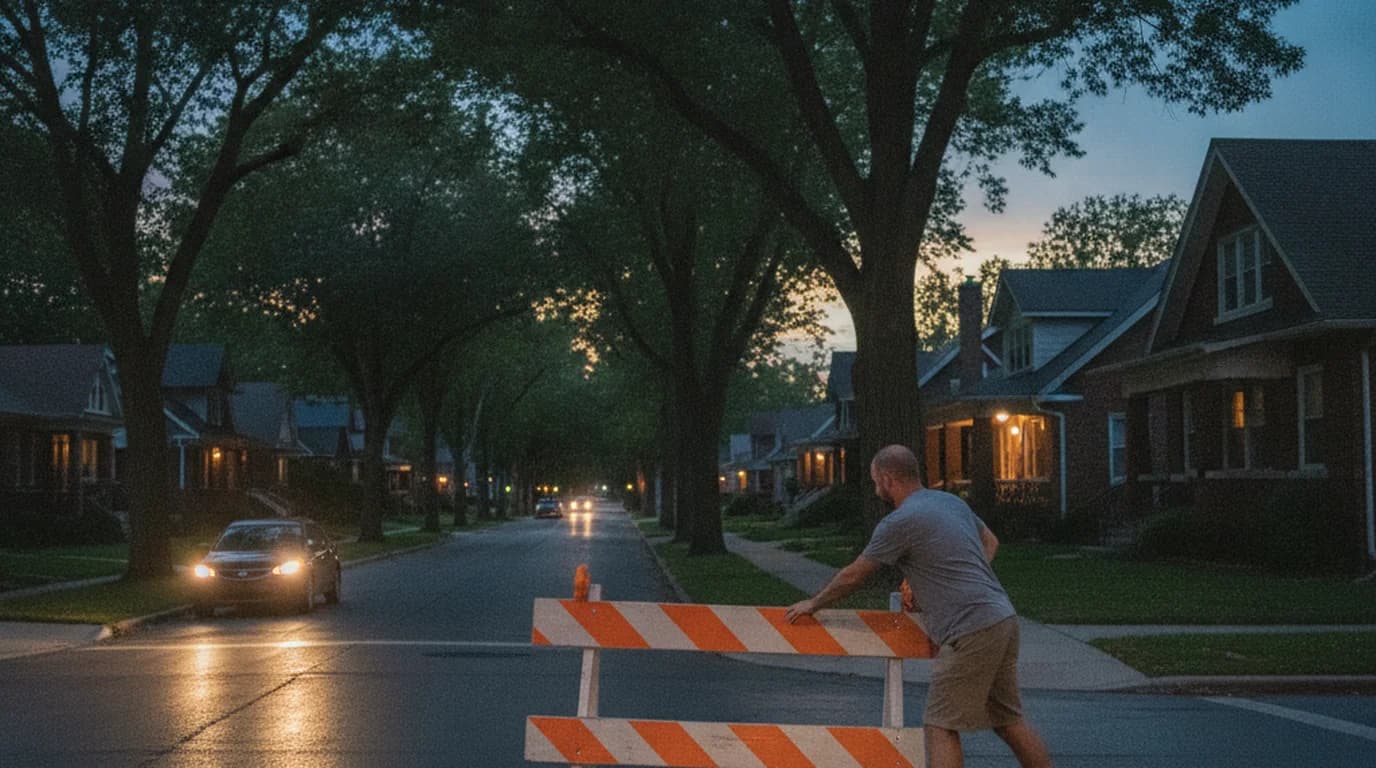
- Somebody has to own the barricades. Unless IMPD requires an officer, a person over 18 stands at them for the whole closure to move them for emergency vehicles and residents. Put two names on that job.
- Nothing may impair access by residents or emergency vehicles, so keep a lane clear down the middle and leave ramps and business entrances unblocked.
- "Handheld chalk and tape are the only allowed means of marking the streets." Spray chalk is not handheld chalk.
- Amplified sound stops at 10 p.m., a reminder the Block Party form prints beside the end time field.
That last rule has a wrinkle almost nobody quotes. Chapter 391 carries a second test with no time limit attached: sound plainly audible more than 75 feet from a device in a public street is prima facie unreasonable noise at any hour. A PA on the center line is exactly that. The chapter excepts events holding a permit for a special occasion, presumably yours, but the special events page never says so. Ask first.
Alcohol gets one line in the whole process: your application must state where alcoholic beverages will be provided or consumed. The city publishes neither permission nor prohibition, and state permitting for a closed street sits outside what I could confirm officially. Get that answer from the state, not from a search result.
Food belongs to a different agency. Marion County Public Health requires registration for events "open to the public that have vendors serving food and/or beverages," at FoodSafe@MarionHealth.org. A residents-only potluck plausibly falls outside that; a taco truck definitely doesn't. Since the permit nudges you toward a potluck anyway, borrow the assignment system from our potluck guide, because eleven households left alone produce three pasta salads and nothing hot.
Doing it, start to finish
- Confirm your city. Marion County, excluding Beech Grove, Lawrence, Southport, and Speedway.
- Confirm you fit the definition. One day or less, by and for residents of your neighborhood.
- Pick your segment and hours. One street, two cross streets, wrapped up by 10 p.m. Settle setup and teardown times now, because they go on the flyer.
- Count backward 30 days minimum, 45 if you can manage it, and start today.
- Email the Block Party Information sheet to specialevents@indy.gov. It asks for contact details, attendance, your begin/end and setup/cleanup times, and the street with both cross streets. Sign the indemnification agreement at the bottom.
- Submit the online Special Event application at indianapolis.dotmapsapp.com. Six sections, and the location step asks you to draw your closure on a map. Yes, that's two separate submissions.
- Attach a certificate of insurance naming the City of Indianapolis as an additional insured. Sec. 986-105(b)(1) leaves the amount to regulation, so ask BNS for your number. The million-dollar figure circulating online traces to Mirror Indy, and no city publication carries it.
- Line up barricades and an attendant, and if you're downtown, budget for the certified officer.
- Handle the side permits. Food vendors go to Marion County Public Health, and tents or stages need a limited duration license from BNS. Blocks inside the Canal, Georgia Street, Mass Ave, or Fountain Fletcher stakeholder areas must present at one of those meetings beforehand.
- Be ready for the Events Advisory Board, an informal stakeholder group meeting virtually at 10 a.m. on the first Thursday of each month.
- Run the party. Keep the lane clear and the sound off by 10.
Questions go to specialevents@indy.gov, or BNS at 317.327.8700, 9 a.m. to 4 p.m. weekdays, at 200 E. Washington St., Suite 107.
The rules change completely at every city line, which is why we built a walkthrough per city instead of one generic guide.
Forty screen doors
Permit filed, barricades borrowed, chalk bought. All that's left is telling forty households which Saturday to come outside, and the flyer already wedged in their screen doors covers the legal notice while telling you nothing about how many burgers to buy.
The last step is making sure the porches know. Give Lemonvite a description of the party and it draws the invitation, which sends by text rather than sitting in an inbox. When you publish, download the QR code attached to your public RSVP link and print it onto a flyer for the screen doors along the block. A neighbor scans it from the porch and is on your list ten seconds later. Then message everyone coming when the barricades and the food both land.