
How to Get a Block Party Permit in Washington, DC
Most of the country has nothing like an Advisory Neighborhood Commission. It sits a full layer below the DC Council, elected off a handful of blocks at a time. The commissioner who represents you is an unpaid neighbor who probably walks a dog past your house on the way to the Metro.
That layer changes how a block party permit in Washington, DC works. District law gives you two accepted ways to show your neighbors are fine with the street being closed. One is the clipboard: signatures from 51% of the properties on the block. The other is approval from every ANC that touches the section of street you want to shut.
Which means the person who can save you a Saturday of door-knocking is somebody you could run into buying coffee.
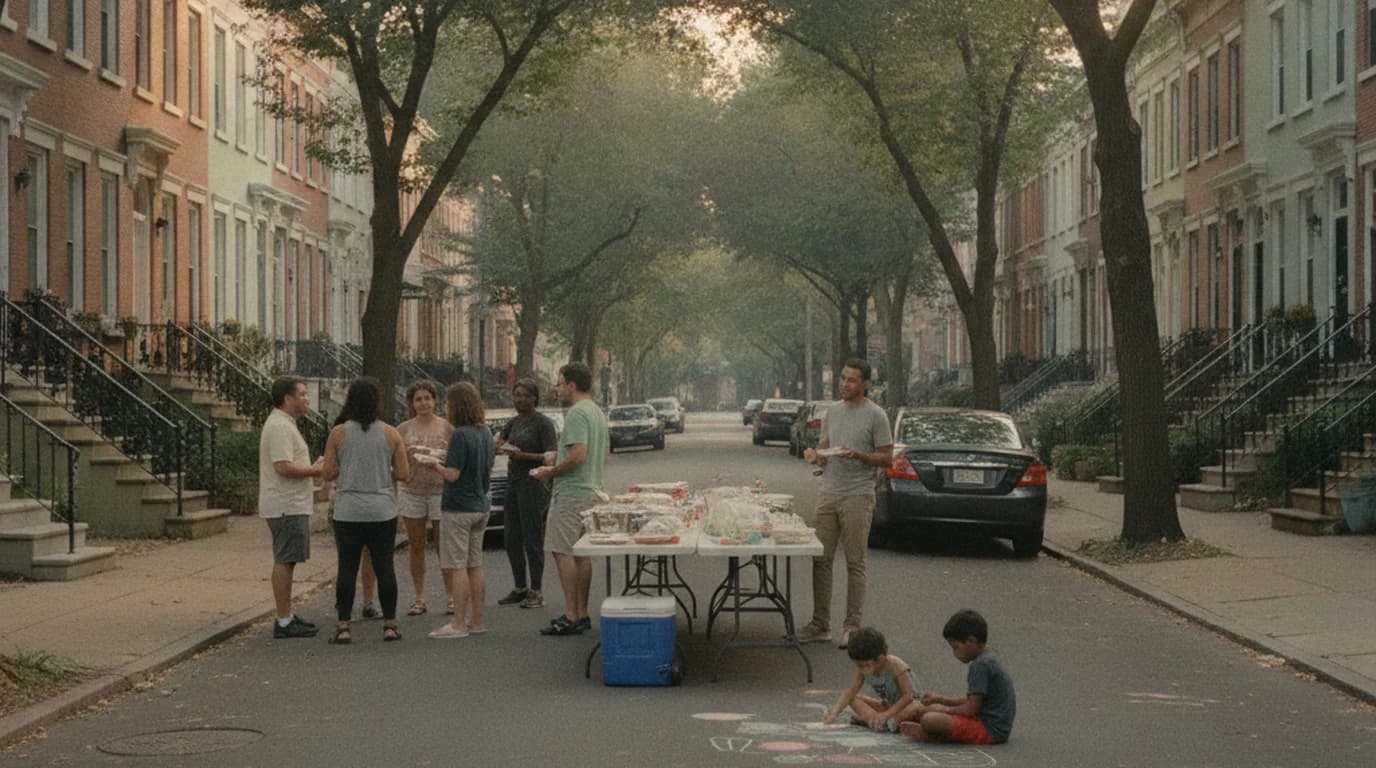
What a block party permit in Washington, DC actually is
The document is a Neighborhood Block Party Permit, issued by the District Department of Transportation through its Public Space Regulation Division. DDOT is the only agency that issues it, and you apply through TOPS, the Transportation Online Permitting System. There is no paper alternative.
The law is narrow about what qualifies: a recreational or civic activity sponsored by neighborhood residents, closing one block, with no admission fee. Charge at the door or sell anything and DDOT's guide sends you to a Special Events Permit instead, a heavier process with different answers to nearly every question below.
Free, and DDOT never gets around to saying so
No application fee, no permit fee, and nowhere on DDOT's site does it announce that. The authority is statutory: D.C. Code § 9-633 says "No fee shall be charged for the application." DDOT's public space fee schedule backs it up by omission, listing a $50 administrative fee and a stack of occupancy charges with no block party line anywhere.
Free paperwork is not a free Saturday, though. DDOT does not deliver barricades. The guide's FAQ hands you that job: "The applicant/sponsor is responsible for using personal vehicles to secure and safely close off the block party location." Somebody's Honda is the barricade. Sort out whose beforehand, because that car is parked for twelve hours.
DDOT does prepare your closure and no-parking signage on approval. Posting it is on you, at least 72 hours ahead.
On insurance I can only report an absence: neither DDOT's materials nor the statute mentions a requirement. Silence is not an exemption, so ask when you file.
The 51% petition, and the ANC route DDOT has not caught up with
D.C. Code § 9-632 accepts two proofs of neighbor consent. Either a list of at least 51% of the residents, owners, or businesses abutting the section you want closed who have consented (vacant buildings excluded), or approval from every Advisory Neighborhood Commission abutting that section, "in a manner to be determined by the Advisory Neighborhood Commission."
The petition is the route DDOT documents. Download the Block Party Temporary Street Closing Petition, walk the block, get ink on paper. The form says "Only original signatures are accepted," so photocopies get rejected, and signatures from the next block over do not count. The guide's FAQ answers that one in a single word: No.
The ANC route arrived with the PLAZA Act of 2024, effective March 21, 2025, and DDOT's materials have not caught up. The Neighborhood Block Parties page says nothing about ANC approval, and the guide it links is stamped April 2023, two years older than the law. The route is real law; whether TOPS has anywhere to put it I could not verify. Call the Public Space Regulation Division at (202) 442-4670 before you skip the clipboard on the strength of a statute.
One wrinkle while you have the form open. DDOT's web page describes the threshold as "51 percent of households on the block," looser than what the statute and the petition both say. Go by the petition. It is the document DDOT accepts.
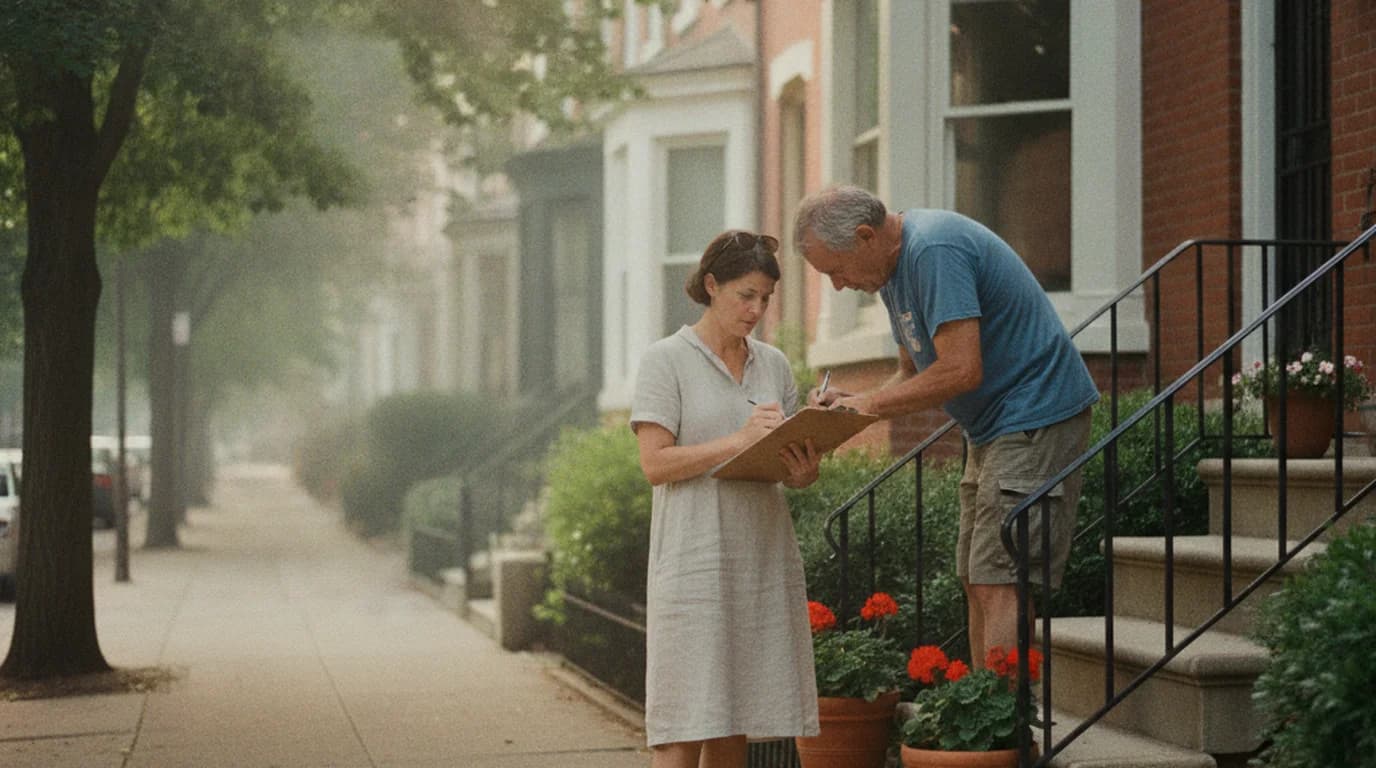
Work your ANC anyway
Take the petition route and you still want your commissioner in the loop. D.C. Code § 9-634 allows only four grounds for denial, and the last is substantial neighborhood opposition. That is a political finding, and the ANC is where opposition gets organized or defused. A commissioner who has known about your party for a month can tell the one guy who hates it that the block already signed.
Finding yours is quick, since ANC districts are drawn by address and the District publishes a lookup. Go to a meeting before you need anything. Asking a favor of a commissioner who met you last week lands worse here than in a city where nobody can name their council member.
The geography rules are short
One block only, and the closure "may not exceed two intersecting streets." You cannot hold it in front of an alley or in an alleyway, which in a city built around alley dwellings disqualifies more frontage than people expect.
What DDOT does not publish is a list of streets you may not close. No official source bars arterials or bus routes outright. Instead DDOT forwards your application to the Metropolitan Police Department, Fire and EMS, the Homeland Security and Emergency Management Agency, and WMATA for comment, and any of them can object. The WMATA referral is how a bus route becomes your problem, and "significant traffic problem" is the denial ground written for it.
Then the DC trap nobody writes down. A lot of pavement in this city is federal. Circles and parkways and some streets edging park land sit under the National Park Service rather than the District, and DDOT cannot permit a closure on ground it does not control. No official block party source addresses this, so treat it as a question to ask rather than a rule. If your block fronts a circle or a park, make the call first.
The rules for the day itself
Twelve hours is the ceiling and 10:00 p.m. is the wall. The petition form is blunter than the statute about what counts inside that: start time includes set-up, end time includes clean-up. Rolling tables off the asphalt at 10:05 is not the deal you signed.
Keep an unobstructed 20-foot emergency access lane for the entire closure. Criterion 8, and the one the fire department cares about.
Then the prohibitions, which reshape more plans than anything else on this page:
- No rental equipment. The guide names dunking booths, moon bounces, stages, and tents. This rule ends most block party group chats, because the inflatable was the entire plan for everyone under eight.
- No vendors and no vending, whether or not money changes hands. Your friend with the taco cart is a vendor.
- No sales and no donations, and neither may even be solicited. A block party doubling as a school fundraiser is not permittable as a block party.
- No alcohol. The rule bans sale and consumption both, so this is not a question of what the beer gets poured into.
Grills and amplified music are the two things everyone asks about, and DDOT addresses neither. Decibel figures circulate online attributed to an agency the District dissolved in 2022; I am not repeating numbers with that pedigree. Ask PSRD.
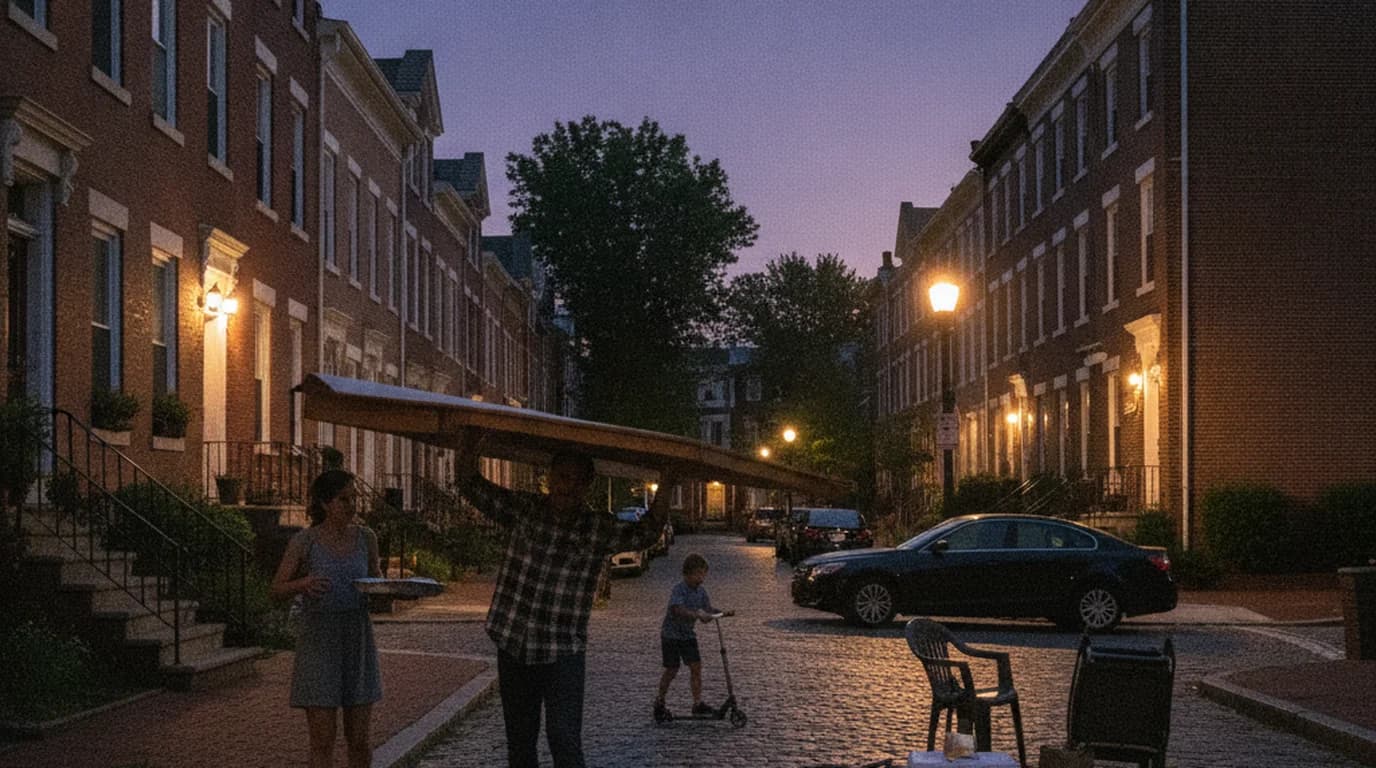
Ten steps, thirty business days
- Confirm you can apply. You must be 21 or older, a District resident living on the block you want closed, with a government-issued ID showing an address there. Organizations apply through an authorized officer plus three resident co-sponsors, and must have existed more than 60 days.
- Pick your date and hours, plus a rain date. Twelve hours maximum, street reopened by 10 p.m., set-up and clean-up inside those times.
- Scope the block. One block, and no more than two intersecting streets. No alley frontage.
- Collect the petition. Consent from at least 51% of the properties abutting the section you are closing, original ink only. Or pursue ANC approval, after calling to confirm TOPS will accept it.
- Draw a Traffic Control Plan. DDOT publishes a Block Party TCP template, and hand-drawn on it is acceptable. It shows how pedestrians and traffic get around your closure.
- Register for a TOPS account.
- Submit at least 30 business days out, uploading your ID along with the signed petition and the TCP. Business days. Roughly six calendar weeks, and reading it as calendar days is the most common way a DC block party misses its date.
- Wait through agency comment. DDOT circulates it to the four agencies above. Statutorily it then has 10 business days to decide a standard application (3 on the newer expedited track, if TOPS offers it), a shorter clock than the lead time it asks of you.
- Post the closure and no-parking signs at least 72 hours before.
- Close the block yourself on the day, with your own vehicles, keeping the 20-foot lane clear throughout. Reopen by 10 p.m., clean-up included.
Questions go to the Public Space Regulation Division at crb.services@dc.gov or (202) 442-4670. DDOT's main line is (202) 673-6813 and the office is at 250 M Street SE, though both official PDFs still print the old 4th Street SW address, which tells you how current the paperwork is. An obsolete 2020 copy of the guide is still live on ddot.dc.gov too, listing a staff contact who no longer works the desk. Use the one linked from the current page, and where anything contradicts the statute, the statute wins.
DC's ban on rental equipment is the strictest in the thirty cities we covered. San Diego permits bounce houses outright.
A potluck by law
You cannot hire a food truck or let anybody sell so much as a cupcake, which pushes every DC block party back into being a potluck. So run it like one on purpose. Assign dishes instead of hoping, because a block left to improvise produces six desserts and no main; our potluck guide has the sign-up that fixes it. Pick the rain date early too, since an August afternoon here turns in twenty minutes and a weather fallback beats a panicked group text at 3 p.m.
Six weeks of paperwork bought you one Saturday. Turn the block out for it.
Thirty business days of waiting deserves a street that fills up. Give Lemonvite the shape of the evening and it draws the invitation, sent by text. Once published, the RSVP page's QR goes onto a flyer bound for everywhere the petition took you: every door on the block, plus the buildings where you got 51% and no phone numbers. A scan is an RSVP. Then message everyone attending, since a potluck by law needs somebody coordinating the food.