
How to Get a Block Party Permit in Denver
The first door I knocked on for a street closure belonged to a guy who did not want a block party. He was polite about it. He worked nights and his bedroom window faced the street. I was standing there with a clipboard and a borrowed pen, and I had not planned anything past "hi."
Denver bakes that conversation into the paperwork. A block party permit in Denver costs nothing and involves no online account, but it does require signatures from roughly 75% of the households on your block, both sides of the closure, on a printed city petition. Two dozen neighbors have to physically say yes.
Which reads like a hurdle and works like a favor. The signature sheet drags you into a conversation you should be having anyway, and it schedules that conversation a month early instead of at 9:15 on the night of, through a screen door, with a grill still going behind you.
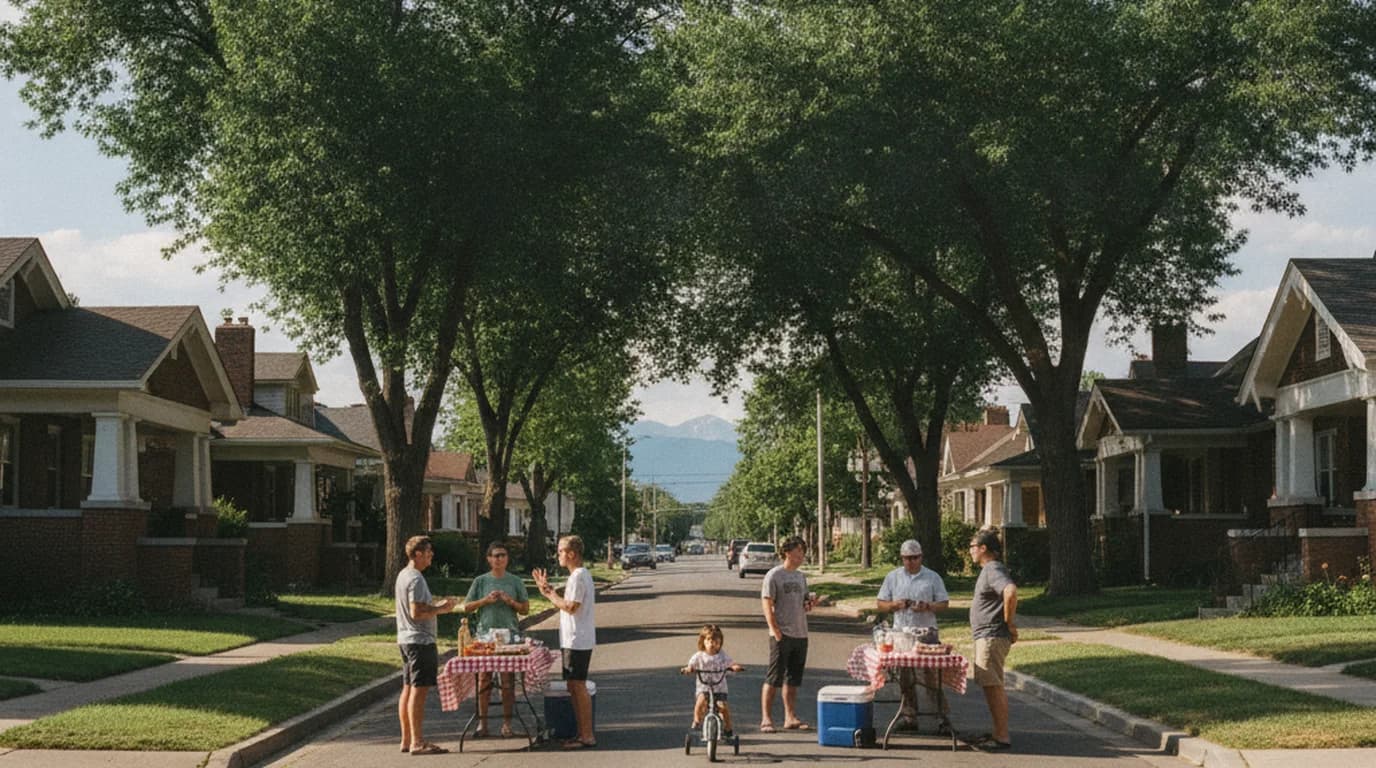
Knock on the doors before you touch the form
Go Saturday or Sunday between about ten and noon. Second best is a weekday around six thirty. Avoid the dinner hour, and do not do this after dark, because a stranger with a clipboard at 8 PM reads very differently from one at 11 AM.
Have fifteen seconds ready, then stop talking.
"Hi, I'm Ran, I'm in 3412, the brick one with the dead lilac out front. A few of us want to close the block on Saturday the 12th, ten to six. Tables in the street, everybody brings something. The city needs most of the houses to sign off. Can I put you down?"
House number, date, hours, what it is, the ask. No speech about community. People decide in about three seconds whether you are selling them something, and brevity is the fastest way to prove you are not.
Bring the actual city petition, printed on paper. Denver does not accept electronic signatures here, which the FAQ says flatly, so a texted "yeah go for it" from the woman across the street is worth nothing on your application. One line per household, in ink.
Fill in the street, the cross streets, and your hours at the top before you start walking. A blank petition invites every household to renegotiate the schedule on its own doorstep, which turns a two hour walk into a four day group text.
The person worried about parking
Someone always raises parking, and they are not being difficult. Denver issues full closures only. Partial closures are never permitted, so you cannot keep a lane open for them.
Give them the actual logistics. Cars come off the block before the barricades go up and go back that evening. There is street parking around the corner, and the block stays reachable on foot the whole time, because you are blocking through traffic rather than sealing a perimeter. Twenty seconds of that converts almost everybody.
The neighbor who says no
You do not need everyone. The threshold is approximately 75% of households on both sides of the closure, so a thirty house block can absorb seven refusals and still file.
What you cannot skip is telling them. Every resident has to be notified whether they sign or not, and where nobody is home, DOTI wants written notice left behind stating the street, the date, and the hours. Do that for a no as well, on paper, in the mailbox. That sheet is what separates a neighbor who is mildly annoyed from a neighbor who calls it in at 4 PM.
And listen to the shape of the refusal, because it is usually about hours. My night shift guy had no objection to a block party. He had an objection to noon until eight. We moved it to eleven until five. He signed, and at two he came out for a hot dog.
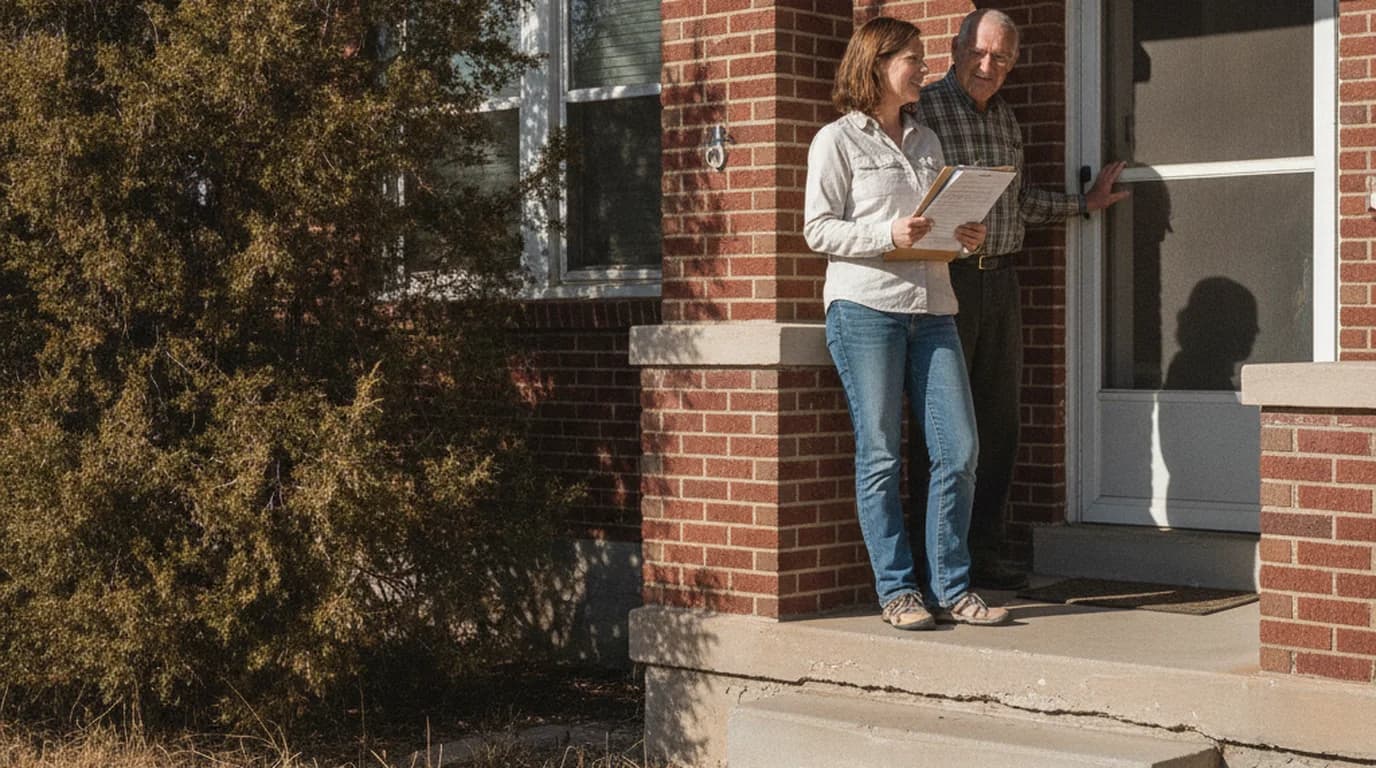
Who issues it, and why there is no website
Denver is a consolidated city and county, so one agency handles all of it: the Department of Transportation and Infrastructure, through DOTI Permit Operations. No county layer, no council sign-off, no police approval.
The real name is a Block Party Street Occupancy Permit, governed by DOTIPT-103.1, "Block Parties on Residential Streets." One 11 page PDF holds every form you will touch. Download the DOTIPT-103.1 packet from DOTI's block parties page, and skim the FAQ while you are at it.
There is no online application. You print the packet, sign it in ink, scan it, and email the whole thing to dotipermitoperations@denvergov.org. Denver does run an E-Permits portal, and people find it first and lose an afternoon in it, but that system handles construction street occupancy. The walk-in counter is closed too. Email or nothing.
Check two eligibility rules before you print. You have to live on the block you are closing. DOTI will not take a request from someone who does not, unless a resident gives written permission to apply on their behalf. And it has to be a residential street or alley, one single block, which the city's page describes as 100% residential properties. DOTI publishes the arterial and collector street list if you need to check yours.
The list that disqualifies most of what you were picturing
Denver's definition of a block party is narrower than yours. Read this before you promise anyone anything.
Allowed, verbatim from the packet: neighborhood gatherings, small BBQs, tables and chairs, tents under 200 square feet, face painters, balloon artists, small games shown on a site plan, and a food truck as long as it is not selling food.
Not allowed, also verbatim: car shows, art exhibits, pools, bouncy equipment, stages and structures, amplified music, farmers markets, church gatherings, political or City Council sponsored events, graduations, birthday parties, cultural celebrations, runs and races and parades, and vending of food or alcohol.
Go down that second list slowly. A bounce house disqualifies you. So does a PA system. So does calling the thing a graduation party or a birthday party, which happen to be two of the most common reasons a block wants its street back. Denver's permit covers an informal gathering of the people who live there and nothing more ambitious.
If that rules you out, file a residential special event revocable street occupancy permit through the Office of Special Events portal instead. That path has real fees and a much longer runway. The packet's own advice, if you want the inflatable, is to keep the party on private property.
Alcohol is a genuine gap in the documents. They prohibit the sale of alcohol and send anything commercial to Special Events, but nothing I read addresses whether neighbors may simply drink at a permitted block party. I would rather flag that than guess at it. Call Permit Operations at (303) 446-3759 and get an answer for your block.
Free, and the insurance question nobody has cleaned up
The permit is free. FAQ Q5 says Denver residents obtain block party permits at no cost, and the DOTI Consolidated Fee Schedule independently lists "Residential Block Party (Insurance Required) - No Fee." Nothing for the application, nothing for issuance.
Barricades are your only real expense, and you rent those from a private company. Denver supplies them during Denver Days and at no other time, and it publishes no price, so budget something. I cannot tell you the number.
Insurance is where Denver's own documents disagree with each other. The March 2024 application form says liability insurance "is not required to obtain a street occupancy permit for a block party" and hands you a checkbox reading "I have not secured insurance." The fee schedule labels the same line item "(Insurance Required)." And the TULIP Entrance Requirements document from August 2025 says permits will not be issued without a certificate of insurance, citing the municipal code. Two newer documents outvote one older form, so do not plan around that checkbox. Call and ask what Permit Operations wants this year.
If you do need coverage, Denver's TULIP program sells it through GatherGuard. Pick event type "Block Party/Street closure/Street fair" and enter venue code 1879-251. Write that number down, because a superseded city PDF is still live listing code 1879-002, which in the current table is the McNichols Center, a building. The help line is 844-747-6240. Insuring through your own agent instead means the additional insured has to read "The City and County of Denver, its Officers, Officials, and Employees," with the City also listed as certificate holder.
The indemnification agreement is mandatory whichever box you check. Sign it.
Five working days, and barricades that are not cones
Five working days is the entire deadline. DOTIPT-103.1 requires email submittal not less than five working days before the closure, and the FAQ restates it as five business days for review and issuance. Applications are rolling and year round, with no lottery and no blackout dates.
Five is the legal floor. Give yourself three weeks anyway, so the petition walk is not a panic.
Hours run 10 AM to 10 PM, and the whole thing including setup and teardown caps at three days. Build one catch into your schedule: Denver's noise ordinance can be enforced from 9 PM, so your last permitted hour is already a quiet hour.
Cones are not traffic control. You need two Type 3 barricades with ROAD CLOSED signs plus four saw-horse barricades, at each end of the block, per the diagram in the packet. The FAQ addresses cones directly, which tells you how often people try it. Those quantities are the minimum for a typical 36 foot wide local street, so a wider one may need more, and any detour requires an approved traffic maintenance plan.
How to get a block party permit in Denver, step by step
- Confirm you qualify. You live on the block, it is a residential street or alley, you want a full single block closure between 10 AM and 10 PM, and nothing on the prohibited list is in your plan.
- Download the DOTIPT-103.1 packet and read the FAQ alongside it.
- Print the petition and fill in the street, the cross streets, the date, and your hours at the top.
- Walk the block. Collect signatures from roughly 75% of households on both sides, one per household, in ink.
- Leave written notice at every house that did not sign, stating the street, the date, and the hours.
- Complete the Application for Block Party Street Occupancy Permit: your contact details, the event date, whether it is a street or an alley, and the two cross streets that bound it.
- Sort out insurance. Call Permit Operations first; if you need TULIP, buy it under venue code 1879-251 and save the certificate.
- Sign the indemnification agreement and initial the certification paragraph.
- Email the packet to
dotipermitoperations@denvergov.orgat least five working days out. - Book barricades with a private barricade company.
- Print the permit when it arrives and keep a copy on site during the party.
- Set the barricades per the diagram, stay inside your permitted hours, and return the street clean and open before traffic comes back.
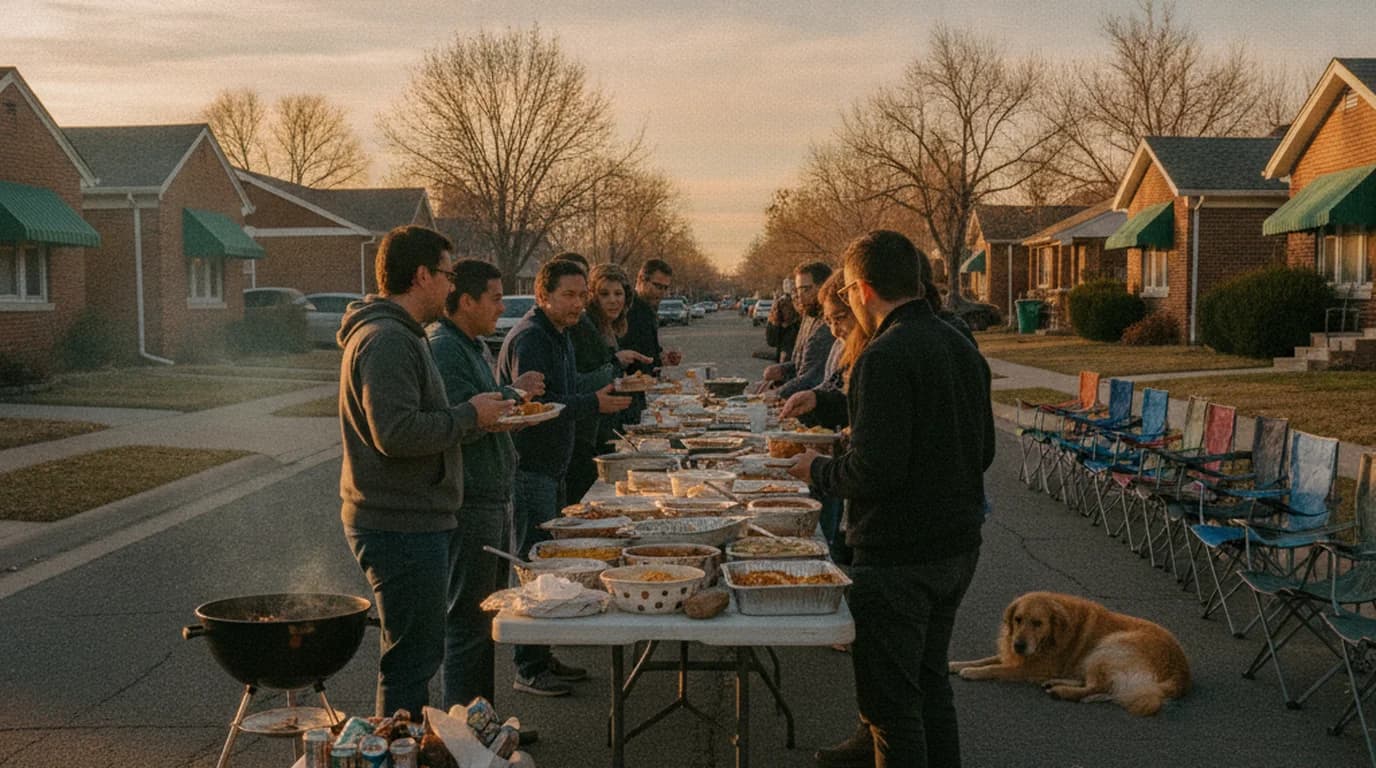
Denver Days is really about the barricades
Denver Days is the city's annual neighborhood week, run by the Office of Community Affairs, which makes it a separate sign-up from the DOTI permit. Fees get waived during the window, which is a nice gesture on a permit that already costs nothing. The free city barricades are the part that saves you actual money.
It ran July 31 through August 9 in 2026, it is capacity limited, and registration closed once it filled up. If free barricades matter to your block, email denverdays@denvergov.org and ask when next year's sign-up opens. Any other week of the year, the ordinary permit is five days and free.
Sixty people who live two minutes away
The permit was the tedious half. What is left is getting sixty people who live within a two minute walk to show up, and to say so in advance so you buy the right amount of ice.
Then go knock on the door of the guy who said no and tell him what time you are wrapping up. He already signed the thing. He may as well get a hot dog out of it.
Denver's five working days is the shortest lead time in the whole series. Memphis wants ninety.
Five working days is a fast permit, which leaves publicity as the real bottleneck. Describe the block party to Lemonvite, let it design the invitation, and send it by text to everyone on your petition. The published event gives you a public RSVP link plus a downloadable QR code, which is what goes on the flyer taped to the light poles for the households you never reached. Scanning is the whole ask. After that, a single message reaches everyone attending when the weather turns.