
How to Get a Block Party Permit in Detroit
Every block club in Detroit has a president, and that person is about to become important to you.
A block party permit in Detroit cannot be filed by a resident acting alone. The Detroit Police Department requires the applicant to be the president or chair of a block club or a condo/apartment association, and to live on the block being closed. There is no line on the form for "neighbor with a good idea."
On a lot of streets that is one phone call. Detroit has block clubs the way other places have group chats, except a block club keeps a list and has somebody's mother running the meeting. If yours is active, call whoever holds the title and the rest of this is a checklist. If your street does not have one, start there: the Department of Neighborhoods runs a Block Club Program, and every district has a manager who will walk you through it. Do that before the clock below starts running.
The 45 business days almost everyone reads wrong
DPD will not accept an application submitted fewer than 45 business days before the event. Business days. Monday through Friday only.
That is roughly nine calendar weeks. A Fourth of July block party means filing by the start of May. Labor Day means filing in early July. People read "45 days," count it on a wall calendar, and get turned away when they walk in seven weeks ahead. An incomplete or illegible application gets handed back, and the calendar keeps running while you fix it.
One more trap, and this one is the city's own doing. An obsolete block party PDF from 2011 is still live on detroitmi.gov and still turns up in search. It says 30 business days and a 9 p.m. end time, and both numbers are wrong now. The current documents went up in July 2024: the Block Party Application and the Block Party Guidelines. Work from those two and ignore anything else.
What it costs
Almost nothing. There is no application fee and no permit fee, and neither current document mentions insurance or carries a certificate field on the form.
The only money is a $75 security deposit, refundable. The conditions matter more than the number:
- It covers four barricades, which the city lends you.
- It has to be a money order or cashier's check payable to CITY OF DETROIT. No cash, no card, no personal check.
- You hand it over at barricade pickup, weeks after the application goes in.
- Return all four in the same condition by the close of the next business day and the refund arrives by mail within three weeks. More than two business days late and it takes 60 days. Damaged or missing barricades forfeit the $75 outright.
Seventy-five percent of the block has to say yes
This is the part that takes real weeks, and the other reason an organized block is such an advantage. You need signatures from 75% of the neighbors who live on the block, collected on the Neighborhood Petition Form bundled into the application PDF. The rules are strict in ways that catch people out.
One adult signature per household. A family of four counts once.
Every signer has to live on the block. The landlord out in Southfield cannot sign for a tenant.
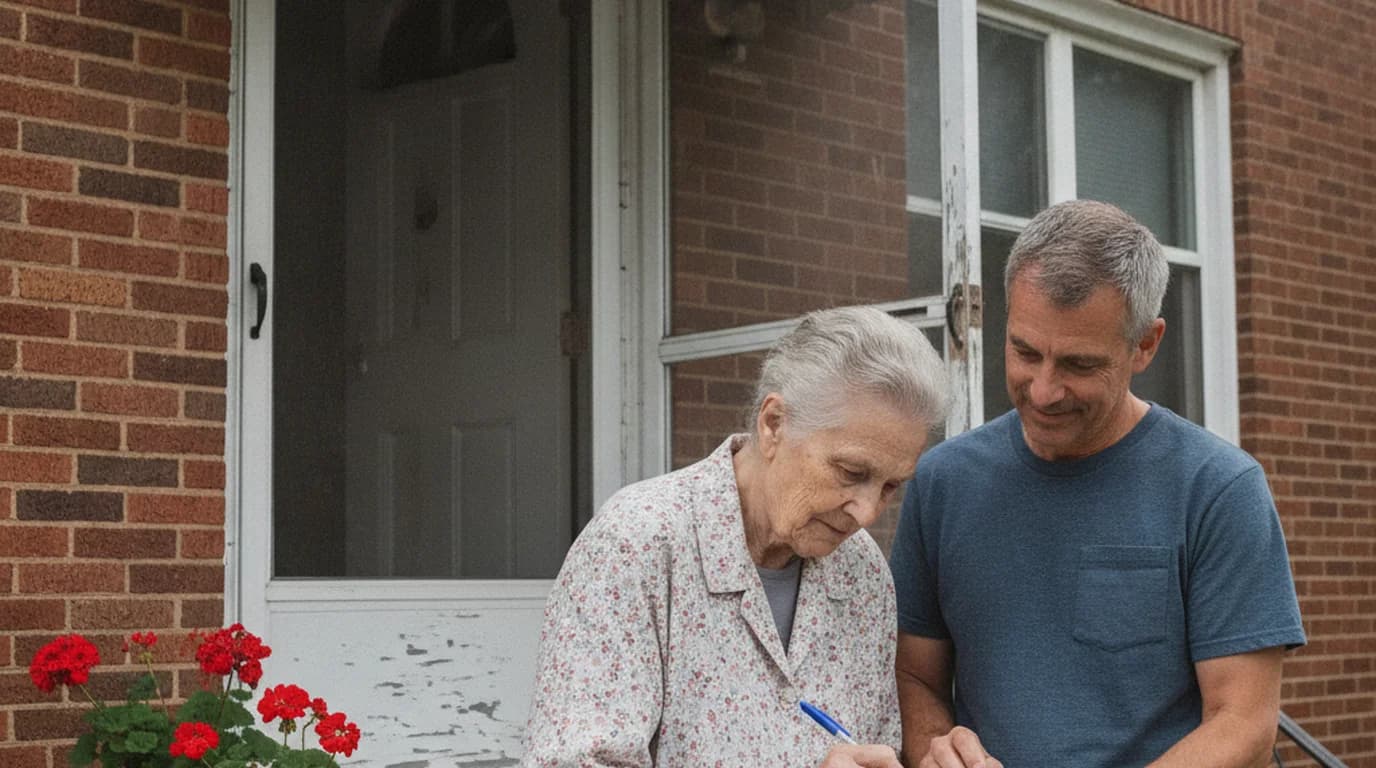
Apartment and condo complexes count separately, at the same threshold. You need 75% of the units too, so one building on the corner turns a twenty-house walk into a much longer project.
Original ink only. Photocopies get rejected outright, and a rejected package means the calendar starts over.
Take the date with you when you knock. "Are you around sometime in September?" gets a shrug. "We are closing the block Saturday the 12th, ten to eight" gets a signature in nine seconds.
Streets that do not qualify
Residential streets only, one block at a time. The guidelines then rule out the streets the city does not control. Wayne County roads are excluded, including Fenkell, Joy Rd., Conant, West Chicago Blvd., Lahser, Edward Hines Dr., and stretches of Davison, Dix, Greenfield, and Kelly Rd. Michigan state trunk lines are out too, which takes the big ones: Woodward, Gratiot, Grand River, Michigan Ave., Jefferson, Eight Mile, Van Dyke, Telegraph, Schaefer, Southfield, Ford Rd., and the Lodge among them.
If your address sits on one of those, you need a Special Event Application from the Mayor's Office instead, on a 60-day deadline and with fees. The Special Events Manager is at (313) 269-7409.
Check the list anyway; Greenfield and Davison appear on both.
What the day itself looks like
Hours are 10 a.m. to 10 p.m. Amplified music has to stop thirty minutes before the end, so the speakers go quiet at 9:30 p.m. There is no separate sound permit; the application just asks yes or no about amplified speakers.
The prohibited list is short and specific:
- No alcohol on the street.
- No cannabis. Added in the 2024 revision, absent from every older version floating around.
- No tents and no inflatables. The bounce house has to sit on private property, off the roadway.
- No selling anything, food and drinks included. Sharing food is a separate matter; the rule is about sales.
- No street concerts, which Detroit City Code Sec. 5-1-4 prohibits outright, with a carve-out for marching bands, processions, and permitted parades.
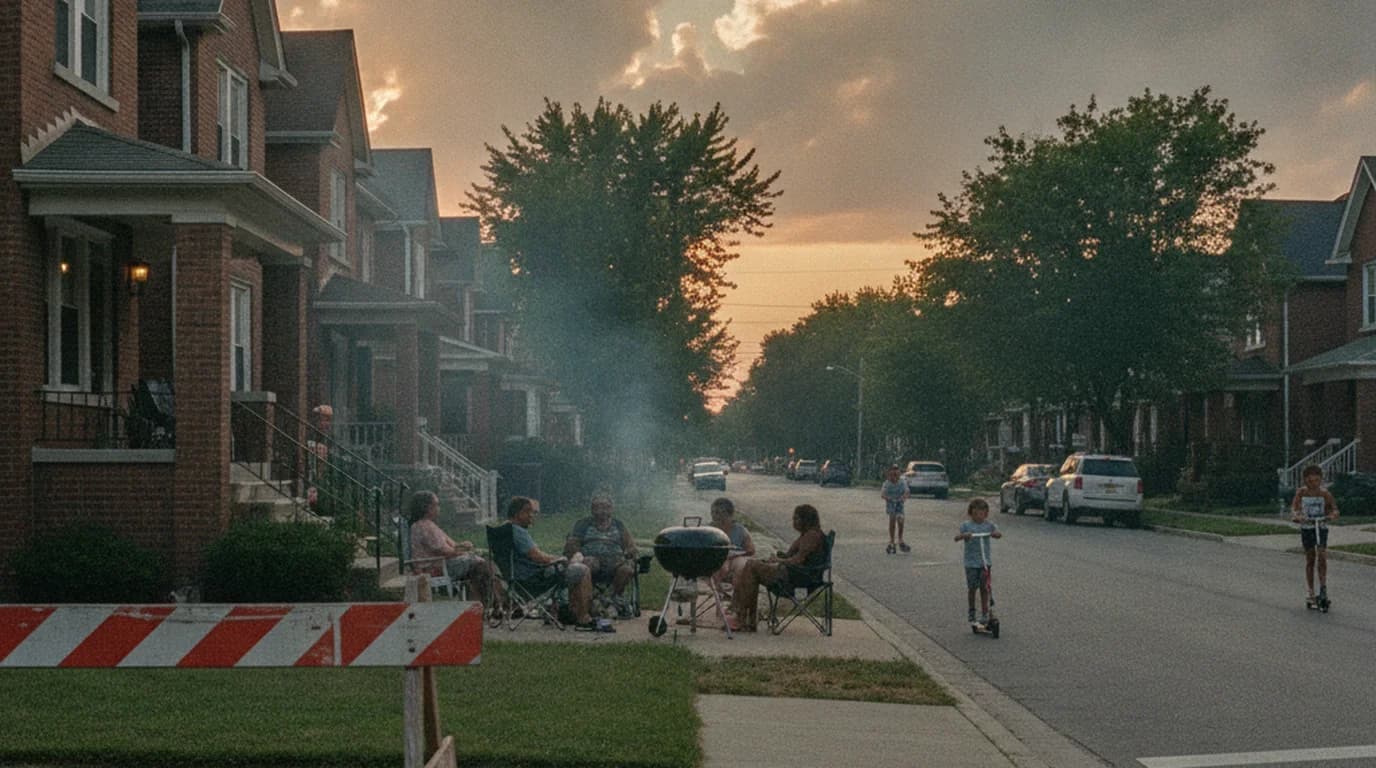
Your four barricades go in the parkway at each end of the block, the city's own word for that strip of grass between sidewalk and curb. You place them yourself, and nobody delivers. A car parked sideways is not a substitute. Keep the approved permit visible on-site, because an officer can ask to see it. Clear the debris after.
Enforcement changed in 2024 and it stuck
In July 2024 the Mayor and the Chief announced a block party enforcement strategy after a run of violence at unpermitted parties. DPD stood up a Neighborhood Response Team, a dedicated car in every precinct backed by roughly 80 officers. Calls to 911 about illegal block party activity became Priority 1 runs, and hosts and property owners started getting charged for disturbing the peace and disorderly conduct, which carries up to 90 days in jail and a $500 fine.
The same announcement named what flips a gathering from legal to illegal: parking on sidewalks and lawns, loitering, excessive noise after 10 p.m., and curfew violations for anyone under 15 after 10 p.m. or under 17 after 11 p.m.
All of that came out of parties thrown with no permit and no petition. For a block that did the paperwork, the takeaway is that your permit is doing real work, and 10 p.m. means 10 p.m.
How to Get a Block Party Permit in Detroit, Step by Step
- Check your street. Residential, and absent from the exclusion lists in the guidelines.
- Confirm your block club. The applicant has to be its president or chair and live on the block. With no club, your first call is to your Department of Neighborhoods district manager.
- Read the guidelines PDF, then download the fillable application. The guidelines carry the exclusion lists, and paper copies live at your precinct and your DON district office.
- Fill in the block details: hundred block and street, both cross streets, the date, a rain date, expected attendance, and whether there will be amplified speakers. The event details page wants the purpose and a rough timeline.
- Walk the petition. 75%, one adult per household, every signer a resident of the block, wet signatures.
- Sign and date the application as president or chair.
- Take the complete package in person to your precinct's Community Relations Division, at least 45 business days out. Submission is in person only; there is no portal.
- Wait for the police review. An officer signs the form and the permit issues from there.
- Get your $75 money order or cashier's check.
- Pick up the four barricades the day before with the deposit in hand, and haul them home yourself.
- Throw the party. Ten to ten, music off at 9:30, permit visible.
- Sweep up, then return the barricades to the precinct within two business days.
Questions go to your local precinct. The citywide line is the Chief Neighborhood Police Liaison at (313) 596-2520. Downtown residents should start with that number, because the First Precinct is missing from the list printed in the guidelines.
Three genuine blanks in the official documents
Three things are genuinely unaddressed in the official documents. Flagging them beats guessing.
Grills and open flame. Not mentioned anywhere. The prohibited list covers alcohol, cannabis, tents, inflatables, and sales, then stops. Every block party in this city has a grill on it, and nothing in writing confirms that is allowed. Ask your precinct rather than reading silence as permission.
Portable toilets and trash pickup. Also unaddressed. The only cleanup language is your agreement to clear the debris.
Whether your block club has to be formally registered. The 2011 document required registration with a Community Access Center, an office that no longer exists. The 2024 documents dropped that language but still require a club president or chair as applicant. So you need a club; whether you need it registered is worth one phone call.
Detroit's 45 business days is the longest lead time of any city we walked through, and it is not close.
Nine weeks for one afternoon
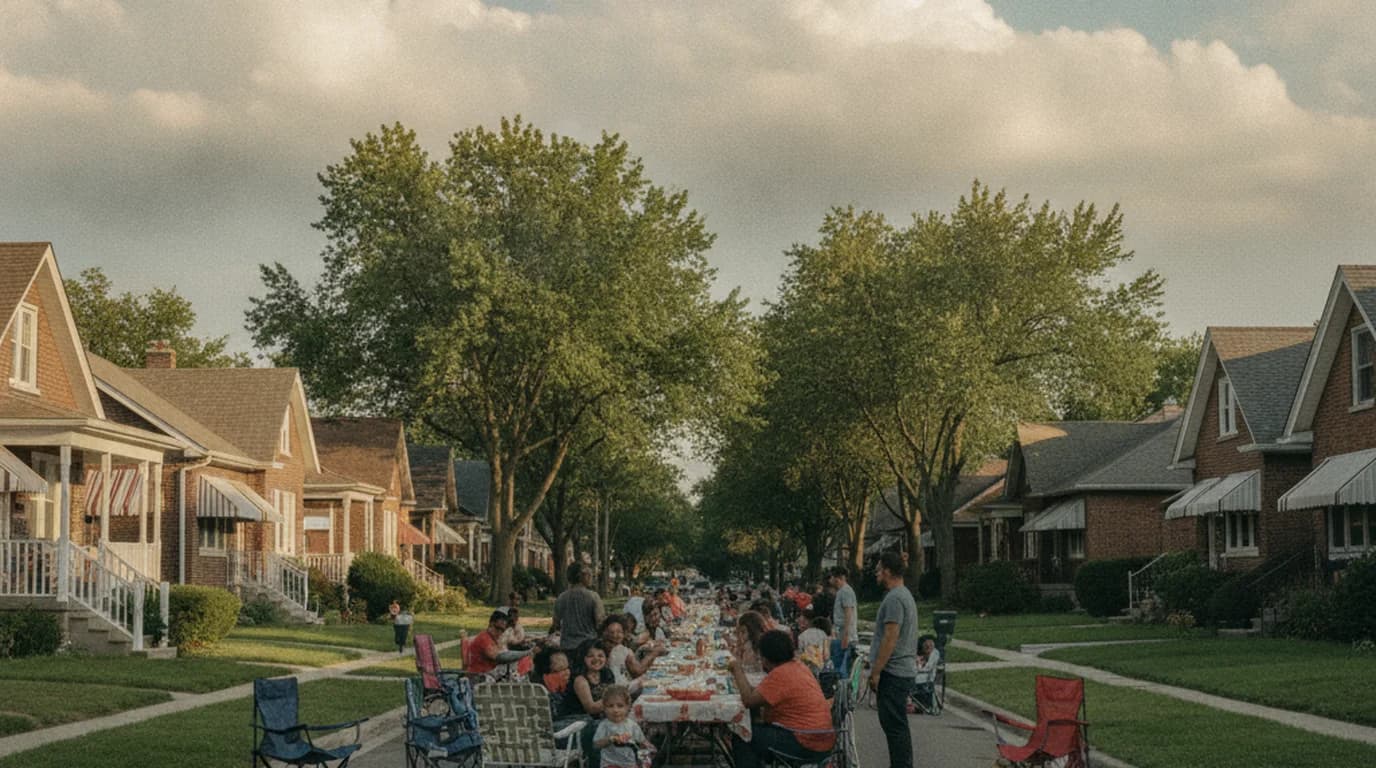
Nine weeks of lead time buys one afternoon of empty asphalt, and it is worth every day.
Since nobody can sell anything on the street, a Detroit block party is a potluck by law, which is the better format anyway once you hand out assignments instead of hoping. Otherwise eleven households turn up with four versions of the same baked beans. Set the tables down the center line and keep the ends clear for the barricades. Steal whatever else you need from these outdoor party ideas.
Only one of your two deadlines involves the police.
Nine weeks of lead time deserves better than a stack of paper on porches. Describe the party to Lemonvite and it builds the invitation around it, sent by text so the neighbor who has not opened an email in years still sees it. Once published, download the QR code for your public RSVP link and print it on the block club flyer. Anyone who scans it RSVPs. You end up with a real headcount and one way to reach everybody the morning of.