
How to Get a Block Party Permit in New York City
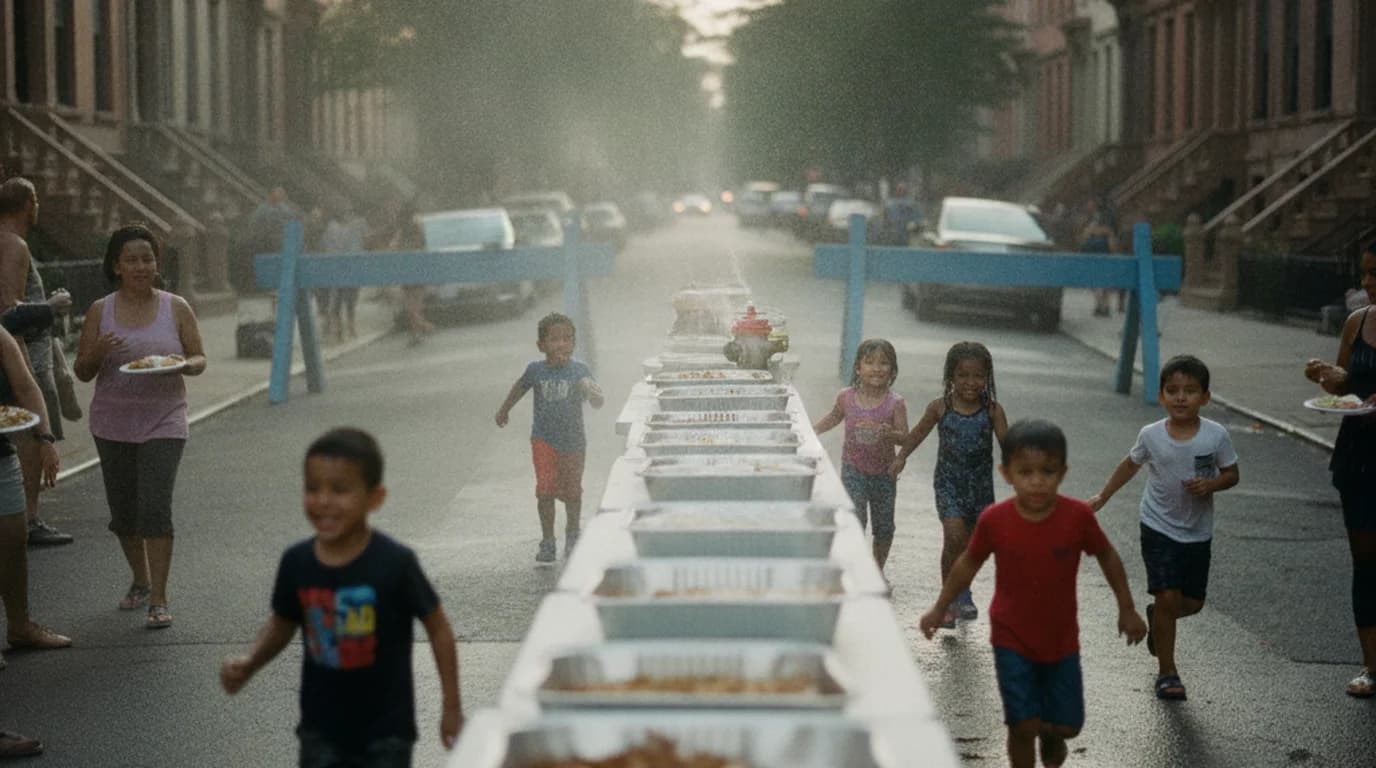
The barricades come out around nine. Somebody's brother-in-law drags them up from the corner, a folding table goes up outside the building with the good stoop, somebody's aunt claims the shady side, and by eleven there is a speaker on an extension cord running out of a first-floor window. The hydrant gets a spray cap. Kids own the roadway where a Honda was double-parked last night. And in the middle of it, holding a clipboard, is the woman from 4B who has run the block association since before you signed your lease.
She filed paperwork back in June. A block party permit in New York City costs less than brunch, which is the good news. The confusing part: the fee and the deadline come from one office, while the number that decides whether you get approved comes from your community board and lives only on that board's website.
SAPO, and What Everybody Actually Calls It
The office is SAPO, the Street Activity Permit Office, inside the Mayor's Office of Citywide Event Coordination and Management. You file for a Street Activity Permit with "Block Party" as the event category. Nobody says street activity permit out loud. They say "did you get the SAPO permit."
The definition is narrow and it matters. A block party closes a single block for a single day with no fundraising and no sale of goods or services, and a "block" is the stretch of street between the curb lines of the cross streets. One block. One day. Nine consecutive hours, maximum.
Once you pay, the application goes to SAPO, the NYPD, and your community board at once. The board will make or break you. Start at the Block Parties permit page, file through E-Apply.
Twenty-Five Dollars for a Block Party Permit in New York City
That is the SAPO application and processing fee, non-refundable, credit or debit card only. The fee schedule lists block parties as "application fee only." No per-block charge, no per-day charge, and the $25 is gone whether you get approved or denied.
Liability insurance is not required. The rules exempt block parties by name from the $1 million certificate every other street event carries. Add a ride, a bounce house, or a petting zoo and insurance returns at $1 million naming the City of New York as additional insured, though the rental company normally supplies that paperwork.
Music is the one real add-on: an NYPD sound permit at $45 for the first day's use, paid by money order or certified check.
Two things the city never publishes: a price for No Parking signs or barricades, and the "convenience fee" the rules allow on online filings. The FAQ's flat "all cards will be charged $25" suggests that one goes uncharged. Call SAPO at (212) 788-0025 to confirm.
Sixty Days, Unless Your Board Says Ninety
The citywide deadline is 60 days before the event, stated on the block party page, the deadlines table, the FAQ, and in the codified rules.
It may not be your deadline. Queens CB9 and CB10 both tell residents to file 90 days out. Brooklyn CB9 published a hard cutoff of July 14 for a summer 2026 party. Follow the citywide 60 days in one of those districts and you can still be denied for filing late.
The permit itself issues roughly two weeks before the event, so do not panic in week four.
And one rule catches nearly everybody: rain dates are not accepted. Pick a Saturday in September and take whatever September gives you, so your rain plan has to be a tent and somebody's lobby.
Seven Boards, Seven Different Thresholds
SAPO's entire citywide standard is that you belong to a block association and have "permission by their neighbors." No percentage appears anywhere in the rules.
Your community board supplies the number, and the numbers are all over the map:
| Community board | What they want |
|---|---|
| Brooklyn CB4 | 65% of residents who live on the block |
| Brooklyn CB9 | at least 20 residents' signatures with name, address, daytime phone |
| Brooklyn CB18 | 50% of homeowners on the block, or a letter of support |
| Queens CB5 | 51% of households, original petition delivered in person at least 6 weeks out |
| Queens CB9 | 75% of residents on the affected block, applicant must be 18 or older |
| Queens CB10 | 60% of the block in favor, plus 80% of it successfully contacted, two documented attempts per address |
| Manhattan CB3 | a block association letter on letterhead, or a majority of residents and merchants where no association exists |
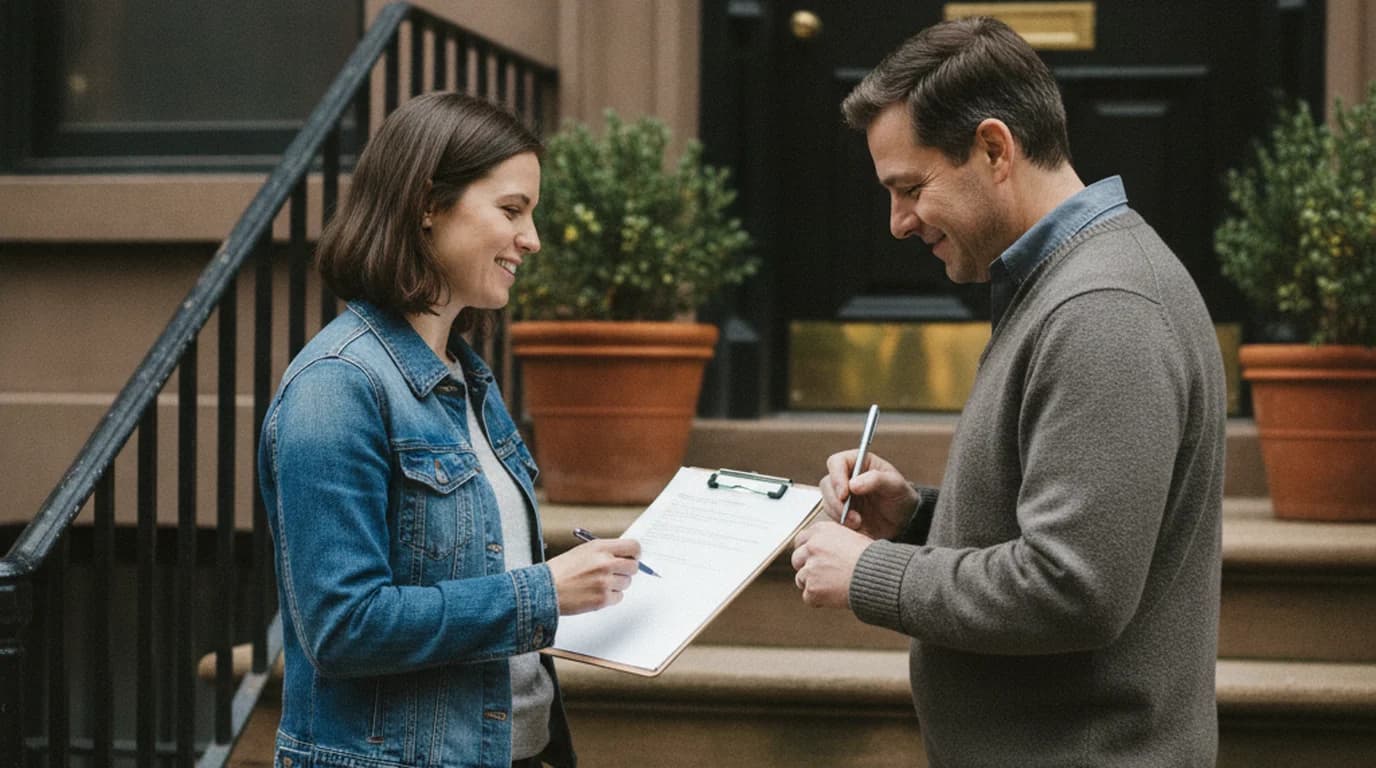
Seven boards, seven answers, and the city has 59 of them. So call your district office before you touch the application. Ask their threshold, which form they want it on, whether your date is spoken for, and whether your block sits on a precinct denied list.
Thin signature counts are the most common reason these applications die.
What You Are Not Allowed to Do
- No alcohol. The FAQ is unambiguous. On your own block, in front of your own building, still prohibited.
- No selling anything, and no fundraising. That covers food, goods, services, and admission. Cross the line and you need a Single Block Festival (90 days' notice) or a Street Event, starting at $3,100 per location per day.
- A sponsor banner or a food truck drops you into that same tier, so keep vendors and branding off the block.
- It cannot be a private party. The city names a birthday party as its own example of what fails, so closing the street for your kid's sixth is out.
- Keep a 15-foot emergency vehicle lane clear the whole time, and recycle. Both are in the rules.
Since selling food is out, the answer is a potluck, which is honestly the better version anyway. Assign dishes or you will end up with six trays of baked ziti and no plates. My potluck guide covers dividing it up.
And nobody from the NYPD is assigned to your block. The FAQ puts security on the event producer, which is you.
Music Is a Separate Permit From a Different Agency
Any amplified sound, including background music out of a first-floor window, needs a sound device permit from the NYPD. This trips up more first-timers than anything else here, because the SAPO permit arrives and feels like the finish line.
Download the NYPD Sound Device Application, file it in person at the precinct covering the block where the speaker will sit, at least five days before the event, with $45 in money order or certified check.
Precincts also set curfews tighter than your nine permitted hours. Brooklyn CB9 says sound permits expire at 7:00 pm; Queens CB10 says the same and adds an 86 dBA ceiling, with the DJ personally exposed to a criminal court summons. Ask your precinct its cutoff while you are standing there filing.
Bounce Houses, Generators, and the Grill Question
Rides and inflatables need a DOB inspection certificate plus that $1 million insurance certificate, furnished by the rental company. A petting zoo needs a DOHMH permit plus insurance from the stable. Raffles go through HRA. A generator needs an FDNY certificate, and DEP too if it is over 40kW. SAPO will not release your permit until every other agency has signed off.
Grills are the one thing I cannot give you a clean answer on. No official city page I could find addresses open-flame cooking in the roadway either way. Call SAPO or your local firehouse before you roll a propane grill into the street.
Twelve Steps, Board Call to Barricade
- Confirm the category fits. One block, one day, nine hours or less, open to everyone, no alcohol, no sales, no fundraising, no branding.
- Join or start the block association. SAPO requires membership.
- Call your community board for their threshold, their form, date availability, and whether you have to present in person.
- Collect signatures on their form. Name, address, and a daytime phone per signer is the usual ask.
- File on E-Apply at least 60 days out. An existing account from DCAS, NYPD, NYC Parks, or NYC Media & Entertainment works. Request event type "Block Party," enter dates and contacts, pick the street, finish the questionnaire, upload documents.
- Pay the $25. Nothing is submitted until the fee clears.
- Deliver the petition to your community board. SAPO does not want it.
- Present to the committee if asked. Manhattan CB3 denies applicants who do not appear.
- File the NYPD sound permit if there will be music, plus any DOB, DOHMH, HRA, or FDNY approvals.
- Respond within five business days to a denial or a conditional approval.
- Print the permit from E-Apply when it issues and keep it on site.
- Pick up your No Parking signs at the precinct and post them yourself.
Rules You Cannot Look Up
Times Square is an automatic denial. The rules direct the Director to deny any street closure between 42nd and 50th Streets and 6th and 8th Avenues in Manhattan.
Incumbents win date conflicts. If two blocks want the same date and location, whoever held that permit last calendar year takes it.
Five business days is the entire appeal window. Say nothing for five business days after a denial or a conditional approval and the application is deemed denied. Written appeals go to the Executive Director at 253 Broadway, 6th Floor.
Then there are the rules you cannot look up. Queens CB10 blocks all Sundays at its precinct's request and allows one block party per block per season. Brooklyn CB9 blocks the major holidays. None of it appears on a citywide page, and some board pages are years out of date, so treat them as a prompt to pick up the phone.
The city's half of this is a $25 form and a 60-day head start. The hard half is three weeks of knocking on doors, which is also the half that makes the party good.
The Nine Hours Are Yours
You will have a nine-hour window, a closed street, and roughly sixty households with no idea what time anything starts. A flyer on the lobby door reaches the people who already knew. It misses the new tenants in 2R and everybody who walks straight past the mailboxes.
Applying outside the five boroughs? The series covers twenty-nine other cities, and not one of them does it this way.
Nine hours, no rain date, so turnout is everything. Give Lemonvite a description of the party and it designs the invitation, sent by text. Publish and you get a public RSVP link with a QR code you can download and print, which is the only realistic way to reach a walk-up building where you will never have thirty phone numbers. Tape it in the vestibule, let people scan, and watch the yeses collect. Then message all of them the night before.