
How to Get a Block Party Permit in San Diego
Nobody in San Diego plans a block party six months out. April looks like October looks like the second week of February, so the idea shows up on a Thursday evening in somebody's driveway, four neighbors agree the street should be closed, and then nothing happens. Whoever volunteered to look it up found nothing on the city's website and let it drop.
There is a permit, and it's more forgiving than you'd guess. A block party permit in San Diego costs zero dollars, and the police department will take your application as late as 10 days before the party.
The trap is at the other end of the calendar. File more than six months ahead and it gets rejected for being too early. And before you file anything, you need signatures from 80 percent of the residential units on your block. That's the part that takes weeks, so your real deadline is however long it takes to walk your street twice.
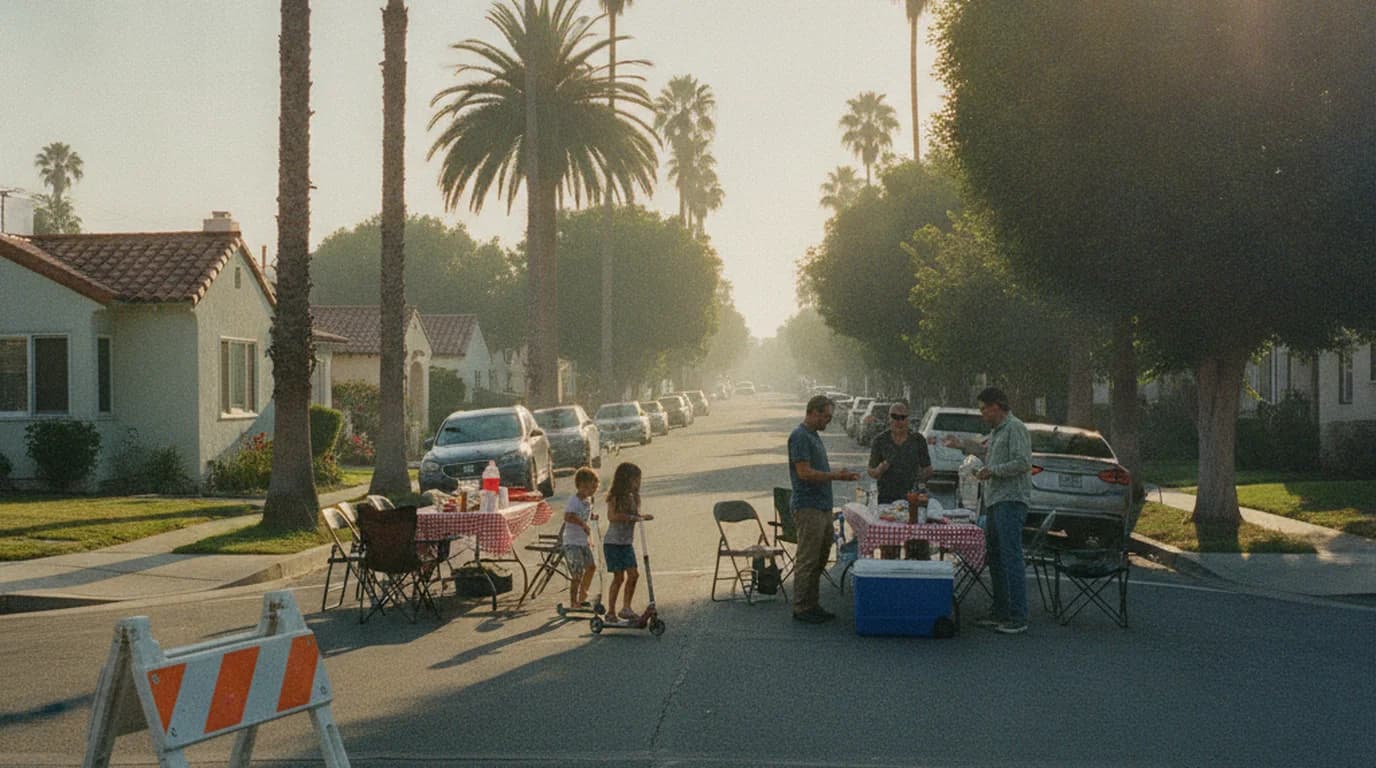
Who actually issues it
It's the Neighborhood Block Party Permit, and it comes with a mandatory companion, the Neighborhood Block Party Resident Survey. Two PDFs, and that's the entire online presence of this permit. No page on sandiego.gov explains it.
The forms live on the Office of Special Events and Filming site, but the completed package goes to the San Diego Police Department, Traffic Division, Special Events Unit at 3554 Ruffin Road in Kearny Mesa. The city's online special event portal doesn't handle block parties, so don't waste an evening there. Start with the permit application and the resident survey.
The permit is ministerial, which is the best news in the document. Meet every criterion and it "shall be issued."
Filing a block party permit in San Diego is free. Barricades are not.
Section 5.D: "The City Council currently does not apply a Permit Application Fee or Late Fee, to a Block Party Application. All other City Council approved rates and fees apply."
So the form costs zero and the barricades cost whatever a rental yard charges. Section 2.G requires "professionally manufactured A-frame barricades that comply with the Manual on Uniform Traffic Control Devices (MUTCD)" at every access point. Orange cones won't clear that bar, and neither will the sawhorses in your garage. The city supplies none and publishes no rate. No official figure exists for what a resident pays, and I won't invent one.
For scale: the Citywide Special Event Permit carries a $341 fee plus $80 per business day late.
The deadline runs in both directions
Straight from Section 5: "A Block Party Application submitted less than 10 days or more than 6 months prior to a Block Party event date shall not be accepted."
That 6-month ceiling surprises people. Lock in a date for next spring and file the week you decide, and you'll get bounced for being organized. Once SDPD has a complete application, "Permit determination shall be within 7 days of receipt."
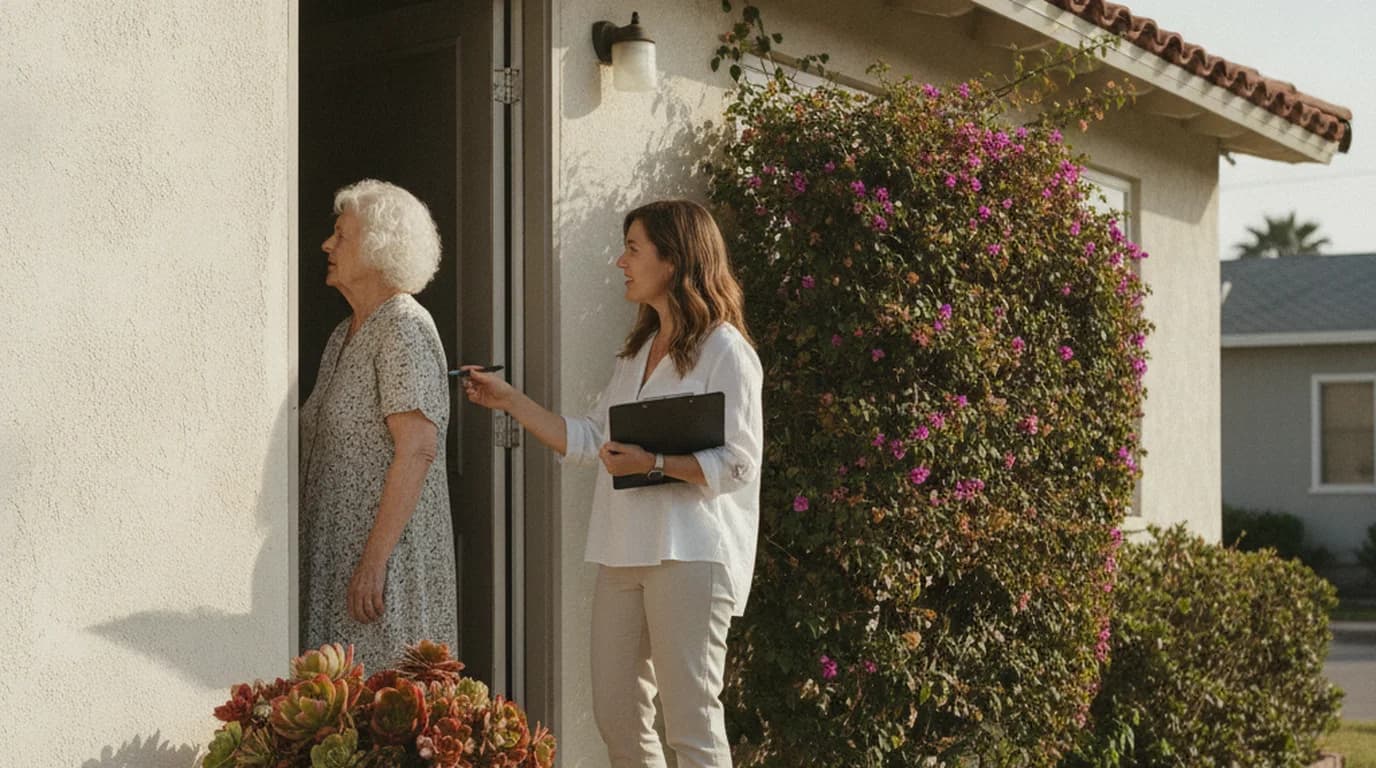
Eighty percent of the units have to say yes
Section 3.C wants a survey showing that "80 percent of the residential units (house, apartment, or condominium complex) within the Block Party Venue support the proposed activity."
The denominator is every unit inside the venue. The neighbor in Tahoe that week counts against you. So does the guy who never opens up. Every unit gets surveyed, and silence is a no.
Three mechanics before you start walking:
- Signers must be 18 or older, and they sign for everyone at that address.
- If an apartment manager denies you access, they may sign for tenants, provided you supply enough copies for each address and they notify all tenants and know of no substantial objection.
- "The Applicant is responsible for resolving all community and operational issues associated with the Block Party." The neighbor who hates the idea is yours to talk down.
Fill in the survey header first (name, contact, hours, streets closed, sound description) so every signature covers identical terms. Three blocks of bungalows might be 50 units; add apartment buildings and it's 200.
Does your street even qualify?
Section 1.B is specific, and plenty of streets fail it:
- Three blocks, maximum, of a residential street "that allows for no more than one lane of traffic in either direction, excluding turn lanes." Arterials are out.
- No transit routes, commercial facilities, hospitals, police stations, or fire stations on the closed stretch.
- No direct access to a public park or beach.
- The closure can't "block-in" the entrance or exit of any street that isn't part of the party.
That park and beach clause is rough on Ocean Beach and Mission Beach, where a huge share of streets dead-end at the exact thing that disqualifies them.
Hard limits, in order of how much they hurt
The hard limits, first:
- One day only, 9:00 AM to 10:00 PM, and that window includes set-up and clean-up.
- 300 people maximum at any given time.
- Private and invite-only. You're responsible for ensuring everyone present was invited.
- Free. No cover charge, no food sales, no vendor booths, no paid sponsorship. Voluntary donations are fine, but never required.
- No parked or moving vehicles inside the venue, and an unobstructed emergency lane the whole time.
- Storm drains covered against discharge (unless rain is possible) and uncovered at clean-up.
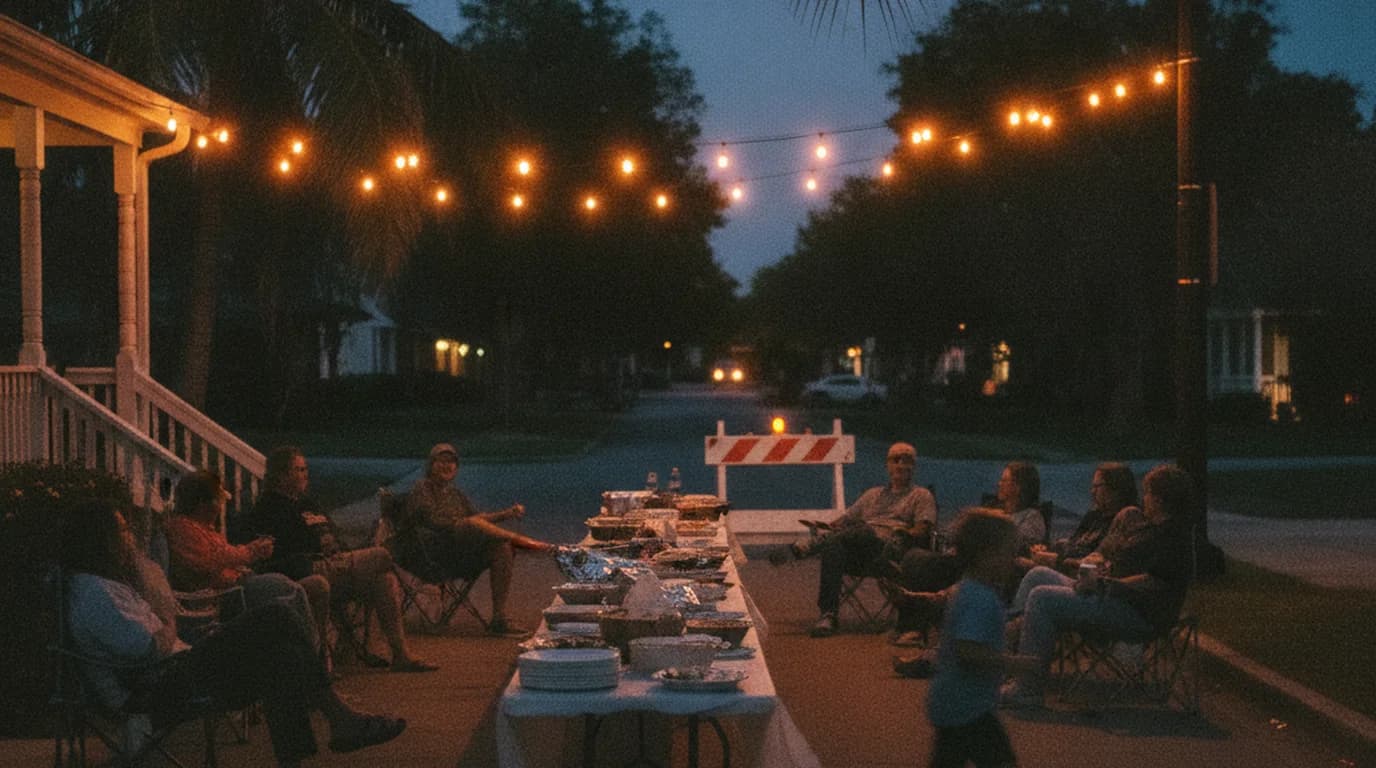
- Retro-reflective material or flashing amber lights on the barricades after dark, which most parties running to 10:00 PM will need.
Alcohol is the one that catches everybody. Section 2.A: "Alcoholic beverages shall not be consumed on City public property, including streets and sidewalks." On private property it just follows normal law, so the cooler lives on a driveway or a front lawn.
Amplified sound is allowed and the form has a field for it. No separate permit, no decibel threshold. Just this: "Upon a complaint by any reasonable person, the Applicant must ensure any sound is turned down to a more acceptable level or eliminated altogether." One annoyed person and the speaker goes down, with no appeal. Hand that neighbor a plate early.
Bounce houses are explicitly permitted on public property, which is a nice surprise. The rental company carries the insurance: Commercial General Liability at $1 million per occurrence and $2 million general aggregate, plus a separate Additional Insured Endorsement naming "the City of San Diego, its officer, employees, volunteers and agents." Ask for both, and name the inflatable on your site plan.
Selling food is banned outright, which makes a potluck the natural format, and a closed street is a rare venue where outdoor party ideas actually scale.
The disqualifier nobody expects
Section 4.D is severe: any event component requiring a sub-permit under the city's Special Event Planning Guide voids the whole application. A tent over 200 square feet, a stage, pyrotechnics, or a bus reroute pushes you into the Citywide process at $341 with a 60-day deadline.
Eleven steps to a mailed packet
- Confirm you're in the City of San Diego. A "San Diego, CA" address settles nothing.
- Check your street against Section 1.B, then pick one day inside 9:00 AM to 10:00 PM and target a submission 10 days to 6 months out.
- Download both PDFs and read Sections 1 through 3.
- Fill in the survey header, then canvass for 80 percent of all residential units.
- Draw the site plan to scale: closed streets, activities, food distribution, the inflatable by name, barricade positions, and the emergency lane.
- Book MUTCD-compliant A-frame barricades, plus reflective or amber lighting if you're out past dusk.
- Gather two proofs of residency: a current utility or household bill (water, gas, electric, telephone, cable) and a driver's license.
- Get proof of insurance. A homeowner's policy is acceptable, or a CGL policy.
- Complete the application: applicant and event details, peak attendance, two 350-character descriptions, an eight-item checklist, and an affidavit signed under penalty of perjury.
- Submit the package to SDPD Traffic Division, Special Events Unit, 3554 Ruffin Road, San Diego, CA 92123, by mail, fax (858-627-3235), or email. Office hours are Monday through Thursday, 8:00 AM to 4:00 PM.
- Wait up to 7 days.
Both PDFs were last updated in October 2023 with no revision stamp, and the submission email on them is one individual's mailbox. Call 858-627-3233 to confirm the current address before you mail anything.
If you're not actually in the City of San Diego
Spring Valley, Lakeside, Ramona, Alpine, Fallbrook, and Bonita are unincorporated, and plenty of homes there carry San Diego mailing addresses. Those residents go to County of San Diego DPW, Traffic Engineering Section, on a 30-to-180-day window, with written sign-off required from the CHP, the local fire agency, and the Sheriff. The dealbreaker: "Special Event Permits are limited to non-profit applicants." A resident can't apply in their own name, so the county has no true block party permit. No fee is published anywhere I could find, so call (858) 694-3866.
Chula Vista, La Mesa, El Cajon, Coronado, and Oceanside each run their own process. If you've landed here from somewhere else, twenty-nine other cities get the same treatment.
Two questions the application leaves open
Grills and open flame. The application never mentions cooking, barbecues, or open flame. Anywhere. The checklist does ask you to show "food and beverage distribution," so food is expected. But open flame falls under Fire-Rescue permitting in the city's broader event rules, and needing any sub-permit disqualifies you under 4.D. No official document resolves this. Call before you file.
Your own insurance minimum. The application accepts a homeowner's policy or a CGL policy and names no dollar amount for either, while the city's broader guides say the organizer must name the City as additionally insured. The application is what you sign. Ignore any summary claiming you need $1 million naming the City; that belongs to the rental company.
Seven days later, the determination
Say it comes back yes. All that's left is telling everyone, which is somehow where block parties still fall apart. A photocopied flyer in a screen door goes out with the junk mail, and the street's group chat has four neighbors who muted it in 2023.
Get the signatures and mail the packet. Then send the invite, and enjoy having the street to yourselves until 10.
Ten days is a short runway, so start telling people the day you mail the packet. Give Lemonvite a sentence about the party and the invitation gets drawn from it, sent by text. Once published, download the QR code for your public RSVP link and print it on a flyer for the block. Neighbors scan it in the driveway and RSVP without you chasing numbers. The count lands in one place, and everyone attending can be messaged at once when the barricades arrive.