
How to Get a Block Party Permit in Oklahoma City
The canopy went first. Somebody had weighted the legs with four sandbags, which sounds like plenty right up until a gust comes off the open ground at the end of the block and puts ten pounds of aluminum and nylon sideways into a parked Tacoma.
It had been a gorgeous morning. It was still technically a gorgeous morning at two, as long as nobody looked southwest.
The permit half of a block party permit in Oklahoma City is manageable: one application, $100, thirty days of notice, no council hearing. The weather half is the one that costs you, because both fees are nonrefundable and the date you type into that application is the date you have bought.
So this one runs in an unusual order: date, then backup plan, then paperwork.
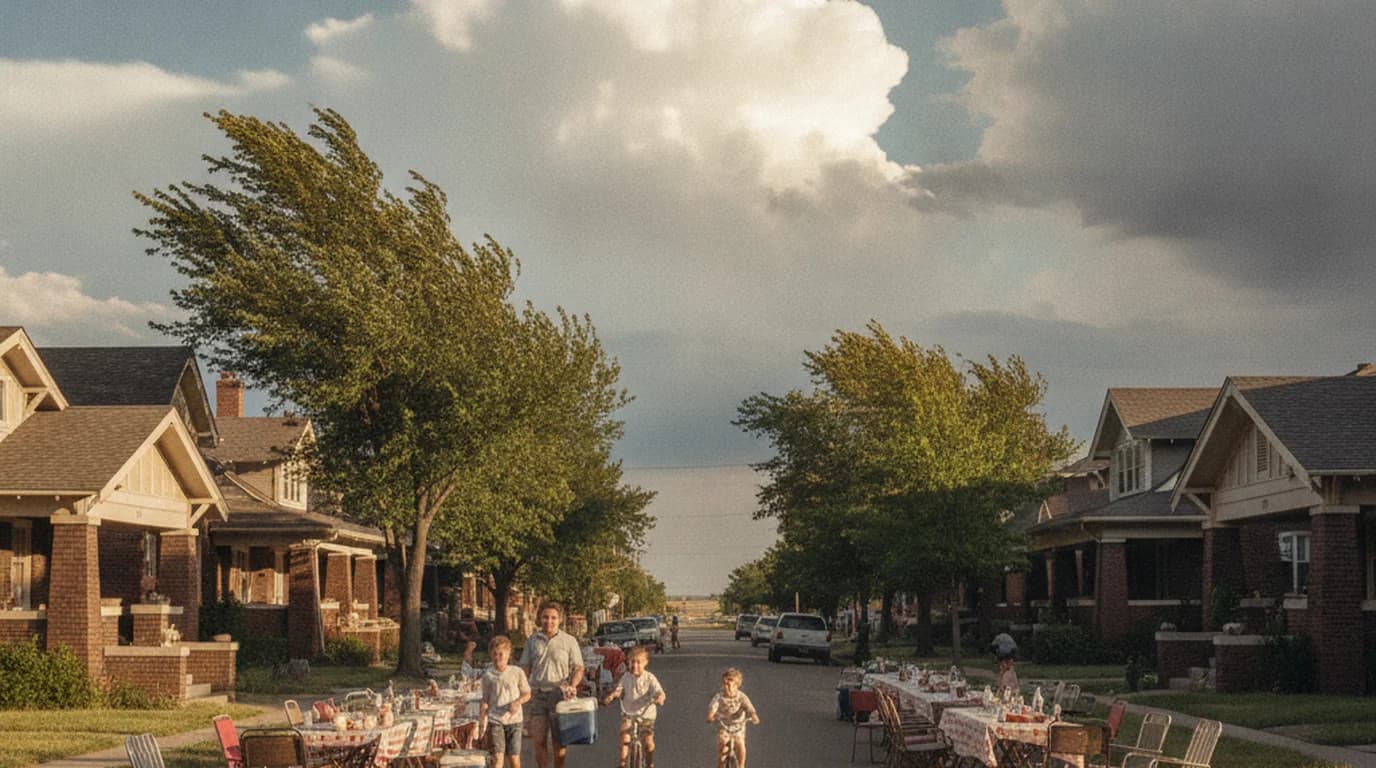
Pick the Date Like Somebody Who Has Lived Here
No blackout window appears in any Oklahoma City special events document, and nothing stops you from closing your street on the second Saturday in May. The city will not save you from spring.
Spring is the prettiest season here and the least trustworthy. Late April hands you redbuds and light that makes an ordinary block look expensive. May hands you the afternoons when the entire state is watching a radar loop. Book a block party then and you are placing a bet, which is worth admitting to yourself before you commit the $100.
Late September through October is the underrated window. The heat has broken and storm season has calmed down. Six in the evening on a wide OKC street in October is about as good as outdoor hosting gets anywhere. Early April works too. July will give you a beautiful morning and then a hundred degrees on black asphalt.
Wind is the constant, in every season. Anything with a flat surface is a sail here, so weight your canopy legs properly. The token sandbags that come in the bag are decorative.
Whether the City Will Give You a Rain Date
The application asks for a closure date and time and a reopening date and time. Nothing in the Special Events Guide or on the form describes a rain date field or a refund for a washed-out event. The closest published provision lets one permit cover a recurring event on multiple dates in the same calendar year, as long as the site plan and participants do not change. That reads as a rule for the block that parties every third Saturday, and I will not tell you it doubles as a rain date. It might. Ask the Office of Special Events at (405) 297-2890 before you commit, and plan as if the answer is no.
So your backup is somebody's garage, arranged in advance instead of at 1:45 on the day. Your permit covers the street and nothing else; the City says plainly that it grants no permission to trespass on private property. Our rain plan for outdoor events has the rest, and the short version is to decide by a fixed hour and tell everyone at once.
It Is Filed as a Minor Event, and the Form Says So
No permit here is literally named "block party permit." Your block party is a Minor Event, and what you receive is an Administrative Revocable Permit, approved by City staff with no council agenda. The form settles any doubt with a "Block party" checkbox on page 2.
It comes from the Office of Special Events, which sits inside the City's Public Information and Marketing Department. That surprises people who reasonably assume street closures belong to Public Works. Public Works owns the right-of-way standards in the background, but the permit itself is Special Events. Walking into the wrong department costs a week.
Start with Types of Events, which names block parties under Minor Events and carries the fee schedule, the deadlines, the eligibility test and the required document list. The authoritative document behind it is the OKC Special Events Guide, and the Special Event Application sits with everything else on the Forms and Resources page. There is no online portal. In 2026 this is still fillable PDFs sent by email, and the City prefers specialevents@okc.gov.
Pricing a Block Party Permit in Oklahoma City: Two Fees, One Total
People routinely report them as one.
| Item | Fee |
|---|---|
| Special Event Permit application | $25 |
| Revocable Permit (right-of-way use) | $75 |
| Baseline total | $100 |
Both are nonrefundable. Cancel or get stormed out and the $100 is gone.
Your real budget line is barricades. Type III barricades are required for every road and lane closure, placed per MUTCD standards by a contractor from the City's pre-qualified list, which you request from the Special Events Office. The City neither lends nor rents them and does not publish what the work costs, so get two quotes early. A quote also tells you whether anyone can serve your date.
A tent or canopy larger than 15 by 15 feet needs a $50 permit plus an inspection booked with Development Services at least five business days out. Open flame and single-event propane permits run $25 apiece. Noise, electrical and generator fees are genuinely unknown, because the City's own fee table prints "$TBD" next to all three; call (405) 297-3884 about the noise one.
You cannot charge admission, since entrance fees are prohibited on City rights-of-way. Split the cost the way you would split any group expense, which is a smaller version of setting a party budget.
Insurance is the soft spot. The Guide requires liability coverage for major events in the right-of-way, then adds that "some Minor Events will be exempt from insurance requirements (non-commercial closures)." The word "some" is doing a lot of work there, so get your answer from staff.
Four Thresholds Define the Minor Event Box
All four have to hold at the same time:
- The closure covers less than one City block
- No more than 500 people
- Less than 24 hours start to finish
- No impact to City Services
Break one and your event is reclassified as a Major Event: a 75-day deadline, a City Services meeting, and actual City Council approval.
Oklahoma City publishes no arterial ban and no bus-route rule. The Guide instead warns that closures on heavily traveled roads get more complicated and may require contacting the office earlier than the stated deadline. Treat that as a soft constraint with a phone number attached.
Two physical rules run the event itself. An open lane for emergency vehicles stays clear at all times, which is the real limit on how you lay out tables. Sidewalks stay open as much as possible. And on the pavement it is handheld chalk and tape only, because painting a street is prohibited outright.
Permits go first-come, first-served, with explicit preference for previously permitted annual events on their usual dates. Check the Special Events Calendar before you promise anybody a date.
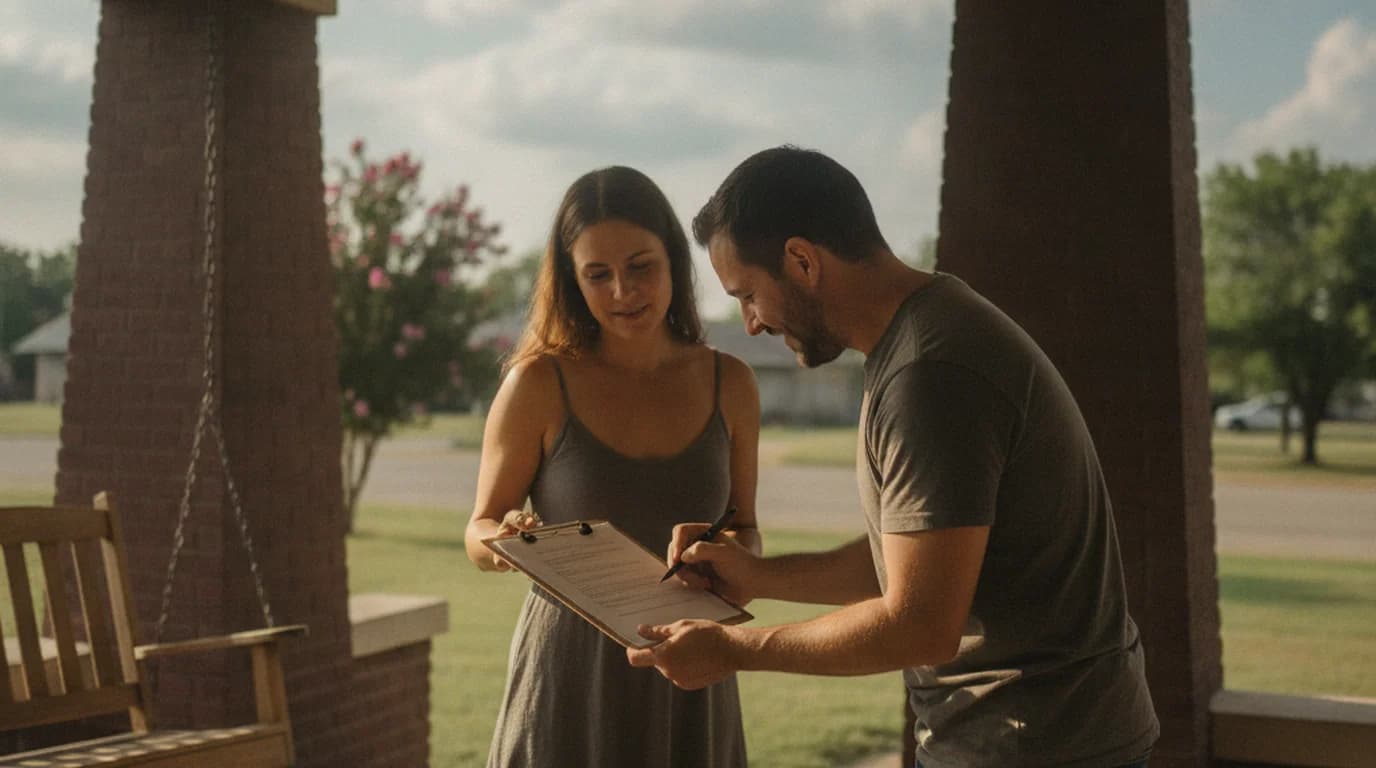
Your Neighbors, and Why Silence Counts as Yes
You have to notify every abutting property owner or lessee in writing, no less than 30 days before the event, describing the closure precisely: which streets, and what dates and times including setup and teardown. Postcards, letters, email and flyers all count. Then you circulate the Street Closure Petition to those same properties for agree-or-disagree signatures.
A neighbor who does not respond within 10 days of receiving your notice counts as consenting. No signature needed. That single rule makes Oklahoma City a lot easier than cities demanding affirmative signatures from a fixed percentage of frontage.
An active objection does not kill your permit either. It shortens your street. If negotiations fail, the pavement abutting that property gets left open and the owner keeps reasonable access, so one holdout costs you a stretch of asphalt rather than the afternoon.
Ignore anyone who says Oklahoma City requires 100% neighbor approval. That sentence does appear in the Guide, inside the FILMING section, where it governs film production closures. There is no published percentage threshold for block parties at all.
The sleeper is notarization. The Written Notice Affidavit must be signed and notarized before your event will even be considered, and a Consent Affidavit may be required alongside the petition. Nothing on the landing page mentions it. It is on page 7 of the Guide, and people find it three days out while hunting for a notary.
What You Cannot Do in the Street
Amplified sound has its own permit and its own hard limits. A Noise Permit is due at least 10 business days ahead, and the Guide says twice that late applications will not be accepted. Count those on a calendar, since business days land closer to two weeks. Three attached rules will decide things for some blocks:
- No amplified sound after 11 p.m. in a residential area. That is the only hard published time limit touching a residential block party.
- A residential noise permit may be issued no more than three times per year. A block with quarterly ambitions and a PA will run out.
- No noise permit within 500 feet of a school, church, hospital, mass care home, hotel or courthouse. In a dense grid that disqualifies whole blocks regardless of how enthusiastic everyone is.
Alcohol is where I have to be careful with you. Selling or serving it requires an Event Alcohol License from the ABLE Commission, applied for 60 days out, the earliest deadline in this whole process by a full month. Simply drinking is murkier. Municipal Code section 5-24 prohibits consuming spirits in public, and I found no ordinance imposing a blanket beer or wine ban, but I will not convert that silence into permission. A closed street is still a public right-of-way, so get it confirmed in writing before anyone opens a cooler.
Grills and open flame mean contacting the Fire Marshal, propane on a food trailer included. Bounce houses appear nowhere in the Guide, the application or any form, so no published rule exists either way. Ask.
Afterward, haul the trash immediately and clear the barricades out of the right-of-way, same day in a high-pedestrian district like Bricktown or the Plaza District.
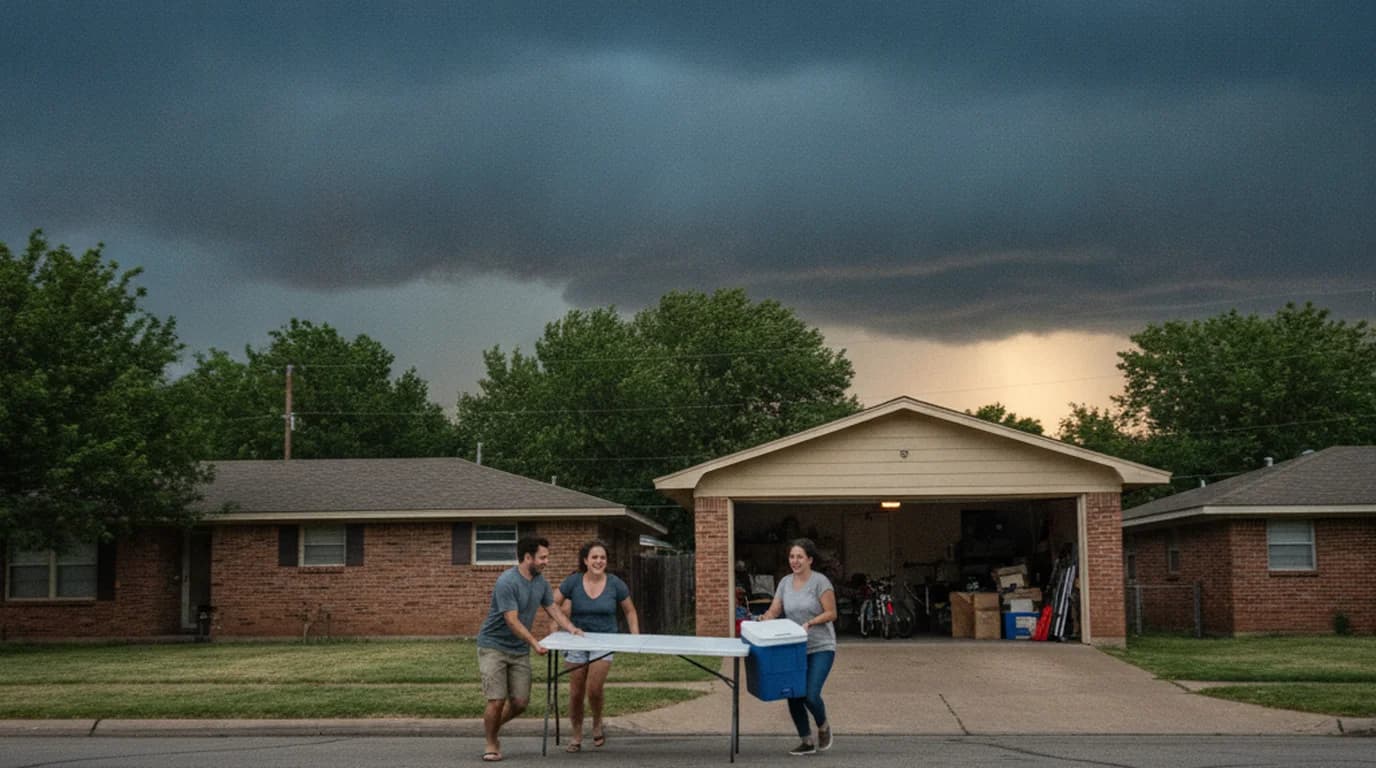
The Steps, Worked Backwards From Your Date
Say you want the street on Saturday, October 17. Only the bold dates are City deadlines, and business-day counts skip weekends and city holidays, so run those on an actual calendar.
- Confirm you are actually in Oklahoma City. The metro sprawls across The Village, Nichols Hills, Warr Acres, Bethany, Edmond and Del City, each with its own ordinance and fees.
- Call (405) 297-2890 in mid-August, before filling in anything. Confirm current fees, ask the rain date question, request the pre-qualified barricade contractor list, and check your date on the Special Events Calendar.
- Tue, Aug 18: 60 days out. ABLE application deadline, if anyone will sell alcohol.
- Notify every abutting owner and lessee in writing, with exact streets and times including setup and teardown, then circulate the Street Closure Petition and keep copies of any consent returned by email.
- Get the Written Notice Affidavit notarized, plus the Consent Affidavit if it is asked for. Do not leave the notary until last.
- Draw a site plan showing closure extent and barricade placement, then book a pre-qualified traffic control contractor with that emergency lane preserved.
- Thu, Sept 17: 30 days out. Email the complete packet to specialevents@okc.gov, with written neighbor notice already sent. Pay the $25 and the $75; invoices settle before the approved permit is released.
- Mon, Oct 5: 10 business days out. Noise permit and vendor list. Hard cutoff, no late acceptance.
- Mon, Oct 12: 5 business days out. Tent inspection, if any canopy exceeds 15 by 15.
- Fri, Oct 16. Watch the forecast. Decide on the garage by a set hour and tell the whole street at once.
What Trips People Up
The City's own Block Party Application Checklist link is dead, along with the Events Deadline Checklist and the Street Festival Application Checklist. Use the Types of Events page and the Guide instead. The Special Events Calendar is linked twice, and the version on the main permits page is broken; the working one is above.
Search results will hand you another city's fee. A $150 per event figure circulates that belongs to The Village, Oklahoma and its Ordinance 774, a different municipality entirely. Oklahoma City charges $25 plus $75.
The Guide is old. Its file metadata puts the last revision in early 2020, and a fee printed in a six-year-old PDF is exactly the sort of thing that drifts. Every number in it still matches the live web pages, but one phone call settles it.
One Message, Whole Street
The approval lands and you have a closed street plus a few dozen households who signed something a month ago and have no idea what time it starts or whether they were supposed to bring a side.
Then on Saturday morning, when the radar turns, that same list is how you tell an entire street in one message that everything just moved into the Hendersons' garage at four. Reason enough to have it.
Permitting in a city that is not this one? The series has twenty-nine more.
Weather is going to make you communicate, so set that up now rather than at 9 a.m. on the day. Describe the party to Lemonvite and it builds the invitation, sent by text. Publishing switches on an open RSVP page, and its QR code saves straight out for the paper flyer that reaches neighbors you have no number for. Once they scan and RSVP, you have a list, and one message tells the whole list that you are pushing to the rain date.