
How to Get a Block Party Permit in Jacksonville
Drive a straight line across Jacksonville and you pass through three or four different ideas of what a street is. Downtown, numbered grid blocks with painted lines. In Riverside the pavement bends under live oaks old enough that the moss drags on the roof of your car. Out on the Westside, drainage ditches instead of curbs and a hundred yards between mailboxes. Cross the Intracoastal and you are in a town that is not legally Jacksonville at all.
A block party permit in Jacksonville is not one thing, because Jacksonville is not one thing. This is the biggest city by land area in the lower 48, and in 1968 it swallowed almost all of a county. Which form you fill out depends on where your driveway is, and so does whether you are dealing with the City of Jacksonville in the first place.
For most of Duval County the answer is short and cheap. Here is the whole thing.
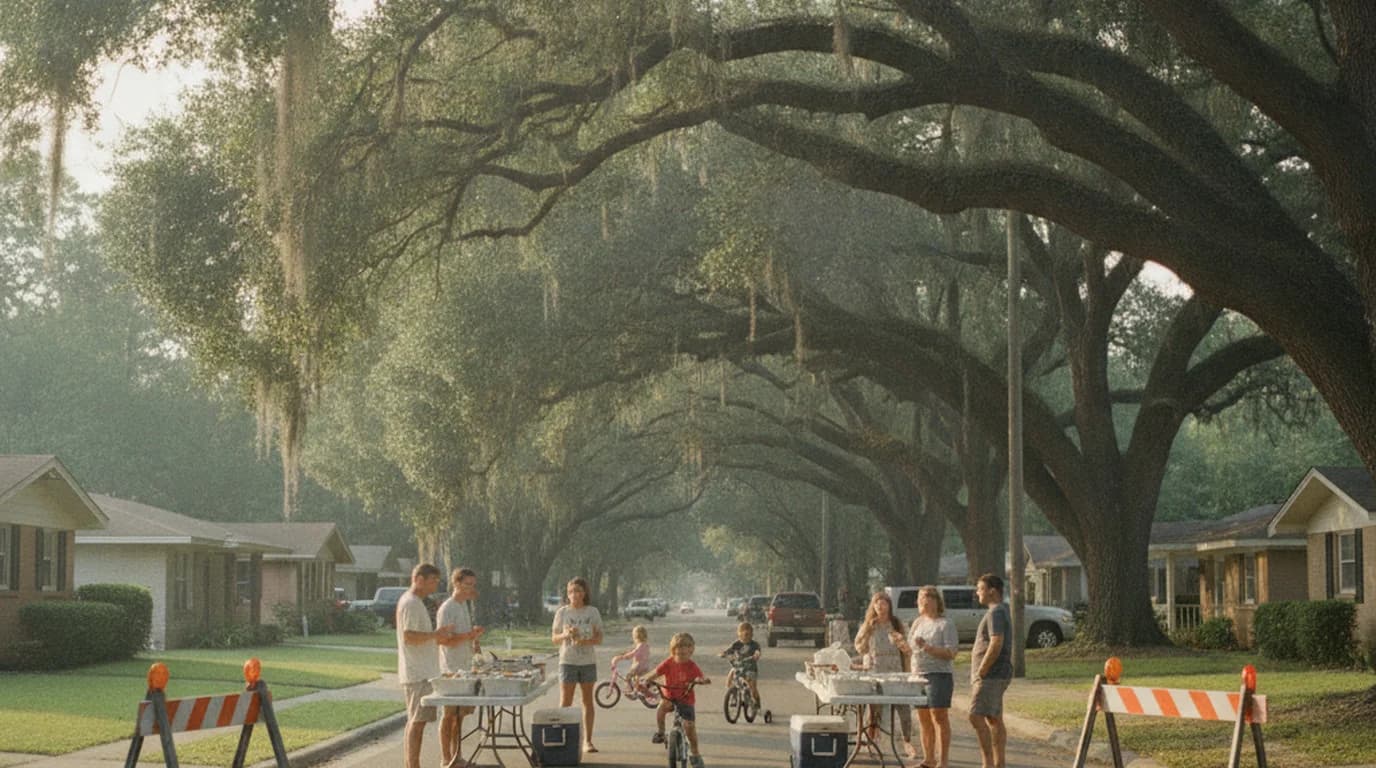
Consolidation, and the Four Towns It Missed
Consolidation means there is no separate county permit to chase afterward. One application covers you, and in a metro this size that is a real gift.
Consolidation was not total, though. Four municipalities kept their own governments and still issue their own permits: Jacksonville Beach, Atlantic Beach, Neptune Beach, and Baldwin. If your house sits in one of those, nobody at Public Works is closing your street. Call your own city hall. I have not verified how those four handle block parties and will not invent a process for them.
Everybody else in Duval County, keep reading.
Who Issues a Block Party Permit in Jacksonville
The Traffic Engineering Division of the Department of Public Works, working with the Jacksonville Sheriff's Office. Its page puts it plainly: Traffic Engineering, in close cooperation with JSO, authorizes the use of roads for block parties and special events.
The name moves around by page. The fee schedule calls it a temporary street closure; the Traffic Engineering page titles it "Use or Closure of Streets for Special Events-Block Parties"; the Office of Special Events calls it a Street Event (Block Party). All of them mean the Block Party Request Form, which you fill out in a browser.
Which office you deal with comes down to headcount. Under 500 people it is Traffic Engineering, and that ordinary residential block party is the rest of this post. At 500 or more you move to the Office of Special Events and a much longer, costlier process, which sounds far away until you invite four streets instead of one.
The Permit Is Free
Nothing. No application fee, no per-day charge.
The city's fee schedule lists it under Traffic Engineering in exactly these words: "Temporary street closures, no fee assessed (but permit required, no charge)."
One number on that same schedule will scare you. Search it for "street closure" and a $2,091.00 line item surfaces. That one belongs to the Real Estate Division and covers permanently vacating a right-of-way, which has nothing to do with your Saturday. Your block party is free.
Barricades cost money, since the city does not supply them.
Insurance deserves a careful sentence. No city page states a requirement for an under-500 block party, and the insurance requirements page scopes itself explicitly to events over 500. But nothing affirmatively says "none required" either, and the form has an insurance upload field. Assume you probably do not need a policy; ask if you want certainty.
Over 500, the fee runs $100 for the first calendar day and $50 for each additional, capped at $200 plus processing, with real insurance behind it: $1,000,000 in general liability each occurrence against a $2,000,000 aggregate.
Thirty Days, or Five, Depending on Which City Page You Read
Two live official city pages disagree with each other. Here are both, and my honest read.
Traffic Engineering, the division that issues the permit, says requests should be submitted at least 30 days in advance. The Office of Special Events About Permitting page says the form must be submitted at least five days in advance of the planned event (no exceptions).
Neither page carries a last-updated date, so there is no telling which is current. My read is an inference on my part: treat 30 days as the target, since it comes from the office reviewing your application, and five days as a floor that will not be waived. If you are already inside that window, call Traffic Engineering at (904) 255-7528.
Two rejection rules hold either way: a filing the day before the event gets rejected, and so does a Friday filing for that weekend. A same-week scramble fails even if you are technically inside five days. For a 500-plus event, the window is no less than 90 days and no sooner than 365 days ahead.
One nice absence: Jacksonville publishes no lottery, no blackout dates, no seasonal windows, and no council district sign-off. Other cities make you chase a councilmember's signature. Nothing official here does.
Seventy Percent of the Block Has to Say Yes
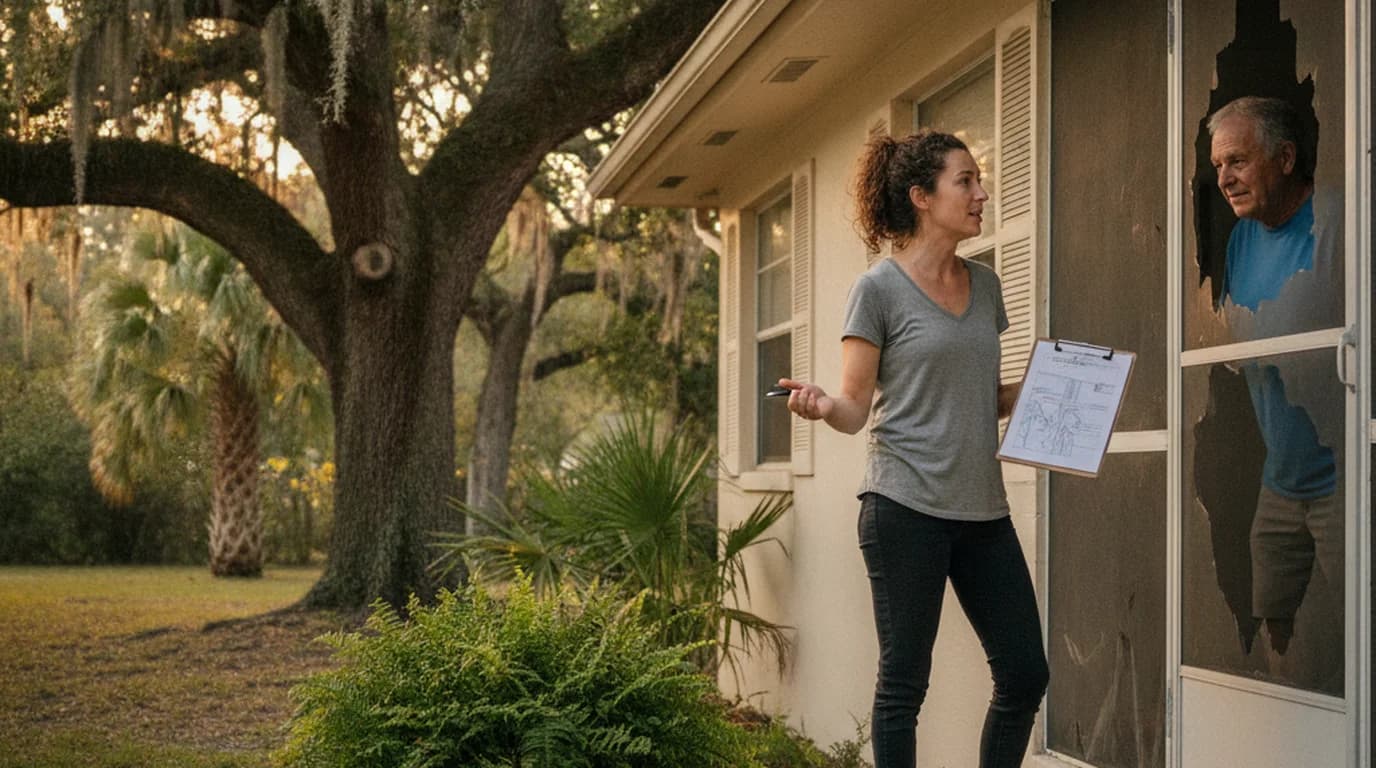
This is the requirement that decides whether your permit happens. Applicants must submit a neighborhood petition showing at least 70% approval, phrased on the form as written consent from at least 70% of the occupants of property in the neighborhood. The threshold counts occupied residences inside the closure limits rather than street frontage, so a vacant house should not be scored against you.
Then the line that costs people entire weekends of door-knocking, straight from the city: a petition must be signed by residents within the block to be closed, and signatures from outside the block will not count.
So define your closure limits before you knock on a single door. Name the two cross streets, then walk between them counting occupied houses until you know what 70 percent of that number is. Every signature from the street behind you is a wasted conversation. In August, in this humidity, that matters. Go out after six.
One Residential Block, and Seven Rules For It
Residential streets only, and only one block per event. You cannot chain two blocks into a longer party, and intersections stay open, so your barricades sit inside the block instead of across the corners. State roads are excluded outright: the application carries a capital-letters warning against anything that closes a state road or locks down the Main Street or Ortega drawspan. If you are unsure what you live on, check maps.coj.net first.
Then the rules for the day itself.
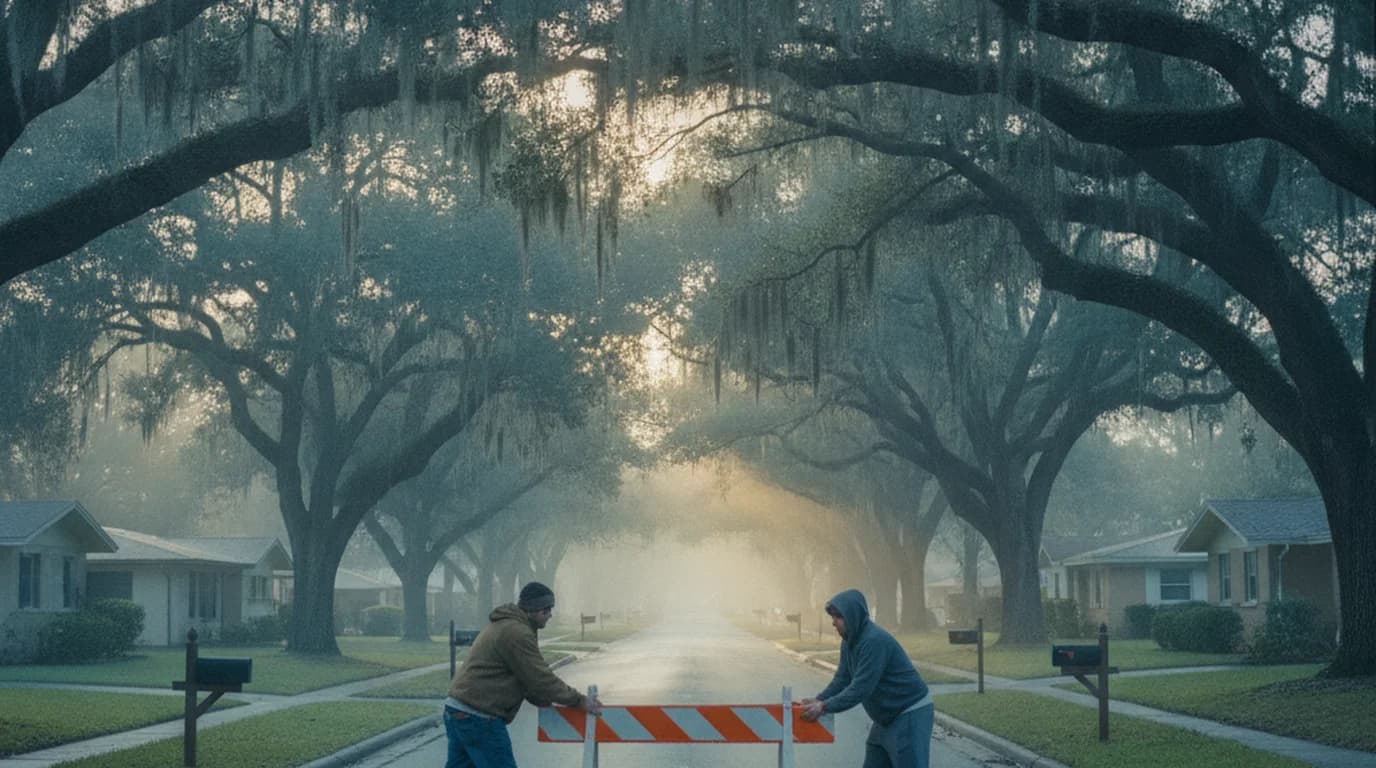
- Real barricades, and only real barricades. The city says it directly: no cones, no sawhorses, no ropes, no parked vehicles as substitutes. This is the most common day-of failure, and your permit depends on the closure being done properly.
- Everything has to be over by 11 p.m. The form asks for your closure start time, setup included, and when the barricades come back off.
- No loud music. No separate sound permit path and no decibel number are published for block parties, so read that as "keep it neighborly."
- No alcohol on city property, and that includes roads and sidewalks. Since the closed roadway is your entire venue, that one bites. It is murkier than it looks, though: the form itself contains an alcohol section, and the city publishes an alcohol location exemption application for under-500 events. Whether a block party can get one I could not verify, so treat the prohibition as the rule and call.
- A city permit does not override your HOA. The form says so in writing.
- You are certifying honestly. Misrepresenting the size or scope of the event gets your future permits denied.
Alcohol being out on the roadway pushes the event toward food, which is the better party anyway. Assign dishes instead of hoping, or you end up with six desserts and no ice; the potluck guide divides it without a spreadsheet. And this is Florida in the warm months, so a rain plan means a canopy and an open garage rather than a second Saturday, since your permit is tied to one date.
Eleven Steps, Cross Street to Cross Street
- Confirm your jurisdiction. Jacksonville Beach, Atlantic Beach, Neptune Beach, or Baldwin means applying to that city instead.
- Confirm the street qualifies. Residential, one block, intersections open, no state roads.
- Estimate your headcount honestly. At 500 you move to the Office of Special Events, 90 days out, with fees and insurance.
- Define the closure limits on paper. Name the two cross streets and count the occupied residences between them.
- Collect the petition. At least 70 percent approval, signatures only from inside those limits.
- Line up barricades from a private vendor, timed to arrive before your permitted start.
- Fill out the Block Party Request Form online. List road names with specific limits; "See Attached Map" by itself is not enough.
- Upload your attachments: the signed petition, a road closure map naming roads and limits, and a detour map if one applies.
- Submit at least 30 days out. A day-before filing, or a Friday filing for that weekend, gets rejected.
- Wait for review by Traffic Engineering with the Sheriff's Office. Nothing is charged.
- Run it inside the rules. Barricades up on time, intersections clear, no alcohol in the street, music down, done by 11 p.m.
What the City Does Not Publish
Three things I could not verify. A phone call settles all of them in about four minutes. Bounce houses and grills: no block-party-specific guidance exists, and the tent and food-vendor rules I found live on the general special event form. Off-duty police: JSO cooperates on authorizing the closure, but nothing indicates paid officers are required at this size. Barricade rental pricing: private market, unpublished by the city.
Traffic Engineering is at (904) 255-7528 or trafficeng@coj.net, tenth floor at 214 North Hogan Street. The Office of Special Events is in the same building on the first floor, (904) 255-5422 or EventPermit@coj.net.
You Already Have Their Names
You already walked your block once with a clipboard, in August, asking sixty people for a signature. That was the hard version, and it left you holding everyone's name and most of their phone numbers.
Applying outside Duval County? The city-by-city series covers twenty-nine other permit offices.
Thirty days of lead time is plenty of runway to tell people, so use it. Describe the party to Lemonvite, get the invitation designed around it, and text it to the numbers you collected on the petition. The published event also gives you a QR code for the public RSVP link, which prints on a flyer for the long stretches of street where walking every door twice is not realistic. Scans come back as RSVPs, and one message keeps everyone attending in the loop.