
How to Get a Block Party Permit in Chicago
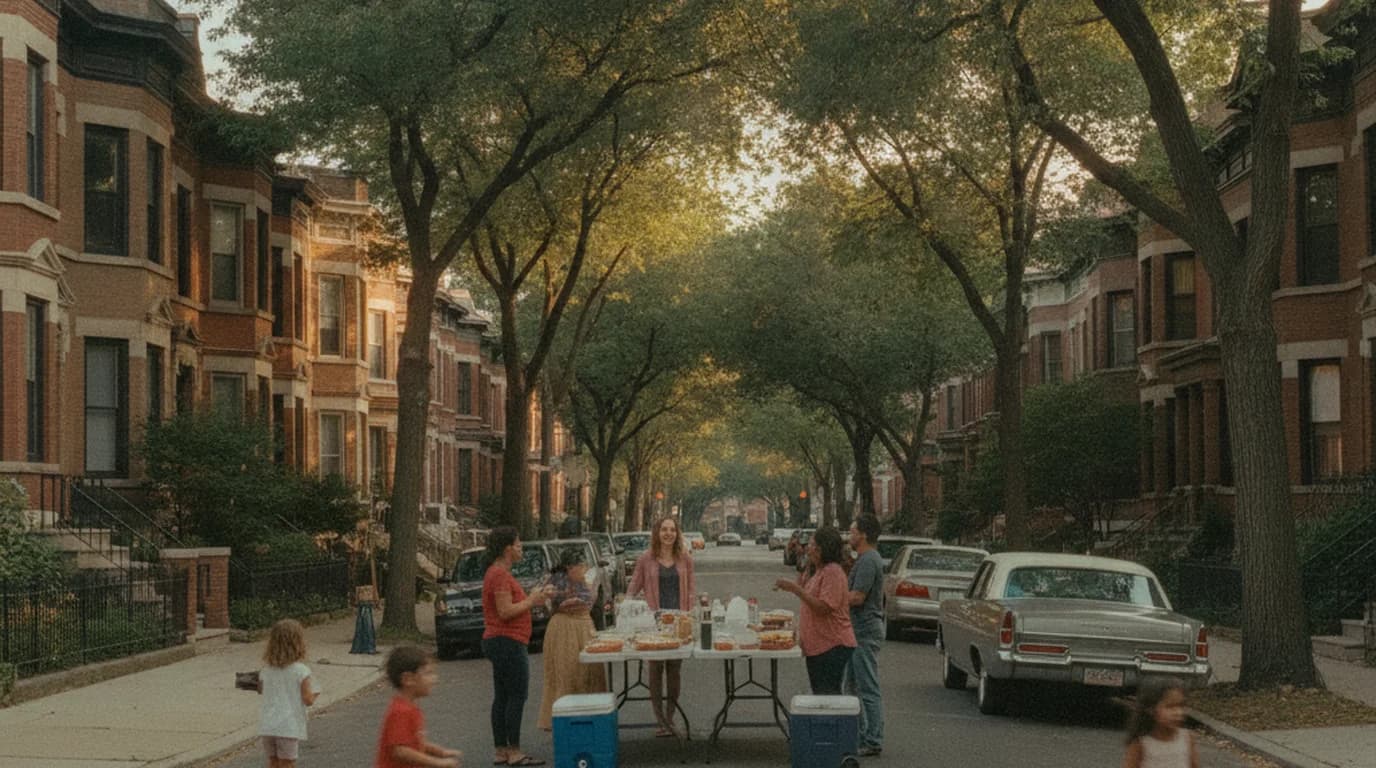
You cannot get a block party permit in Chicago by yourself. There is no online checkout, no counter at City Hall where you walk out holding the permit. You have to get your alderman's ward office to file it for you.
The Chicago Department of Transportation issues the permit, and CDOT will not take your application. Your ward office takes it and enters the request into the City's Service Request system. That entry is the legal aldermanic request for a recreational street closing under Section 9-12-040 of the Municipal Code, and only then does CDOT approve and release the permit.
So your first call about your block party goes to a political office. The staffer who picks up effectively decides whether your street closes on the third Saturday in August, and they have a stack of these by June. Be pleasant, and call early.
What the Permit Is Actually Called
Ask any ward office for a "Block Party Permit" and they will know what you mean. Behind the counter it wears other names. CDOT files it with parades and film shoots under "DOT Special Event," and the portal calls the application type "Sidewalk Sales and Block Parties." The form is the "Data Collection Form for a Permit to Hold a Block Party (Recreational Street Closing)."
One trap to clear first. Section 9-12-040, the ordinance your permit is issued under, is titled "Play streets," which is the statutory label for the block party permit and nothing more. PlayStreets Chicago is a different animal: a Department of Public Health grant program funding two community organizations to run activations in areas chosen by below-average life expectancy. No public form, no way for a resident to sign up. The Block Party Permit is your only door.
It Costs Nothing, and That Is Not a Typo
The 2026 CDOT permit fee schedule has a row for Block Party. Processing fee: No Charge. Permit fee: No Charge. Special instructions: "Requested and approved by Alderman." Page three of the fee schedule PDF.
No insurance. No official source I could find mentions a certificate of insurance for a block party. Permit-broker sites claim otherwise; the city does not.
No barricade fee, because there are no barricades. The 47th Ward puts it flatly: the permit lets residents close the block to traffic, but the city provides no street cleaning and no barricades. Chicagoans park a couple of cars sideways across each end. The ward office does hand out free "No Parking" signs.
One number to ignore: that same table lists a $50 per block per day closure charge, doubled downtown, on the Festival and Farmers Market row. Write-ups keep attaching it to block parties. A residential block party pays zero.
The Deadline Everyone Gets Wrong
Two deadlines live in this process, and confusing them is the most expensive mistake you can make.
CDOT's rule is that the request must reach the department within three business days prior to the event. That is the ward-to-CDOT hop, an internal cutoff. Call the ward on Tuesday for a Saturday party and you will be disappointed.
Your real deadline is set by your ward:
- The 40th Ward asks for at least two weeks.
- The 46th Ward asks for at least 15 days.
- The 47th Ward recommends 30 days and works by event date, clearing July permits before it looks at August.
- The 19th Ward says permits will be issued no later than two weeks before the requested date.
Four wards out of fifty, so treat that as a range. Two weeks is the common floor and nobody promises faster. Apply 30 days out and stop thinking about it. Permits go first come, first served, and a warm July Saturday goes fast.
Getting Your Neighbors to Say Yes
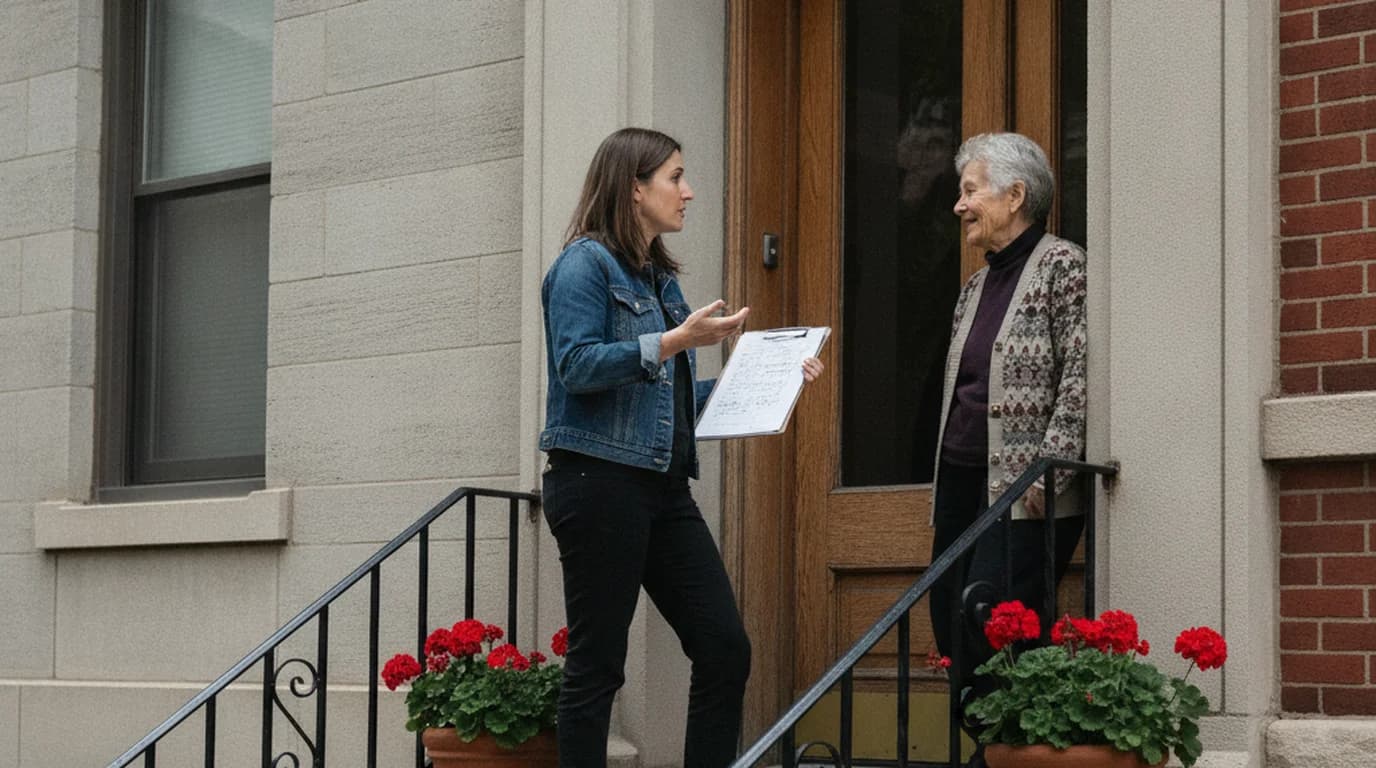
The citywide requirement is one sentence: applicants must provide evidence that a majority of the residents on the affected block approve. What counts as evidence is left entirely to your ward.
The 46th Ward wants at least 25 signatures from at least seven different addresses, plus a petition signed by 60% of the buildings if your block has never thrown one. Those signatures stay valid for three years. The 40th and 47th call a petition encouraged, though both expect one if the block has not held a party in two years.
Go door to door regardless of what your ward accepts. The neighbor who complains at 9 PM is almost always the neighbor nobody asked, and a Sunday morning with a clipboard is the cheapest insurance available to you.
Which Streets Qualify, and For How Long
Arterial streets (Federal Aid Urban streets, in city language) are out, as is any CTA bus route. Your closure runs one block, intersection to intersection, and the intersections stay open. Metered and pay-box spaces have to stay accessible throughout, and the 47th Ward asks you to keep alleys passable.
The CDOT page contradicts itself here. Its intro says block parties cannot extend more than two blocks; its rules list allows only one, and the form agrees. Two sources to one, so plan for a single block.
The permit covers one day and will not be issued for consecutive days, so a full weekend is two requests. Citywide, no closure starts before 8:00 AM or runs past 10:00 PM, and wards narrow it: the 40th and 47th post 10:00 AM to 10:00 PM, the 19th says 10:00 AM is the earliest start. Either way, clean and open by 10:00 PM.
Frequency is a ward call too. The 46th allows up to two per block per year; the 47th allows one, with Halloween its only exception, and a weekday Halloween closure runs 2:00 PM until dusk.
Fireworks, Cars, and Four Unanswered Questions
Some of this is written down. A lot of it is not.
Fireworks are illegal, and the 47th Ward warns that setting them off can get your block's future permits denied. Put that one on the flyer.
No commercial purpose. Businesses and outside organizations do not get this permit; CDOT sends them to the Department of Cultural Affairs and Special Events for a festival permit.
You cannot make anyone move a car. The 47th Ward is blunt: you may ask, but the city does not require or enforce removal. Those free signs are a polite request with a city logo.
Alcohol is the unanswered question. CDOT's page says nothing about it, and neither does the application form or any ward page I read. Chicago's open-container rule, Section 8-4-030, prohibits drinking on the public way with a few narrow carve-outs, and a block party permit does not appear to be one. I could not pull the ordinance text directly, so ask your ward what it expects.
Amplified sound is unaddressed. No CDOT or ward page mentions a separate sound permit, and none says one is unnecessary either. The city's noise ordinance still applies.
Grills and rented inflatables have no official guidance. Not a word on any city page. The bounce-house rules below cover only the city's own unit, so if you are renting a moonwalk, call the ward.
How to Get a Block Party Permit in Chicago, Step by Step
- Check that your street qualifies. No arterial, no bus route, one block intersection to intersection.
- Find your ward with the city's ward and alderperson lookup, then your office in the directory of all 50 wards.
- Call the ward office first. CDOT says the process should begin there. Ask two questions: what signature threshold, what deadline.
- Collect the signatures to whatever standard they gave you.
- Fill out the Block Party Permit Information Form: your details, an emergency contact, the exact block (street, from, to), the purpose, the date, and your hours. The rules live on CDOT's block party permit page.
- Submit it with the signatures by the ward's deadline. Some wards use an online form or take email. A few still want you to walk it in.
- Ward staff enter it into the CSR system. That entry is the formal aldermanic request.
- CDOT approves and releases the permit back through the ward, often by email to the applicant.
- Request add-ons separately. A fire truck visit goes through the ward at least 14 days ahead. CFD no longer confirms attendance in advance and will not open hydrants or give rides.
- Pick up your free "No Parking" signs and post them 24 to 48 hours ahead.
- Flyer the block five to seven days out and the parked cars 48 hours before, per the 47th Ward.
- On the day, close the street yourself no earlier than your permitted start, keep alleys and meters clear, and reopen a clean street by 10:00 PM.
The form is old, stamped "Created: 10/28/98, Revised: 01/01/12," and the CDOT address on it is stale; the department sits at 2 N. LaSalle Street, Suite 1110 (312.744.3600, CDOTPermitsupport@cityofchicago.org). CDOT's web page is no fresher, still full of pandemic-era language and still linking a 2021 COVID-19 Safety Affirmation Form that resolves to this day. At least one ward required it. Whether anyone still does is unclear, so ask.
The Free Bounce House You Probably Already Missed
Chicago's best block party perk is the city's Jumping Jack Program: a free bounce house delivered to permitted block parties.
The 2026 season runs weekends only, Saturday, May 23 through Sunday, September 6, and skips July 4. One request per block per season. The application portal opened at 9:00 AM on April 15, 2026, and by early August it had hit full capacity. For next year, apply the morning it opens and ask for a Sunday, because Saturday demand is much heavier.
A Street With Nobody On It
A closed block hands you two hundred feet of empty asphalt and a guest list that lives within shouting distance. Steal from these outdoor party ideas, and run the food as a real potluck with assignments instead of hoping six people think to bring ice. Chicago is one of thirty cities in our permit walkthrough series, so send it to your cousin in Denver.
Then there is the invitation, which is harder than the ward office was. You are inviting people whose last names you may not know, half of whom you greet by nodding at the mailbox.
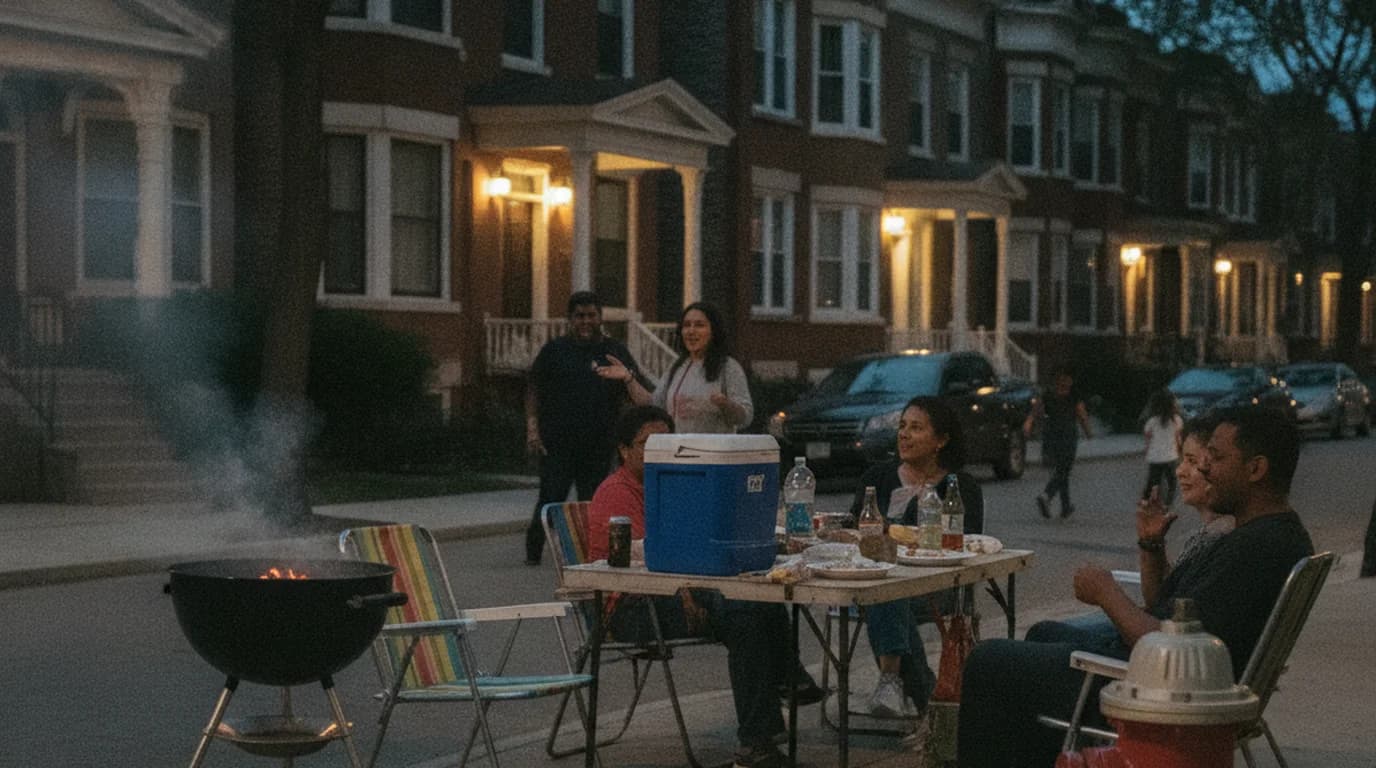
Publicizing it is the last step, and on a Chicago block it is mostly a paper problem. Describe the party to Lemonvite for an invitation built around it, then text it to everyone whose number you have. Your published event comes with a public RSVP link and a QR code you can download, which prints cleanly on a flyer for the three-flats where knocking gets you an intercom. Scans become RSVPs, RSVPs become a headcount, and one message reaches the whole list when the ward confirms your date.