
How to Get a Block Party Permit in Houston
Ask anybody in Greater Houston who owns the street in front of their house and you will get a shrug. It is a street. It was there before they moved in. Then somebody in the group text proposes closing it for an afternoon in November, and that shrug becomes the most expensive unanswered question of the project.
A block party permit in Houston is a real permit with a real fee and a forty-day floor. It also only exists if the pavement belongs to the City of Houston, and a huge number of streets carrying a Houston mailing address do not. The households on those streets can lose three weeks to an office with no authority over them.
So before the potluck spreadsheet, settle whose street it is.
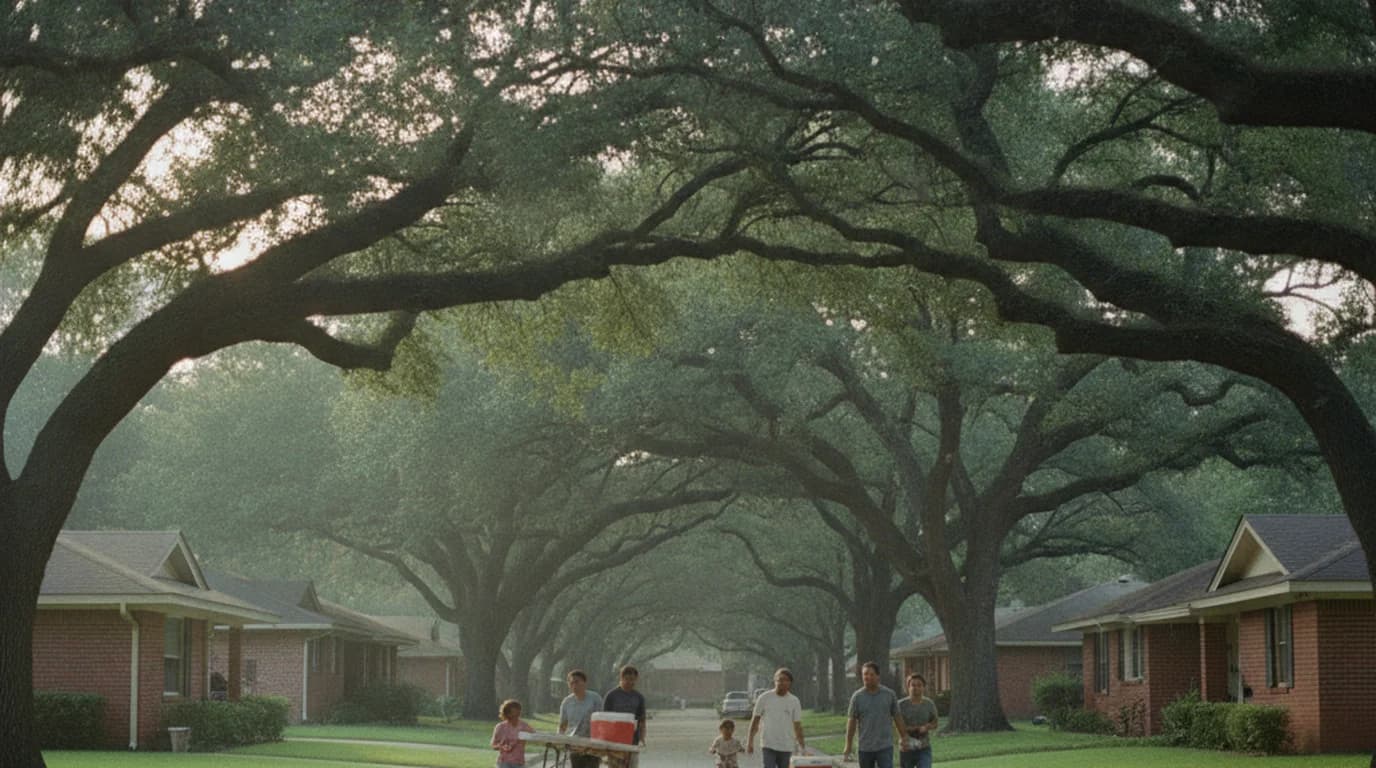
Start by Finding Out Whose Street It Is
Greater Houston is a patchwork your mailing address politely hides. An envelope reading Houston, TX tells you almost nothing about who regulates the asphalt.
Inside City of Houston limits. The Mayor's Office of Special Events (MOSE) issues street closure permits here and nowhere else. Check your address against the city's Who Is My Council Member? lookup, the same tool the application points applicants to. Or call 311.
An incorporated enclave. West University Place, Bellaire, Southside Place and the Memorial villages are separate cities sitting inside the Houston map, with their own city halls and their own rules.
Unincorporated Harris County. Vast, and full of neighborhoods that feel like Houston in every respect but this one. I went looking for a published county block party process and could not find one. Rather than invent one for you: call the county.
A subdivision with private streets. The MOSE permit covers using a public street. If your association owns the pavement, your board is who you are asking.
Deed restrictions sit on top of all four. An HOA's blessing is not a street closure permit, and a permit does not suspend your deed restrictions. In a master-planned community you may need both, on two timelines.
The Permit Is Not Called a Block Party Permit
Assume from here that you are inside city limits.
Houston issues nothing named a block party permit. You apply for a Street Function Permit, code MOSE1004, from the Mayor's Office of Special Events, under Chapter 25 and Chapter 32 of the Houston Code of Ordinances. The MOSE FAQ defines a street function as using a public street for "a street dance, block party, fun run... or other function requiring the closing of the street or a portion thereof to normal vehicular traffic." The form is the generic Special Event Application, with a STREET FUNCTIONS block on page 4.
Houston Public Works does not issue this, whatever your search results suggest. It handles construction work-zone obstructions and enters your process only as one option for traffic control. Call MOSE at 832.393.0868, which the FAQ tells first-time applicants to do before anything else. That call is where you learn how your street is classified, and the classification sets your deadline.
The $67.13 Application Fee Is the Small Number
The application fee is $67.13, non-refundable, per the Special Event Requisite Sheet updated 01.06.2026. The Street Function Permit page says $66.21 for the same permit. The Requisite Sheet is newer and is what the FAQ points to for fees, so budget $67.13 and expect drift; it states in capitals that fees increase annually. Pay by exact cash, money order or cashier's check, in person or by mail to 901 Bagby Street, Mezzanine Level. No card, and nothing gets processed until the fee lands.
That is the smallest number here by a wide margin. Three mandatory items set the real budget, and the City prices none of them:
- Liability insurance at $1,000,000 per occurrence, naming the CITY OF HOUSTON as an additional insured, with a waiver of subrogation covering set-up through breakdown.
- Certified peace officers you hire, posted at every street closing for the whole event including load-in and load-out. HPD Special Operations Division sets the count from your projected attendance. No published rate and no cap. Usually the biggest number in the whole budget.
- Traffic control, either a private contractor's certified plan and equipment or a reimbursement to Houston Public Works for placing and removing the barricades. You get quoted; nothing is posted.
Every activity then adds its own permit. Amplified music: a Temporary Sound Permit at $33.43 daily or $79.46 extended, plus a $33.10 administration fee. Food handed out: a Temporary Health Permit at $92.69 per booth per day. Grills: a propane permit at $397.31, a $33.10 administrative fee, and standby fire inspectors at $370.82 for a four-hour minimum plus $87.76 an hour after that. Alcohol sold or distributed: a TABC permit plus a permission letter from MOSE. The Affidavit of Inability to Pay is restricted to non-revenue-generating parades, so no hardship discount reaches you.
Quote the officers and the barricades while your date is still private, because those two numbers decide whether the party happens. This is one of the rare neighborhood events where setting the budget has to come first.
Forty Days, or 120 if Your Street Is the Wrong Kind
| What you are filing | Minimum filing time |
|---|---|
| Minor street function (the ordinary block party) | 40 consecutive days |
| Minor street function with TxDOT right-of-way closures | 90 consecutive days |
| Major street function (closes a major thoroughfare or collector) | 120 consecutive days |
Retaining the right of appeal on a minor street function also pushes you to 120 days. You may file no earlier than 365 days out, first come first served. There is no lottery, and nothing published about blackout dates or council district sign-off.
The classification is the trap. A minor street function closes no portion of a major thoroughfare or collector street; touch one and you are a major street function at 120 days. Almost no resident knows which category their street falls into, and discovering it in week six of a forty-day plan is how a Houston block party dies. Ask on the first call.
A $208.74 expedited fee exists for applications filed fewer than 30 days out, while the permit page says minor street functions must be filed at least 40 days ahead. Those two official statements do not obviously reconcile, so do not plan on buying your way in at three weeks.
After filing, one deadline sneaks up: the certified traffic control plan and contractor contact, or your Public Works reimbursement, are due ten business days before the event.
The Neighbor Rule Houston Leaves Vague
Plenty of cities run a block party petition with a hard threshold. Houston publishes no percentage and no signature count anywhere I could find.
It publishes three softer things. The permit page lists "Permission from neighborhood (when required)" among plan-review submittals, at the director's discretion. The application carries an EVENT NOTIFICATION clause you initial, agreeing you "may be required serve notices to residents and/or businesses in and around the area" and to furnish evidence of it. And one hard rule, bolded: if your closure impedes access to any business or residence inside it, written approval or notification letters go in with the application.
On a residential block a closure impedes somebody's driveway essentially by definition, so treat those letters as required. Get them in writing, and go back twice for the house that never answers, because a silent door in this town usually means somebody works a shift that starts at six.
All of this comes from City web pages and City forms; I could not retrieve Chapter 25, Article II itself. If a codified signature threshold or block-size cap exists in the ordinance, it is not published.
Heat, Humidity and Hurricane Season
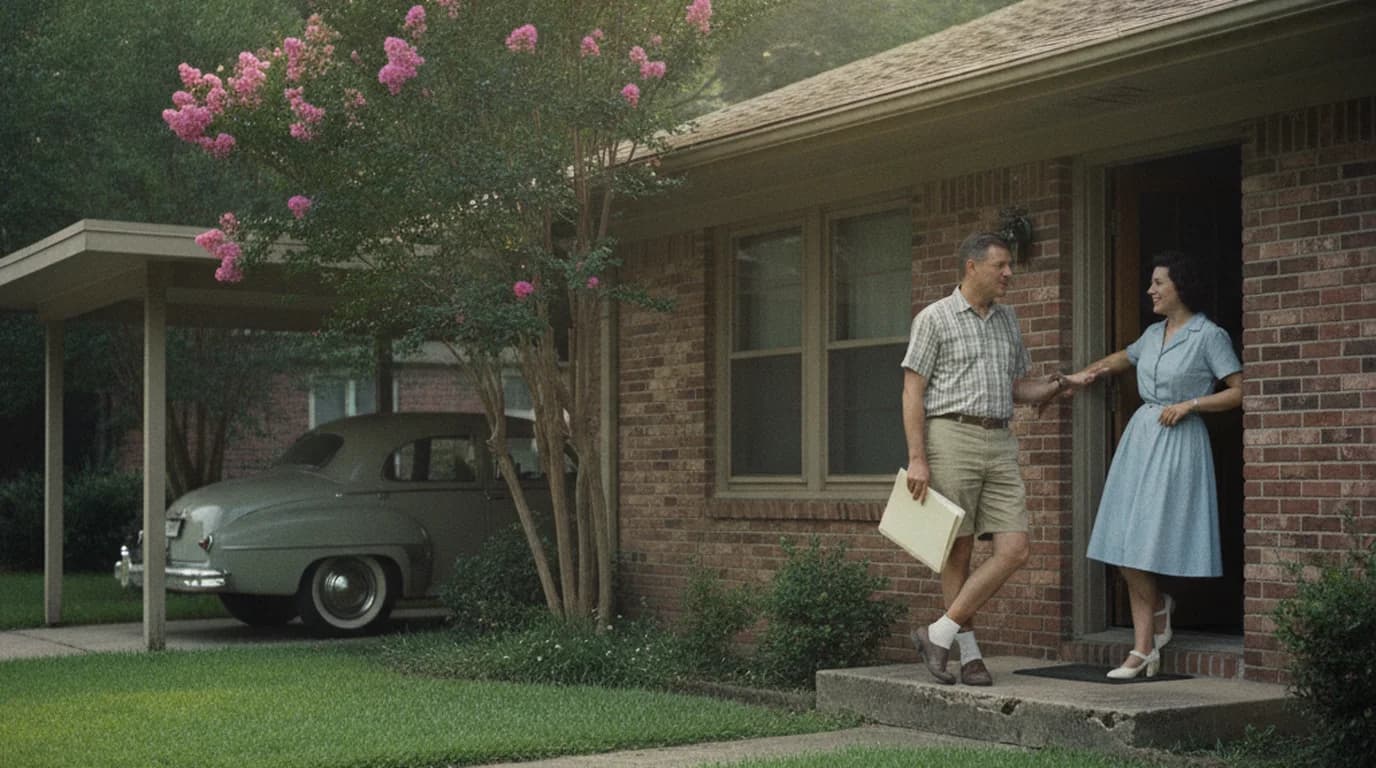
No City page publishes a seasonal rule, which leaves this to you. My answer is not in July. Houston's problem is less the temperature than what the humidity does to it. A closed street is bare concrete unless your block has old live oaks over it, and at eight in the evening the air still feels like a warm towel. The older neighbors check the forecast and stay inside, which loses you exactly the people a block party is for. Aim for late October into early December, or March into April, starting mid-afternoon so the evening cools into the party. Amplified sound is capped at 75 decibels and has to stop by 10:00 p.m. regardless.
Hurricane season runs June 1 through November 30, and a forty-day floor means a late-September party gets filed in mid-August. The fee is non-refundable and the permit covers that event period only. I found no published way to move a street function to a rain date, so ask your coordinator what happens if a storm takes your Saturday, well before you file. A named storm anywhere in the Gulf also hollows out attendance days ahead even when the track misses Houston. Build the rain plan accordingly.
How to Get a Block Party Permit in Houston, Step by Step
- Confirm you are inside city limits with the council member lookup or by calling 311.
- Call MOSE at 832.393.0868 first. A coordinator reviews costs and availability, then tells you how your street is classified.
- Download the Special Event Application and the Requisite Sheet from the MOSE forms page.
- Complete every page, including STREET FUNCTIONS: closure times, the streets, metered spaces inside the closure, your traffic control choice. Initial the insurance, indemnification, security, emergency access and notification clauses.
- Attach a map showing every structure going onto the street. Without it the application is not deemed complete.
- File at least 40 consecutive days out. Email it to specialevents@houstontx.gov, bring it in, mail it or fax it to 832-393-0837, then pay the fee separately at 901 Bagby Street, Mezzanine Level.
- Work through plan review with your Event Coordinator: certificate of insurance, Security Control Plan, certified traffic control plan, neighborhood permission where required.
- Get the Security Control Plan approved by HPD Special Operations Division and hire the officers it specifies.
- Pull the ancillary permits. MOSE issues the sound and health authorization letters first. A health permit requested fewer than seven days out costs an extra $66.21.
- Submit the traffic control plan, or your reimbursement payment, ten business days out.
- Line up portable toilets at one per 300 with 10% ADA accessible, handwashing at the same ratio, medical services and a cleanup vendor.
- Wait for final approval before promoting anything. The application forbids advertising the event until then.
Six Things Worth Knowing Before You File
- You cannot apply online. The permit page's "Apply Online" heading tells you to email the form, and its "Apply by Email" heading describes faxing.
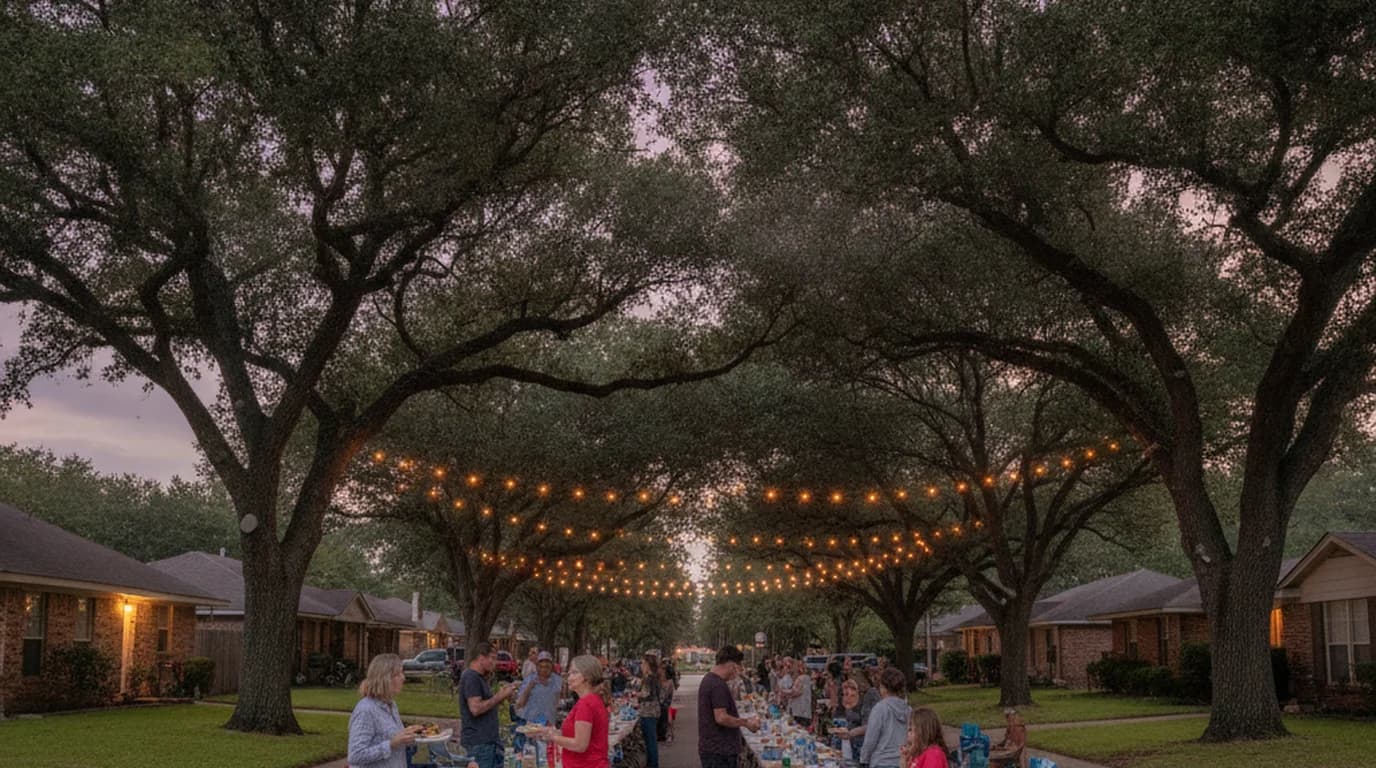
- A potluck triggers a health permit. The rule covers giving away food or drink, including pre-packaged and sealed goods, so ask your coordinator how a neighborhood table gets treated before you organize the potluck assignments.
- One lane has to stay openable for emergency vehicles and for access to abutting property. You initial that clause, so plan the tables around it.
- Tents over 1,200 square feet need a Fire Marshal occupancy permit (832-394-8811), and bounce houses require "Additional City of Houston Permitting" that the City neither names nor prices.
- The ORGANIZATION/BUSINESS NAME field is starred mandatory, and nothing explains how a lone homeowner with no civic club files. A street with an HOA has an easy answer.
Permits are single-event, so an annual block party re-applies, re-insures and re-pays every year. And if a search result tells you Houston requires seven-day public notice for street closures, that line is not on any City of Houston page; it appears to come from a neighboring municipality.
The Number Everything Hangs On
Notice how much of this hangs off one number. HPD sets your officer count from projected attendance. Portable toilets are one per 300. In Houston a real headcount stops being a hosting nicety and becomes a line on a government form.
Houston is the most expensive of the thirty cities we walked through. Fourteen of them charge nothing at all.
After insurance, officers and a security plan, publicizing it should be the easy part. Hand Lemonvite a description of the block party and the invitation comes back built for it, texted so it lands the same afternoon. Publishing opens an RSVP page anyone can use, and its QR saves out for a flyer on the subdivision boards and mailbox clusters where paper still beats anything digital. Every scan is a headcount you did not have to chase, and one message reaches all of them.