
How to Get a Block Party Permit in Boston
The first thing that goes wrong when you go looking for a block party permit in Boston is the search. You type it into boston.gov and land on the Transportation Department's traffic permits index, where nothing matches. The permit is real. City Hall just files it under a name almost nobody on your street says out loud: a Play Street Closing Permit.
Once you know the name, Boston turns out to be one of the gentler cities to do this in. There is no police detail to hire and no signature sheet to circulate down the block. What Boston does have is a timeline that does not add up on its own webpage, and a policy of approving your street closure without handing you anything to close it with.
The permit, and the offices behind it
The Boston Transportation Department issues the Play Street Closing Permit through its Permit Branch and reviews every application jointly with the Boston Police Department. The police role here is reading your paperwork. Nobody bills you for it.
Three other offices appear without issuing anything. The Mayor's Office of Neighborhood Services keeps a liaison in every neighborhood, the closest thing Boston gives you to a human to talk to before you file; your liaison checks your date against other events and is who you nudge when the application stalls. The Office of Civic Organizing runs the Block Party Grant and Halloween's Spooky Streets. Consumer Affairs and Licensing runs the Outdoor Public Event application, which you hit the moment you want a grill or a speaker.
Everything starts at boston.gov/blockparty, and the application is online only, at the Block Party and Play Street permit portal. There is no paper form; the downloadable one still surfacing in search results is dead, a leftover from the old cityofboston.gov site.
Nobody publishes what a block party permit in Boston costs
The honest answer is annoying: Boston does not publish a fee for the Play Street Closing Permit, and never says it is free either. I checked six official pages, including both city fee schedules, and it appears on none with a number next to it. So do not budget off a blog post, mine included. Email btdpermitbranch@boston.gov or call 617-635-4680 first.
What is solid:
- No police detail cost. The city's official FAQ says plainly that police details and traffic officers are not automatically provided for block parties.
- No insurance. A plain play street closure needs no certificate; that only enters at Tier 2 or Tier 3 of the Outdoor Public Event process.
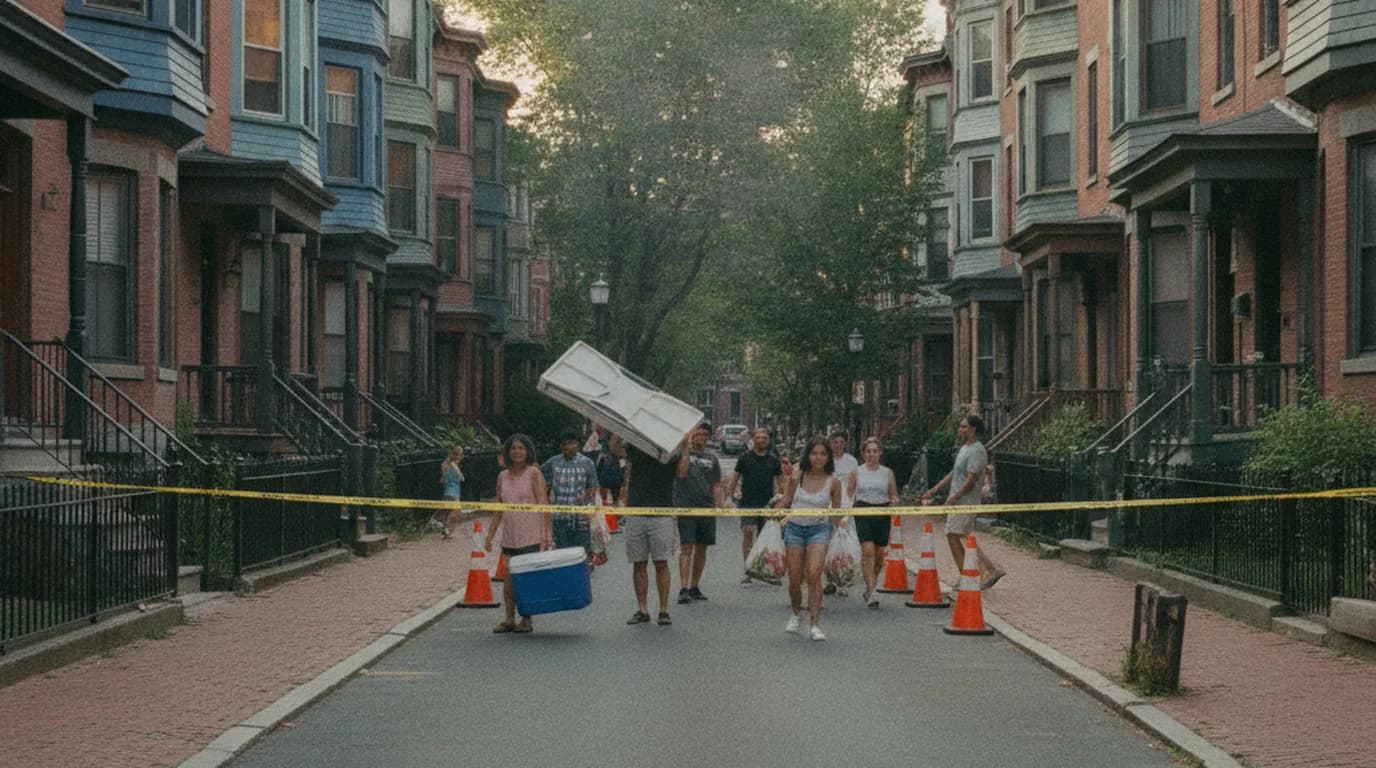
- Barricades cost you, because the city supplies none. Bring your own caution tape and cones.
- Money flows toward you too: the Block Party Grant is up to $750, one per street.
One clue about the missing number: the Office of Civic Organizing lists "Permit Fees" first among the expenses its grant cannot cover, so a fee exists somewhere in this process. Cones and tape are the line items you fully control, which puts a block party in the range of any backyard party you would set a budget for.
The timeline that does not add up
Boston's block party page tells you to apply at least 30 days before your party. The same page says approval takes about 30 business days. Those are not the same number. Thirty business days is roughly six calendar weeks.
Apply six weeks out. Filing at the stated minimum can land your approval after your party has already happened.
The grant clock starts earlier still. For 2026, applications opened April 14 and closed June 22 at 5 p.m., with funded events required to fall between May and the end of September. It unlocks only after your permit application is submitted, and it needs your own Boston Vendor ID from Procurement. It can close early if funds run out.
Reading this in August, you have missed the 2026 grant but not Spooky Streets, the Halloween variant: same permit, smaller grant, fixed late-October window. In 2025 the deadline was September 22 and the award was $300; watch the Office of Civic Organizing page for this year's dates, and keep your date loose regardless, because the city can revoke an approved permit for emergency construction.
Nobody has to sign anything
Most big cities make you paper the block: a petition, a notarized form, a percentage of the frontage signed off. Boston has no threshold and no consent document at all. Against the other city permit processes in this series, that is unusual.
The city instead strongly encourages outreach with neighbors before applying, and its FAQ asks you to confirm that residents are aware of and support the event. Then it adds the sentence that should shape your whole approach: complaints or concerns from residents may result in the denial or revocation of a permit or grant.
That sentence is Boston's entire outreach policy. With no signature threshold, there is no moment where consent gets locked in. An objection raised two weeks after your permit is issued still counts. Outreach in Boston is effectively mandatory. It just is not a document.
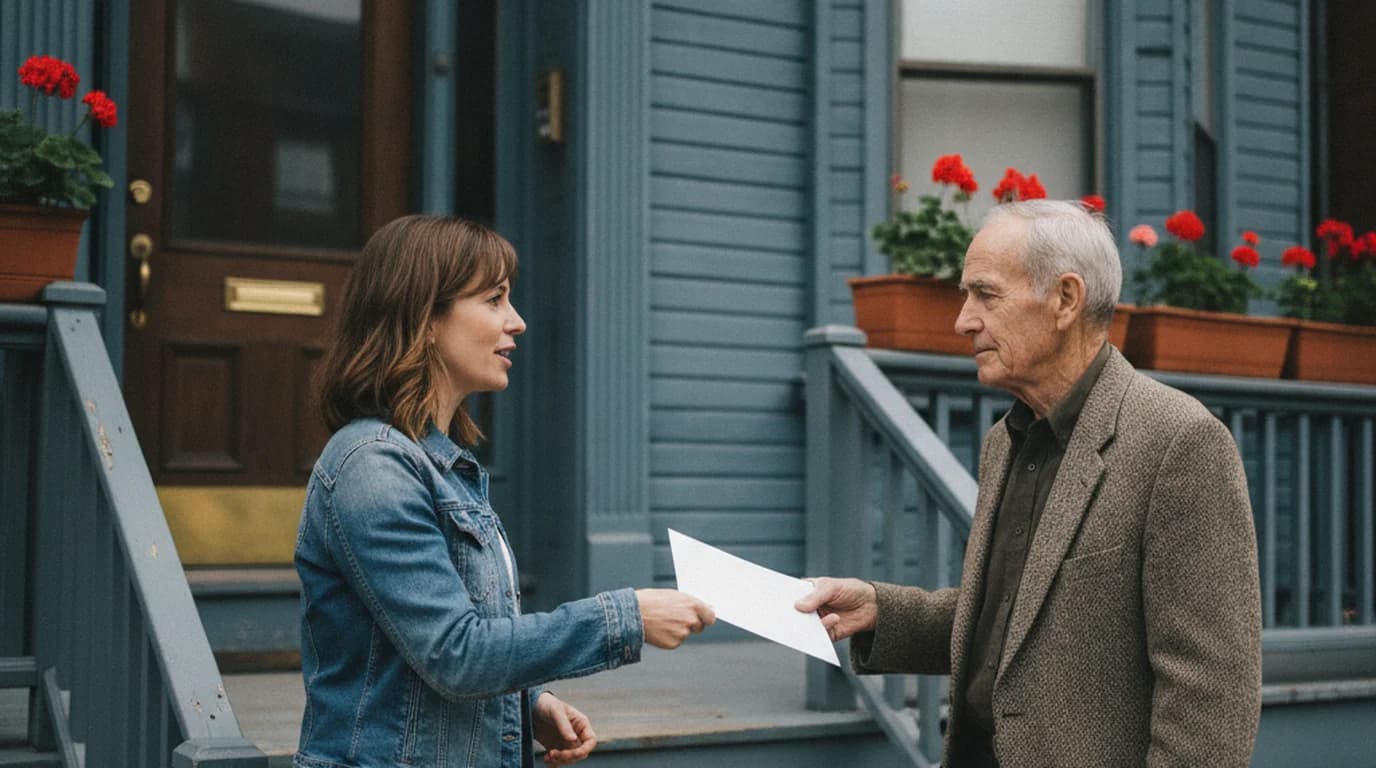
So knock on doors before you file. The city publishes a printable flyer with room for the date, the times, what is happening, and how somebody can pitch in. Include that last line; people who help do not complain.
Which streets qualify on a grid like Boston's
The permit closes a residential public street to through traffic. A sidewalk party without a closure does not qualify, and neither does a park.
Beyond "residential," Boston publishes no list of ineligible street types. No named arterials, no bus route exclusions. What it publishes instead is a set of self-screening questions. Is your location a major street? Will it affect public transit? Is street sweeping expected for that time? That last one is a real Boston problem: posted street cleaning comes with tow enforcement and will run straight through your party if you pick the wrong Tuesday.
Two hard rules shape which stretch you ask for:
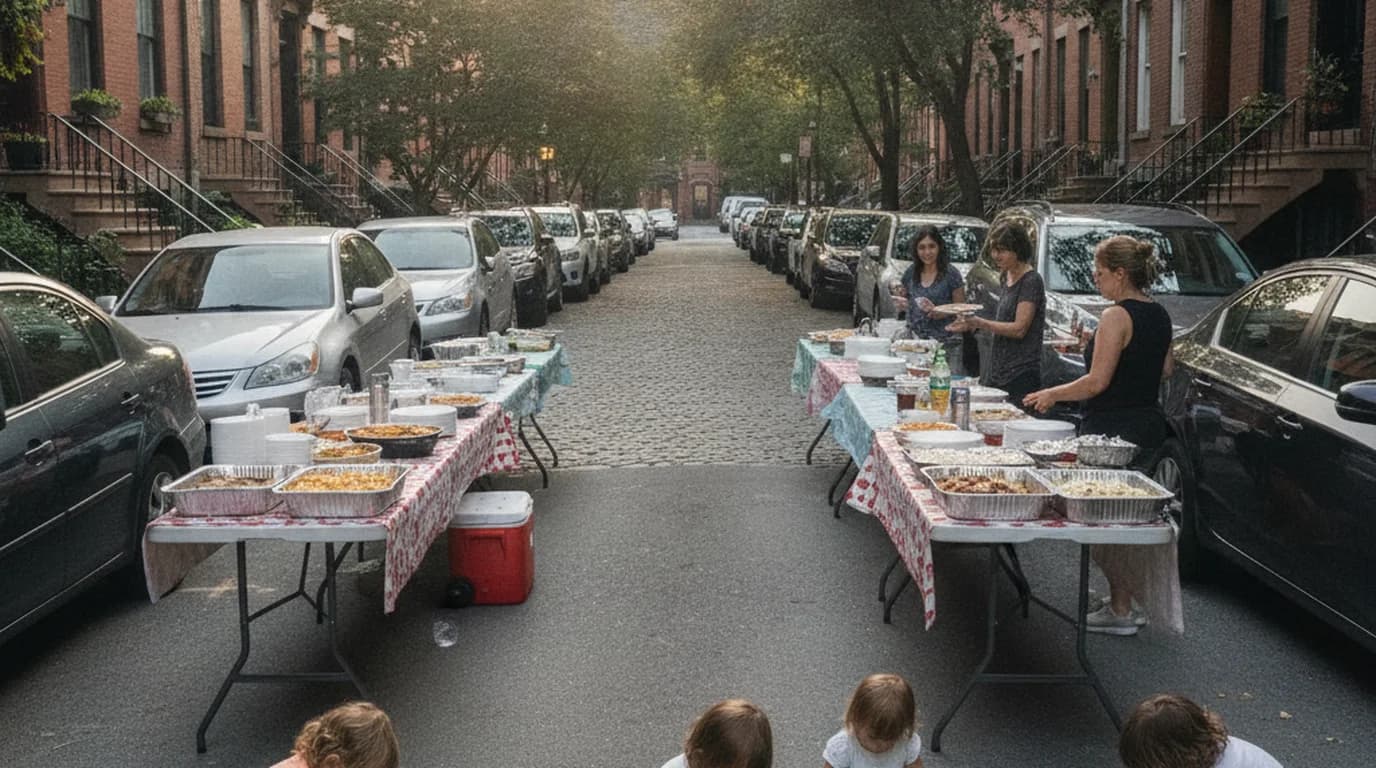
- A twenty foot aisle stays clear, the entire block, the entire time. Boston Fire and EMS require it for emergency access. On a narrow one-way lined with parked cars, twenty feet is most of your street. Set your tables against that number instead of the curb.
- You cannot close the street with vehicles. Caution tape, cones, and other easily removable devices only. Parking a car sideways across the block end is the first thing everybody thinks of. It is banned.
And the permit does not remove parked cars or authorize towing, which catches everybody out. Every photo of a block party shows an empty street; yours will not be unless your neighbors move theirs. On a block where people have fought over those spots for a decade, start early.
What you can do, and what tips you into a bigger application
With the Play Street Closing Permit alone:
- Close the street to through traffic
- Chairs, tables, and tents 10x10 feet or smaller
- Sidewalk chalk, bubbles, foursquare, double dutch
- A potluck serving free food
The potluck line is good news for the food plan. A free potluck is allowed outright, and it works best on asphalt anyway. Running one well is its own small art.
Each of these needs the separate Outdoor Public Event application:
- Alcohol
- Amplified music, stages, risers, or performances
- Grills of any kind, including propane, wood, electric, and charcoal
- Bouncy houses and other inflatable structures
- Carnival rides, petting zoos, pony rides
- Food trucks, food prepared on the street, selling food, street vendors
- Tents larger than 10x10, and more than three 10x10 tents
That Outdoor Public Event application adds up to 30 business days on top of your permit, with tiered notice running 10 to 30 business days by size. Tier 2 and Tier 3 can also owe an insurance certificate and a committee appearance. One speaker or one grill converts a simple street closure into a full special event process.
Boston's own workaround is the best advice on the page: put those on private property. A grill in a driveway or a speaker on a porch needs no additional permit, and boston.gov calls it the quickest and easiest way. Take the hint.
Nothing sets your hours in regulation, though the city's planning materials ask whether setup starts after 9 a.m. and cleanup ends before 8 p.m. Treat that as the expected window. Your permit is good rain or shine, so decide what a wet forecast means in advance.
What you actually do, in order
- Call your neighborhood liaison. Find yours via the Mayor's Office of Neighborhood Services or contactons@boston.gov, and check your date against other events and the sweeping schedule.
- Knock on doors before you file. No form, no signatures, but complaints later can undo an approved permit.
- Register on the portal. Create an account at onlinepermitsandlicenses.boston.gov/playstreet. The login carries over, and next year you can copy this application forward.
- Submit six weeks out. You give the date and hours, plus the exact stretch of street you want closed.
- File the extras in parallel. Grant money needs your own Vendor ID from Procurement (vendor.questions@boston.gov). Music, a grill, an inflatable, or anything sold needs the Outdoor Public Event application (publicevents@boston.gov).
- Take the call. A city staffer may ask about your timing or suggest a different section of street. They are usually right about which end is the problem.
- Print the permit and flyer the block, with a plain reminder that cars need to move.
- Close the street with your own cones and tape. Never vehicles. Keep that twenty foot lane open all day, including after the tables fill up.
- Clean up. You are responsible for leaving the street clean, and grant purchases can be audited, so keep receipts. If you cancel, tell the Office of Civic Organizing at civicorganizing@boston.gov with a new date.
Six weeks later, the actual work
The permit clears about six weeks after you file, and then the only job left is the one that decides whether this works. A flyer covers the households you already know by name, which on most Boston streets is a fraction of them, especially in the three-deckers where the top floor turns over every September.
Get the cones first. Then let the street know it is invited.
A permit nobody hears about is six weeks of paperwork for an empty street, so treat publicity as the final step rather than an afterthought. Describe your block party to Lemonvite, send the invitation by text, and print the QR code that comes with your published event onto a paper flyer for the triple-deckers where you have no phone numbers at all. Every scan is an RSVP. Every RSVP is a person you can then message about start times, parking, or the thing you forgot to buy.