
How to Get a Block Party Permit in Louisville
Every spring Louisville hands over its own streets without blinking. Barricades go up around Churchill Downs, the Pegasus Parade takes Broadway, and half of Old Louisville spends Oaks Day on a porch with a cooler and eleven people nobody formally invited. The city is unusually good at closing a road and putting a party on it.
Which makes the small ordinary version feel like it should be easy. It mostly is. It just starts a lot earlier than anybody expects.
There is no block party permit in Louisville under that name. What you file is a Special Event Permit with Louisville Metro Emergency Services, with a Block Party Petition attached, signed by three quarters of your block. It costs $40 to submit and it is due 60 days before the party. That last number is the one that ruins plans.
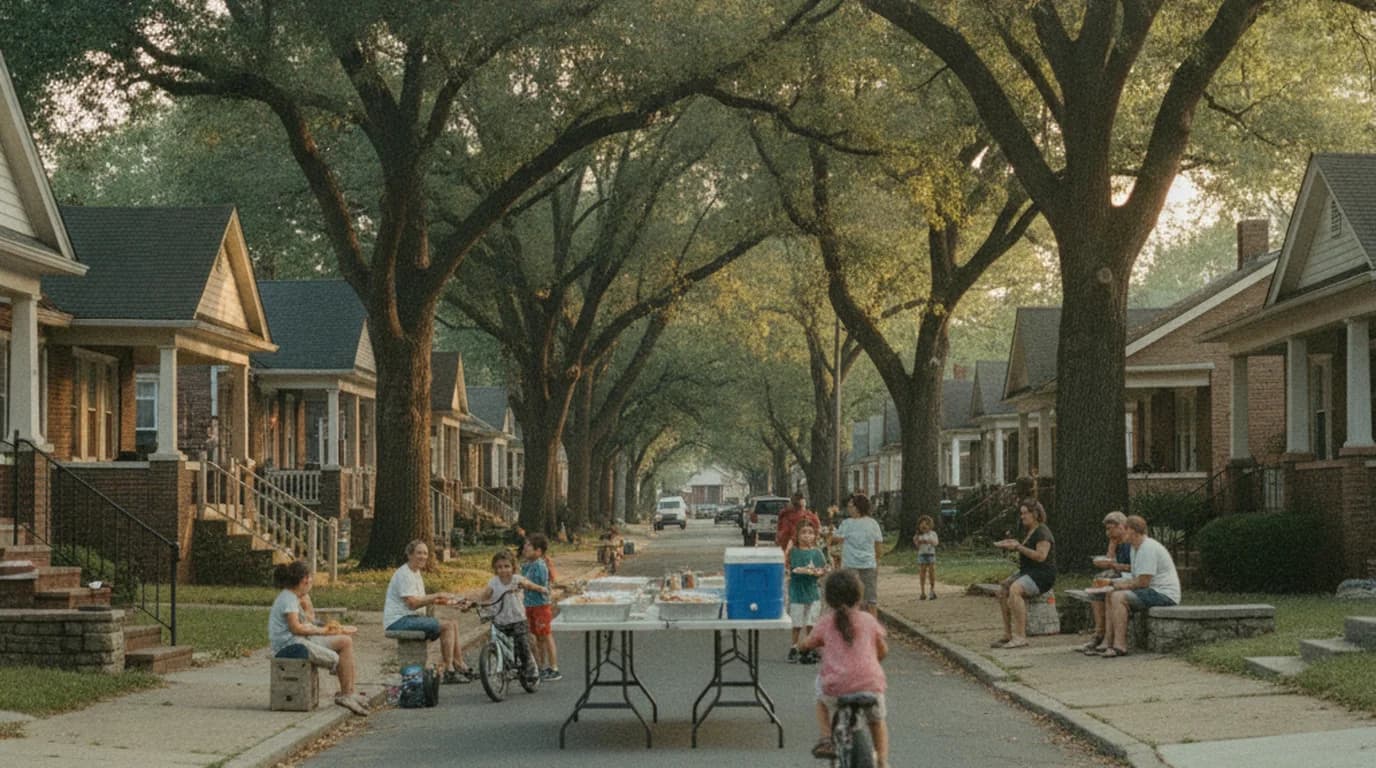
What you are actually applying for
The permit comes from the Office of Special Events, a unit of Louisville Metro Emergency Services, issued under Chapter 100 of the Metro Code. Public Works owns the pavement and reviews your traffic plan on the way through, which sends plenty of people to the wrong counter. Codes and Regulations owns exactly one piece of this, the temporary alcohol license, which is a shame, because searching louisvilleky.gov for "block party" lands you squarely on two Codes and Regulations form pages.
Two documents carry the weight. The Special Events Handbook, revised June 2025 is the operative rulebook, down to a phone number for every agency that will touch your file. The Block Party Petition is the signature sheet you carry door to door. Applications go through Accela at the Louisville Metro Business Portal, with an Accela users guide for when the portal fights you.
The 60-day clock, and the Derby question
A small event, meaning under 500 attendees, files 60 days ahead. Over 500 goes to 90. Against most American cities that is a long runway, and it catches blocks that assumed a street closure was a two-week errand.
Sixty days is only the filing deadline. Signatures come before it, so the honest start is three months out, which for a Labor Day party means picking up a clipboard in June while everyone still thinks it is a vague idea. Miss the window and the handbook does allow exceptions case by case, though it also warns that paying the fee is no assurance the permit issues.
Now, Derby, because someone on your block will raise it. LMPD publishes extensive road closures around Churchill Downs every Derby week and those are real. What I could not find in any Metro material is a rule saying the Office of Special Events stops issuing permits during Derby, so I am not going to tell you a blackout exists. What I will say is that the city services you may be billed for are being spent somewhere else that week, and your file is competing for review attention with an international horse race. If your date sits near the first weekend in May, file early in your window.
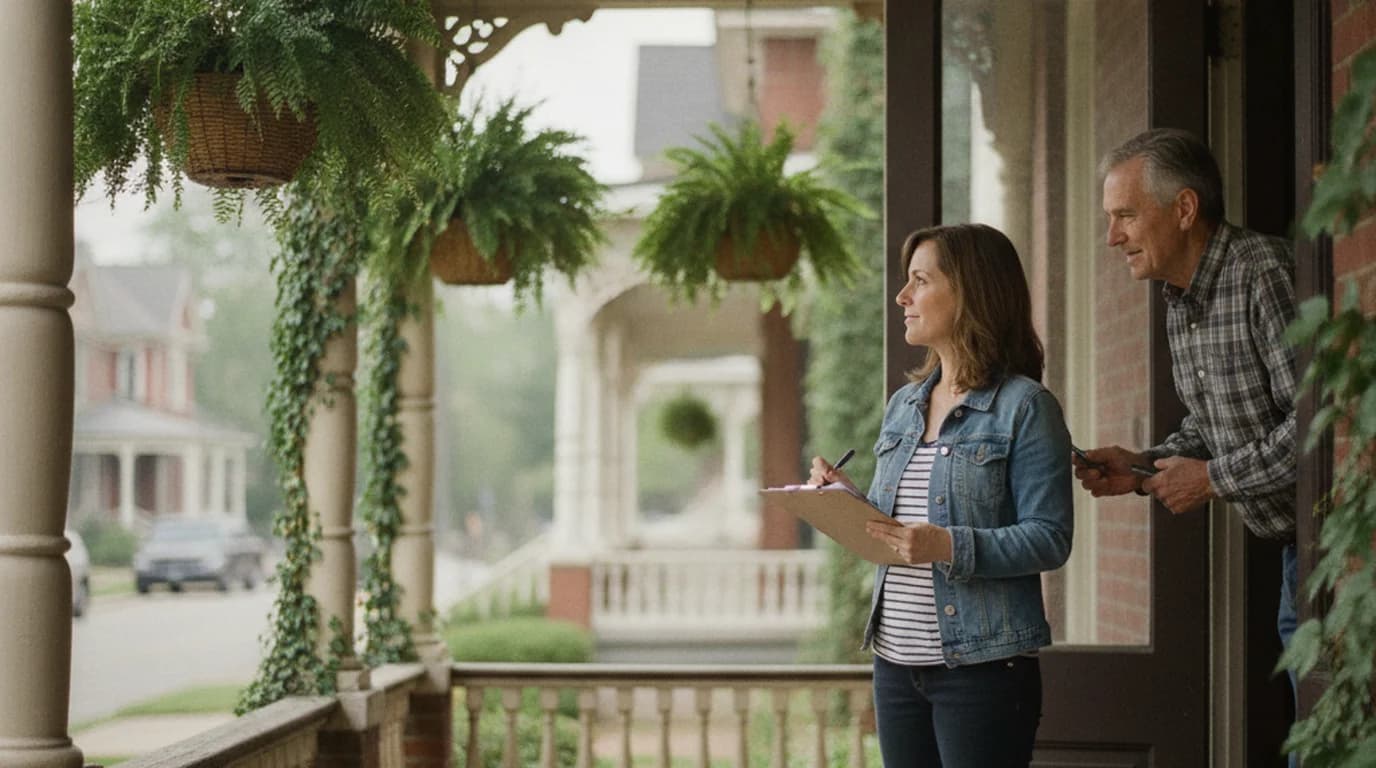
Three quarters of the block, residents and businesses both
Residential block parties need a signed block party petition showing 75% of the affected residents and businesses stating they do not object to the closure. The form shouts it in all caps across the top. Because the threshold counts residents and businesses, frontage buys you nothing, and neither does whoever happened to be home on a Sunday.
Three quarters is a high bar. It includes the duplex with the rotating tenants and the guy who has not spoken to a neighbor since the last mayoral administration. The sheet has 20 rows and asks for the street, the two bounding cross streets, the date and your hours, so lock that down before the first signature.
Go in person. A petition is a chore and also the best advance notice you will ever give, because a neighbor who signs in June still remembers in August. The household that phones in a noise complaint is, with grim reliability, the one nobody knocked on.
What it costs, and the number nobody can quote you
Forty dollars, paid inside Accela at submission. The application is not accepted without it, and nothing on the fee schedule is refundable, including when a permit gets denied.
Then the bigger number, stated on page one of the handbook: you will be charged 100% of the cost of city services supplied for your event, with Solid Waste, EMS, electrical service and No Parking signage all named as examples. After the agencies review your file, the Office of Special Events sends an Estimated Invoice and Agreement to Pay, and the permit issues only once you sign and return it. A final invoice lands within 15 business days after the party, due 30 days later.
Louisville publishes no rate card for any of it, so anyone quoting a total before OSE sends the estimate is guessing. Plan with a range, and if you are splitting costs across households, settle the split before the estimate arrives. Our guide to setting a party budget has a structure that survives an unknown line item.
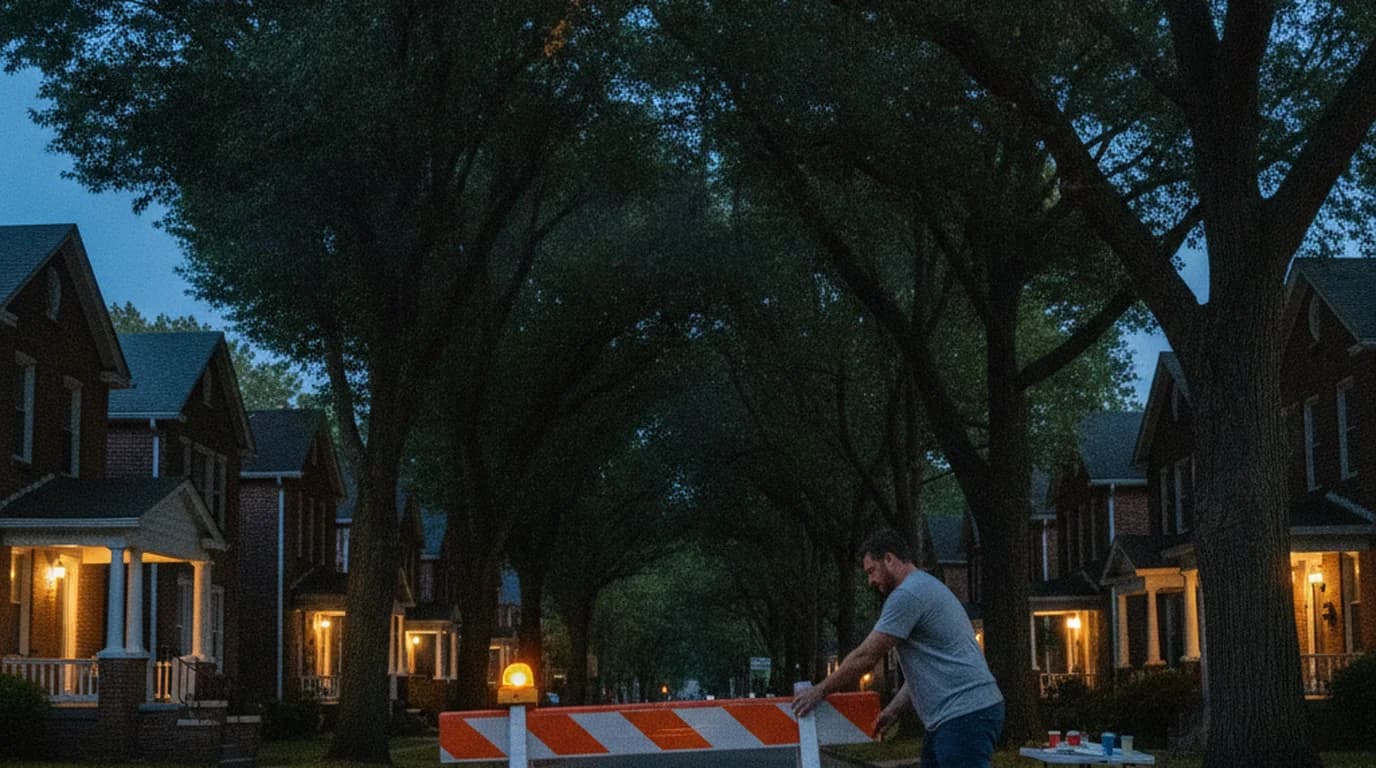
Barricades usually are not a Metro charge, because the handbook hands them to you: traffic control equipment and signs are the applicant's responsibility. Rent them, lighted Type 2 units past dusk. And know that an unpaid balance from a previous event blocks a new application outright.
Check which government actually owns your street
Biggest wrong turn available to you here, and it costs weeks.
Louisville Metro is consolidated with Jefferson County, but dozens of small incorporated cities survived the 2003 merger and still run their own street closures. St. Matthews, Jeffersontown, Shively, Anchorage, Middletown, Lyndon, Prospect, Douglass Hills, and more. A Louisville mailing address tells you nothing, so look the actual address up on Metro's MyLouisville tool first.
St. Matthews issues its own Special Events Permit for any closure inside city limits, plus its own Street Party Petition, on a 30-day deadline with up to 14 calendar days of review. Half of Metro's runway and a separate form set. City Hall sits at 3940 Grandview Ave, (502) 899-2512. Jeffersontown publishes a Special Festival Permit Application, submitted to permits@jeffersontownky.gov or 10416 Watterson Trail, (502) 267-8333. Neither city publishes a fee I could find, so ask.
And if your search turned up a free permit with a 21-day deadline and a Temporary Street Closure Petition, congratulations, you found Louisville, Colorado. It surfaces constantly and none of it applies here.
Alcohol turns a small party into a complicated one
You can serve it. Think hard first, because it flips three switches at once.
Insurance is the first. Most Louisville block parties owe no certificate of insurance at all, exempt until attendance hits 500. Serve alcohol on a roadway or on Metro property and a COI becomes mandatory at any size, with Host Liquor Liability specified and the event date named. An individual host needs personal liability of at least $1,000,000 per occurrence, usually written off a homeowners policy. Inflatables trigger a COI on their own.
Then policing, which is the expensive one. Alcohol requires sworn uniformed officers written into your security plan, and since 2021 LMPD does not provide officers for security or traffic control without an approved contract. So you hire off-duty officers yourself and file a roster with OSE a week ahead.
You also need a separate license, a Temporary Alcoholic Beverage License from Metro Codes and Regulations at (502) 574-3591, available only after the Kentucky ABC Commission approves it.
Skip the alcohol and your security plan can be one line. The handbook accepts "Call 911" as an answer.
Access, recycling, and the food question
Access for local traffic and emergency vehicles stays open the entire time, which shapes your layout more than anything else here.
Your Maintenance of Traffic plan names every affected street, alley and right-of-way and shows alternate routes for cars and buses, so a TARC route becomes a detour drawing rather than an automatic no. A state-owned roadway escalates sharply, because the Kentucky Transportation Cabinet wants that plan drawn by a Certified Work Zone Traffic Control Supervisor. Downtown gets its own window: no closures or street parking in the Central Business District, weekdays 6 to 9 a.m. and 3 to 6 p.m.
Recycling containers are required at a 1:1 ratio with your garbage containers, plus portable restrooms wherever permanent ones are not available.
Food is a live question. Any non-prepackaged food or drink requires a Health Department permit from Public Health and Wellness at (502) 574-4038, and food trucks have to be named to OSE in advance. Where a neighbor's pan of burgoo falls against that line is nowhere in the handbook, so make the call before you feed forty people off folding tables. Running it as a structured potluck with assignments is easier regardless, and it stops the whole street bringing dessert.
A few things the handbook never answers. Permitted hours and amplified sound go unaddressed, since Louisville has no separate sound permit and no block-party curfew, only a pointer to Chapter 99, the general noise ordinance. Anyone quoting you specific Louisville quiet hours is inventing them. Grills go unmentioned, as does whether you have to live on the street you are closing. One call settles all of it: Office of Special Events, (502) 572-3533, 410 S. Fifth Street, Suite 323, by appointment only.
How to get a block party permit in Louisville, step by step
- Confirm Metro owns your street with MyLouisville or the LOJIC municipalities map. Inside St. Matthews, Jeffersontown, Shively or another small city, apply to them.
- Read the Special Events Handbook.
- Start three months out. Filing is due at 60 days and signatures come first.
- Lock the street, the bounding cross streets, the date and your hours, then circulate the Block Party Petition to 75% of affected residents and businesses.
- Create an Accela account on the Louisville Metro Business Portal, then start a Special Event application from the Licenses tab.
- Upload the attachments: signed petition, site map, Maintenance of Traffic plan, security plan, emergency action plan, cleanup and recycling plan.
- Add a certificate of insurance only if you trigger one, listing 611 West Jefferson Street, Room 33, Louisville, KY 40202 as certificate holder with the handbook's exact additional-insured wording.
- Pay the $40, then run the side permits in parallel: alcohol, open food, tents, Solid Waste containers.
- Wait out the multi-agency review, then sign and return the Estimated Invoice and Agreement to Pay. No permit issues until OSE has it back.
- Rent your own barricades and signs, lighted Type 2 units past dusk.
- Run the party with the permit on site and emergency access open.
- Clear every barricade by the first business day after, then pay the final invoice within 30 days.
Louisville's sixty days is on the long end of the thirty cities we wrote up this way. Denver asks for five.
What sixty days actually buys you
Sixty days is a long time to sit on a plan, and it is also why your block party has a real shot at being good. By the time the permit clears you will have walked every porch on the street, all before buying a single bag of ice.
Which leaves the invitation. The petition got you names and addresses. It did not get you phone numbers, so collect those while you are standing on the porch with the clipboard, because they turn out to be worth more than the signatures.
Sixty days out is when you should already be telling people. Describe the block party to Lemonvite and the invitation gets designed around it, then sent by text so it does not sit unread. Once published, print the QR code from your public RSVP link onto a flyer for the porches along the street. A scan puts someone on the list without a phone number changing hands. From there, everyone attending is one message away when the estimated invoice or the weather shifts things.