
How to Get a Block Party Permit in San Jose
There is a specific kind of South Bay quiet. The garage door goes up at 7:40, the car reverses out, the door comes down. Around 6:30 it runs backward. Nobody uses a front door. The house across the cul-de-sac has had the same two cars in it for six years and you could not tell a police officer either neighbor's last name.
You wave. They wave back. Neither of you is being cold about it. The street was built for cars and everyone honored the design.
The correction is a block party. A block party permit in San Jose costs zero dollars, subsidized on purpose by the City. What costs you is the paperwork trail, and that trail starts with a link the City itself gets wrong.
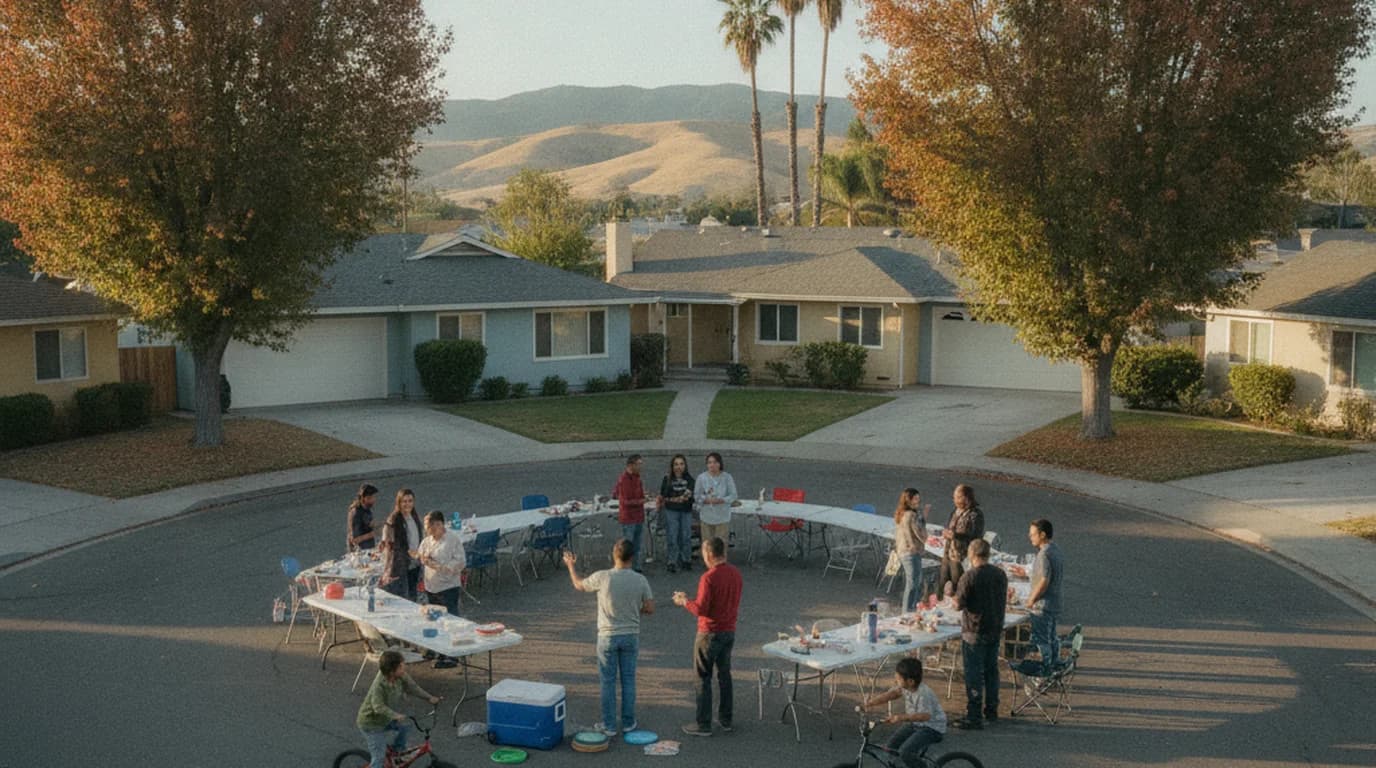
Start here, because the city's Apply button is broken
Go to the SJPD Permits Unit page and click "Apply for a Permit Online." You land on sjpdpermits.eprovalcloud.com, which redirects to a login page serving the City of Philadelphia Streets Department's Street Event Application. It quotes Philadelphia's 75 and 90 percent petition thresholds and Philadelphia's $25, $60 and $150 fees. The contact address it hands you is block.party@phila.gov. San Jose appears nowhere on the page.
I checked it myself because I did not believe it. If you have read that your San Jose block needs 75 percent of residents to sign and sixty dollars, this is why.
The application that works is the Block Party Application on SimpliGov. Set Permit Type to "Block Party" and Application Type to "New." Everything below assumes you are on that form.
SJPD, and the code section behind it
The San José Police Department Permits Unit owns this process, and most search results will not tell you that. DOT and Parks are dead ends. DOT only defines what counts as an approved barricade and handles tow-aways, and Viva CalleSJ is a city-run open streets event, unrelated to closing your street.
The document is officially a Temporary Street Closure Permit, defined in San José Municipal Code 13.14.180 and governed by SJMC Chapter 13.14, which names block parties outright in 13.14.164(E). On the application it is just "Block Party."
One dropdown mistake is expensive. The same form offers "Street Closure / Parade," the commercial track, which wants $1,000,000 in liability insurance naming the City and may require off-duty officers through the Secondary Employment Unit. A Parade Permit runs $275. Pick wrong and you have bought yourself weeks and a bill.
A block party permit in San Jose costs zero, and two official sources say so
The SJPD Permit Fee Schedule in force from July 1, 2026 through June 30, 2027 lists Temporary Street Closure Permit | $0 | Per Event. The Council-adopted Fees and Charges schedule for the Police Department repeats it at line 24 and marks it "No Change." It also shows the program costing the City $38,967 a year at 0.0 percent cost recovery, which is San Jose deciding to eat the whole thing.
A stale $175 figure floats around online, from a 2017 city post on Nextdoor about waiving the fee for the first fifty applicants. Ignore it. No application fee hides behind the zero, either.
Money can still reach you in three places:
- Barricades. You supply them and they must be DOT-approved, with flashers or reflective tape if you run past dark. What they cost is the one number I cannot give you honestly: the City publishes no rate and never says whether it lends them out. Call DOT at (408) 535-3850 before you budget.
- A Tow-Away Permit, only if you need cars removed or curb space reserved. That runs $67 in processing, $0.82 per sign plus tax, and $8 per parking meter per day, with no meter charge Sundays or holidays. A normal block party skips it.
- Insurance, possibly. SJMC 13.14.270(A)(3) exempts events that place no barricades, and a block party places barricades by definition, which reads as though a certificate is due eight business days out. Yet insurance appears nowhere in the Block Party application's document list. SJPD does not appear to ask residents for it. Confirm rather than assume.
Every affected neighbor signs, in ink
San Jose uses no percentage. The application asks for "a petition signed by each resident affected by the closure within barricade locations." Everyone inside the lines, with no threshold to clear.
Two rules sit on top of that. Original signatures, so no typed names and no digital collection. And last year's sheet will be rejected, in the application's own words, so an annual party means walking the block again every year.
The petition is a one-page PDF with columns for address, name, signature and phone. It is stamped "Rev. 09/10/2013" and the City serves it from a vendor training subdomain. It works today. Grab a copy anyway.
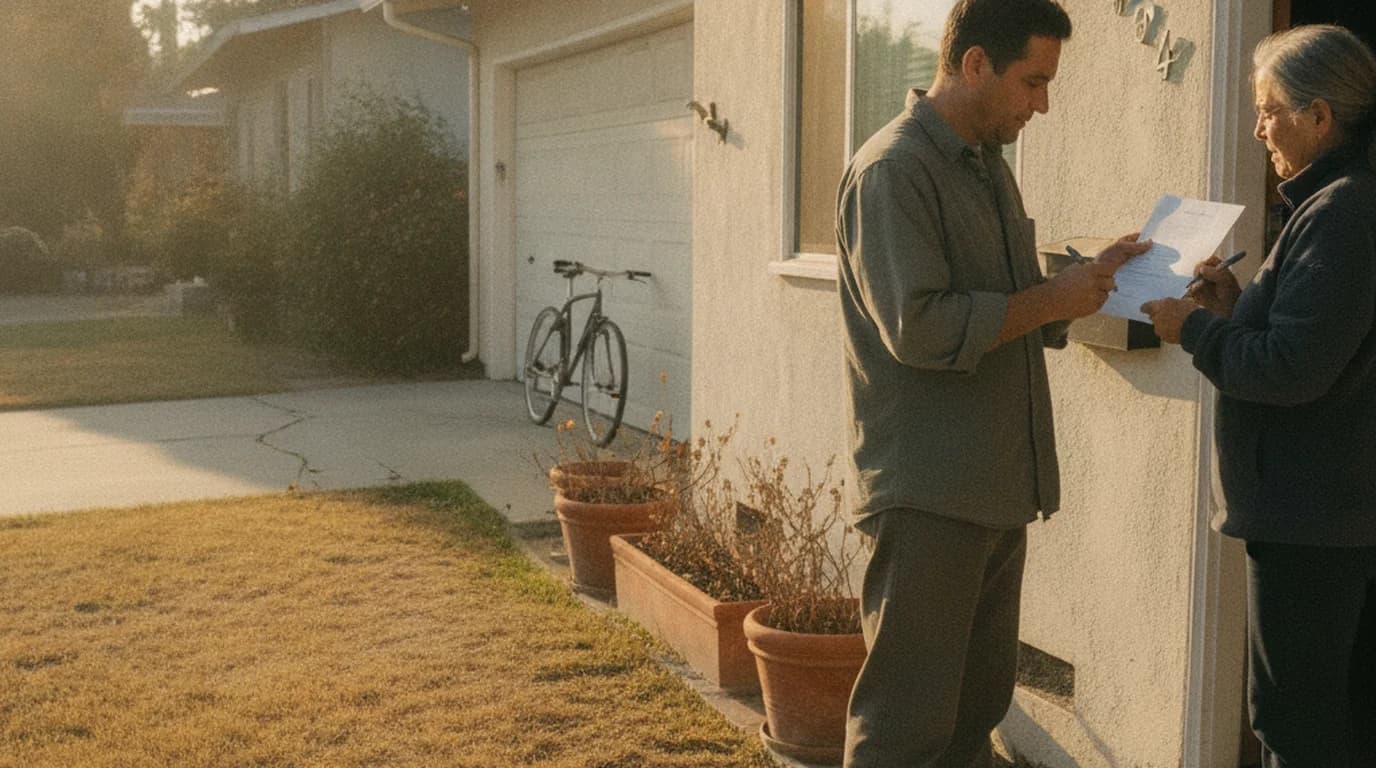
You upload two things under the Documents tab. That petition, and a computer-generated map marking the streets to be barricaded and each barricade position. Hand-drawn is not accepted. The county map site the form links to currently fails TLS verification, so your browser will block it; any other mapping tool is fine.
The petition walk is the first hour of the party, spread across a few evenings. It is how you find out the couple three doors down also grew up in Sunnyvale.
Ten business days, unless you close two blocks
The application says it in capitals: it must be received no later than 10 business days before the event. SJMC 13.14.290(C) agrees exactly, for a closure of no more than one block.
Close more than one block and your deadline becomes 45 calendar days under 13.14.290(A). Nothing on the application warns you. It is the most expensive trap here, and the usual fix is to shrink the closure rather than move the date.
Three official sources then publish three different processing times. The ordinance promises a decision in 5 business days for a one-block closure. The application says allow 3 to 4 weeks. The SJPD Procedures Guide says 20 business days. Plan around the longest and apply 4 to 6 weeks out. Late applications can be considered for good cause under 13.14.290(E), but do not build a schedule on that.
The calendar is otherwise clean: no blackout dates, no seasonal window, no lottery, no council district sign-off. Permits go first-come, first-served under 13.14.220(B).
National Night Out is the exception, with a far earlier cutoff. For the August 4, 2026 event, SJPD wanted block party applications by July 12. Planning one next year means working backward from early July.
No amplified sound, and that changes the plan
Read this line before you promise anyone anything: "No amplified sound or fireworks permitted." It is flat, and unlike many cities San Jose offers no separate sound permit that lifts it for a block party. Acoustic only. A guitar and a decent set of lungs, or nothing.
The other hard rule is the clock. All block parties must conclude by 10 PM. The form asks for your closure hours and repeats the cutoff inline.
Three things the City never addresses anywhere in the block party materials. Treat the silence as silence. Alcohol: the form's Block Party branch never asks about it, and California's open container law applies to a public street regardless. Grills and BBQs: unmentioned in either direction. Bounce houses, inflatables and canopies: also unmentioned, and the City's Air Jumper permit covers parks under a different department.
For any of those, call the Permits Unit at (408) 277-4452 or email sjpdpermits@sanjoseca.gov before you rent something. They are open weekdays 8:30 AM to 3:30 PM, closed noon to 1. In-person applications are no longer accepted at all.
One check before all of it. Confirm your parcel sits inside the City of San José. Santa Clara County has unincorporated islands whose houses carry San Jose mailing addresses, and the County Roads Department permits those streets instead.
Why a cul-de-sac is the easy version
San Jose publishes no special rule for cul-de-sacs. There is no fast lane, and no discount to give since the permit is already free. What a cul-de-sac gives you is arithmetic.
The petition covers every resident inside the barricade lines. On a nine-house bulb that is nine doors on a Saturday morning; on a through-street between two intersections it can be forty. A cul-de-sac has one entrance, so you set one barricade line. And it is one block by construction, which keeps you on the ten-day track.
The approval criteria reward the same geometry. Under 13.14.310(A), SJPD weighs whether traffic controls make the closure safe and whether the crowd would block emergency vehicles; 13.14.320(G) requires denial if the event unreasonably impedes access to adjacent properties. On a dead-end street those questions answer themselves, which is roughly why requests on busy streets get refused.
Ten steps to a free permit
- Confirm your parcel is in the City of San José, then count backward: 10 business days for one block, 45 calendar days for more. Aim for 4 to 6 weeks.
- Fix your barricade lines, intersection to intersection or a house-number range. One block keeps you on the fast track.
- Print the petition and fill in the street name and event date.
- Get a wet-ink signature from every resident inside those lines. Budget a couple of evenings; half the doors will not answer the first time.
- Make a computer-generated map of the closure and the barricade positions.
- Line up DOT-approved barricades, with flashers or reflective tape if you will be out after sunset.
- Open the Block Party Application, set Permit Type to "Block Party," and fill in coordinator details, barricade range, date, closure hours ending by 10 PM, and estimated attendance. The Captcha tab saves your progress by email.
- Upload the petition and map under Documents, sign, submit.
- Pay nothing. The form's payment boilerplate is shared across all twenty-odd SJPD permit types. Your fee is $0.
- On the day, post the permit, set the barricades, keep a clear path for emergency vehicles, run it acoustic, and be done by 10.
San Jose sits near the easy end of the thirty cities in this series, and the gap between it and Houston is startling.
Six years of waving
The permit is administrative. The party is nine or forty households eating outside together for the first time since they moved in.
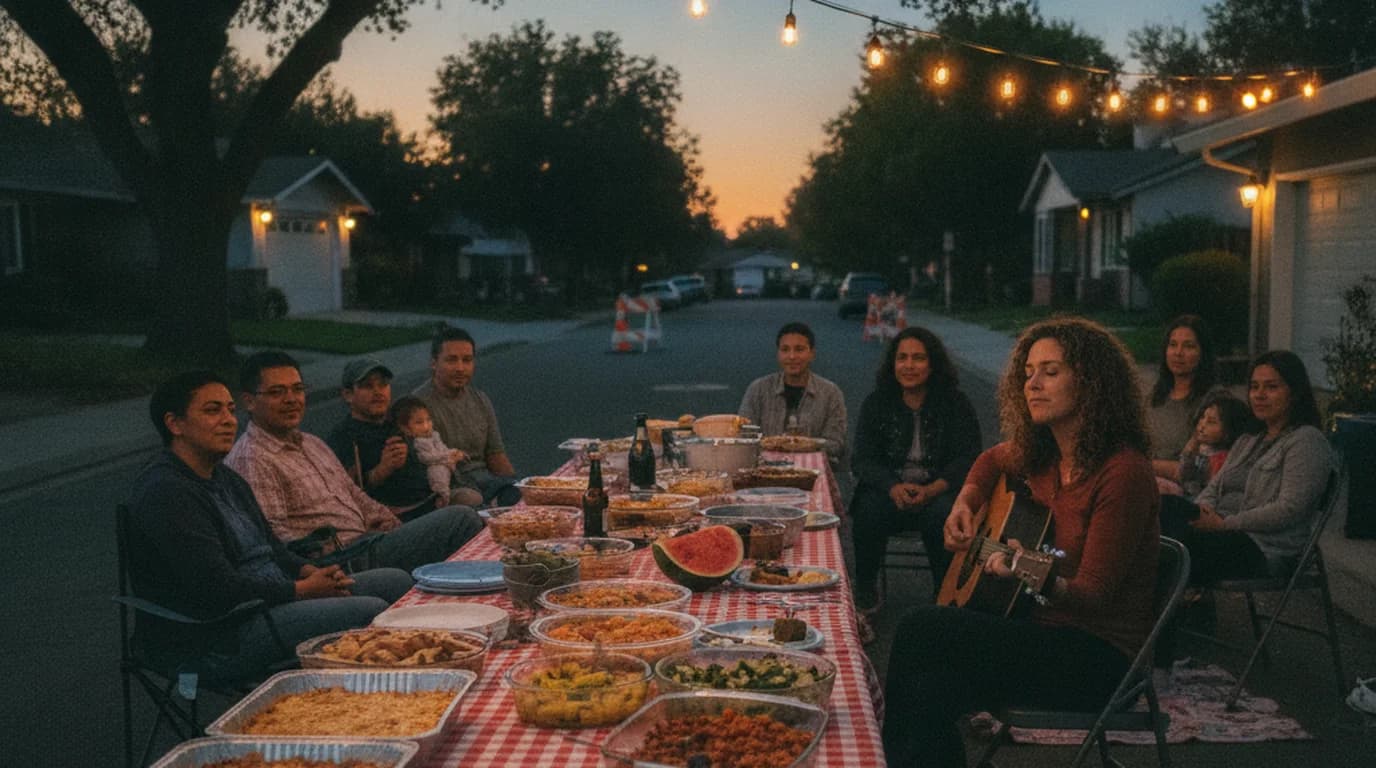
Go potluck with real assignments, because "bring something" produces a folding table holding nothing but sides, while a potluck with a plan produces dinner. Then build the evening around the no-amplification rule instead of fighting it. Conversation at a normal volume, somebody's guitar, kids on scooters, everything winding down while there is still light in the sky.
Six years of waving end on a Saturday afternoon.
Six years of waving ends with an actual invitation. Tell Lemonvite what the afternoon is and it designs one around it, sent by text to whoever you have numbers for. For the rest of the cul-de-sac, publish the event and print its QR code onto a flyer for the mailboxes. A scan opens the public RSVP page and puts them on the list. You get a headcount before you shop, and one message reaches everyone attending after that.