
How to Get a Block Party Permit in Portland
Most cities hand you a form. Portland hands you a program with a name.
The Bureau of Transportation runs an umbrella called Portland in the Streets, and underneath it sits a family of permits: block parties, community events, painting a mural into your intersection, hanging a banner across the road, Play Streets, PARK(ing) Day. There is a dedicated email address and a phone line where a person picks up. Closing a residential street so people can stand in it is somebody's actual job here.
Which is why a block party permit in Portland costs nothing. Zero. PBOT's application page says "Permits are 100% FREE" in bold type, and the rules page follows with "Best of all, the permit is free." No application fee, no per-block charge, no seasonal window, no lottery.
The branding is what trips people up. PBOT is generous enough with names that plenty of hosts go looking at the wrong permit.
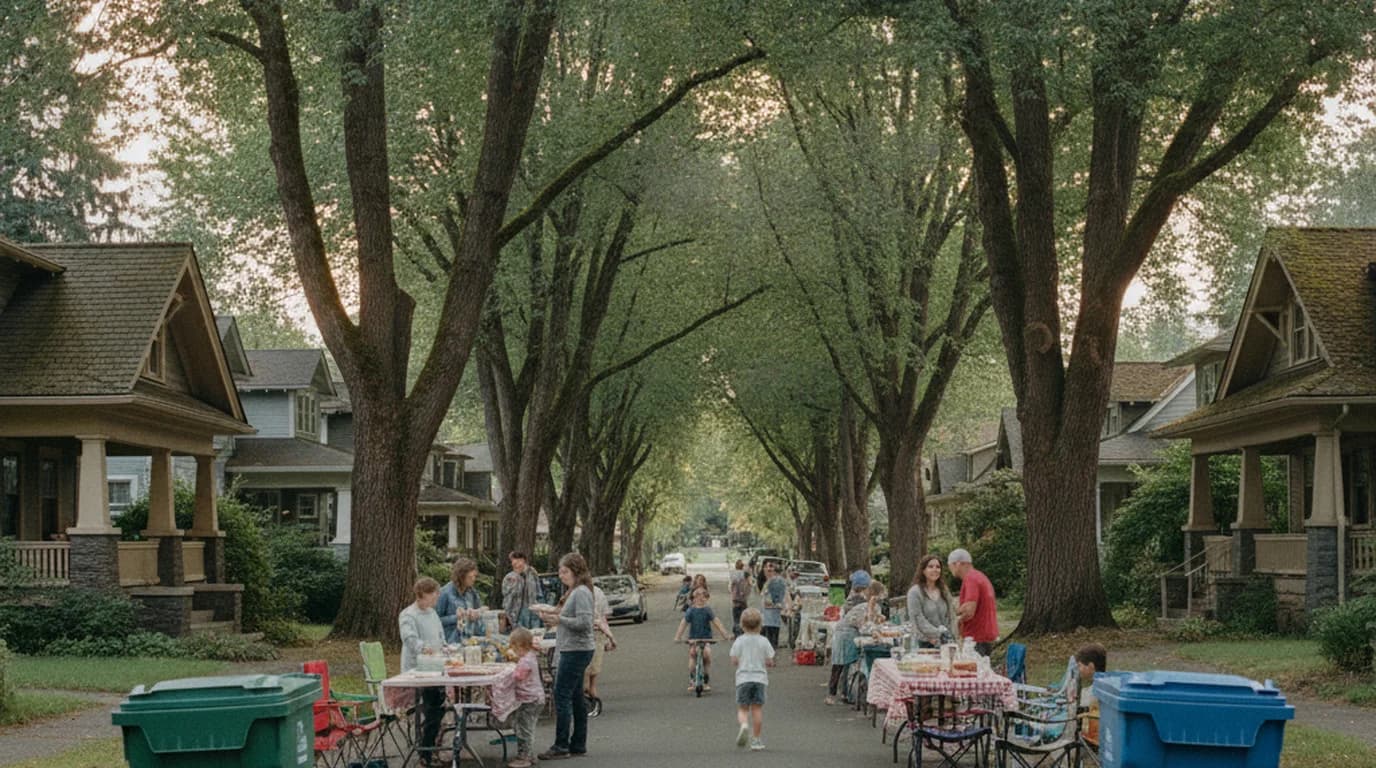
Three Programs, One of Which Is Yours
Block Party permit. This is the one you want. Free, self-service, filed by a resident, closing up to two blocks of a low-traffic residential street. You apply on the Block Party permit page, where the form is embedded right on portland.gov with a map picker. No account, no third-party portal, ten to fifteen minutes.
Play Streets. Skip it. The Play Streets program is a PBOT partnership with nonprofits and community organizations, complete with lending trailers of games and free traffic-control gear. It ranks well in search. A homeowner still files the Block Party permit.
Community Event permit. The escalation path. Break any threshold below and you land here instead, on a 45-calendar-day clock that PBOT would rather you stretch to three months. Filing late can add a $150 expedite fee.
Ignore the search-result debris. Google still surfaces a "Healthy Blocks permit" page, which now redirects to the block party application, and a dead api.portlandoregon.gov "Block Parties" page. Start from Learn about Block Party Permits, the real rules page.
A Block Party Permit in Portland Is Free. Three Other Things Are Not.
The permit itself is $0 in every case. Three other things can still take your money.
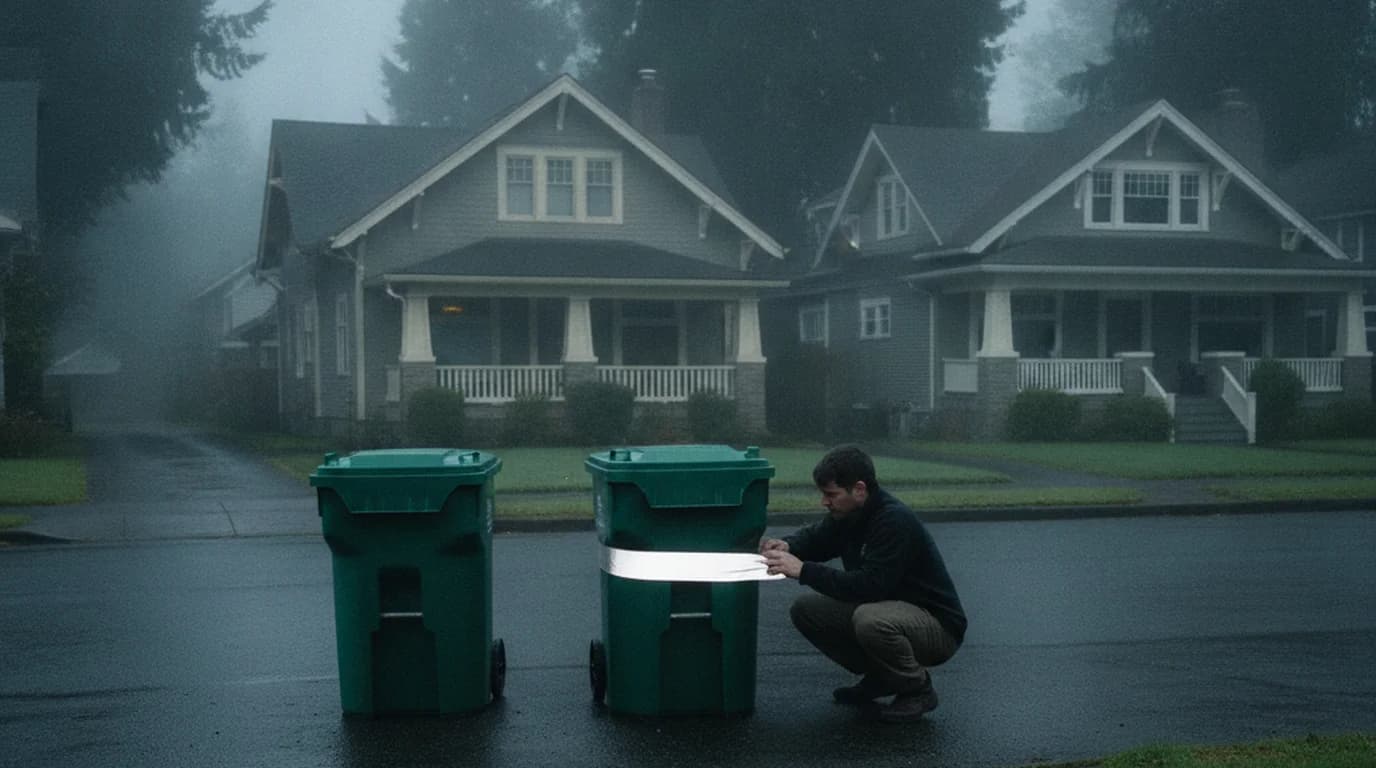
Barricades, if you trigger them. A single block, in daylight, on a street clear of arterials: you can legally close that road with your own trash bins and some reflective tape. Go beyond one block and you have to rent Type 3 barricades and signage from a private vendor. Same if your block touches a non-Local-Service street, or if the closure runs past dusk. PBOT publishes a vendor list with six companies on it and not one price: American Barricade (503-285-6616), Block Party Barricades (503-583-8531), Cantel (503-234-0800), Portland Rent All (503-548-4884), plus two flagging outfits. The city publishes no figure and I am not going to invent one.
A noise variance, if your sound is loud enough to need one. $196 for a one or two day event, and the biggest surprise in this whole process. More below.
Insurance, if you decide you want it. PBOT is explicit that it is optional for a block party closure. You might still want a rider on a homeowner's policy, or the city's own TULIP special-event policy. File a certificate and the right-of-way limits are $1,000,000 per occurrence and $2,000,000 aggregate. Skip it and nobody stops your party.
One thing for next spring's calendar: Party On, Portland!, run by the city's Safe Blocks Program, bundles a free noise variance with a free block party permit for registered parties. The waived variance is the real prize, since it is the one cost a normal block party can incur. For 2026, registration closed June 30 and the window ran August 1 through 14.
Fifteen Business Days, and the Deadline After That
Applications "should be submitted at least 15 business days before your event," roughly three calendar weeks. PBOT's word there is "should," and the city publishes no expedite fee and no stated penalty for filing late. Treat 15 as real and give yourself more, since multi-block closures take longer to review and PBOT never says how much longer.
The deadline most people miss lands after approval: you are required to notify every resident on the closed block or blocks at least two days before your permit starts.
Notification Instead of Consent
Half the block party advice online assumes you will spend a weekend circulating a petition and chasing signatures. Portland works differently.
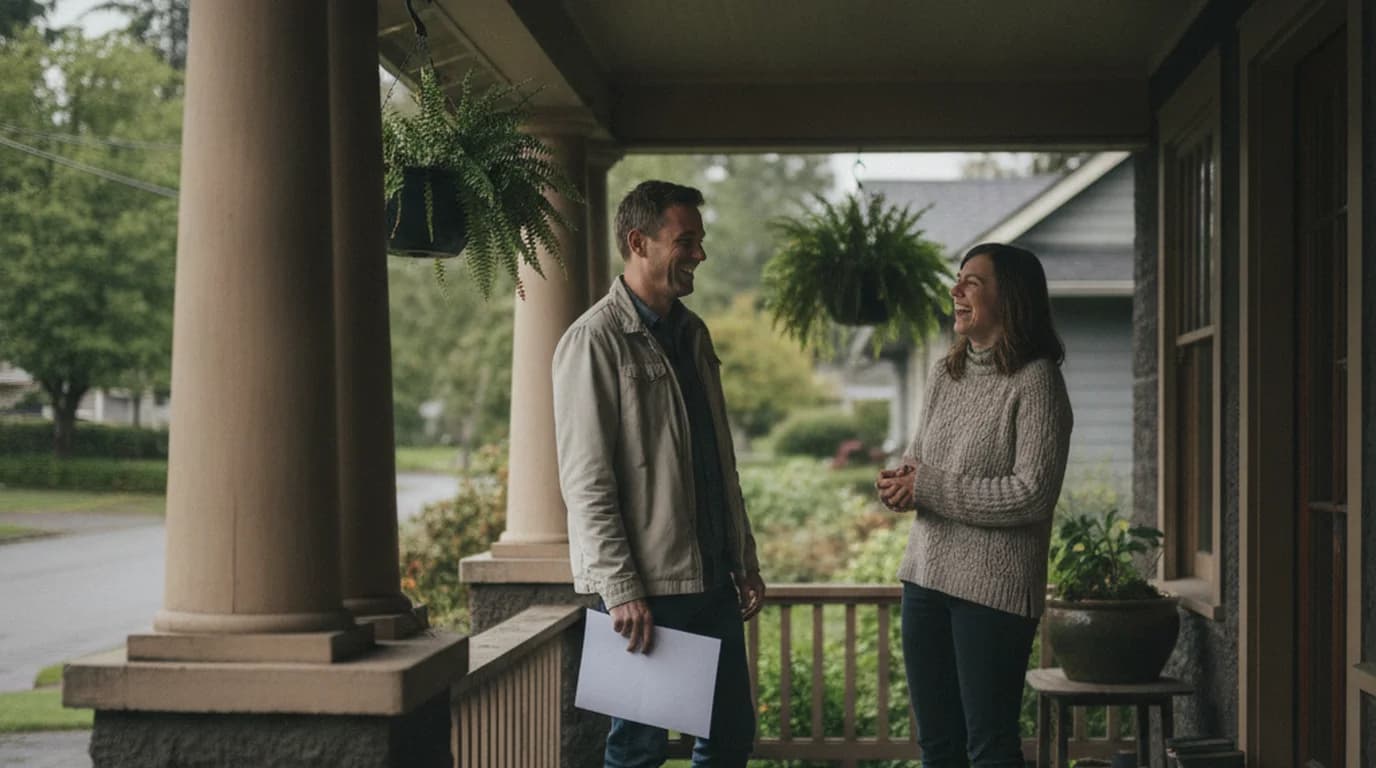
There are no signatures to collect. No petition, no percentage-of-households threshold buried in the fine print. What the city wants is notification: talk to your neighbors before you apply, which is encouraged and counts as your notification, then get a flyer to every resident on the block at least two days before the permit starts, which is required.
The trap is procedural. A copy of your flyer has to be inside the application when you submit it. PBOT provides a flyer template to download and fill in. Most people file the flyer under "errand for later" and submit without it, which makes the application incomplete.
Talking to neighbors early also surfaces the driveway that has to stay usable and the paving crew already booked for that Saturday.
Local Service Traffic, and Three Other Tests
Four conditions, and every one of them is about the street itself:
- It has to be classified Local Service Traffic on PBOT's street classification map, which in practice means a low-traffic residential street.
- It cannot be on a bus or transit route.
- It cannot be an arterial.
- Metered blocks are out.
You can close up to two blocks (four if you are painting an intersection), and intersections stay open either way. What you get is a closed block segment with traffic still crossing at every corner.
The Seven Things That Disqualify You
Break any one of these and the city stops calling it a block party:
- More than 100 people at any single point in time.
- Vendors, beyond one permitted food vendor.
- Alcohol sales or consumption on the street.
- Anything associated with a business.
- A closure longer than two blocks, except intersection paintings.
- A closure on an arterial street.
- A closure in a metered area.
Number three catches party hosts. Alcohol in the roadway is a bright line, and nobody at PBOT is weighing your particular case. Cross it and you are in Community Event territory, on the 45-day clock. Your porch and your driveway are not the street.
One more condition lives outside that list and appears twice in the rules: the party has to be free and open to the general public. A genuinely invite-only event does not qualify, which is a real legal condition of occupying public right-of-way. Practically it shapes the invitation more than the party: what you send out is an announcement to the whole block.
With a second food vendor out and alcohol on the street out, a potluck is the natural shape for the food. Assign categories, or the whole street brings dessert.
Closing a Street With Your Own Garbage Cans
For a one-block daylight closure that does not touch an arterial, Portland lets you barricade with household items. Your rolling bins count. The specs are exact:
- At least 3 feet tall and 18 inches wide, with a minimum of two items at each end.
- Two 4-inch retroreflective bands on all sides. First band 2 inches down from the top, second one 2 to 6 inches below that.
- A "STREET CLOSED" sign on the center item at both ends, at least 2 feet tall by 3 feet wide, mounted 20 inches or more above the roadway and not covering the tape.
- Barricades set 3 to 6 feet apart at each end, clear of every crosswalk. Under state law every corner is a crosswalk whether or not anyone painted it.
- A 12-foot fire lane stays open the entire time, whatever you are using as a barricade. This is the rule that goes first once tables and coolers spread out.
- Weight everything so it cannot tip.
Summer hosts run into dusk. Your permitted window is up to 8 hours within any 7 consecutive days, between 9 a.m. and 9 p.m., setup and cleanup included. But household-item barricades are daylight only, and the street has to be fully reopened by dusk. Running to 9 p.m. in July means real barricades with retroreflectivity and flashing lights, approved case by case. So "9 to 9" is misleading for anyone closing the street with a couple of bins.
(Schools get 7 a.m. to 7 p.m. Street painting gets 16 hours in a week. Recurring events can span a month.)
Music Is a Different Bureau
Portland's Noise Code exempts sounds "not electronically amplified" created by athletic and entertainment events. Nowhere in Chapter 18.14 is there an exemption for block parties or for permitted street closures of any kind, and PBOT's own page notes that the permit "shall not exempt the permittee from obtaining any license or permit as required by City Code."
So if your amplified sound will exceed Noise Code limits, you need a separate noise variance from Portland Permitting & Development. Different bureau, different clock:
- $196 for a one or two day event, $220 for three or more days. Cut in half for nonprofits and City Neighborhood Associations.
- File 10 or more business days out for that base fee. At 5 to 9 business days it becomes 1.5x. At 4 business days it doubles. Under 3 business days they will not accept it.
- Revising an approved variance costs $109.
- The notification radius is 500 feet or two blocks, wider than the permit's own block-only rule.
- Packages go to variances@portlandoregon.gov. Questions to 503-823-7350.
Whether a typical residential party crosses that threshold is a judgment call I cannot make for your street. But Party On, Portland treats a waived variance as its headline benefit, which suggests the city expects amplified sound here to be variance territory. If you are hiring a DJ, call early.
Twelve Steps, Map to Bins
- Check your street on the TSP map. Local Service Traffic, no bus route, no arterial, no meters.
- Check your event against the seven thresholds above.
- Talk to your neighbors. It counts toward the required notification and surfaces date conflicts before you file.
- Make your flyer, from PBOT's template or your own. You need a copy to attach.
- Pick your window. Up to 8 hours inside any 7 consecutive days, 9 a.m. to 9 p.m.
- Apply at least 15 business days out. Map picker, number of blocks, midblock or intersection. No fee.
- File a noise variance separately if you need one, ideally 10 or more business days ahead.
- Rent barricades if you are over one block, next to an arterial, or running past dusk.
- Read the traffic control plan PBOT issues with the permit. Arterial-adjacent blocks get a site-specific one free.
- Deliver the flyer to every resident at least two days before the permit starts.
- Set up no earlier than your permit time. Barricades out of crosswalks, signs centered, fire lane clear.
- Reopen before your end time, everything out of the right-of-way. If the party fizzles at four, open the street at four.
The Questions Portland Does Not Answer
Bounce houses and inflatables go unmentioned on every block party page, in either direction. Grills and fire pits are unaddressed too, though Portland Fire & Rescue may have rules of its own. Tents and canopies: silent. Same for cars already parked on the block, and for any weather or cancellation policy.
Call the Block Party Program at 503-823-4003 or email pbotblockparty@portlandoregon.gov. Ten minutes on the phone beats guessing, and this is a staffed program full of people who want your party to happen. Ask about weather while you have them: your permitted time is measured as 8 hours inside a 7-day span rather than one locked date, and you want to know what that allows you if the forecast turns. Then go build the rest of your rain plan.
Eighty households, one Saturday
Getting eighty households to know that on Saturday the 12th, from noon until eight, the street belongs to them is the half PBOT cannot help with. Your flyer satisfies the city and reaches roughly the people who were already coming. The neighbors you most want at this thing, the ones four doors down whose names you would have to guess at, tend to find out because a text arrived.
Doing this somewhere other than Portland? The city-by-city series covers twenty-nine more permit offices, and Portland is one of the two friendliest.
Portland hands you a program and a free permit. Filling the street is still yours. Describe the block party at Lemonvite and it draws the invitation, which sends by text. Publishing opens an RSVP page and gives you a QR to print onto the same notice you are already delivering to every resident. One flyer does the notification and the invitation at once. Scans become RSVPs, and everyone attending is one message away when the forecast turns.