
How to Get a Block Party Permit in El Paso
On my aunt's block in Central El Paso, a birthday party never stays one party. It starts as a carne asada for a cousin turning nine. By seven, two teenagers are running quinceañera choreography on the driveway and somebody's comadre has arrived with a pot of beans nobody asked for. Most of the guests are family who live three streets over.
Then a folding table comes off the driveway and into the street, and the afternoon becomes a different legal category. That is where a block party permit in El Paso starts to matter.
The city does have a permit for it. It is just filed under a name no one would ever search for.
Start at Seven, Because June Does Not Negotiate
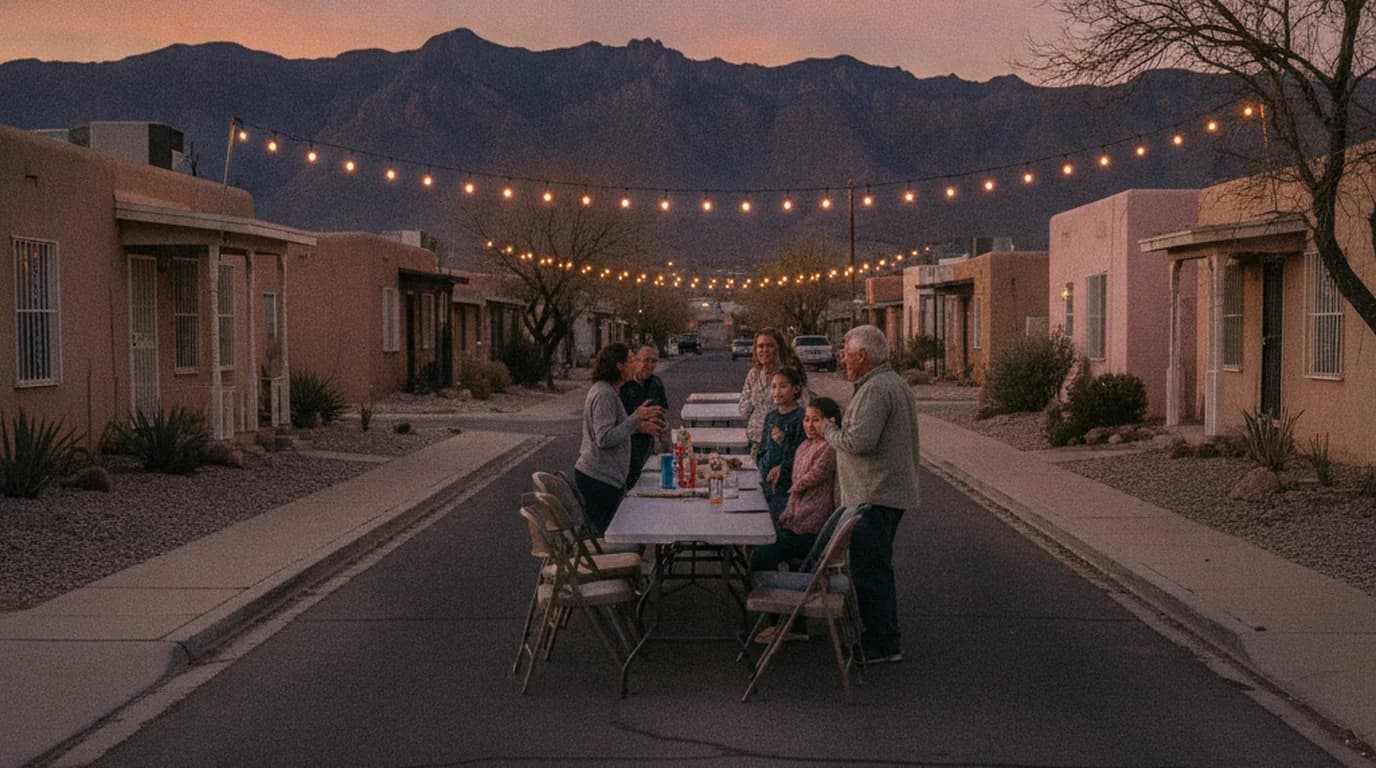
Before any of the paperwork, pick the hour. A block party happens on asphalt, and El Paso asphalt spends the whole day storing heat and the whole evening handing it back. An afternoon start in June means the abuelas look at the driveway once and stay inside with the swamp cooler running.
So run it late. Seven into the night in summer, with the food out once the sun drops behind the Franklins. October through April you can start mid-afternoon. Shade is the thing to over-buy either way, since most El Paso streets have nothing overhead except power lines, and canopies do more for attendance than anything else you can rent. The rest follows ordinary outdoor party ideas with shade as the first line item.
The permit covers 24 hours or less. Past that, El Paso publishes no allowed-hours rule and no quiet-hours number I could source officially, so I will not hand you a curfew that might not exist. If music matters to your block, call the Special Events office at (915) 212-0104 and ask.
What a Block Party Permit in El Paso Is Actually Called
There is no document in El Paso called a block party permit. What you want is a Temporary Event permit, issued by the Special Events office inside the Planning and Inspections Department. People look for it at the City Clerk or Streets and Maintenance; it is neither. The whole thing runs off the city's Event Types page, which is the one page worth reading end to end.
A Temporary Event is defined as a "bazaar, block party, street dance, sidewalk sale, show, exhibition, festival, celebration or similar" that meets every one of these:
- Lasts 24 hours or less
- Takes place on city right-of-way, meaning a street, alley or sidewalk
- Does not exceed one city block or one intersection
- Sits in a closure area that is at least two-thirds residentially zoned
- Is requested by the owners, residents or tenants of that area
Miss one and you are filing a Special Event instead: $377.00 rather than $137.00, plus a certificate of insurance with the application. Geography and zoning are what catch people. Two blocks is not a Temporary Event no matter how neighborly the second block is, and the two-thirds test applies to the closure area itself, so a corner store and a church on one short stretch can bump your potluck into the expensive tier.
The last criterion is the best rule in the ordinance: only owners, residents or tenants can request the closure, so no outside promoter can file for your block. The law behind it is Municipal Code Title 13, Chapter 13.38; the city's neighbor form prints § 13.38.040 across the top.
The Fees, and the One I Cannot Confirm
The application fee for a Temporary Event is $137.00 by cash or check, $139.71 by credit card, filed 30 or more days ahead. Inside 30 days it roughly doubles, to $268.00 or $273.31.
It is non-refundable, and the city says so twice, beside both amounts. You pay whether the permit is granted or denied, which settles the order of operations: collect your neighbors' signatures first, pay second.
You are also responsible for city service costs: Police, Parks, Health Department and Cleaning Services, none of them published as a schedule. Request police services and the deposit is due no later than two business days before the party.
Then the street closure fee, where I have to be honest with you. The Event Types page lists $53.00 per 12-hour period in residential zones, but only under the Special Event heading; the Temporary Event section never mentions closure fees. The Downtown Management District quotes that same $53 as if it applies generally, which suggests it probably does, but the DMD is not the city and I could not confirm the charge on a city page. Ask when you call.
Every Abutting Neighbor Signs, or Objects
Everything above is paperwork. This is the part you have to walk.
You must collect the signature and a statement from each owner or occupant of real property abutting the boundaries of the proposed closure, on the city's Notice of Proposed Closure. It is a table: name, address, owner or tenant, a consent column, an object column, and a signature. If a neighborhood association covers your block, § 13.38.040 says it gets notice too.
Those two columns make El Paso's rule unusual. There is no percentage here, no "60% of frontage" formula: each abutting owner or occupant has to be contacted and their position recorded. The Object column means the city collects objections rather than treating one as automatic denial, though nothing published says how many objections sink an application. If you expect a hard no from the house on the corner, make that phone call before you spend $137.
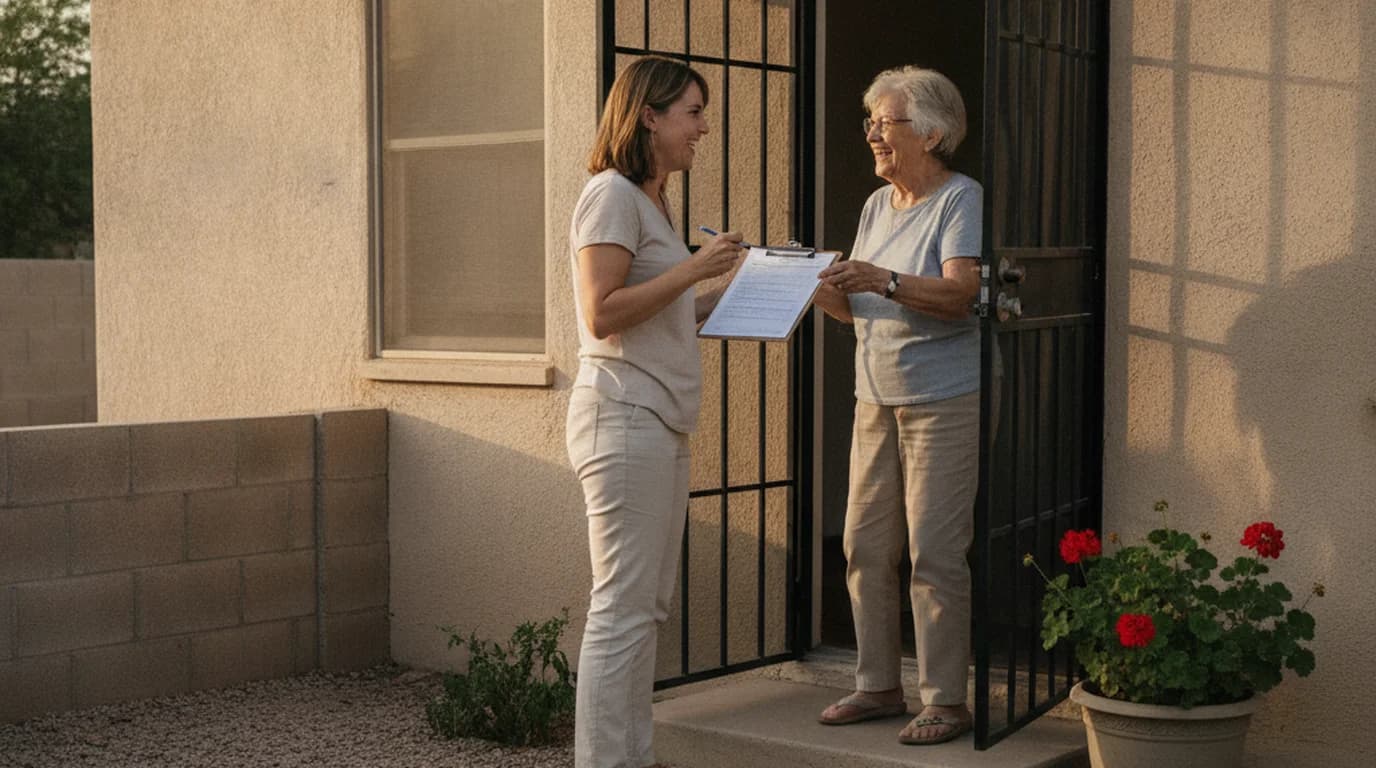
The form is printed in English. On a block like my aunt's, where plenty of households run their lives in Spanish, the paper is not the conversation. Walk it door to door and explain it out loud in whichever language the door opens in. The signature is the last thirty seconds of a five-minute visit, and a photo of the form dropped into the WhatsApp group gets you fourteen thumbs-up emoji and zero signatures.
Go in the evening, once the heat breaks and people are home. Renters count as occupants, so knock on doors instead of pulling names off a property record.
A Traffic Control Company Has to Draw the Plan
El Paso requires a traffic control plan submitted with the application, showing all traffic re-routing plus the barricades and signs, and the city states plainly that you must contact a traffic control company to draft it. You cannot sketch it yourself. That one requirement reorders your schedule: the city publishes no vendor list and no price range, and for a residential potluck this is likely the largest real cost and the step most likely to blow the 30-day deadline. Start it the week you pick a date. You also need a site plan showing the layout and how traffic moves around it.
Alcohol Turns One Permit Into Four Things
The city's rule is that alcohol brings a TABC Temporary Event Permit, insurance, and a licensed Texas Peace Officer on site. That officer is a paid off-duty hire, so a $137 permit becomes a much more expensive afternoon the moment somebody suggests a keg. Whether a dry block party needs insurance at all is not stated on the Temporary Event page, and the $1M/$2M limits floating around El Paso's site belong to a separate event sponsorship program, so do not budget off them.
Vendors carry their own paperwork: food vendors get scheduled to come in together, on one day, to be licensed. Which is an argument for the version of this party where the food comes out of eleven kitchens on the block instead of a truck. Hand out assignments early using the potluck guide rather than hoping the sides balance themselves.
One more that catches blocks near downtown and UTEP: if your closure touches the streetcar's operational right-of-way, including within ten feet of the infrastructure, there is a separate streetcar application.
Everything else is screened case by case. The application asks about portable restrooms, alley use, police, security, parking, fireworks, amplifiers, animals and food service. El Paso publishes no flat rule on bounce houses, grills or open flame, so answer honestly on the form and let the office come back to you.
Ten Steps, in the Order They Have to Happen
- Confirm your street is in the city proper. Unincorporated county goes to the Sheriff's Office, and the Downtown Plan Area permits through the Downtown Management District at (915) 400-2294.
- Check the five criteria. One block, 24 hours, city right-of-way, two-thirds residential, requested by people who live there.
- Pick a date 30 days to a year out. A TxDOT roadway closed for more than four hours makes it 90 days.
- Call a traffic control company for the plan. In practice this is your real first step.
- Walk the block with the Notice of Proposed Closure, recording every abutting owner or occupant as consenting or objecting, with a signature.
- Draw the site plan, showing tables, canopies, any inflatable, and how traffic moves around it.
- Line up whatever extras apply: TABC permit, insurance and a peace officer for alcohol; health licensing for any vendor; a streetcar application near the line; a letter on the property owner's letterhead if the party spills onto private land.
- Submit the online Event Permit Application, choosing Temporary Event, with the site map and route, the closure notice, the traffic control plan and any authorization letters attached.
- Pay the $137.00 fee, or $139.71 by card.
- Pay the police deposit two business days out if you asked for PD services, then settle the city service costs as billed.
Where This Goes Wrong
The Citizen Access Portal is a trap. The Event Types page links the Accela portal prominently for permits, but its menu runs Building, Licenses, Planning, Traffic Control and a few others, with no Special Events module anywhere. Anyone who follows that link spends an hour hunting for a permit that was never there. The real application is the GovOS form in step eight.
The May 31 deadline you found is not yours. Search for El Paso event permits and you land on the Moving Event Guidelines page, with its May 1 to May 31 window marked "No Exceptions." That is the city's event sponsorship and funding program for runs, walks and parades. Your window is a rolling one year to 30 days.
Two phone numbers are in circulation. The city's web pages list (915) 212-0104 and an office at 300 N. Campbell, weekdays 8 to 5; the application form lists (915) 212-1563 and 811 Texas Ave. Two city pages agree on the first pair, so start there. Email is SpecialEvents@elpasotexas.gov.
The county is a different permit entirely. In unincorporated El Paso County the Sheriff's Office issues it, the application is filed in person at 3850 Justice Drive on a weekday between 8 and 4, and it costs $75, or $150 inside 30 days. No personal checks. Cross a jurisdiction line anywhere in this country and the rules restart, which is why we did one guide per city.
What El Paso does not have is refreshing: no lottery, no council district sign-off, no blackout dates, no seasonal restriction. A rolling window, a form, a professional traffic plan, and your neighbors' signatures.
The Numbers You Did Not Collect
You will finish the canvass knowing every address on the street and roughly none of their phone numbers. Fix that while you are standing at the door, because the households that signed your closure notice in September have no idea what time anything starts.
Then the part that fills the street. Tell Lemonvite what the evening is, down to the carne asada and the seven o'clock start, and you get an invitation made for it rather than a template. Text it to the family who live three streets over. For the rest of the block, print the QR code from your published event on a flyer and tape it to the door: a scan opens the public RSVP page, no number required. Then message everyone attending once the music is sorted.