
Planning an Indian-American Fusion Wedding: Invites and Events
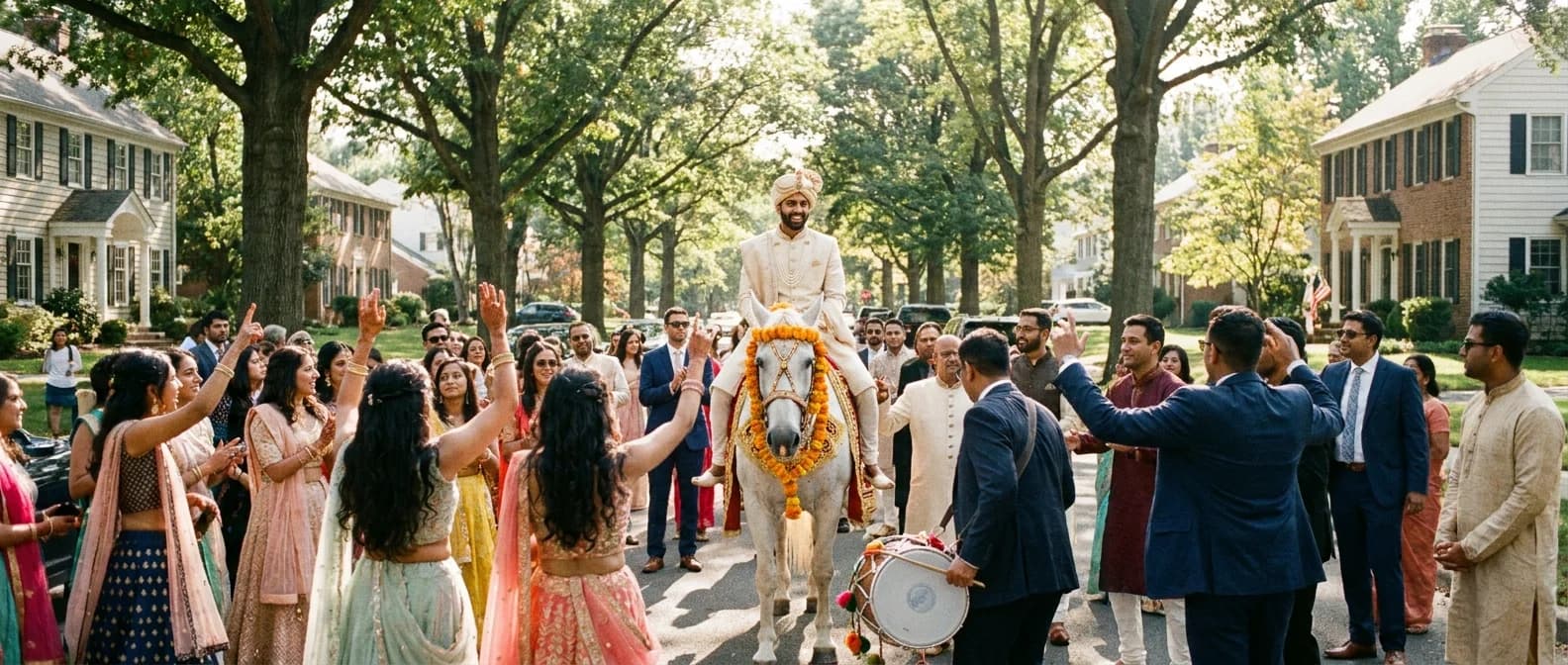
My cousin Neha married a guy named Tom from Ohio, and the first real sign of trouble came three weeks out, when his best man texted her, "quick q, is the horse thing the actual wedding, or a separate event we also dress up for?" He meant the baraat. Someone had warned him there would be a horse. Nobody had told him there were five other functions with names he'd never heard, or that "wear Indian clothes" was a real instruction and not a polite suggestion he could decline.
That text is the whole job of planning an Indian-American fusion wedding in one screenshot. Neha's side knew the entire choreography cold, down to which auntie sings at the sangeet. Tom's side was flying blind. They wanted desperately to do it right and had no map at all. You are essentially running one wedding for two crowds who read the same weekend at two very different levels, and the invitations are where that split either gets handled early or turns into forty panicked texts the week of.
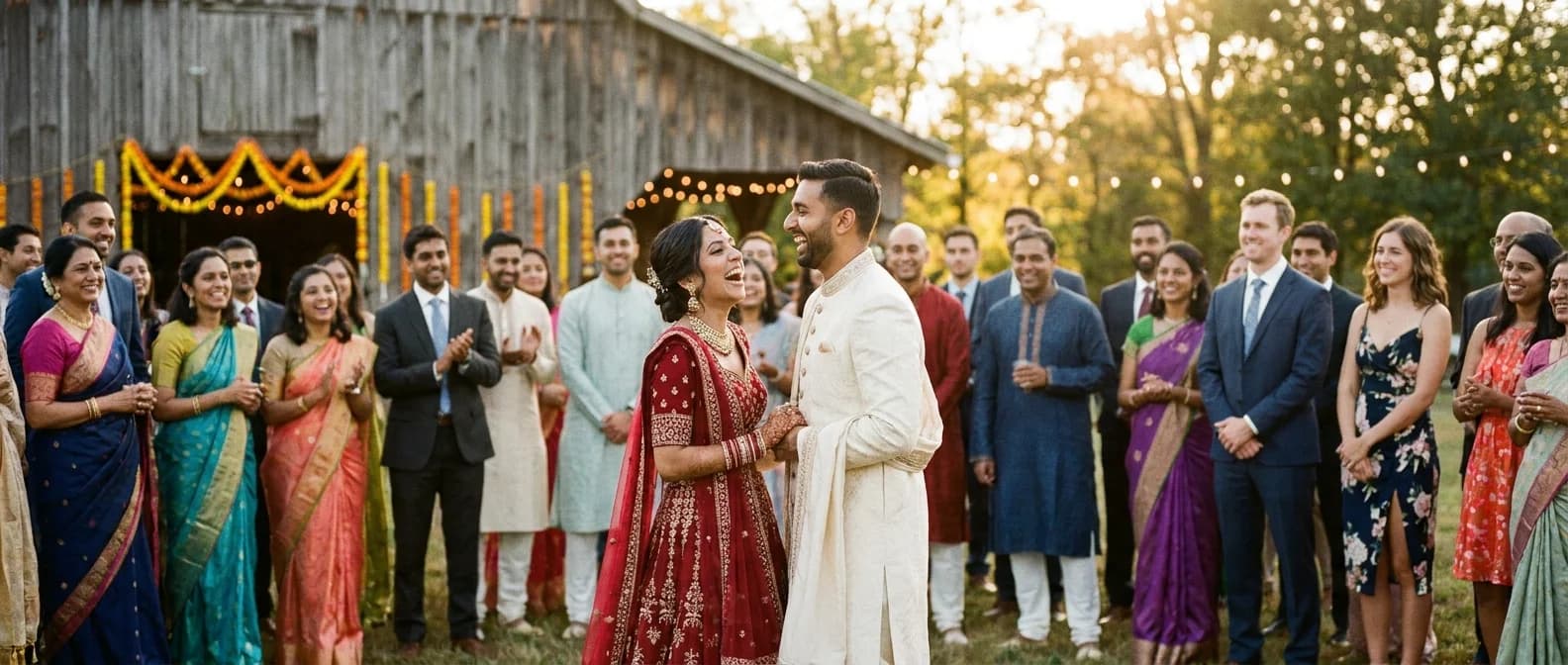
A split guest list is the actual challenge
A wedding in Delhi or Mumbai has one big advantage you don't get in New Jersey: almost everyone in the room already knows the drill. They know to skip the 9 a.m. haldi if they're tired, that the sangeet runs late, that you greet the elders first. The diaspora version is different. Half your guests have been to twenty of these. The other half have been to exactly zero, and that half includes the groom's college roommates, your coworkers, the friends who matter most to you and understand the least about what's coming.
So every invitation you send is doing two jobs at once. For the relatives who grew up inside these rituals, it's pure logistics: time, venue, dress code, done. For the friends who've never seen a baraat, it's also a gentle orientation, the difference between someone showing up confident in a kurta they rented and someone hovering at the back in a suit, terrified they're about to insult your grandmother. Same events, two reading levels. Hold that idea and most of the hard decisions get easier.
Map the weekend before you word a single card
A wedding in India can sprawl across a full week. In the US, with the whole guest list flying in and spending real PTO to be there, it usually compresses into a long weekend, Thursday night through Sunday brunch. Before you write anything, decide the actual shape of those days, because the events you choose determine every invitation that follows.
Here's the menu most fusion couples are choosing from:
- The welcome dinner and mehndi, Thursday or Friday. For diaspora weddings these two often merge, so the first night runs as equal parts arrival party and henna ceremony. It's worth real planning, which I got into in the mehndi and haldi guide.
- The sangeet, Friday night. The dance night, with choreographed performances and an open floor after. It's the one your American friends will replay for a year. Word it like the party it is; the sangeet invitation wording post has the language for that.
- The haldi, Saturday morning. Short and gloriously messy, turmeric paste everywhere. Plenty of fusion couples keep this one to family and close friends rather than putting it on the full guest list.
- The ceremony itself: the baraat arrival, then the rite, whether your family's tradition is the Hindu pheras, the Sikh anand karaj, or something else entirely. This is the fusion fault line. Some couples run one traditional Indian ceremony and fold a short Western "I do" exchange into it; interfaith couples sometimes hold two ceremonies outright. There's no default here, so pin down what you're actually doing before you describe it to a single guest.
- The reception, Saturday night, cocktail hour rolling into dinner into a late dance floor. It's the most American event of the run, and usually the moment both sides of the room finally mix. I wrote up the wording in the Indian wedding reception invitation guide.
- The day-after brunch on Sunday, borrowed straight from the American playbook and genuinely kind when half your guests crossed the country to get there.
One strong opinion: don't try to cram all of that onto a single Saturday, and don't make the dawn functions mandatory for guests who landed at midnight. Keep the early, intimate rituals to family and the people who'll truly treasure them. Put the big communal events, the sangeet and the reception, where the whole list is invited. A guest who slept four hours does not need to feel guilty for missing the 9 a.m. turmeric.
Bilingual invites that don't become a wall of text
The instinct is to print everything twice, full English beside full Hindi or Gujarati or Punjabi, top to bottom. Resist it. A card with every line doubled reads as cluttered to everyone and elegant to no one. The better move is to pick the load-bearing lines and let each language carry what it carries best.
Lead with the language most of your guests read, usually English, so the friends who can't read Devanagari aren't lost on their own invitation. Then bring the second language in where it means the most: the invocation your elders will look for at the very top, and the couple's names in the family script. The full skeleton of names, host line, request line, and date lives in my wedding invitation wording guide, and it holds whether you write it in one language or two. If your grandparents will read this card and judge it, that one bilingual touch at the top matters more than translating the parking instructions.
Tell your non-desi guests what's actually happening
This is the highest-leverage thing you'll do, and almost nobody plans for it. The friends who've never been to an Indian wedding don't need a history lecture. They need a short, friendly explainer of what each function is and what's expected of them, and it should live on your event page or wedding site, never crammed onto the formal card.
Keep it to a sentence per event. "The baraat is the groom's arrival procession, with a band and dancing, and yes, you're invited to dance him in." "The sangeet is our big dance night, expect performances and a late finish." Then answer the two questions they're too polite to ask: what do I wear, and is there a gift thing at every event. Spell the dress code out per function and mean it. "Please wear Indian clothes, here's a shop near the venue and a rental site if you'd rather not buy" does more to relax a nervous guest than any amount of "festive attire." Tom's best man didn't need to understand the theology of the saptapadi. He needed to know that Saturday at 10 the groom arrives dancing and the vibe is bright colors over a gray suit, so come ready to dance him in.
The haldi deserves its own warning line, because turmeric does not come out of clothes and that's the entire point of it. Tell anyone you've invited to wear yellow they will not mourn losing. The same dress-code-as-load-bearing-instruction logic runs through the whole weekend, and it's the thing first-timers are most grateful for.
The invitation suite is where the logistics get solved
Step back and look at what you're actually asking a guest to track: five or six functions, each with its own start time and dress code, plus a hotel block, plus a Sunday brunch. Forward all of that as one screenshotted PDF and you've signed up for a month of "wait, what time is the sangeet again?" The functions need to be separate events, each with its own RSVP, so you can see at a glance that the haldi is thirty people and the reception is two hundred and eighty.
This is where I'd reach for Lemonvite's design engine. Describe the look you want, "deep maroon and gold for the ceremony, an art-deco flip for the reception," and it designs the whole suite in one visual family instead of you hunting through templates built for someone else's wedding. Your split guest list also splits how invites travel: the relatives live on their phones and want a text, while the work friends will open an email and then ignore the next two, so it helps that you can send each invite by text or email and let people pick their lane. For the aunts and cousins still in India or the UK, sending invitations worldwide without international postage or a fight over time zones is half the reason to go digital at all.
Two more things a multi-event weekend needs. Build a real maybe into the RSVP, because a chunk of your replies will come from travel-dependent guests who haven't booked flights and shouldn't be pushed into a false yes; I made the full case for the maybe elsewhere. And when the shuttle time slips or the venue moves the parking, one update from the event page pushes to everyone who already RSVP'd, instead of you re-forwarding a correction into half a dozen separate threads at midnight. You can run every function under one wedding invitation set, so each event lives in the same place and each guest answers them one at a time.
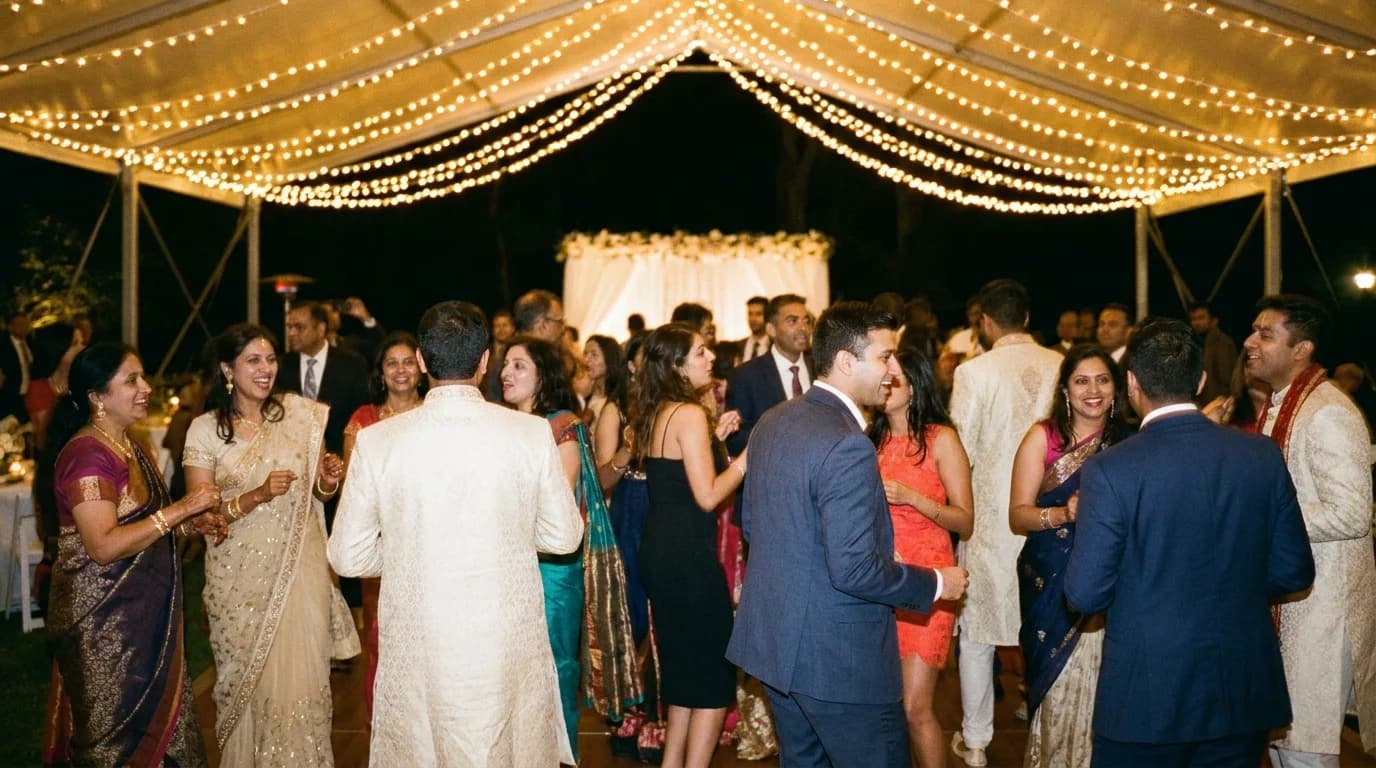
Neha's wedding worked, in the end. Tom's best man wore a teal kurta, danced in the baraat like he'd been doing it for years, and cried a little during the pheras someone had walked him through the week before. None of that happened by accident. It happened because the invitations did the translating before anyone arrived. Get the events mapped and the guests oriented, then let the invites carry both crowds through the weekend while you go argue with the caterer about the paneer.