
Diwali Party Invitation Wording for Indian-American Hosts
The text came in at 5:12 PM, ninety minutes before anyone was due. "Slightly embarrassing question. Is tonight a religious service or a party? And would wine be rude?" That was Danielle from my team, and she was right to ask, because my invitation had read, in full: "Diwali at ours! Saturday the 2nd, 6 PM onward. Food, lights, bring the kids."
Perfect for my mother's cousins. Useless for about a third of the room.
That gap is the whole job of Diwali party invitation wording once you're hosting in the US instead of attending in India. An invite in Pune can be four words long because the culture carries everything else. Everyone there already knows roughly when the puja happens and that you don't fill up at lunch. In Edison or Cary or Fremont your guest list is split down the middle. Half of it needs a time and an address. The other half needs an orientation and would rather die than ask for one.
So below: the 2026 dates, then wording sorted by which half of that list you're writing to. Plus the questions your invite has to answer before the group chat does.
Diwali 2026 lands on a Sunday, and your invite has to deal with it
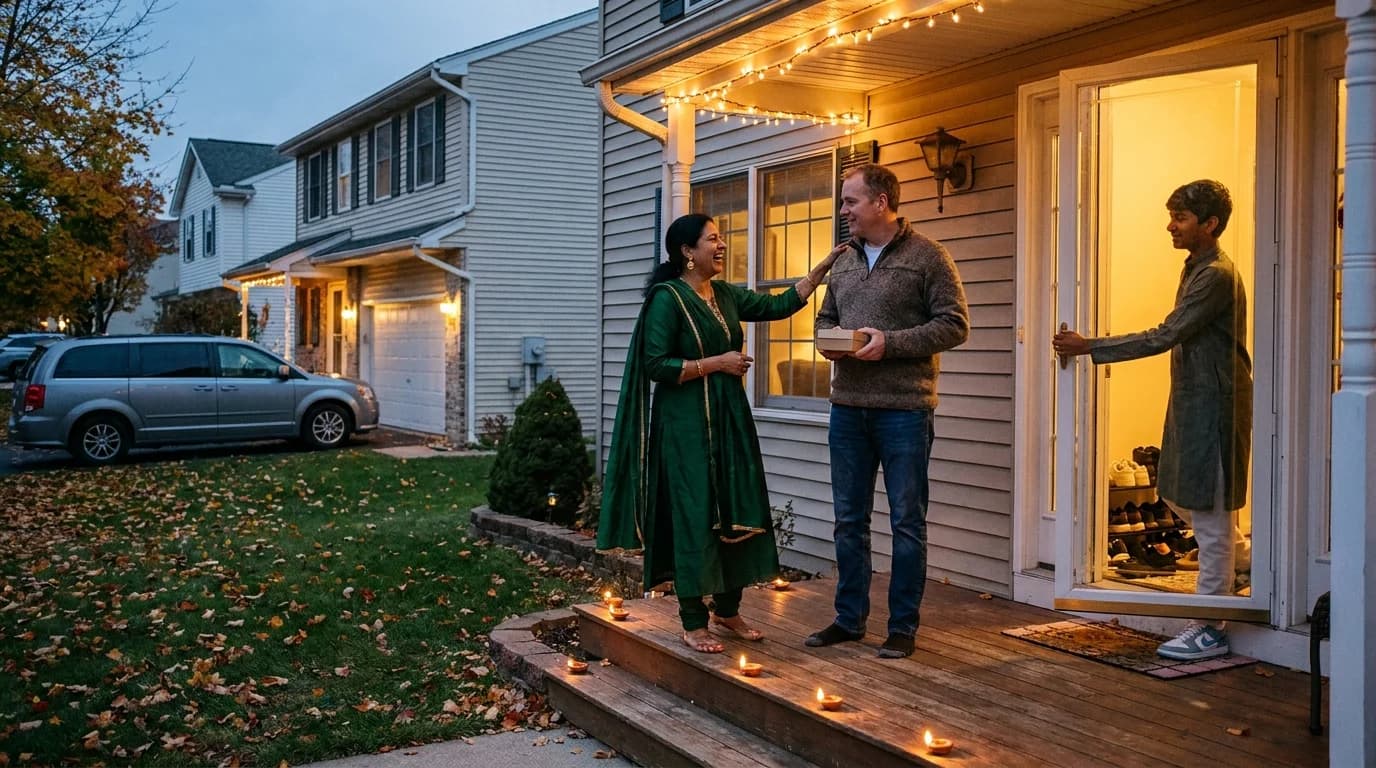
Diwali 2026 runs Friday November 6 through Tuesday November 10. Dhanteras opens it on the Friday. Chhoti Diwali falls on Saturday the 7th. Lakshmi Puja, the main night, is Sunday November 8, and then Govardhan Puja and Bhai Dooj close things out on the Monday and Tuesday.
Which puts the big night directly ahead of a Monday. School buses, standups, the works. In India that Monday would be a holiday and the entire country would be sleeping it off. Here you'll be scraping wax off a granite counter at 6:40 in the morning.
Every Indian-American host I know solves this one of two ways, and both work as long as the invitation is honest about which you picked. Saturday the 7th gives you Chhoti Diwali, a real festival night with the house already lit and no alarm the next day. Or take Saturday the 14th. Leave the 8th to your parents and throw the party once the family obligations are behind you.
What you want to avoid is writing the invite as an apology. "We know it's not the actual day, but..." tells your guests up front that they're getting the consolation prize. State the date like you chose it, because you did.
- "Our Diwali is Saturday the 7th. Chhoti Diwali, lamps already up. Nobody has anywhere to be on Sunday morning."
- "We're keeping the 8th for family and doing the party on Saturday the 14th. Diyas keep."
What a Diwali invite has to answer in America
Each of these becomes a 4 PM text to you if the invitation doesn't handle it first. I have received all of them, several twice.
Is there a puja, and when does it start. The single most useful line you can write, and most hosts leave it out. Guests who want to be there for the aarti need a time. Guests who'd feel intrusive standing through it need permission to arrive after. Give both.
What to wear. "Festive attire" means nothing to somebody who has never owned a kurta. Say the actual thing: "Wear Indian clothes if you have them, otherwise anything you'd wear to a nice dinner." If a friend would love an excuse to go buy a kurta, tell her directly. She will.
Shoes. Put it on the invitation. Announcing it at the door while forty people queue on your porch is slow, and the written version warns guests to pick socks they'd be happy to be seen in.
Then the food question, which in an American context means three separate things at once: is this dinner or snacks, is it vegetarian, and is there alcohol. Non-Indian guests can't tell whether "food and drinks" means a grazing table or a full thali, and a few will eat beforehand and feel awful about it. "Vegetarian, come hungry" clears it in three words.
And the one nobody thinks to put in writing: what to bring. Left unsaid, you get eleven bottles of Cabernet delivered to a house in the middle of Lakshmi Puja. In most homes that lands as wildly off-key rather than offensive, and one sentence prevents it.
Diwali party invitation wording for the family list
The version the elders will read closely. Traditional wording names the family as hosts and opens with a blessing before it gets anywhere near a logistics line.
- "With the blessings of Lakshmi and Ganesh, the Deshpande family invites you to our Diwali celebration. Lakshmi Puja at 6:30 PM, dinner to follow."
- "Shubh Deepavali. Our home is lit and our doors are open. Come sit with us for the aarti, then stay for far too much food."
- "The Iyers warmly invite you and your family for Deepavali. Puja at 6, prasad after, dinner from 7:30."
None of those ask for anything. "Come sit with us" does the work a gift line would do in an American invitation, and it does it better with this crowd.
Wording for friends and the cul-de-sac
Looser, funnier, honest about what your house is going to be like. These go to the people who've been over enough times to know where the bathroom is.
- "Diwali at ours. Saturday the 7th, 6 PM. Diyas, a rangoli the kids will step on by 6:15, and enough food to make Sunday unnecessary."
- "It's the good festival. Aarti at 6:45 for anyone who wants in, samosas from the moment you arrive until we run out."
- "Our annual attempt to feed thirty people from a kitchen built for four. Diwali, Saturday, 6 PM. Socks recommended, we're a shoes-off house."
Wording for coworkers and neighbors who have never been
Almost nobody writes this one, which is why Danielle had to text me. Your non-Indian guests want to come and want desperately not to get it wrong. Two sentences turn a nervous yes into a real one.
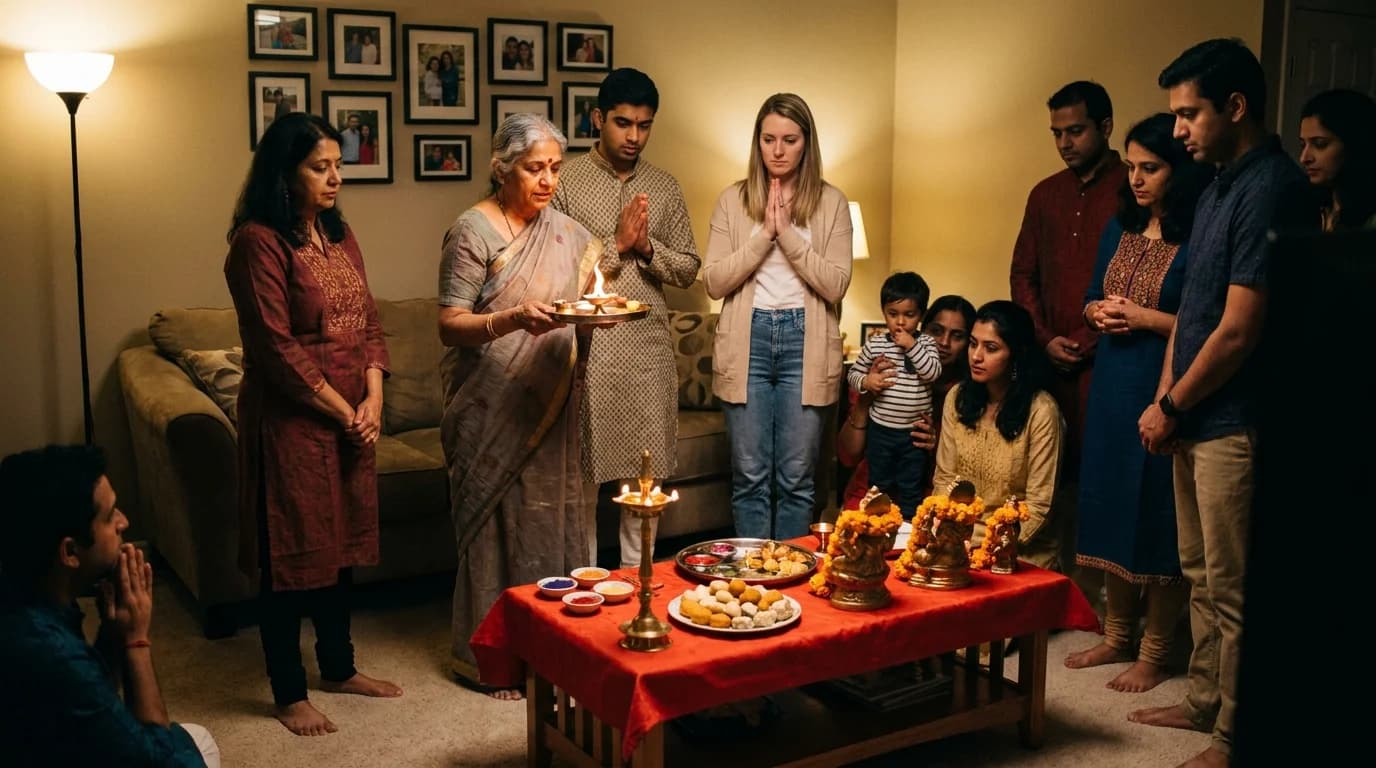
- "You're invited to our Diwali party. Diwali is the Hindu festival of lights, and ours means a house full of oil lamps, a short prayer at 6:30 you're welcome to join or skip, and a lot of food. Shoes off at the door. Come at 6:30 or come at 8, both work."
- "Diwali party Saturday. Short version: lamps everywhere, a fifteen-minute puja early on, then dinner. All vegetarian and there's plenty. Dress up if you feel like it, jeans are completely fine."
- "We'd love to have you for Diwali. No gifts needed at all. If you want to bring something, sweets or flowers land better in a house doing a puja than a bottle of wine does."
Read those back. Each one gives two arrival times, so nobody has to guess which is real, and each admits the religious bit exists while making it optional. Do that much and the 4 PM text never comes.
Lines that solve the specifically American problems
Parking. Suburban Diwali means thirty cars on a street built for eight. "Street parking on both sides, please leave the Hendersons at 41 their driveway" saves you a real fight with a real neighbor.
The end time. On a school night, write it down. "6 to 10, because Monday exists" isn't rude. It's the reason parents say yes.
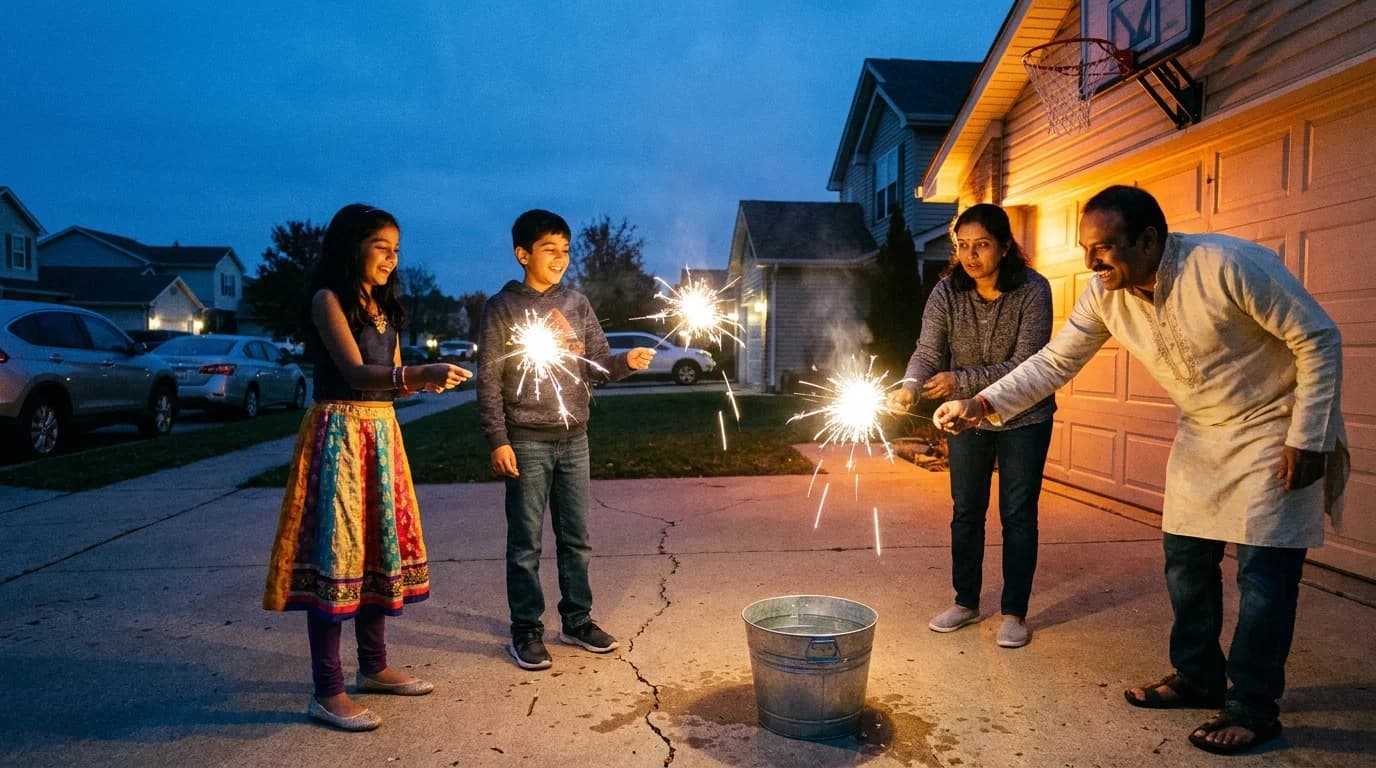
Sparklers. Check your city before you promise anything, because plenty of suburbs ban them outright and others only allow them around the 4th. If you're clear: "Sparklers in the driveway around 8, weather permitting. Bucket of water, and a strict policy about the six-year-olds."
On food, the aunties will cook whether you asked or not, so assign rather than fight it, and cap the mithai. Four families each arriving with the same tin of soan papdi is how you end up eating soan papdi in December. And if you want no gifts, say so plainly. There's a whole art to wording that so people believe you.
What not to put in a Diwali invitation
Don't call it "Indian Christmas." I know it's shorthand and kindly meant, and it still flattens a five-day festival into somebody else's holiday. "The festival of lights" does the same job without the trade.
Skip "festive attire" unless a sentence that means something follows it. Never write "7 PM" when the puja is at 6:30 and you're going to be privately wounded that nobody made it. And an RSVP with no deadline is a wish, so put a date on it, then chase the people who ghost, because at Diwali a solid quarter of them will.
One more: resist explaining the entire Ramayana on the invitation. Mythology by the paragraph reads like homework. One line about what the lamps mean is plenty, and people ask about the rest once they're in your kitchen holding a plate.
Getting it to a list that's half WhatsApp and half work email
The two halves bite one last time at the send. Cousins live in a WhatsApp thread. Coworkers need something that lands in a calendar. Your mother's friends won't open an email from an address they don't recognize, and every one of them opens a text.
A text invite reaches all three. Describe what you want to Lemonvite's design engine, something like "brass diyas along a dark porch step, marigolds, deep indigo and gold," and you get a custom Diwali invite without digging through templates. Send it by text and the address arrives in the same tap as the puja time, RSVP sitting right there in the message. Your headcount builds into one list instead of scattering across four chats and your dad's phone calls. When the puja time slides twenty minutes, one message reaches everyone who said yes.
Build it as a holiday party invitation and the puja and the party sit on one page, two times under one address. If you ran a garba this season, the venue notes from my dandiya post transfer over intact. Once the wording is settled, the fun part is the house, which I've covered in Diwali decor and rangoli for American homes.
Pick your Saturday. Write the line about the shoes. Then send the thing three weeks out, while your guests still have an open weekend and your mother still has time to tell you what you got wrong.