
Indian Wedding Reception Invitation Wording and Ideas
By the time you reach the reception card, you have already survived the wedding invitation. You picked the host line, spelled out the muhurat, and fought about the font. So you assume the hard part is behind you. Then someone asks why the groom's name comes first this time, and you realize Indian wedding reception invitation wording is its own puzzle with its own rules.
When my friend Ishaan got married, his family threw the reception three weeks after the ceremony, in Pune, for the whole side of the guest list that could not fly to Jaipur for the wedding itself. The wedding card had gone out months earlier in the bride's family's name. The reception card was a blank page nobody knew how to begin. That gap, between knowing exactly what a reception is and having no idea how to word the invitation for it, is what this guide closes.
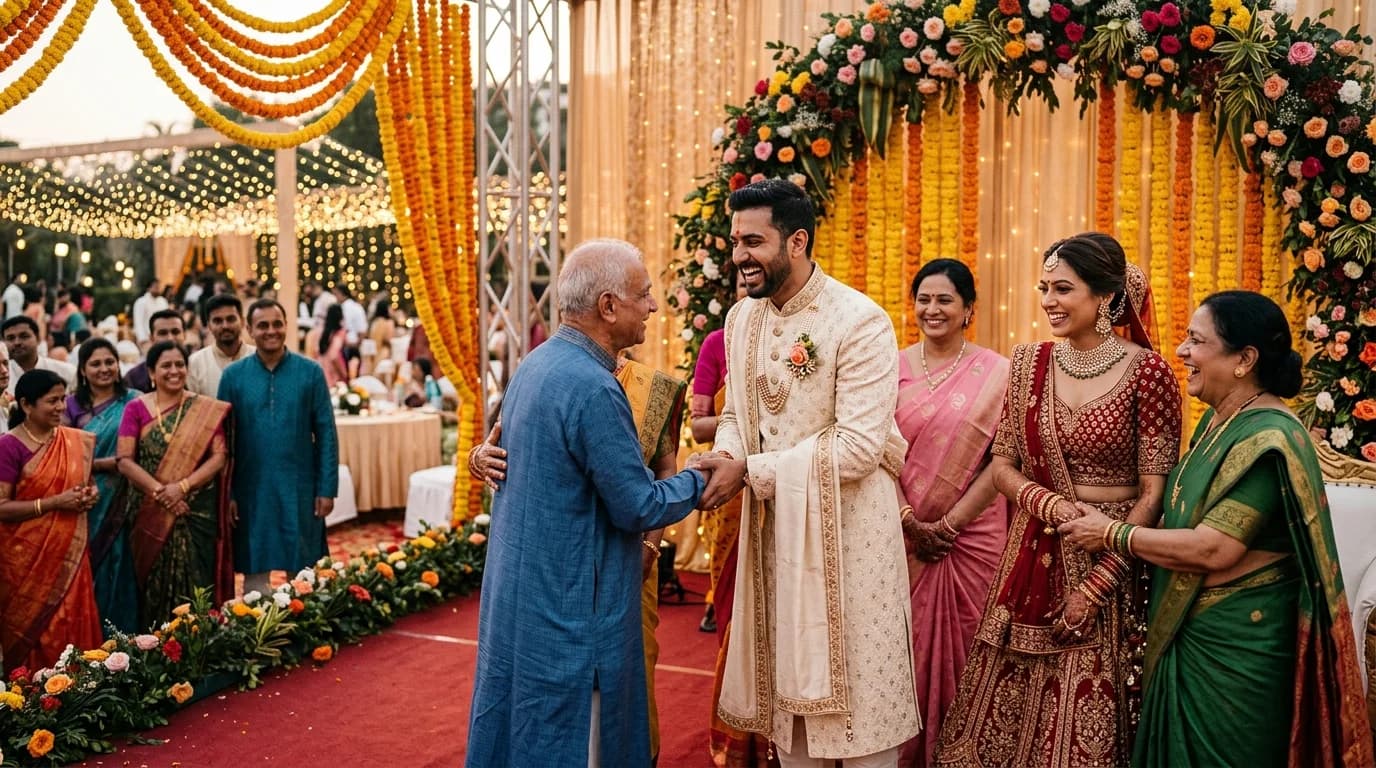
What the reception actually is, and who hosts it
The reception is the polished one. The sangeet is the dance night and the wedding day belongs to the vows; the reception is the formal evening where the newly married couple sits on a decorated stage while every guest files up to greet them and take a photo. Dinner runs late, and a few brave relatives give speeches. It is usually the calmest and most elegant event in the whole run, which is exactly why its invitation reads nothing like the loud, come-dance sangeet invitation you sent a week earlier.
The trickier question is who hosts. In many North Indian families the reception is the groom's family's party. The ceremony happens at the bride's end, and the reception is how the groom's side welcomes the bride and introduces the couple to their own community. That one fact rewrites the invitation. When the groom's family hosts, the groom's name goes first, the reverse of the bride-first order on the wedding card. Plenty of families break from this: both sides co-host, or the couple host themselves, especially for a second reception. There is no single national rule, so confirm what your family is actually doing before you write a word.
A couple of regional notes worth getting right. For a Muslim Indian wedding the reception is usually the walima, the banquet the groom's family hosts after the nikah; the wording follows the same welcoming logic. For many South Indian families the reception runs the evening before or after the muhurtham rather than weeks later. The structure decides the wording, so pin down the structure first.
The bones of a reception invitation
A reception card carries the same skeleton as any wedding invitation, just aimed at the reception. The full anatomy lives in my wedding invitation wording guide; here is the short version, reception-flavored:
- The host line: whoever is throwing the reception, named first.
- The request line: "request the pleasure of your company" works everywhere, since a reception is rarely in a temple. Save "the honor of your presence" for a religious ceremony.
- The couple's names, in the order that matches the host (groom first when the groom's side hosts).
- The reception's own date, time, and venue, which are often different from the wedding's.
- The dinner note: "Dinner and dancing to follow," or simply "Cocktails and dinner."
- The RSVP line, pointing wherever you are actually collecting replies.
Keep registry details and hotel blocks off the card itself. They belong on the details insert or the event page, along with directions.
Indian wedding reception invitation wording: the formal version
This is where name order does real work. A few templates you can lift and rename:
- Groom's family hosting: "Mr. and Mrs. Rajeev Malhotra request the pleasure of your company at the wedding reception of their son Aarav and his bride Diya, on Sunday, the nineteenth of July, at seven in the evening, at The Leela, Mumbai."
- Both families hosting: "With hearts full of joy, the Malhotra and Iyer families invite you to celebrate the marriage of Aarav and Diya over an evening of dinner and dancing."
- The couple hosting themselves: "Now happily married, Aarav and Diya would love your company at their wedding reception, an evening of food and long-overdue catching up."
- With a blessing line, if your elders expect one: "With the blessings of our elders, we warmly invite you to the wedding reception of Aarav and Diya."
If your family tree is complicated, the same five words that rescue a wedding card rescue this one: "together with their families" credits everyone and ranks no one.
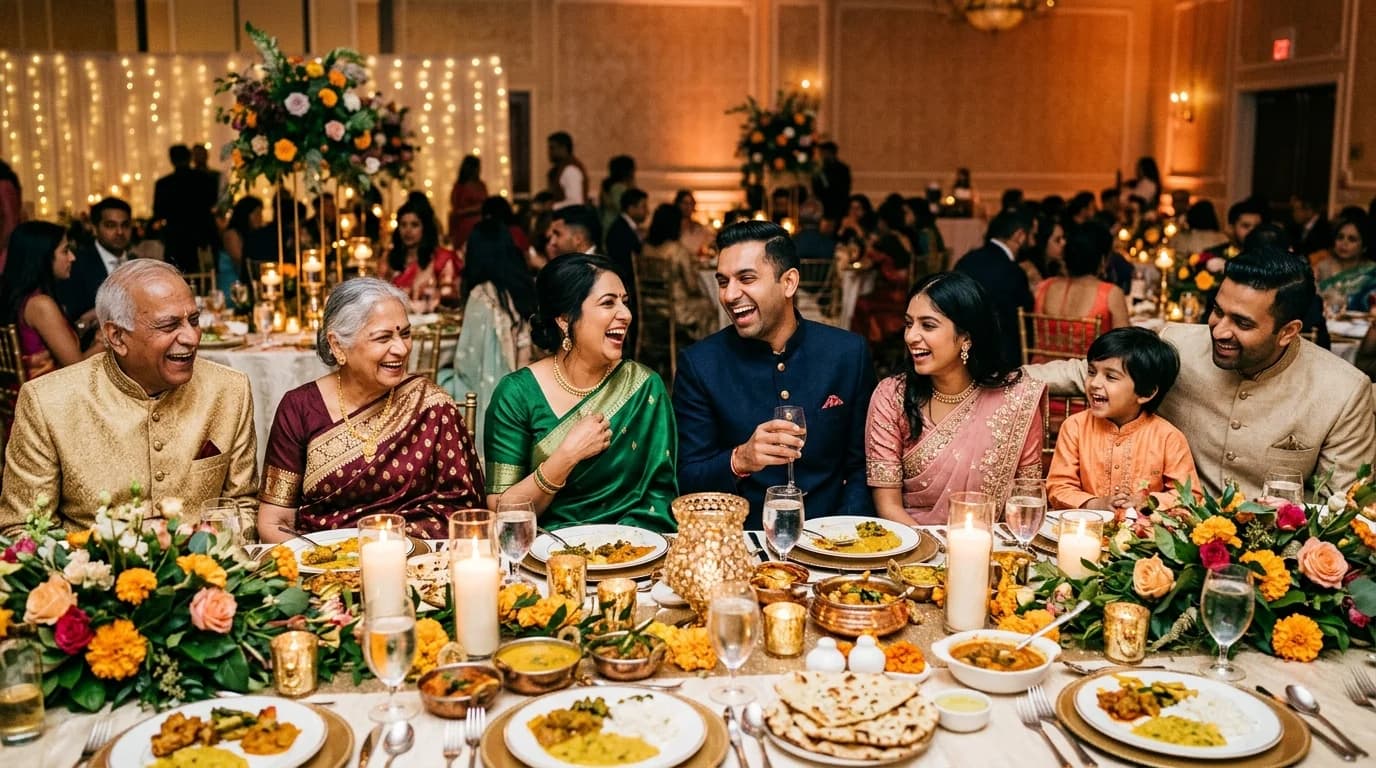
And the WhatsApp-ready version
Most reception invites do not travel in a box anymore. They land on a phone, in the same chat where the family has been arguing logistics for a month, so the wording can loosen up, warm and honest that this is a party:
- "We did the big wedding. Now we just want to eat, dance, and actually talk to you. Aarav and Diya's reception, Sunday 7 PM at The Leela. Come hungry."
- "Officially married and ready to celebrate. Pull up to our reception Sunday for dinner, drinks, and a dance floor that stays open late."
- "Two weeks married and still glowing. Join us for the reception we'll actually have time to enjoy."
The casual tone never excuses missing logistics. A reception is a seated, catered evening, so the where and when still have to be unmissable even when the message reads like a text to a cousin.
The reception-only invite
Some guests, your dad's whole office or the neighbours down the road, only come to the reception. They were never at the ceremony, and the wording should make that feel intentional. The move is to acknowledge the wedding warmly and pivot straight to the celebration:
- "Having married in an intimate family ceremony, Aarav and Diya invite you to share in the joy at their wedding reception."
- "The vows are done. Now we want to celebrate with everyone we love. Join Aarav and Diya for dinner and dancing on Sunday the nineteenth."
Do not apologize for the smaller ceremony or over-explain it. One gracious line carries it.
The second-city (or second-country) reception
This is the Ishaan situation from the top, and it keeps growing. The wedding happens where the bride's family is, and weeks later the couple throws a reception somewhere else entirely for the friends and relatives who could not travel. If half your list lives abroad, the logistics of sending invitations worldwide matter as much as the words on the card.
The wording just needs to be honest that the wedding already happened: "We got married in Chennai in June. This August, we're bringing the celebration to London, and we would love you there." That framing turns a far-flung reception into a gift for the people who matter rather than a make-up event.
The questions guests won't ask out loud
A reception has its own rhythm: a cocktail hour, the couple's grand entrance, the stage greeting where everyone queues for a photo, dinner, speeches, the first dance, then an open floor until the lights come up. You do not print the run-sheet on the invitation. But the invite should answer two things people genuinely wonder about. Is there a photo line on stage, so they should expect to wait their turn to say hello? And when is dinner, so nobody eats first or shows up starving? One clear line about timing does more for your guests than any flourish, and the event description guide has more on phrasing that gracefully.
Two more lines people forget. Dress code: a reception leans glamorous, so say "Indian formal" or "cocktail, Indo-western welcome" outright rather than leaving aunties to guess. And the RSVP, which is not optional here, because the headcount on a seated, catered night is also the bill.
Wrangling a reception guest list
Indian guest lists are a category of problem all their own, and the reception list tends to be the longest of the lot, since it folds in everyone the ceremony could not seat. A few habits keep a 300-person list from becoming a second job.
Decide your stance on plus-ones before anyone asks, because someone always asks. For a big family reception you are usually more generous than at a tight ceremony, but be deliberate about it; the plus-one etiquette playbook holds even when the numbers are enormous. And accept that a lot of replies will be soft, especially from the travel-dependent crowd, so it helps to build a real maybe into your RSVP instead of forcing a yes from someone still hunting for flights.
This is where paper falls apart and where Lemonvite's design engine earns its keep. Describe the look you want, "deep maroon and gold, mirror-work border, a little black-tie glamour," and it designs the reception invite for you, no template hunting. Then it goes out by text, which matters for a guest list that is half WhatsApp-native cousins and half relatives who will never open an email from an address they do not recognize. A text gets opened. One tap records the RSVP. The headcount builds in one list instead of scattering across four group chats and a phone call from your mother.
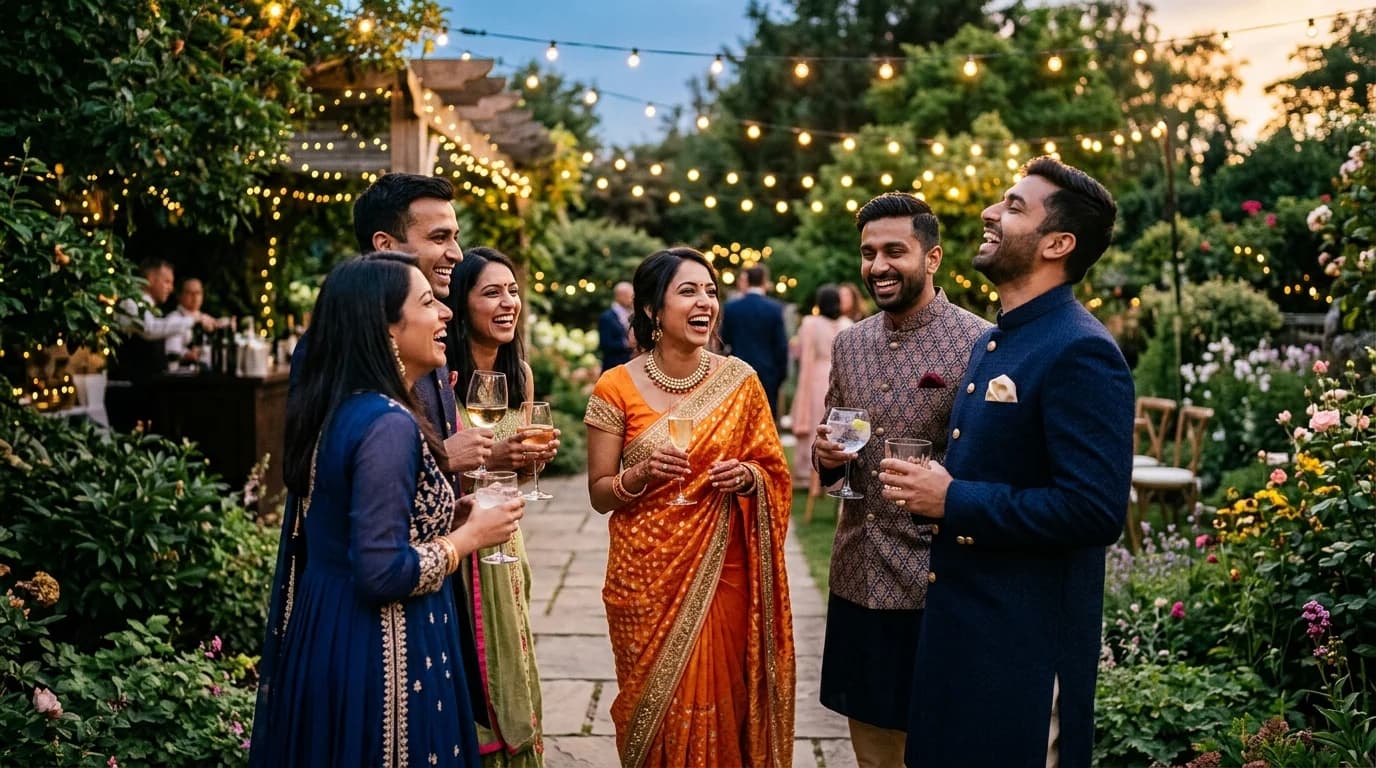
You can run the reception as one event inside the full wedding invitations set, so the sangeet, the ceremony, and the reception all live together and people RSVP per event. When the venue moves the parking or the start time slips by half an hour, and it will, one broadcast from the event page reaches everyone who already said yes.
So pin down who is hosting, put that name first, and let "together with their families" smooth over the rest. Write the formal version for the card and the loose one for the chat, then build the working invite on Lemonvite and let it chase the replies while you get back to the seating chart. Ishaan's Pune reception filled up in a week once the invite could finally travel.