
Mehndi and Haldi Function Planning and Invitations
The first haldi I helped run, the bride's aunt pulled me aside about an hour in and asked, completely deadpan, why on earth I'd told everyone to wear something nice. By then there was turmeric on three good kurtas, a yellow handprint in someone's hair, and a streak across a borrowed silk dupatta that did not survive the day. Turmeric does not come out. That is sort of the entire point of a haldi, and it is the first thing nobody warns the person doing the planning.
Mehndi and haldi get talked about as a single unit, usually in the same breath as the sangeet, but a mehndi and haldi function are two very different events with two very different jobs. If you're hosting either one, or both, here's what I wish someone had handed me before I started: what each ceremony actually is, how to plan it so the bride isn't miserable, what to put your guests in, and how to get the invitations out without drowning in five group chats.
Mehndi and haldi are not the same function
A bit of groundwork, because people mix these up constantly and then plan the wrong party.
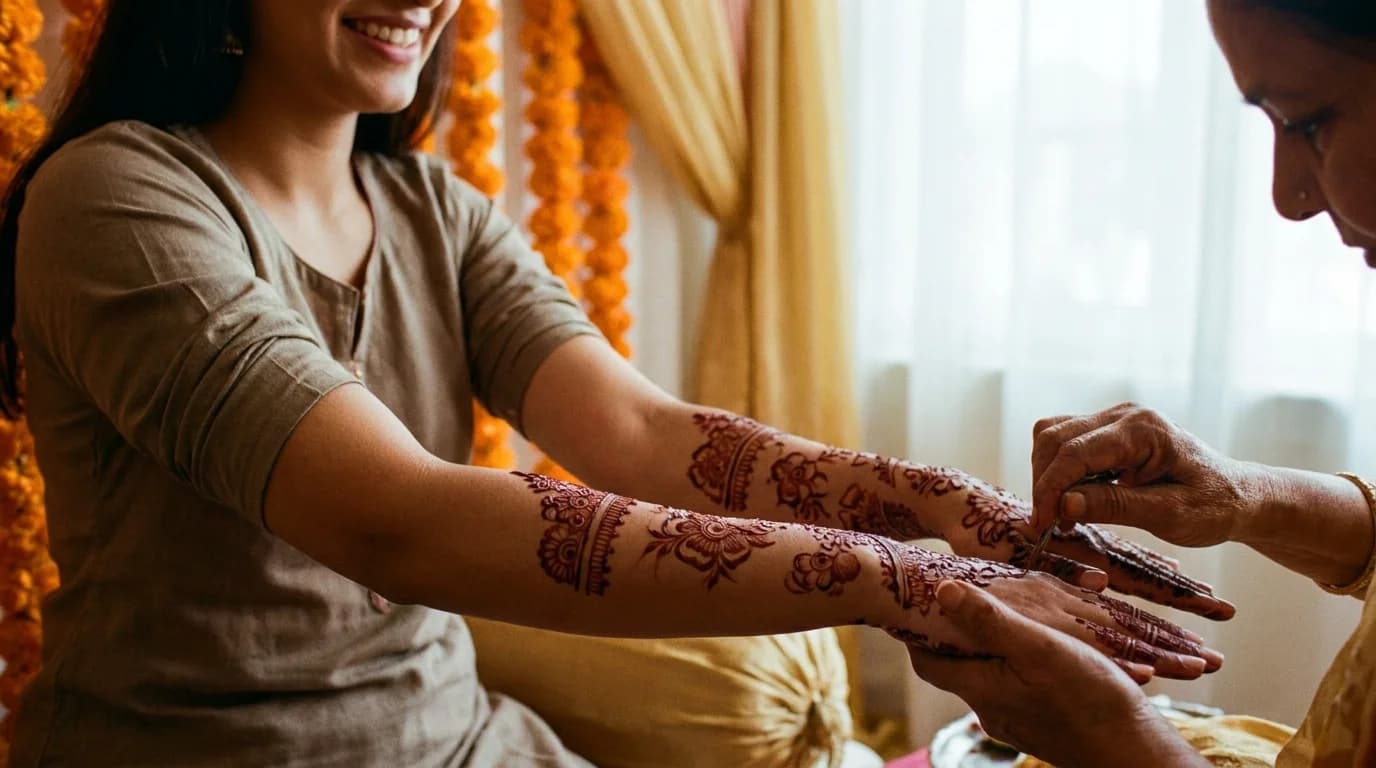
The mehndi is the henna night. An artist, or several, covers the bride's hands and feet in intricate designs, the other women get smaller ones done, and the room fills with music while the color slowly deepens. Folklore says the darker the stain, the stronger the love, so the bride's henna gets the most time and the most attention. Many artists hide the groom's initials somewhere in the pattern for him to find later. It's the relaxed, sit-and-talk function of the week, and at plenty of weddings it folds straight into the sangeet once the henna's on.
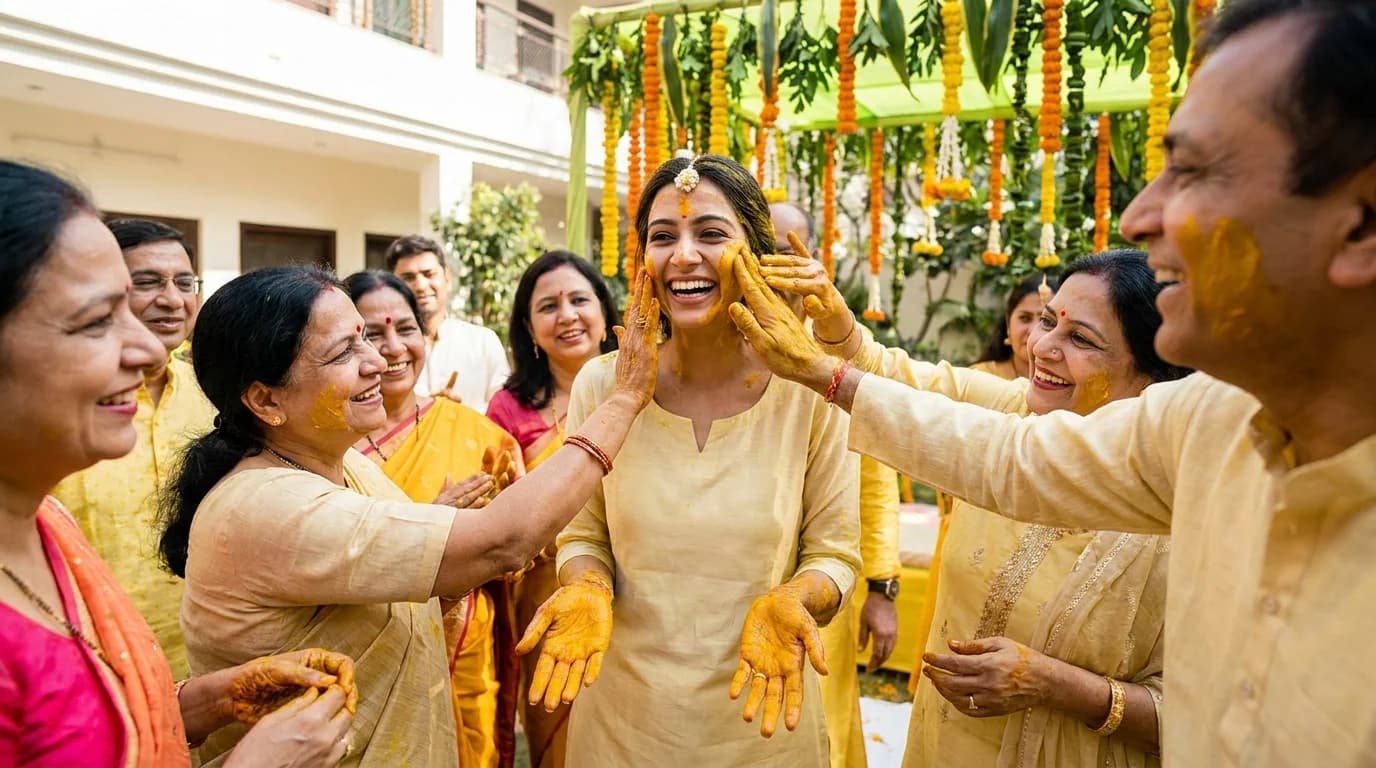
The haldi is the turmeric ceremony. Family and close friends take turns smearing a paste of turmeric, sandalwood, and rosewater onto the bride and groom, offering a blessing as they go, usually the morning of or a day before the wedding. The yellow is meant to cleanse and bless, and it's also why everyone swears the couple is glowing in the wedding photos. In Gujarat and Rajasthan you'll hear the same ritual called pithi. Traditionally the bride and groom each had their own haldi at their own home; plenty of families now run one combined, messier, far more fun version with both sides in the same yellow chaos.
If you want the full run of the week, and where these land relative to the baraat and the pheras, I laid it out in the sangeet invitation wording guide. The short version: mehndi tends to come first and stay mellow, while haldi sits close to the wedding and gets loud.
One planning take before anything else. If you're doing both, run the haldi and the mehndi on separate days, or at least separate ends of one day, with haldi first. Wet turmeric and people flinging paste do not belong anywhere near three hours of fresh, still-drying henna. I once watched a bride hold her hands up in the air like a surgeon through her entire haldi because someone built the schedule backwards.
Build the whole haldi around the turmeric
The single biggest haldi mistake is treating it like an occasion where people dress up. A haldi is closer to a controlled food fight with religious significance, and the planning has to respect that.
So the dress code is the whole plan here. Tell every guest to wear something they are genuinely willing to throw away after, ideally white or pale yellow so the turmeric reads beautifully in the photos. "Wear something nice" is how you end up apologizing for a ruined dupatta, as I learned the hard way. Stack a pile of cheap dupattas or old kurtas by the door for anyone who didn't get the memo.
Hold it outside if you possibly can, mid-morning, on a lawn or a terrace where a hose exists. Lay down old bedsheets or a plastic tarp under the seating, because the paste goes everywhere and dried turmeric on a tile floor is a stain of its own. Most of my hard-won notes on running a daytime outdoor function, shade placement and where people actually stand and what wilts in the sun, live in my outdoor party ideas post, and a haldi leans on every one of them.
Keep the food to things someone can hand the couple, since the guests of honor are coated in paste and can't hold a plate. Little bowls of chaat or skewers, anything that survives being passed bite by bite. The haldi is short and joyful by design, so don't over-program it; the smearing, the songs, and a good lunch after are the whole event.
Plan the mehndi around the bride's hands
First-timers always miss the same thing about a mehndi: the bride is out of commission for hours. Good henna takes three to five hours to apply and then has to sit and dry. For most of her own party she can't use her hands; someone else holds her glass and feeds her bites between songs. Build the function around that reality instead of fighting it, and seat her somewhere central and comfortable where the henna can dry while everyone comes to her.
Book the artist early, weeks ahead at least. The good mehndi artists in wedding season are reserved solid months ahead, and the gap between a great artist and whoever happened to be free shows up on the bride's hands in every honeymoon photo for the next two weeks. Confirm how many hands they're covering, because "just the bride" and "the bride plus forty aunties" are wildly different bookings.
If you want guests to get henna too, set up a second station with a couple of extra cones and let people drift through the line over the evening. It doubles as the activity, which is handy at a function where the main event is, technically, sitting still.
Decor and dress code that actually photograph
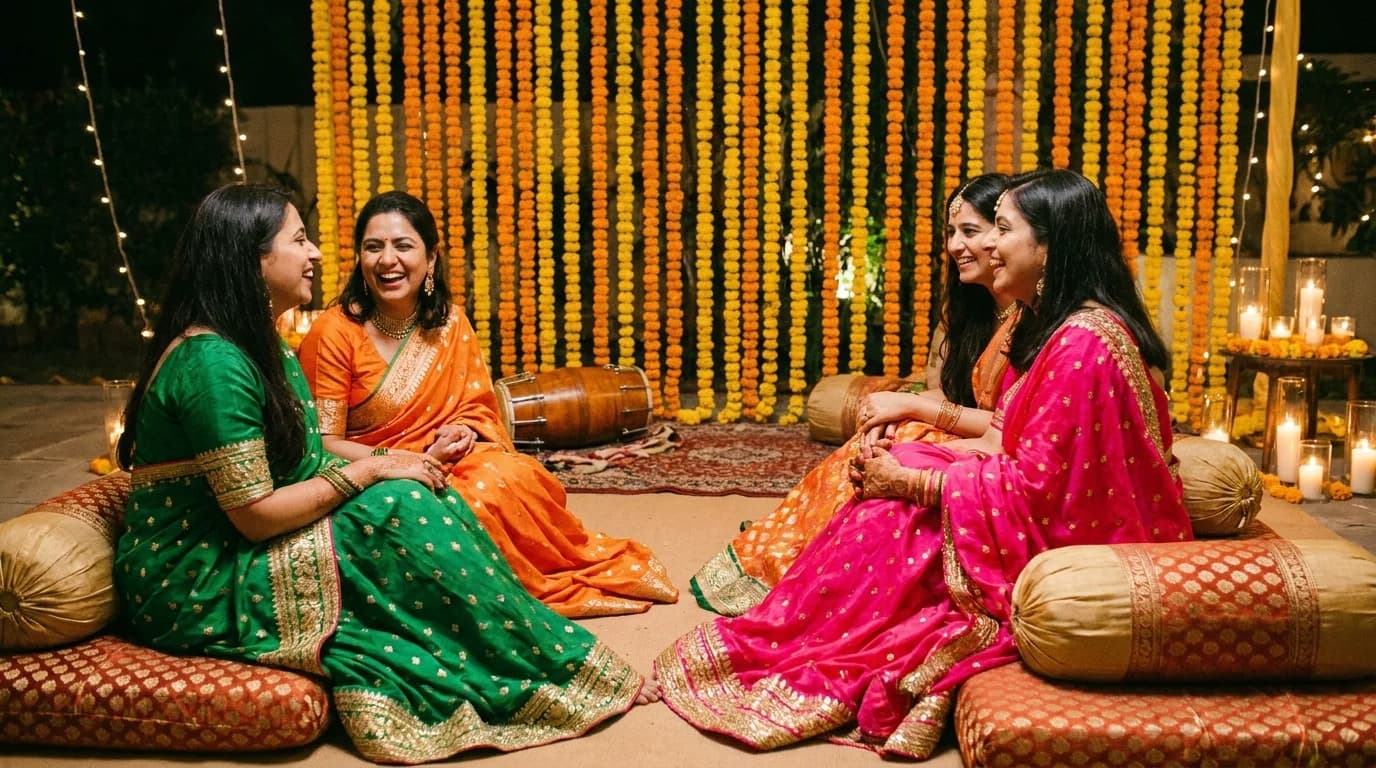
Marigolds do the heavy lifting at both functions and they're cheap by the kilo. String them into a phoolon ki chadar, the curtain of fresh flowers that hangs behind the couple, and you've got a backdrop that costs almost nothing and photographs like it cost a fortune. Low floor seating with bolster cushions, mango leaves over the doorways, and you're most of the way there.
Guests always ask about dress code before anything else, so spell it out for them. For the mehndi, point them toward bright and festive, the greens and oranges and hot pinks, gota-patti work if they own it. For the haldi, yellow they won't mourn. Put the two codes on the two separate invitations so nobody has to guess which function calls for which look.
The invitations are a logistics problem, not a design problem
Each function is its own event with its own start time and its own dress code. A guest coming for the whole wedding is already tracking the mehndi, the haldi, the sangeet, and the wedding day, and the fastest route to a hundred "wait, what time is haldi?" texts is to bury everything in one forwarded image.
So give each function a clear invitation of its own, and make the dress-code line load-bearing. "Haldi, Saturday 10 a.m., wear yellow you won't mind ruining" prevents the exact disaster I opened with. Spell out the timing, whether food is included, and where to park, because out-of-town family planning a mehndi and haldi function into a packed week will thank you for it.
This is where paper falls apart and a phone wins. I'd describe the look to Lemonvite's design engine, something like "marigold and turmeric yellow, gota border, a little mirror-work shimmer," and let it design the mehndi and haldi invites instead of hunting through templates that were built for someone else's wedding. Then it goes out by text, which matters more for an Indian wedding crowd than almost anywhere else: half the guest list lives on WhatsApp and will never open an email from an address they don't recognize. A text gets seen, one tap RSVPs them, and the headcount builds in a single list rather than scattered across four chats and a call from your mother.
You can build the mehndi and haldi as part of the full wedding invitations set, so every function lives in one place and guests RSVP to each one separately. And since a big family list always sends back a few honest "we'll try" replies, it helps to build a real maybe into the RSVP instead of forcing a yes out of the cousin who hasn't booked flights yet.
Get the haldi dress code right, give the bride's hands the hours of stillness they need, and let the invitations chase the headcount while you go buy ten more kilos of marigolds. Just, please, tell everyone to wear something they can throw away.