
Sangeet Invitation Wording and Planning Guide
My cousin Aanya's sangeet had a forty-person dance floor, a rented dholak, and a family group chat with 96 unread messages before 9 a.m. What it did not have, eleven days out, was an invitation anyone could send. She kept firing the same question into the chat: what is the sangeet invitation wording supposed to sound like? Formal, like the wedding card? Loud and fun, like the night itself? Something in between that won't make her nani sigh?
That question is the whole reason this guide exists. The sangeet is the most joyful and least stiff night of the entire wedding sequence, and the invitation should feel that way. Below: where the sangeet actually sits in the run of events, how to survive the dance-performance chaos, and a stack of sangeet invitation wording you can copy, both the dignified version the elders will approve of and the version your cousins will actually open.
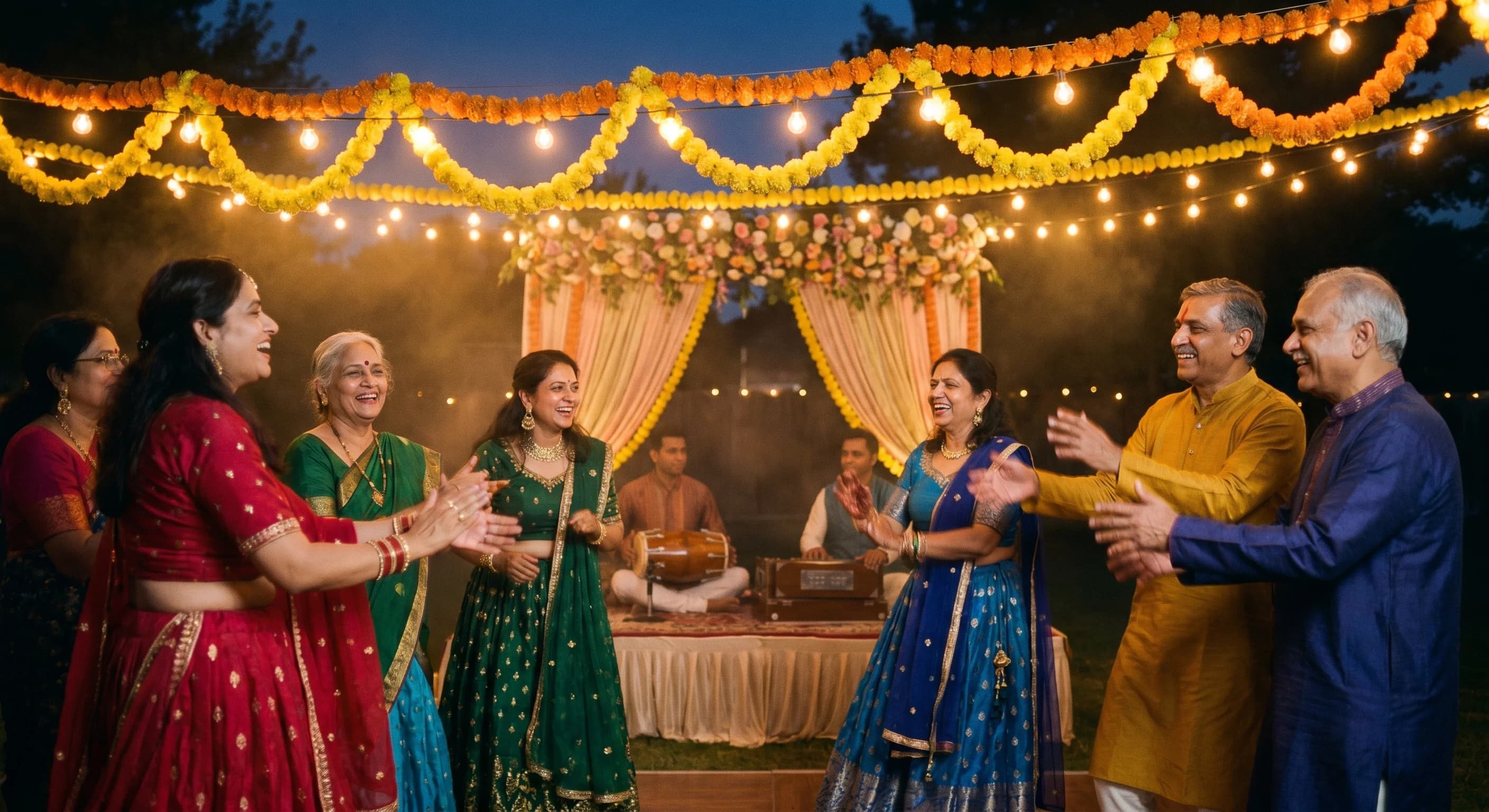
Where the sangeet sits in the wedding
If you've never been to a multi-day Indian wedding, the sequence can blur together into "a week of being fed." Here's the rough shape of a North Indian wedding so the invite makes sense in context.
It usually starts months earlier with the roka or the engagement, the same way an engagement party opens the whole era. Then the final stretch arrives: the mehndi, where the bride and the women get henna; the sangeet, the music-and-dance night; the haldi, the turmeric ceremony that leaves everyone glowing yellow; and then the wedding day itself, with the baraat (the groom's procession, dhol and all) and the pheras, the vows taken around the sacred fire.
Families shuffle that order constantly. Plenty fold the mehndi and the sangeet into one long evening. Some do haldi the morning of the wedding. The point to get right is what the sangeet is: the performance night, typically a day or two before the wedding, where both families show up to sing, dance, and roast the couple lovingly.
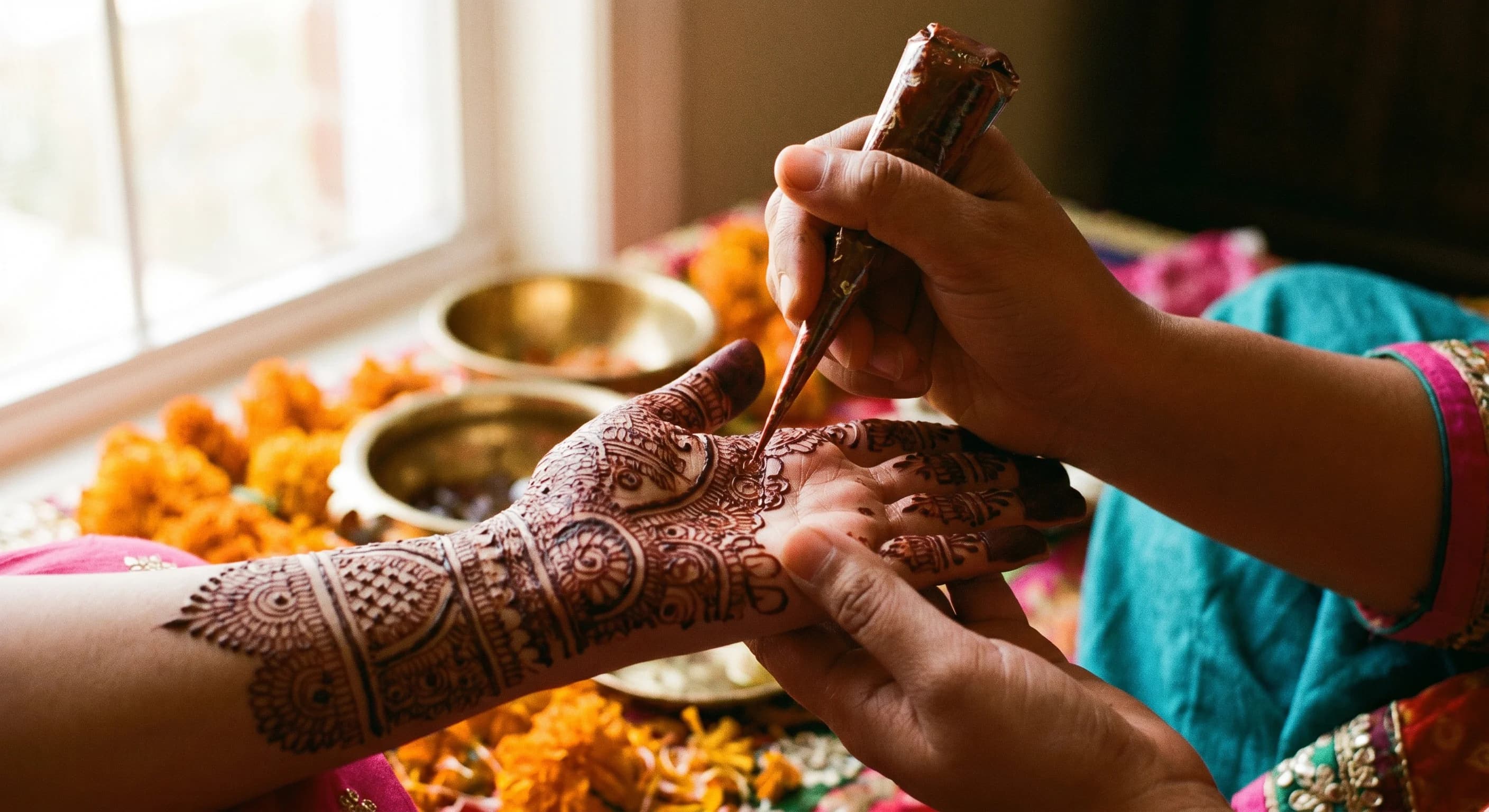
It started narrower than that. The original was a ladies' sangeet, the women of the bride's family gathering to play the dholak and sing folk songs (a lot of them cheerfully teasing the groom) in the days before the wedding. That version still happens. But the modern sangeet has grown into a co-ed, both-families, fully choreographed production with a DJ, a stage, and a runsheet. Your invitation needs to signal which one you're throwing, because "come sing a few folk songs at the house" and "report for your dance number at 8 sharp" are very different asks.
The performances are the whole point
Nobody warns first-timers that the sangeet is something you rehearse for, not just something you show up to. The heart of a modern sangeet is the performances. The bride's side prepares numbers, the groom's side prepares numbers, the parents do an embarrassing duet, the little cousins do something to a Bollywood song that brings the house down. Half the fun is the friendly competition between the two families. Unlike a bachelorette weekend, which is just the bride's crew, the sangeet puts everyone on the same floor: grandparents, toddlers, the uncle who insists he can still do bhangra.
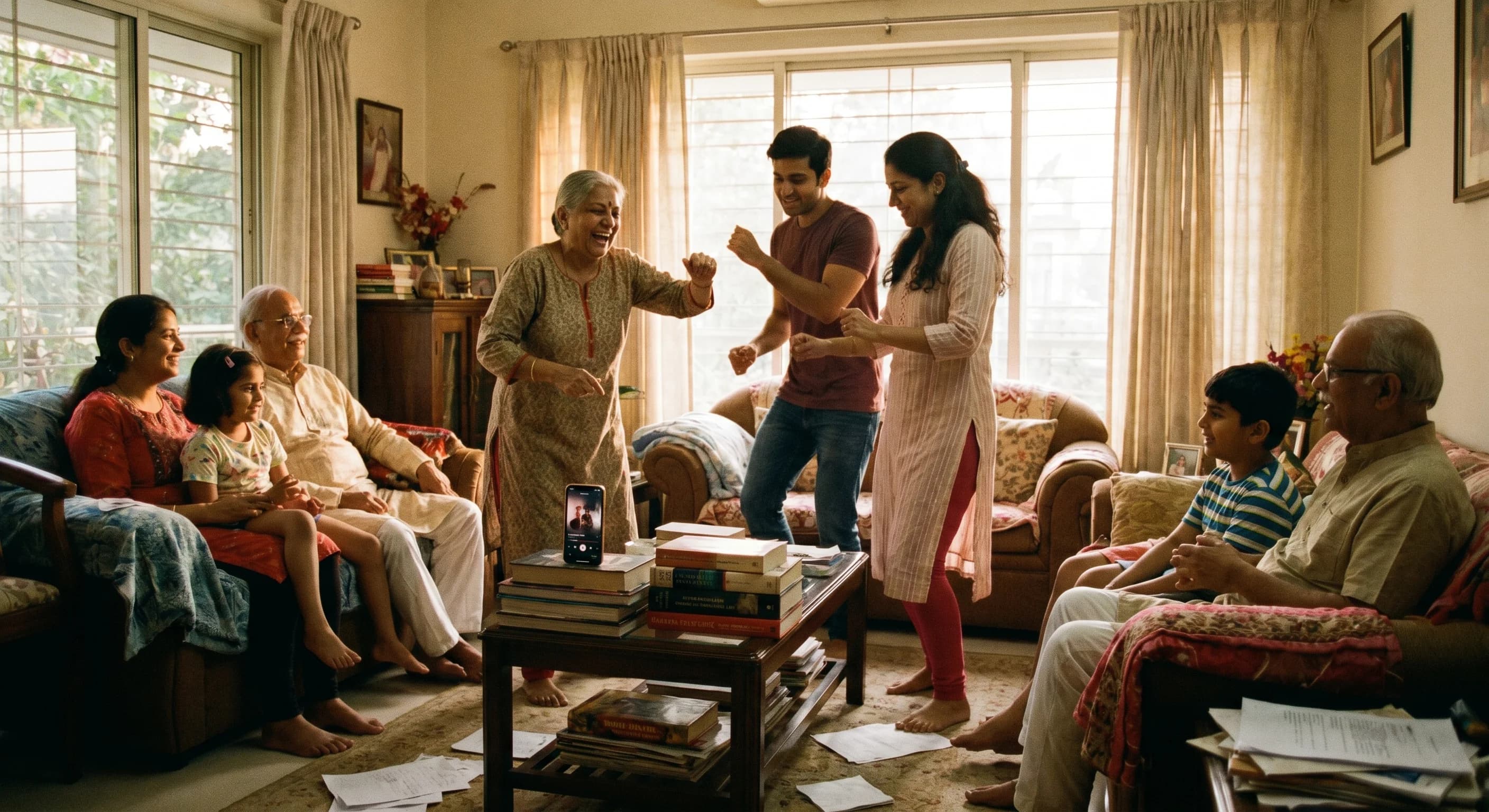
What this means for you, the host: the invitation is also a recruitment notice. People need lead time to learn choreography. So your sangeet communication actually has two layers. The polished invite goes to everyone. But the dance crew needs a separate, earlier nudge: rehearsal dates, song assignments, who's in which number. Don't bury "first practice is Sunday" inside a pretty invitation card that half the family will admire and then forget.
If you're hiring a choreographer, lock the date before you send anything, because their calendar in wedding season fills up faster than yours does.
Sangeet invitation wording: the formal version
For the printed card, the version that sits in a box with the rest of the wedding stationery, the version the grandparents will keep. Formal Indian wedding wording leans on the families as hosts and a note of blessing.
- "With the blessings of our elders, the Sharma family request the pleasure of your company at the Sangeet of Aanya and Veer. An evening of music, dance, and dinner."
- "You are warmly invited to celebrate Aanya and Veer with an evening of song and dance. Sangeet ceremony followed by dinner and dancing."
- "Two families, one melody. Join us for the Sangeet of Aanya and Veer as we dance our way to the wedding."
- "The Mehta and Sharma families joyfully invite you to the Sangeet evening in honour of Aanya and Veer. Come ready to dance."
Notice the host line. Like the wedding card, the formal sangeet invite traditionally names the families doing the inviting, often both sides together now rather than just the bride's. "Join us" is the safe, gracious verb that works no matter who's actually paying.
Sangeet invitation wording: the modern, WhatsApp-friendly version
Most sangeet invites today don't travel in a box. They travel on a phone, in the same chat where everyone's already arguing about song choices. The wording should match. Short, warm, a little funny, and honest about the fact that this is a dance party.
- "It's Sangeet night! Aanya x Veer want you on the dance floor Friday. Playlist loaded, dinner sorted, just bring your best moves."
- "Two families, one dance floor, zero chill. Come to Aanya and Veer's sangeet Friday at 7. Wear something you can do the hook step in."
- "Consider this your official summons to the Aanya x Veer sangeet. There will be dhol, there will be drama, there will be at least one uncle who refuses to leave the floor."
- "Reminder that the sangeet is technically a competition and the bride's side intends to win. Friday, 7 p.m. Come cheer or come dance, but come."
A quick note on the dance-crew version, which is its own message and reads more like a callout: "Bride's side, this is your rehearsal notice. First practice Sunday 4 p.m. at the house. Three numbers, and yes, you're in at least one of them." Keep that separate from the come-one-come-all invite so the casual guests don't think they're being conscripted.
What every sangeet invite needs to say
The vibe can be loose. The logistics cannot. Whether you go formal or WhatsApp, the invitation has to answer these without anyone having to text you back:
Which night, in a week full of nights. Guests coming for the whole wedding are tracking three or four events. Say "Sangeet, Friday the 14th" clearly, and if you can, point to where it falls relative to the wedding day so out-of-town family can plan flights.
A dress code they can actually dance in. This is the one people quietly panic about. A single line fixes it: "Sangeet dress code: jewel tones, and nothing you can't do the hook step in." If there's a color theme or a specific look, say so. Indian formalwear is gorgeous and occasionally impossible to move in, so steering people toward something danceable is a kindness.
Whether dinner is included, and when. Sangeets run late and feed everyone, but say it outright so nobody eats first and nobody arrives starving at 7 expecting food at 7:05.
The performance situation. If you want guests to prepare something, the invite is where you plant that seed. If performances are by the families only and guests just watch, that's worth saying too, so nobody shows up thinking they need a routine.
Coordinating a guest list the size of a small town
Indian wedding guest lists are their own genre of problem. The sangeet in particular tends to balloon, because it's the fun one, and "of course Sharma uncle's whole family is coming" is a sentence that adds eleven people without warning.
A few things make a 200-plus list manageable instead of maddening. First, decide your stance on plus-ones before anyone asks, because they will ask. For a sprawling family event you're often more generous with plus-ones than at, say, a seated dinner, but be deliberate about it. The general plus-one etiquette playbook still applies even when the numbers are big: state your policy on the invite so you're not negotiating it one cousin at a time.
Second, accept that a chunk of your replies will be soft. Half of "RSVP" for a destination-ish family wedding is really "we'll come if we can get the time off and the flights work." That maybe is real information, not indecision, and the smart move is to build a real maybe into your RSVP instead of forcing a yes or no out of someone who genuinely doesn't know yet.
This is where doing it on paper falls apart, and where I'd point you at Lemonvite's design engine. Describe what you want, "marigold and magenta, gold mirror-work border, a little Bollywood glamour," and it designs the sangeet invite for you, no template-hunting. Then it goes out by text, which matters more for a sangeet than almost any other event, because the guest list is half WhatsApp-native cousins and half relatives who will never open an email from an address they don't recognise. A text gets seen. One tap RSVPs them. The headcount builds in a single list instead of scattered across four chats and a phone call from your mother.
You can build the sangeet as part of the full wedding invitations set, so the mehndi, sangeet, and the wedding day all live together and guests can RSVP per event. When the parking changes or the start time slips by half an hour (it will), one broadcast message from the event page reaches everyone who said yes, instead of you typing the same update into three group chats.
Get the wording right for the night you're actually throwing, formal for the card, loose for the chat, and let the invite chase the RSVPs while you go memorise your dance steps. The bride's side really might win this year.