
Christening Invitation Wording and Planning Guide
My cousin asked me to be her daughter's godmother in February, and about four seconds after I said yes, she texted: "right, now help me write the invite, I have absolutely no idea what to say."
She is not alone. Christening invitation wording trips people up because the day is really two events wearing one outfit. There is the church service, which is solemn and full of promises, and there is the lunch afterwards, which is your nan, three high chairs, and a lot of sausage rolls. The invitation has to set up both without sounding like a Sunday bulletin on one hand or a kids' party flyer on the other.
So here is everything I worked out helping her, expanded into a proper guide: wording you can lift straight off the page, how to choose and ask godparents, who actually goes on the list, and how to run the timing so nobody's standing in a car park wondering where lunch is.
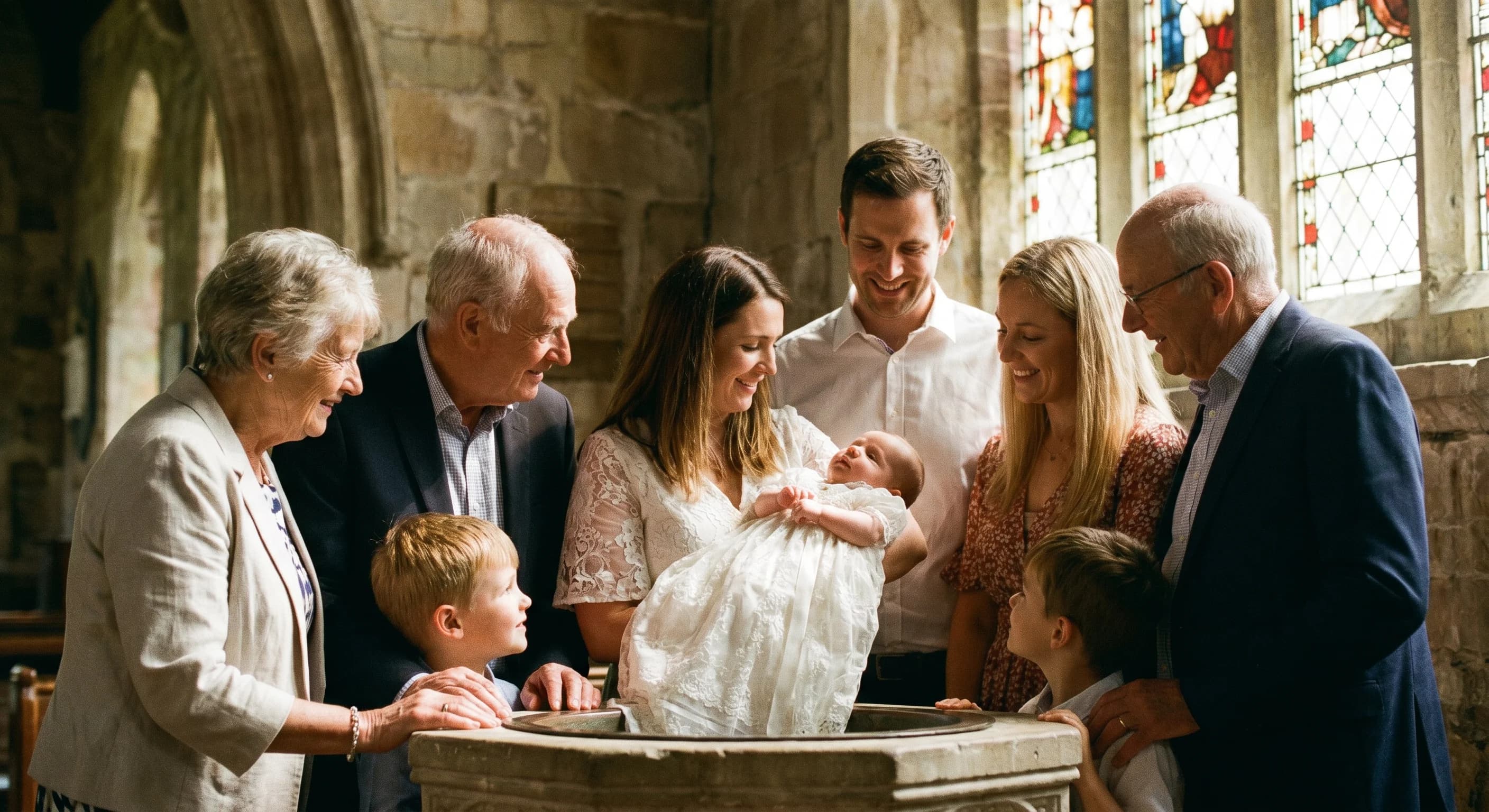
What every christening invitation needs to say
Before the nice phrasing, the scaffolding. A christening invite carries a bit more than a birthday one, because guests are navigating a church they may not know and a schedule with two halves.
- Whose christening it is, full name. Include the surname if your guest list spans both sides of the family, because Great-Aunt Pat genuinely may not know which baby.
- The church, with its full name and address. "St Mary's" is not enough in a town with three of them. A postcode for the sat-nav saves a dozen panicked phone calls.
- The date and the service time, and crucially whether the christening is its own service or folded into the main Sunday morning one. Guests dress and arrive very differently for those two things.
- The reception, if there is one: where it is, and roughly when it'll wrap. Lunches without an end time drift well into the afternoon.
- The RSVP, with a deadline and a one-tap way to reply. You need a headcount for the caterer or your own kitchen, and "let me know!" never gets you one.
Get those down and the wording can be as warm or as simple as you like. Miss the church address or the service time, and your phone becomes a help desk the night before.
Traditional christening invitation wording
For a church-service christening with a more formal tone, the kind where you want it to feel like the occasion it is. These suit a printed or beautifully designed invite, and they read well to godparents and grandparents alike.
- "With joyful hearts, we invite you to the christening of Eloise Mary Hart, on Sunday the 13th of September at 11.30am, at St Andrew's Church, Linton. Lunch to follow at the village hall."
- "We would be honoured to have you join us as our son Thomas is baptised into God's family. Holy Trinity Church, Saturday 4th October, 2pm, with a reception afterwards at home."
- "Please join us for the christening of our daughter, Amara Grace. We'll gather to give thanks and welcome her into the church, followed by afternoon tea with family and friends."
- "Our little one is being welcomed into the church, and we'd love you there to share the day. The christening of Oliver James, followed by a celebration lunch."
A note on the religious language: it's worth matching it to your church and your own comfort. "Baptised into God's family," "received into the church," and "welcomed into the Christian faith" all describe the same rite, so pick the phrasing that sounds like you rather than copying a stranger's. If grandparents are Catholic and you're Church of England, plainer wording keeps everyone on the same page.
Relaxed christening invitation wording
Plenty of christenings are gentle, low-key family days, and the invite can say so. These work for the lunch-led celebration where the service is short and the point is everyone being together.
- "We're getting Maisie christened and then feeding everyone properly. Service at 12, lunch straight after. Come hungry."
- "Freddie's being christened on the 20th and we'd love our favourite people there. Quick service, long lunch, no fuss."
- "Join us to celebrate as baby Rumi is christened. There will be cake, there will be cousins, there will probably be chaos. Wouldn't be a family do otherwise."
- "A small christening for a small person. Come watch Isla get splashed, then stay for a glass of something and a proper catch-up."
The trick with the relaxed tone is to still be clear about the church part. "Quick service" tells people there's a service without making it sound like a chore. One christening invite I got just said "drinks to celebrate Noah" with a church address tacked at the bottom, and half the guests turned up thinking they were going straight to a pub.
Choosing and asking godparents
This is the part people agonise over more than the wording, and rightly so, because it's the lasting bit. Godparents stand up during the service and make promises on the child's behalf, traditionally to help bring them up in the faith and to support the parents in doing so. It's a genuine commitment, not an honorary title.
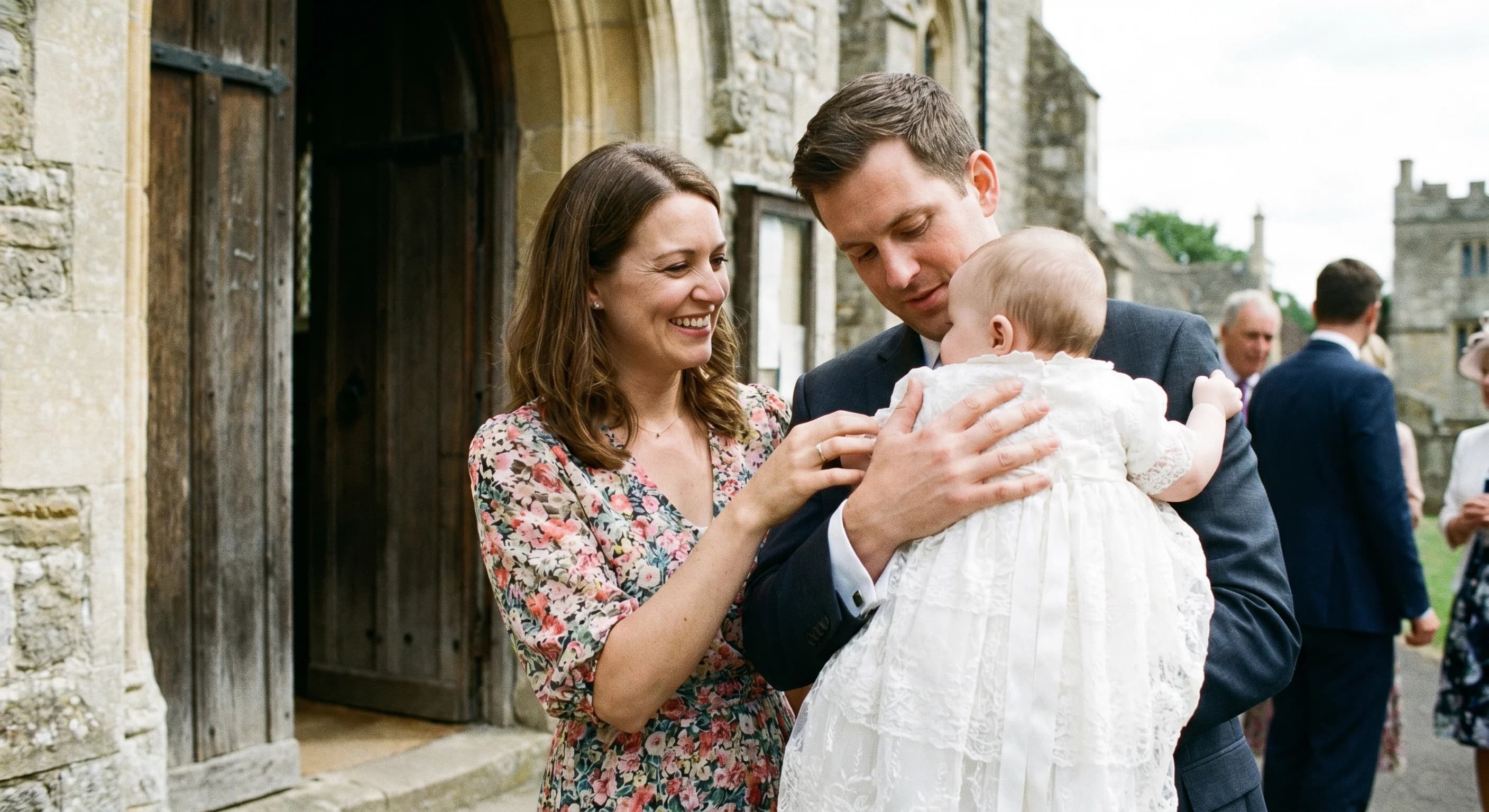
A few practical points worth knowing before you ask:
How many. The Church of England convention is three: traditionally two of the same sex as the child and one of the opposite, though most vicars are relaxed about this now. The Catholic Church requires at least one godparent (you can have two, one of each sex), and at least one must be a confirmed Catholic. If you're unsure, your priest or vicar will tell you what your church expects, so ask early.
Who qualifies. Godparents are usually expected to be baptised themselves, and in the Catholic Church, confirmed. A close friend who'd be wonderful but isn't christened can often still take part as a "supporting adult" or witness rather than a formal godparent. Worth checking rather than assuming.
How to ask. Do it properly and in person if you can. It's a lovely thing to be asked and it deserves more than a group chat. Some parents give a small card or keepsake; the words matter more than the gift. Something as simple as "we can't think of anyone we'd rather have help guide her, will you be Amara's godmother?" lands beautifully.
Don't pick godparents to avoid offending people, and don't pick them by who gave the best baby gift. Pick the ones who'll still be in your child's life in twenty years.
The guest list: close family or the wider circle
Christenings split neatly into two sizes, and deciding which you're throwing early saves you grief later.
The small version is immediate family, godparents and their partners, maybe a couple of the closest friends. Twenty-ish people, lunch round a long table, everyone gets a proper conversation. This is my favourite kind, and it's a similar instinct to the one I argue for in the baby shower planning guide: fewer people, more warmth.
The big version brings in the wider family and the friend group, and starts to look like a small wedding reception. Both are completely valid. What you don't want is to start small and let it creep, because that's how you end up catering for fifteen and feeding forty.
One kindness for guests who don't go to church often: a line on the invite about what to expect helps enormously. Whether children are welcome in the service (they almost always are at a christening), whether there's a dress code, and where to park. People relax when they know the shape of the day. If you're sending it to friends with babies of their own, christenings pair naturally with other welcome traditions, like the full month baby celebration some families mark, so a warm, clear invite travels well across different households.
Timing the day: service, then lunch
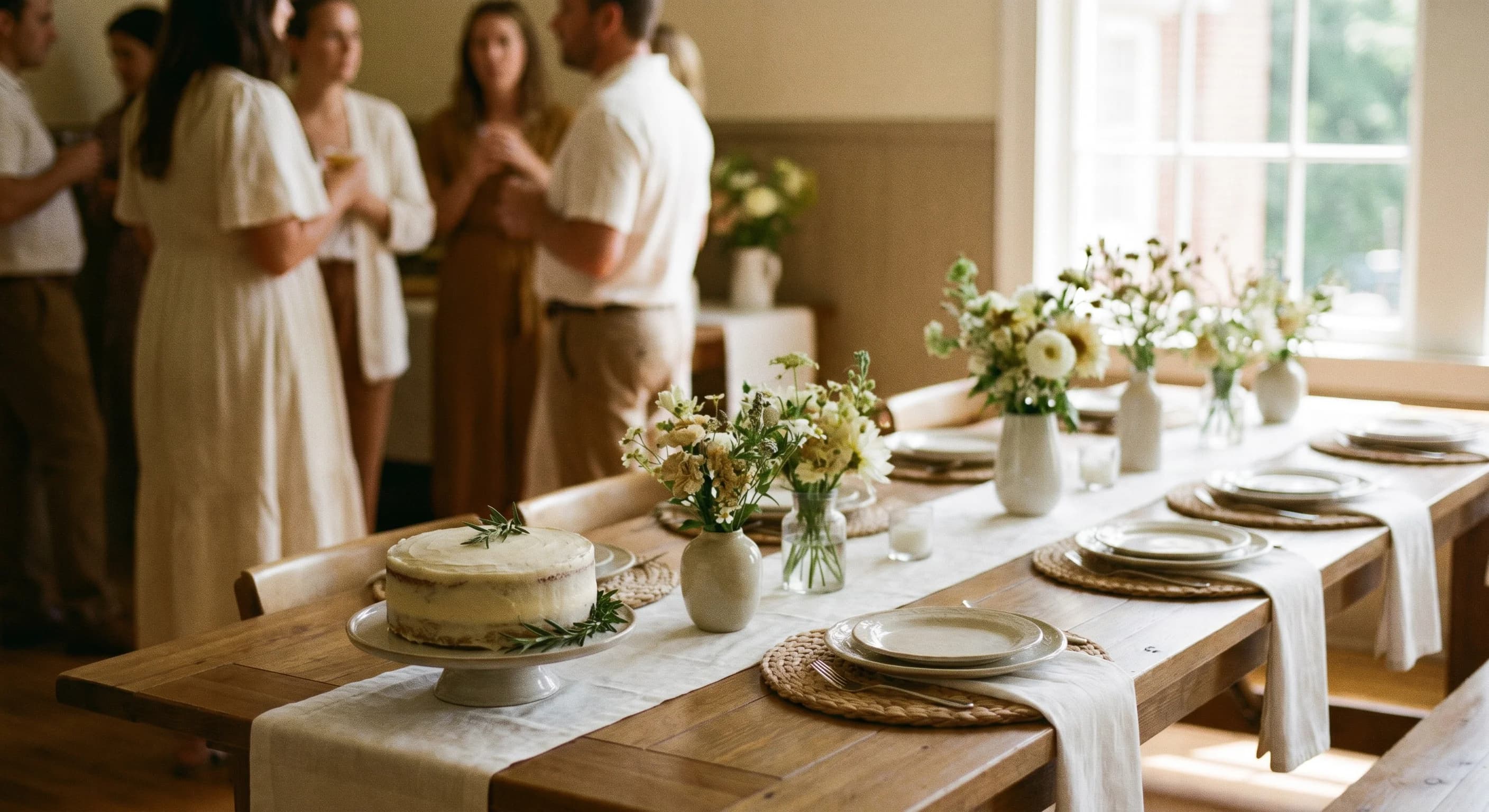
Most christenings run as a service followed by a meal, and the gap between them is where days go wrong. If the service ends at 12.30 and lunch is a 25-minute drive away at 1.30, say all of that on the invite. Guests with small children especially need to know whether to feed them first.
A few timing notes from doing this:
Sunday late morning is the classic slot, because many churches christen during or just after the main service. It flows straight into lunch and keeps the whole thing to the first half of the day.
A dedicated afternoon service gives you more control and a calmer church, then an afternoon tea rather than a full sit-down lunch. Lighter on cooking, easy on a hot day.
Whichever you choose, put an end time on the reception. It sounds unsentimental, but guests stay longer and more happily when they know the shape of it, the same way a clear finish helps any gathering, right down to a first birthday party, where overtired is always one biscuit away.
And keep the food simple. A christening lunch does not need to be ambitious. A good spread, something for the children, a cake, and enough tea and wine to go round is plenty. Nobody remembers a fancy starter. They remember the baby in the gown and the room full of people who turned up.
Putting the invitation together
Once the words are sorted, the sending is the easy part, and it's the bit I'd not go back on. For my cousin's christening we built the invite on Lemonvite. She described what she wanted, "soft sage and cream, a little watercolour, gentle and not too churchy", to Lemonvite's design engine and got something that looked like she'd hired a stationer.
Then it went out by text rather than post, which mattered because half the family lives a long drive away and she didn't have everyone's current address. People saw it, tapped, and the RSVPs gathered themselves over a weekend instead of trickling in for a fortnight. The notes field caught two food things and one "can I bring Mum, she'd love to come" before any of it became a day-of surprise, exactly the way it does for a baby shower invitation.
So write the wording like the warm, real thing it is. Choose godparents who'll mean it. Then let the invite handle the church address, the lunch details, and the headcount, and give yourself the morning to actually enjoy your own child's christening.