
Ganesh Chaturthi Celebration and Invitation Ideas
The first Ganpati I brought home on my own stood four feet tall, plaster of Paris, painted a glossy electric blue that photographs beautifully and dissolves approximately never. On visarjan morning I carried him to the lake and did the final aarti with a lump in my throat before letting him slip under. Then I watched him bob straight back up and float there, paint already peeling, while a man with a long pole pushed him down again. I have brought home a small clay Bappa, no taller than my forearm, every year since.
That is how you learn to host Ganesh Chaturthi: you start big and glossy and slightly panicked, and you slowly work out that the festival was never asking for any of it. Ten days of Ganpati at home can be the warmest stretch of your year, or a rolling low-grade worry about modak counts and aarti timings and who said they were coming for darshan. The difference is mostly in how you set it up before the 14th.
So these are the Ganesh Chaturthi celebration and invitation ideas I actually use now, after a decade of getting it wrong in interesting ways. They cover the whole stretch, from the morning Bappa arrives to the evening he leaves, plus the part nobody plans for: getting the people you love into the room without a forwarded group-chat message.
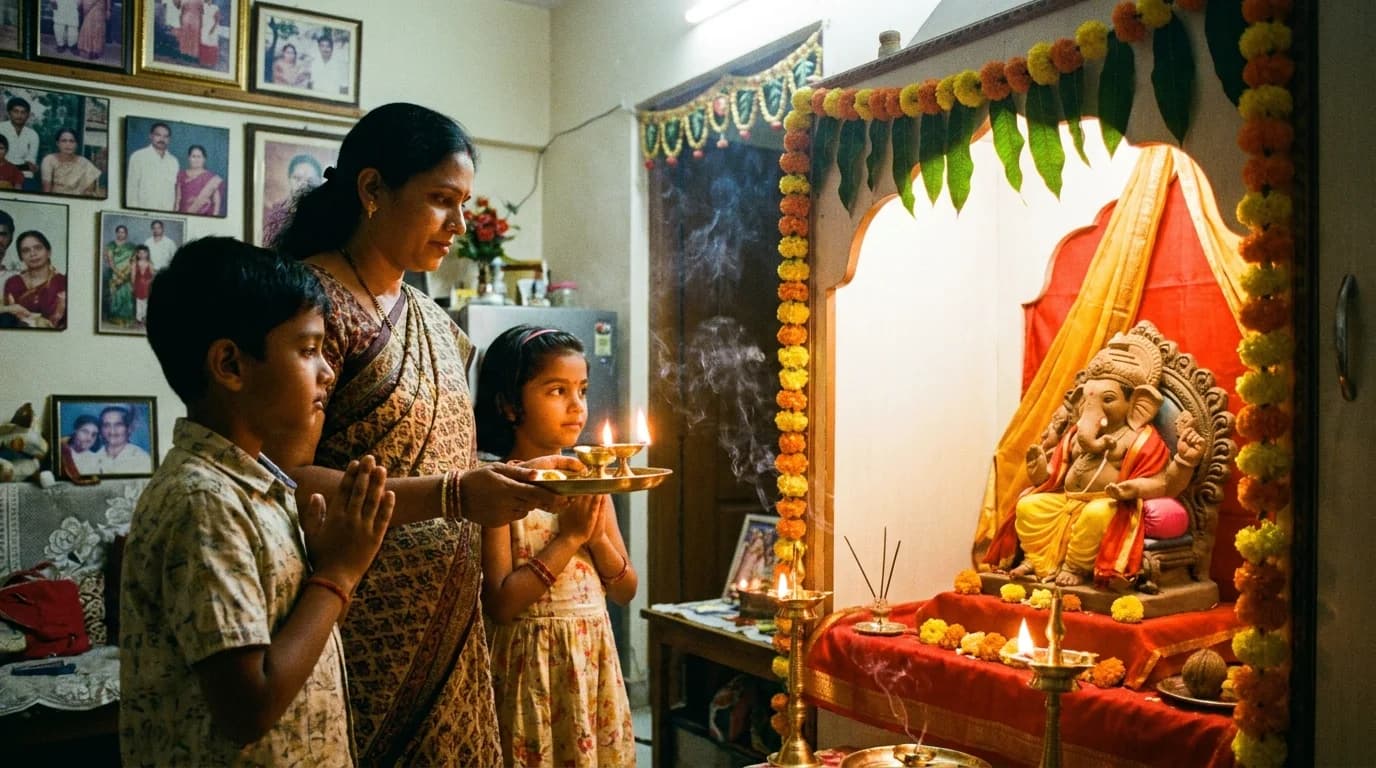
First, decide how long Ganpati is staying
Ganesh Chaturthi 2026 falls on Monday, 14 September, with the midday Madhyahna window the traditional time for the pranapratishtha, the installation that brings Bappa to life in the idol. The festival then runs through to Anant Chaturdashi on Friday, 25 September, the day of the grand public visarjan when the giant mandal idols go down to the sea. What trips up most first-time hosts is the assumption that you keep Bappa home for all ten of those days.
You don't. Households pick their own span, and every one of them is legitimate. Plenty keep him for dedh din, a day and a half. Others keep him three or five days; a handful go the full ten, right up to Anant Chaturdashi. None of these spans is holier than the others. Ten days is simply ten days: more aartis to lead and more evenings you need to be home and presentable.
So be honest about your September before you commit. If it is your first year hosting, or you and your partner both work, do the dedh din or the five-day. You will perform each ritual with attention instead of speed-running all of them while the dal burns on the next ring. The years I kept Bappa the full ten out of obligation are not the ones I remember most fondly.
Pick a clay idol, and build the mandap yourself
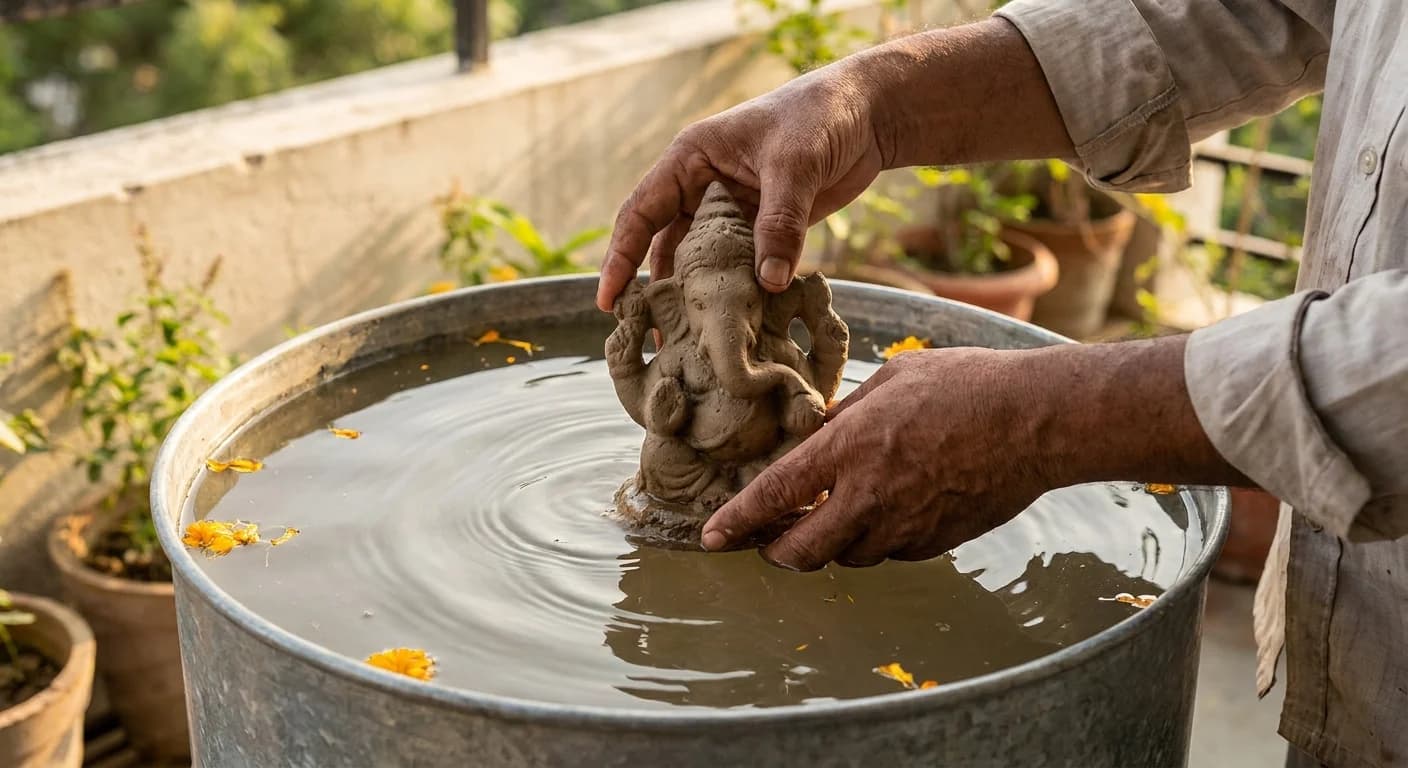
Let me be preachy for exactly one paragraph. Buy a shadu maati idol, the natural unbaked-clay kind, rather than plaster of Paris. POP doesn't dissolve, and its bright chemical paints leach into the water. The lakes and the shoreline then spend all of October coughing it back up. A clay Bappa breaks down cleanly, which means you can immerse him at home in a bucket and pour the soft soil that's left into your plants. Plenty of cities now restrict POP immersion anyway, so the choice may soon be made for you.
The mandap, the little throne Bappa sits on, is where the real fun lives and where you barely need to spend a thing. I have seen a gorgeous one built from a side table, a borrowed dupatta, and a string of fairy lights, and I have seen four-figure readymade thermocol sets that managed to look like a hotel lobby. Go homemade. Drape a bright fabric behind him and string a fresh marigold and mango-leaf toran along the top, with a couple of brass diyas at his feet. Keep durva grass and some red flowers on the plate, jaswand if you can find it, since those are the offerings Bappa is traditionally fondest of. Then hand the doorstep rangoli to the children. A wobbly six-year-old's rangoli beats a stencil-perfect one nobody remembers making.
The modak, and the rest of the bhog
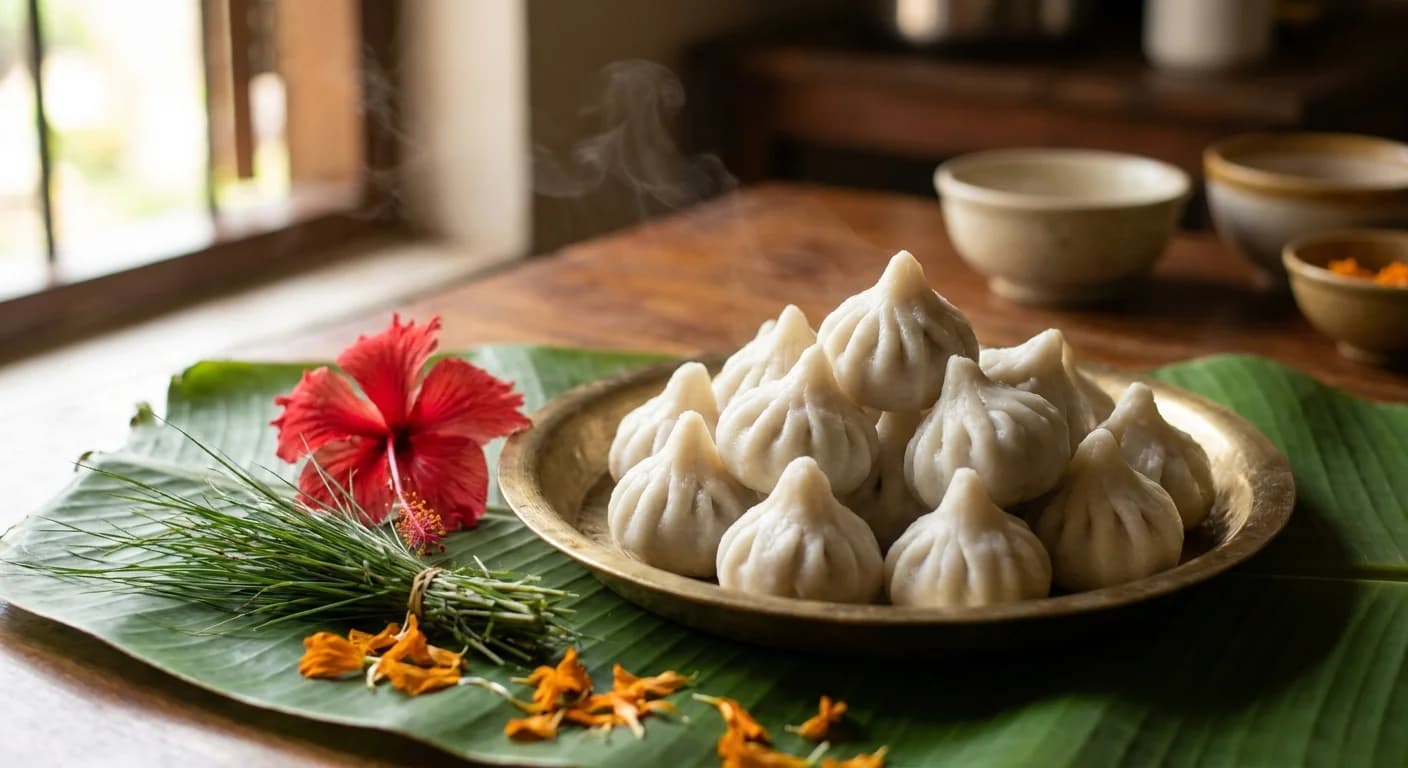
Ukadiche modak, the steamed rice-flour dumpling stuffed with coconut and jaggery, is the sweet Bappa actually asks for. The fried kind and the mawa kind are lovely too, but the soft steamed one is the classic naivedya, traditionally offered twenty-one at a time. If you have an aai or an aaji who makes them, this is the year to stand at her elbow and learn, because the pleating is genuinely hard and entirely worth knowing.
If you can't turn out twenty-one good modak by hand on a Monday morning, please don't prop up a plate of chocolate "modak" as the centrepiece and call it done. Order the real ones. Plenty of halwais and home cooks take Ganesh Chaturthi orders, and a box of proper ukadiche modak from someone who steams them all day beats a tray of your own that collapsed in the pot. Around them, keep the bhog simple and regional: puran poli if you have the patience for it, plus whatever already counts as festival food in your house. You are feeding a god and then twenty relatives. You are not auditioning.
And don't try to cook all of it alone at dawn. The bhog turns into a group effort if you let it, so assign the dishes the way you would for any shared meal and nobody has to sweat over a kadhai while their own aarti waits. Our perfect potluck guide covers how to split a menu by category so three people don't all arrive with sheera while the savoury goes missing. Keep the list somewhere everyone can see instead of buried in a chat that scrolls past in an hour.
Keep the aartis social
The reason to bring Ganpati home instead of only visiting a pandal is the daily rhythm of it: the morning and evening aarti, Sukhkarta Dukhharta sung slightly off-key by whoever happens to be around, the whole house smelling of agarbatti and fresh flowers for days on end. Don't keep that to yourself.
Ganesh Chaturthi has always been a neighbourhood festival at heart. Lokmanya Tilak turned the home pujas into big public ones in the 1890s precisely to pull people into a shared courtyard. So open your evenings up. Tell the neighbours which aarti they're welcome at, and let darshan run across the days instead of cramming everyone into one packed afternoon. Keep prasad and chai flowing the whole time. An at-home Ganpati that nobody visits is a sad little thing. One with a rotating cast of cousins and friends and the aunty from the third floor who only ever comes for the modak is the version you will miss in October.
A kinder visarjan
Visarjan is the part that wrecks people a little, in the best way, and the part most worth rethinking. You do not have to fight a crowd all the way down to the sea. With a clay idol you can do a perfectly proper home visarjan right there in a large bucket of water. Do the final aarti and set down one last plate of modak, then say the chant every Marathi kid knows by heart: "Ganpati Bappa Morya, pudhchya varshi lavkar ya," come back soon next year. Let the clay dissolve over a day or two, then give the muddy water and soil to the garden, so Bappa quite literally stays on in the house.
If you would rather a community send-off, most cities now set up artificial immersion tanks in each neighbourhood so the natural lakes are spared. Use them with a clear conscience. The farewell feels no less complete for being gentle on the water. Whatever you choose, fix the visarjan day and time before the festival starts, because a vague "we'll immerse him whenever" is how the most moving part of the ten days becomes an errand squeezed between chores.
Send a Ganesh Chaturthi invite people actually answer
The at-home Ganpati usually falls down on the invitation, which is to say there usually isn't one. Word goes out as a forward in a family WhatsApp group. Half the relatives never see it, and you spend the festival genuinely unsure whether four people or forty are turning up for Thursday's aarti. With bhog to cook and modak to count by the head, that guessing is the real stress of the whole stretch.
So I send a proper invitation now. I describe what I want to Lemonvite's design engine, something close to "Ganesh Chaturthi at home, marigold and saffron, traditional makhar, warm and festive, touches of gold," and it designs the festive invitation in seconds. Then it goes out by text. People actually open a text, and each guest taps once to RSVP, so I finally have a real headcount and know how much bhog to make for which evening. When you write it, spell out the plan in plain words: say which days Bappa is home and when the main aarti is, and make clear that darshan stays open all week. A clear note does far more than a pretty one, and I keep our guide to writing the event description open while I do it.
If your family is scattered, and at Ganesh Chaturthi whose isn't, the same invite reaches the cousin in Pune and the one in New Jersey. Indian numbers and everyone overseas get it over WhatsApp, so nobody misses the darshan over a country code. It is the same instinct behind sending a proper Raksha Bandhan get-together invite a few weeks earlier: a festival you love deserves better than a message lost in a muted group.
The version that finally works
The Ganesh Chaturthi I host now is a fraction of the stress of that plaster-of-Paris year. A small clay Bappa comes home on the 14th and leaves, by quiet home visarjan, after five days. The mandap is mostly fabric and marigolds. The modak are either made alongside my mother or ordered from someone far better at them than I will ever be, and the rest of the bhog is shared out across whoever's coming. The aartis stay open, so the house stays full. And the invite goes out in July, so I know my numbers long before I am soaking the first batch of rice.
Bappa asks for very little in the end: a clean send-off, and a houseful of people who actually showed up. If you want to get that last part right this year, you can describe your darshan invite and send it from Lemonvite in roughly the time it takes a pot of modak to steam.