
Raksha Bandhan Get-Together and Gifting Ideas
My family's Raksha Bandhan used to be finished before the chai went cold. My sister tied the rakhi around eight in the morning, in the ten-minute gap between my niece's meltdown and my father leaving for work. I handed over an envelope and a box of kaju katli. Somebody photographed the thali for the family WhatsApp. By half past nine we'd all scattered back into an ordinary Friday.
And every year it shrank a little more. The rakhi started arriving by courier because my cousins moved cities. The shagun became a UPI transfer with a party emoji. One year my brother and I "celebrated" over a video call that dropped twice. The thread is the whole point of the festival, and somewhere along the way we'd turned it into a delivery confirmation.
So a few years ago I stopped treating it like an errand and started hosting it like an actual gathering. These are the Raksha Bandhan get-together and gifting ideas that made the day worth taking off work for, plus the bits I'd happily skip.
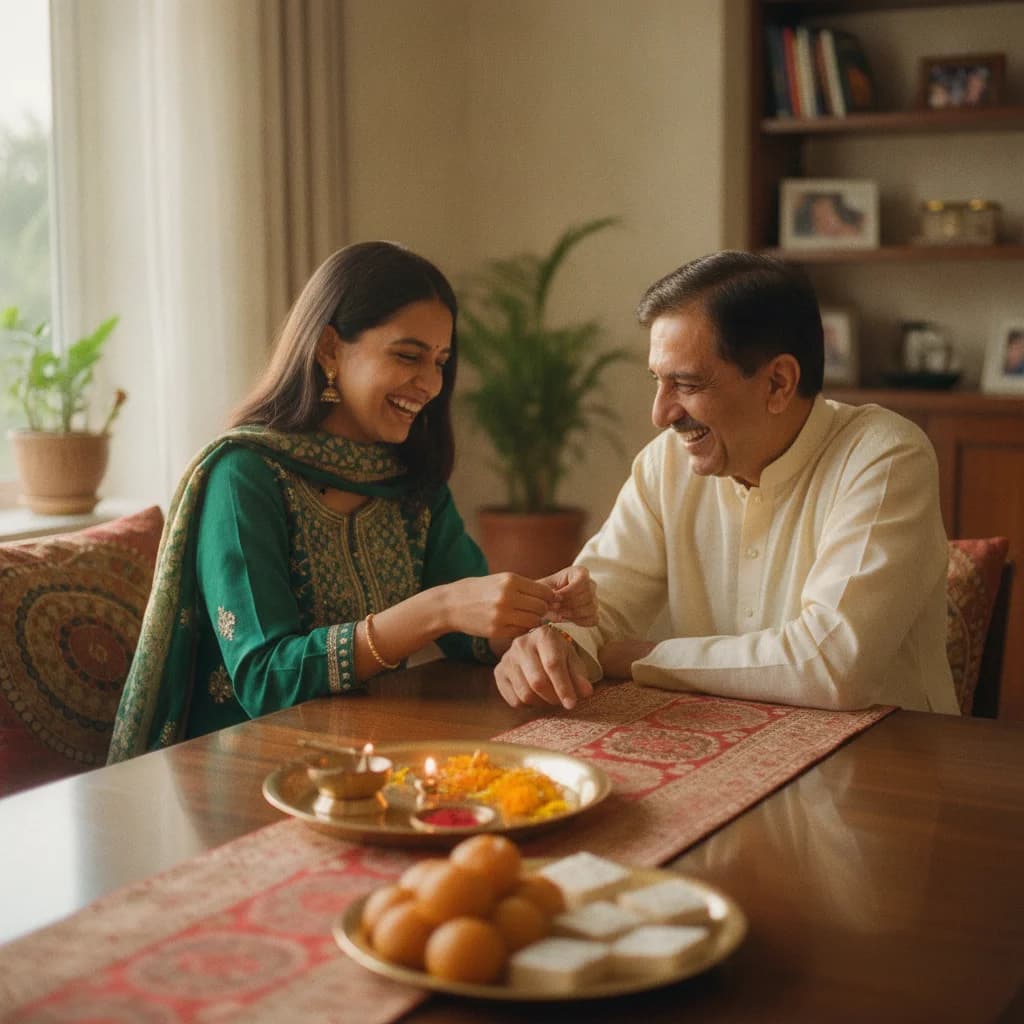
Decide what you're actually hosting
The reason so many Raksha Bandhan mornings feel rushed is that nobody decided what the day was. The rakhi gets tied in a doorway, and then everyone stands around wondering if that was it. So pick a shape before you pick anything else.
The morning rakhi and a long lunch is my favourite, and the one I'd recommend to most families. You do the tika and the thread when everyone's fresh, then the ceremony rolls straight into a proper meal that runs till mid-afternoon. The evening get-together suits working families and cousins who can't take the Friday off in 2026; you tie the rakhi once people are back from the office and let a late dinner turn into a proper sit-down. And if your siblings are spread across three cities, the weekend-after reunion is completely legitimate. The festival is the occasion. The calendar date is not a deadline you have to bleed for.
A word on timing, because people ask. Raksha Bandhan 2026 lands on Friday, 28 August, the full moon of Shravan (Shravan Purnima). The lucky thing this year is that Bhadra, the window you're traditionally told to avoid for tying the rakhi, clears before sunrise, so the whole morning is open. Plenty of families tie in the roughly six-to-ten o'clock muhurat, and the early afternoon does the job too. Panchang timings shift a little by region, so check your local one before you promise anyone a fixed slot. Whatever your local panchang says, the planning move stays the same: build the get-together around the tying instead of squeezing it in once the thread is already on.
Build the day around a real feast
A Raksha Bandhan lunch that's just the same weekday dal and sabzi is a missed opportunity. This is a festival with a sweet tooth and a season behind it, so lean into both.
The one seasonal thing I insist on is ghewar. It's the Sawan sweet, the kind that only really surfaces around now. A good disc of it with rabri does more for the mood than any amount of decoration. Beyond that, I keep the savoury food regional and generous rather than fancy: a proper pulao or a chole, something fried that people crave, and a raita with one cooling side because late August is brutal. Kaju katli and a box of besan ladoo round it out. You don't need a thirty-dish thali. You need a few things done well and enough of them.
What you should not do is cook the entire spread alone at six in the morning so you can be sweating over a kadai while your own rakhi sits untied. Split it. If you've never divided up a family meal before, my potluck guide covers how to assign dishes so you don't end up with four people bringing the same raita and nobody on mains. Or order the centrepiece, a tray of biryani and the mithai, and cook only the easy supporting stuff yourself.
And put the food plan on the invite. "Lunch is covered, bring a box of your favourite mithai to share" answers the question every cousin is silently texting the group about. If you're not sure how to phrase that without it reading like a chore list, my guide to writing an event description walks through exactly this.
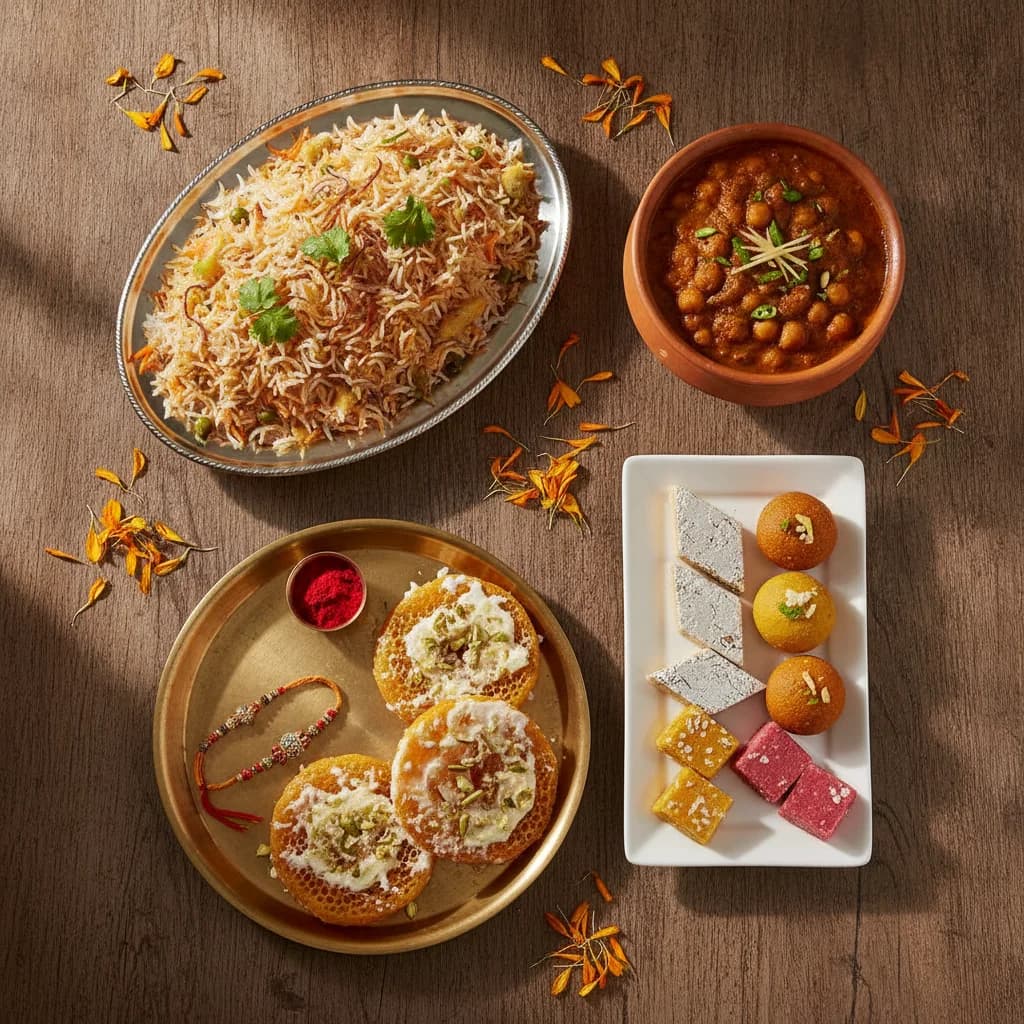
Rakhi gifting beyond the reflex chocolate box
The gifting habit worth breaking is the default dry-fruit box or assorted-chocolate tin that gets handed over, smiled at, and re-gifted to a neighbour by Tuesday. It's the gifting equivalent of "fine, you?" Nobody wants it and everybody keeps giving it.
Give for the person instead of for the occasion. A sister who actually cooks would rather have a heavy cast-iron kadai or a knife that doesn't squash the tomato than another scarf. A sibling who reads wants the specific book you've heard them talk about, while a generic gift card just says you gave up. Someone deep into skincare will clock the serum they mentioned in March and remember it for years. The thought is in the specificity, and specificity is the one thing a panic-bought tin can never have.
A few opinions I'll stand behind:
Cash in an envelope still beats a UPI ping. The shagun isn't tacky; it's often exactly what a younger sibling or a cousin saving for something actually wants. But hand it over as a folded note in an envelope on the day, paired with one small thoughtful thing, so it lands as a gift rather than a bank alert. The emoji transfer is for siblings you genuinely can't see, and even there it's a stand-in for the real gesture.
Gifting goes both ways now. The old script had the brother handing over a present and the sister tying the thread, full stop. Half the families I know have happily dropped that. Sisters give too: his favourite mithai instead of the generic box, a decent grooming kit, the gadget he keeps not buying himself. And don't forget the lumba rakhi for the bhabhi if that's your house's tradition; a small gift for her alongside it is a kindness people remember.
Experiences travel better than objects for the siblings who own everything. A family lunch out the following weekend, or a short trip you plan together, beats one more thing to dust. Tickets to something he'd never book himself work too. For the kids in the family, skip the giant plastic toy that's in three pieces by Sunday night. A good book and a small note of cash is lighter to post and lands better anyway.
Don't forget the siblings who can't make it
This is the part Raksha Bandhan is really about now. Families are scattered: siblings in Bengaluru and Toronto and Dubai, cousins who haven't all been in one room since a wedding. Pretending otherwise is how the festival shrinks into a courier slip.
So plan for the absent ones on purpose. Post the physical rakhi early, because India Post and the courier services clog badly in the back half of August and a rakhi that arrives on the 30th is a sad thing. Schedule any gift delivery to land the day before. And set a real time for the video call rather than a vague "we'll connect." A proper twenty minutes where the rakhi gets held up to the camera and tied in spirit beats two dropped calls and a guilty text. If you're coordinating people across cities and time zones, the same logic that makes me send invitations worldwide by text instead of email applies here: a message that actually reaches a phone in another country is the only invite that works.
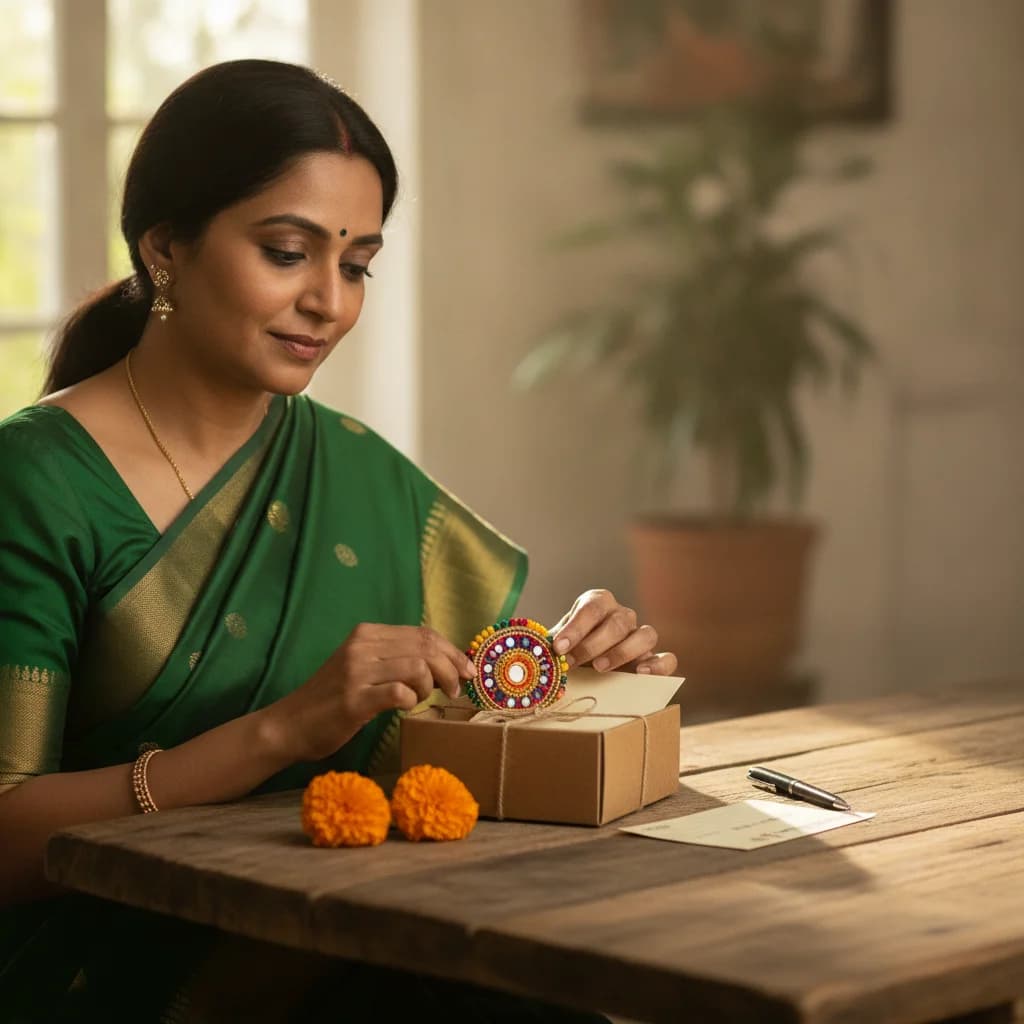
Send a real invite instead of a group-chat forward
On a festival, your get-together is competing with the in-laws' lunch and the simple pull of doing the quick version at home. A forwarded "Raksha Bandhan at ours, 11 am?" buried in a muted family group loses that competition, because half the relatives never see it and the other half forget by the next morning. I've written before about why you should stop running events out of group chats, and a festival lunch with food to cater is exactly where it bites.
A proper invite wins the slot. I describe the vibe to Lemonvite's design engine, something like "Raksha Bandhan family lunch, marigold and gold, traditional thali feel," and it designs the festive invitation for me in seconds. Then it goes out by text, where people actually open it, they tap once to RSVP, and I can see who's coming and which uncle never opened it so I know exactly who to call.
That headcount is the whole reason to bother, because mithai orders and biryani trays are a numbers problem. Fourteen confirmed is a clean order. "Arre, maybe twenty-five?" is a fridge full of leftover rice and a stressed Thursday.
The shape of a good Raksha Bandhan
Decide whether it's a morning, an evening, or next weekend. Tie the rakhi in the clear muhurat and let it flow into a real meal, with the cooking shared so you're not chained to the stove. Gift for the person in front of you, not the tin on the shelf. Reach the siblings who can't come like you mean it. And send an invite that actually lands so you know your numbers.
If this is your year to gather the family properly instead of doing the nine-thirty version, get the invite out now, because the window opens in early July and the long weekend fills up fast once the rakhis hit the shops. You can put one together on Lemonvite tonight, send it by text tomorrow, and spend the 28th with a thread on your wrist and a plate of ghewar in your hand instead of a phone full of half-sent forwards.