
Onam Sadhya and Celebration Planning
The first Onam I hosted on my own, I made eleven dishes for the sadhya and forgot to start the rice. Twenty people sitting cross-legged with an empty banana leaf in front of each of them. The parippu was going cold while I stood in the kitchen staring at an unopened bag of Matta rice like it had personally betrayed me. My ammumma would have had a word for me. I just laughed and went around pouring everyone a second glass of sambaram.
An Onam Sadhya is the most forgiving feast in the world and the most unforgiving one at the same time. Forgiving, because nobody who sits down to twenty-odd dishes on a leaf is counting whether you nailed the olan. Unforgiving, because there are twenty-odd dishes, and if you try to cook all of them alone on the morning of Thiruvonam, you'll be a wreck before Maveli gets anywhere near your doorstep.
So this is the guide I wish someone had handed me that first year: how to actually plan an Onam celebration, from the pookalam on the front step to the last spoon of payasam, without losing the part that matters.
Onam is ten days, not one lunch
Onam in 2026 falls on Wednesday, August 26. That's Thiruvonam, the big day. But the festival opens ten days earlier on Atham (around August 16), and those ten days are the actual celebration. Each morning the pookalam, the flower carpet at your front door, grows a little wider and a little bolder, until by Thiruvonam it's a full wheel of colour the neighbours slow down to look at.
If you only block out the one day, you've already missed the rhythm of it. You don't need a full ten-day production, because most of us don't have a courtyard or a spare fortnight. But pick three or four evenings across that stretch to mark in some small way. Lay a first pookalam early in the week. Walk to the market for flowers and fresh plantain leaves a few days out, and save the big lunch for Thiruvonam itself. The story I grew up on is that Mahabali, the good king the gods exiled to the netherworld, is allowed home once a year to check that his people are happy and prospering, and the whole point is to look like a household worth visiting. Stretch it out. The build-up is half the joy.
The pookalam is your decor, and it's nearly free
Forget buying decorations. The most striking thing you can put out for Onam is a pookalam, and it costs whatever a few bags of marigold, chrysanthemum and rose petals run at your local market.
A few things I picked up doing it badly for years. Start with a faint chalk circle so you're not guessing the edges halfway through. Lay your darkest, smallest petals in the centre and work outward in rings, because keeping a clean curve is far easier than fixing a wobbly one later. Get the kids down on the floor with you; a slightly lopsided pookalam made by a six-year-old beats a perfect one nobody remembers making. And if you're in a flat with no real doorstep, do it on a steel tray and set it on the table. Nobody has ever once complained that the flowers were on a tray.
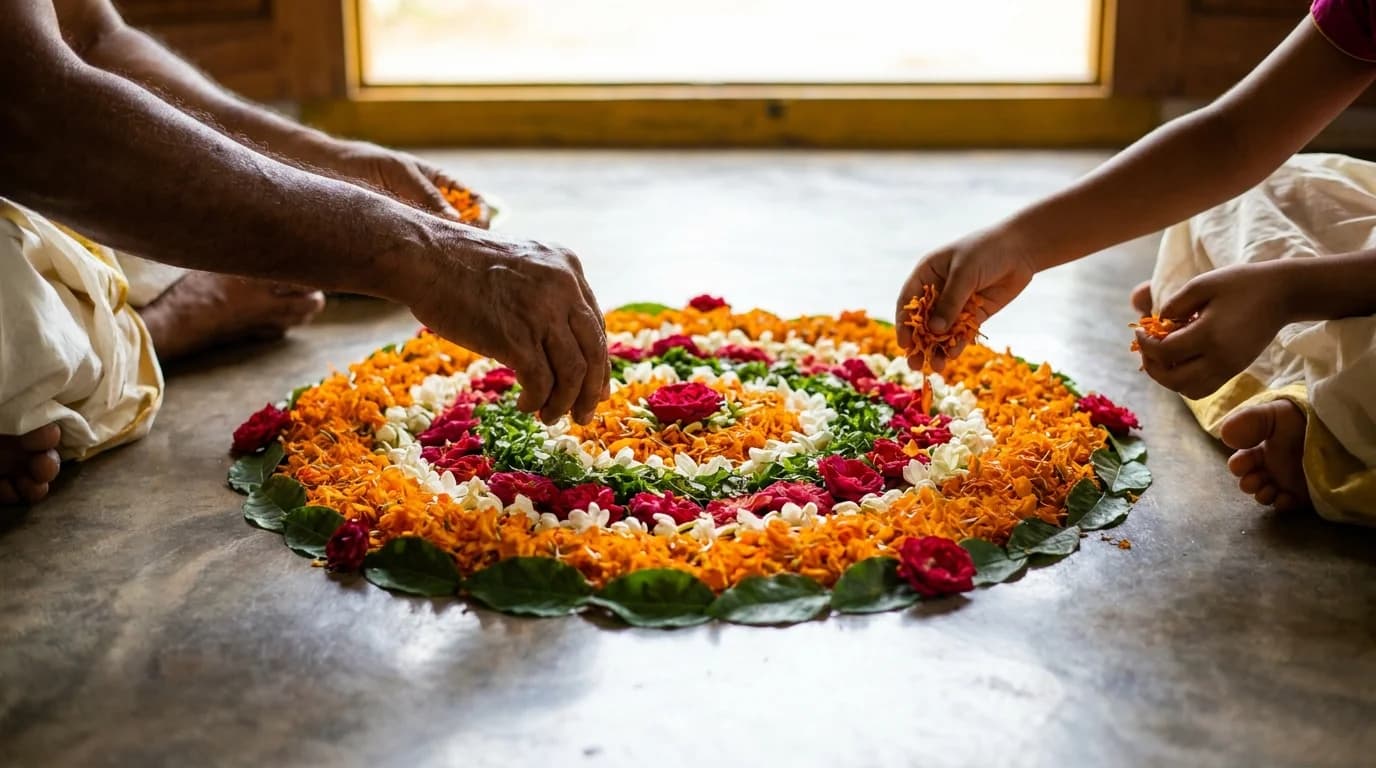
If you're hosting people who've never seen one, the pookalam doubles as the icebreaker. Guests crouch down, ask what the flowers are for, and the awkward first twenty minutes of any gathering take care of themselves.
The Sadhya: plan it like a feast, cook it like a relay
The Onam Sadhya is the heart of the whole day, a vegetarian banana-leaf spread that runs anywhere from a modest eleven dishes to the full twenty-six-plus your relatives will absolutely measure you against.
A few things worth knowing if it's your first time serving one:
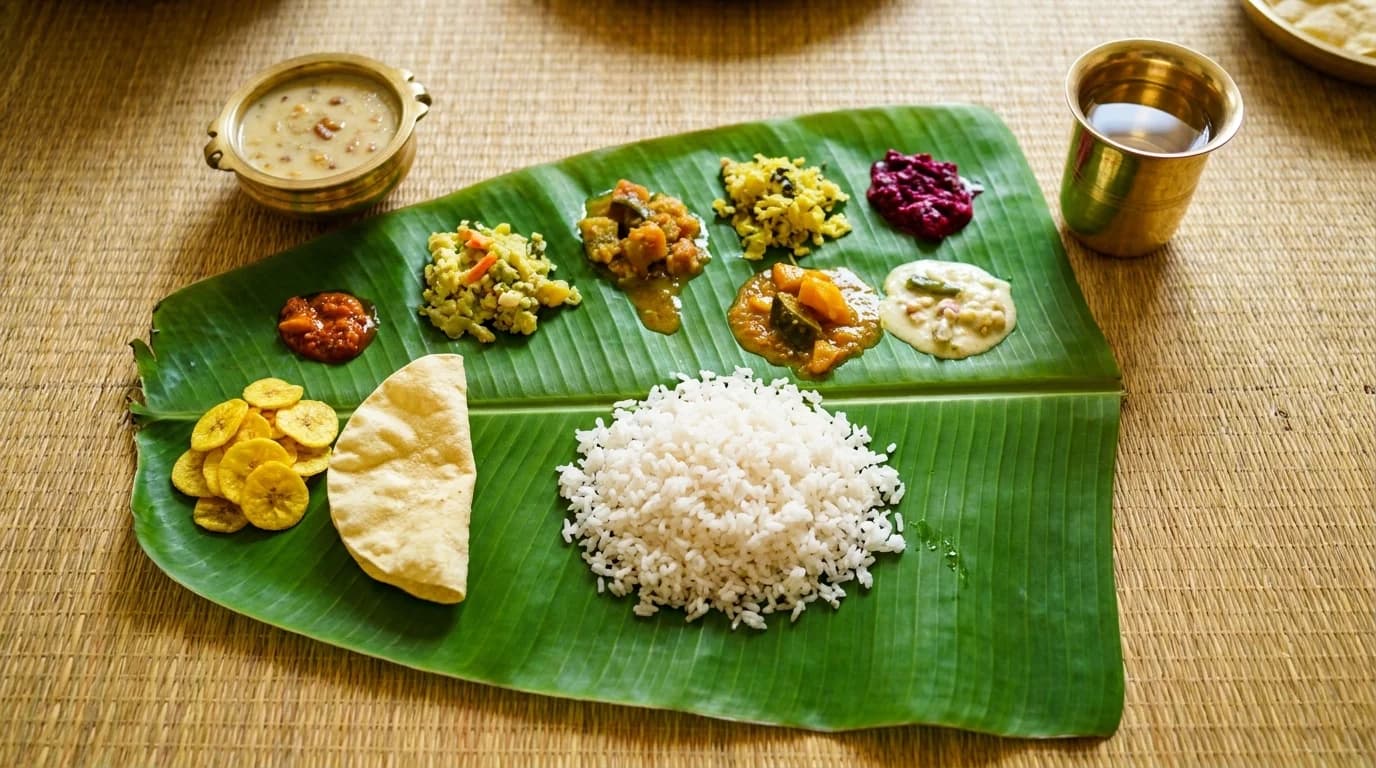
The leaf has rules. Use a fresh plantain leaf with the tapering end pointing to the guest's left. Salt and pickles go to the top-left, the crunchy things (banana chips, sharkara upperi, pappadam) along the top edge, the curries (olan, kaalan, avial, thoran, erissery) around them, and rice in the centre. There's an order to eating it, too: parippu and ghee with rice first, then sambar, then the tangy pulissery and rasam, and payasam to close. You don't have to lecture anyone on this, but knowing it yourself is what makes the leaf look right when you set it down.
Payasam is non-negotiable, and you want two. Traditionally a pale one (palada payasam, made with milk and sugar) and a darker, jaggery-rich one (ada pradhaman or parippu pradhaman). If you make one thing from scratch with real care this Onam, make it the payasam. It's the dish people remember on the drive home.
You cannot cook twenty-six dishes alone. Please don't try. This is exactly where I went wrong for years.
Share the cooking, the way it was always meant to be
In Kerala the sadhya was historically a shared effort, with neighbours and whole families cooking together for the temple feast and the home one. Lean into that. Assign dishes ahead of time, or you'll have everyone turn up with "a curry" and end up holding five thorans and no rasam.
The way I run it now: I cook the rice, the sambar, the avial and one payasam, the load-bearing dishes that set the tone. The rest gets parcelled out. One friend is on olan, another brings the thoran, my cousin handles pappadam and chips because she refuses to cook but is genuinely excellent at buying. It's the same logic as any good potluck, where you assign by category so you don't go curry-rich and dessert-poor. Our perfect potluck guide breaks down how to split a menu without the awkward overlap, and it maps almost exactly onto a sadhya. Put the assignments on a shared list everyone can actually see, instead of letting them get buried in a group chat that scrolls past in an hour.
The invite sets the tone and saves you the headcount panic
Onam tends to attract the "we'll figure it out" invite: a forwarded message, a "you're coming na?" voice note, a vaguely worded open house. And then you're cooking for an unknown number, which with a banana-leaf lunch is nerve-racking, because you portion by the head.
So I send a proper invitation now. I describe what I want to Lemonvite's design engine, and last year I typed something close to "Onam, pookalam in marigold and red, banana leaf border, warm Kerala festive, gold and deep green." What came back looked hand-painted, the kind of thing you'd see on the front of an old sweet box. Then it goes out by text, where people actually open it, and each guest taps once to RSVP. I get my real headcount, which means I know how many leaves to buy and how much rice to soak, instead of guessing and praying.
If your family is scattered, and whose isn't at Onam, the same invite reaches the cousins in Dubai and the ones in New Jersey. US and Canadian numbers get it as a text; everyone else gets it over WhatsApp, so nobody falls through the cracks because of a country code. And when you write the thing, say what the day actually is: lunch at 1, sadhya served on leaves, wear your onakkodi if you've got it. A clear note does more work than a pretty one, and I keep a guide to writing the event description bookmarked for exactly this.
After the feast, the day is only half done
A sadhya leaves everyone happily horizontal, which is a real hosting problem if your afternoon is meant to keep going. Have something ready for after.
Back home there would be Pulikali dancers, men painted up as tigers, moving through the streets, and the great snake-boat races, the Vallam Kali, out on the backwaters. You can't summon either to your living room, but you can put the Aranmula boat race on the TV and let it run while everyone digests. The traditional Onam games, the Onakalikal, travel better than you'd expect: a tug of war out in the garden, or musical antakshari heavy on old Malayalam film songs. If anyone still remembers the steps, the women can take a few rounds of Thiruvathira. Tell guests ahead of time to come in their onakkodi, the new clothes you put on for Onam, and you've got a room that photographs beautifully with no effort from you.
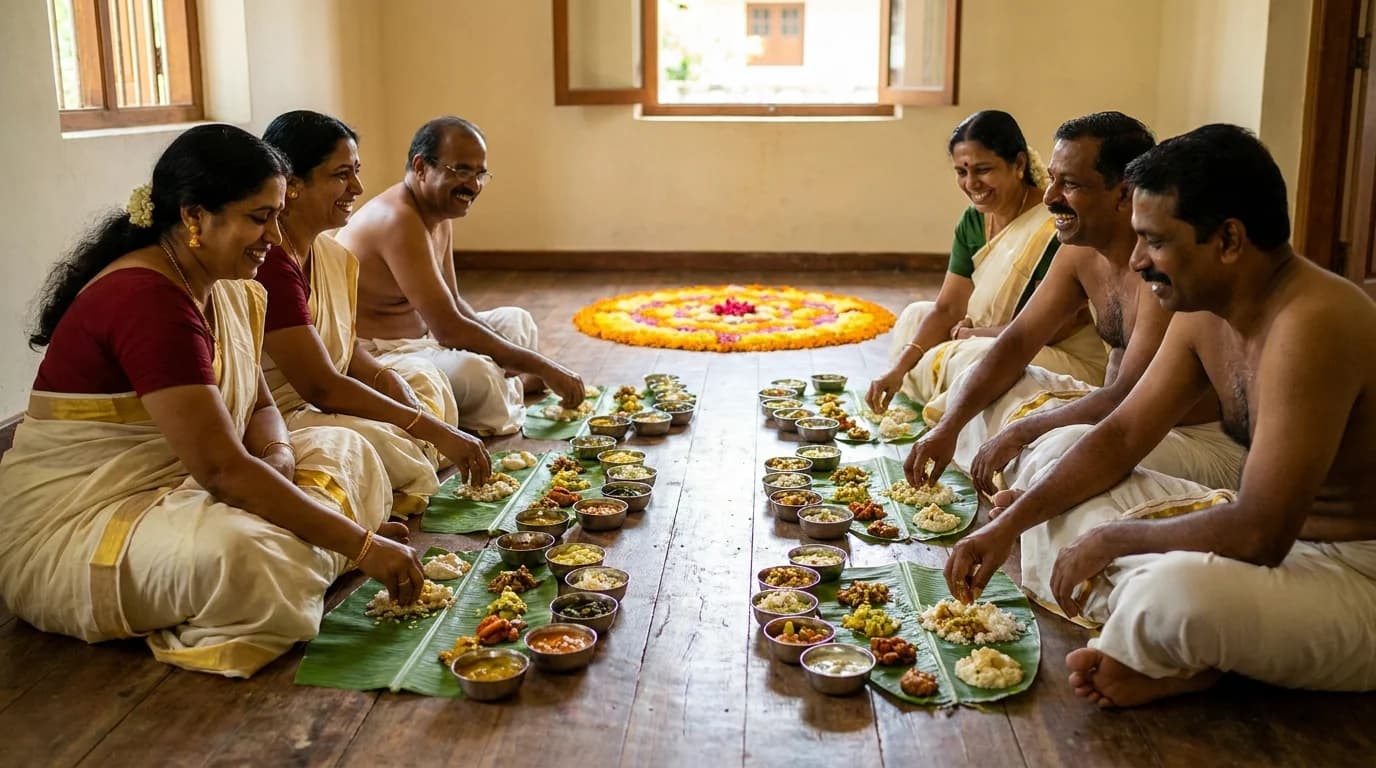
If the weather holds and you've got the space, push the whole thing outside. A lot of the outdoor party ideas I rely on through summer work just as well for an Onam afternoon on the lawn.
The version that actually works
The Onam I run now is a fraction of the stress of that first one. A small pookalam goes down a few days early and grows by the morning. The sadhya gets divided, so I cook the spine of it and friends carry the rest, and nobody is alone in a kitchen with twenty-six pots. The invite goes out by text two weeks ahead, so I have a real headcount and a real reason to soak the right amount of rice. And the afternoon has somewhere to go after the food, so people linger instead of slipping out at three.
Maveli only comes home once a year. The least you can do is not be hiding in the kitchen, panicking over the rice, when he does.
When you're ready to put yours together, you can describe the invite and send it out on Lemonvite in about the time it takes your first pot of payasam to thicken.