
Dussehra Gathering Ideas
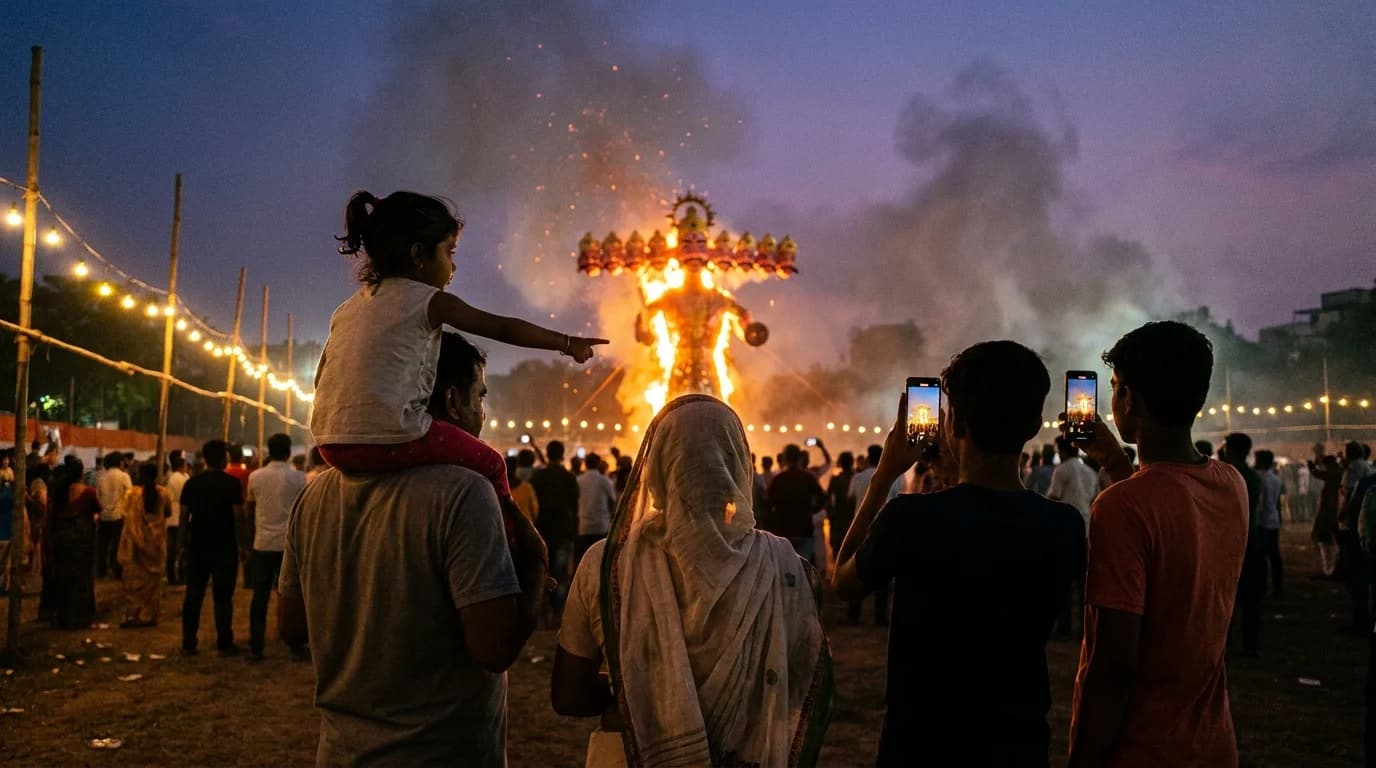
Two years ago I called people over for a Dussehra dinner at seven in the evening. By quarter past, four guests had arrived and three of them lived in my house. Everyone else was standing in a field two kilometres away with a phone held above their head, waiting for a forty-foot Ravana to catch fire.
Entirely my own doing. I had planned Dashami as though it were a blank Tuesday with a puja attached.
So the Dussehra gathering ideas below start with the clock, because Vijayadashami is the one festival where your whole neighbourhood already has somewhere to be at sunset. Get the hour right and the rest of the day looks after itself. Get it wrong and you will be reheating puris at nine thirty for people who already ate at the maidan.
The dates, and why 2026 hands you four days
Dussehra 2026 falls on Tuesday, 20 October. Sharad Navratri opens on Sunday, 11 October, and Maha Navami is the Monday, the 19th.
That Monday is the thing to mark on your calendar right now. A Tuesday festival with Navami the day before means plenty of workplaces effectively lose both, and plenty of families will run Saturday the 17th straight through to Tuesday the 20th as one long stretch. Good news if your cousins need to travel in. Bad news if they decide to travel out. Ask people in the first week of October, before somebody books Rishikesh.
The nine nights before Dashami are their own event, and if garba is how your family does Navratri then the garba night needs its own invitation and usually its own crowd. Dashami is the quieter, fuller day: the fast ends, the effigies burn, the idols go to the water, the dolls go back in their boxes.
Two Dussehra gathering ideas that work around the dahan
In most of north and central India the evening belongs to the maidan. Ramlila has been running nightly for a week and a half, and on Dashami the effigies of Ravana, Kumbhakarna and Meghnath go up around sunset in front of a crowd no living room can beat. Don't try to beat it.
Eat early, then walk over together. People come at four thirty or five and you feed them properly while it is still light. By six thirty the whole group heads to the grounds as one loud unmanageable unit. Your gathering gets the good hours and somebody else's bonfire is your closing act. Children love this version, and so do the relatives who would never go to the maidan on their own.
Or open the door afterwards. Doors from eight thirty, once everyone is back from the burning and faintly smoky and starving. This is the version I run now. Nobody is dressed up any more and the kids are past caring. A pot of chole on a low flame does more for the mood than three days of planning, and by ten there will be someone asleep on the sofa and four people still arguing about the traffic on the ring road.
What ruins the evening is the seven o'clock sit-down, which asks your guests to choose between you and Ravana. They will not choose you.
Host the Dashami your family actually grew up with
Dussehra looks different in every state, and a gathering that tries to stage all of them at once ends up feeling like a themed restaurant. Pick the thread that is really yours and do that one properly.
In Bengal, Odisha and Assam the day is Bijoya Dashami. Sindoor khela in the morning, then Ma goes to the water in the afternoon and the visiting starts after that, with kolakuli at the door and a plate you are not allowed to refuse. Keep it stocked with narkel naru and nimki, a bowl of ghugni for anyone who has been out in the crowd since noon, and whatever sandesh you managed to buy without queueing twice. What outsiders get wrong is treating Bijoya as a single evening. It runs for days. Leave the door open through the following weekend and put that on the invite in so many words.
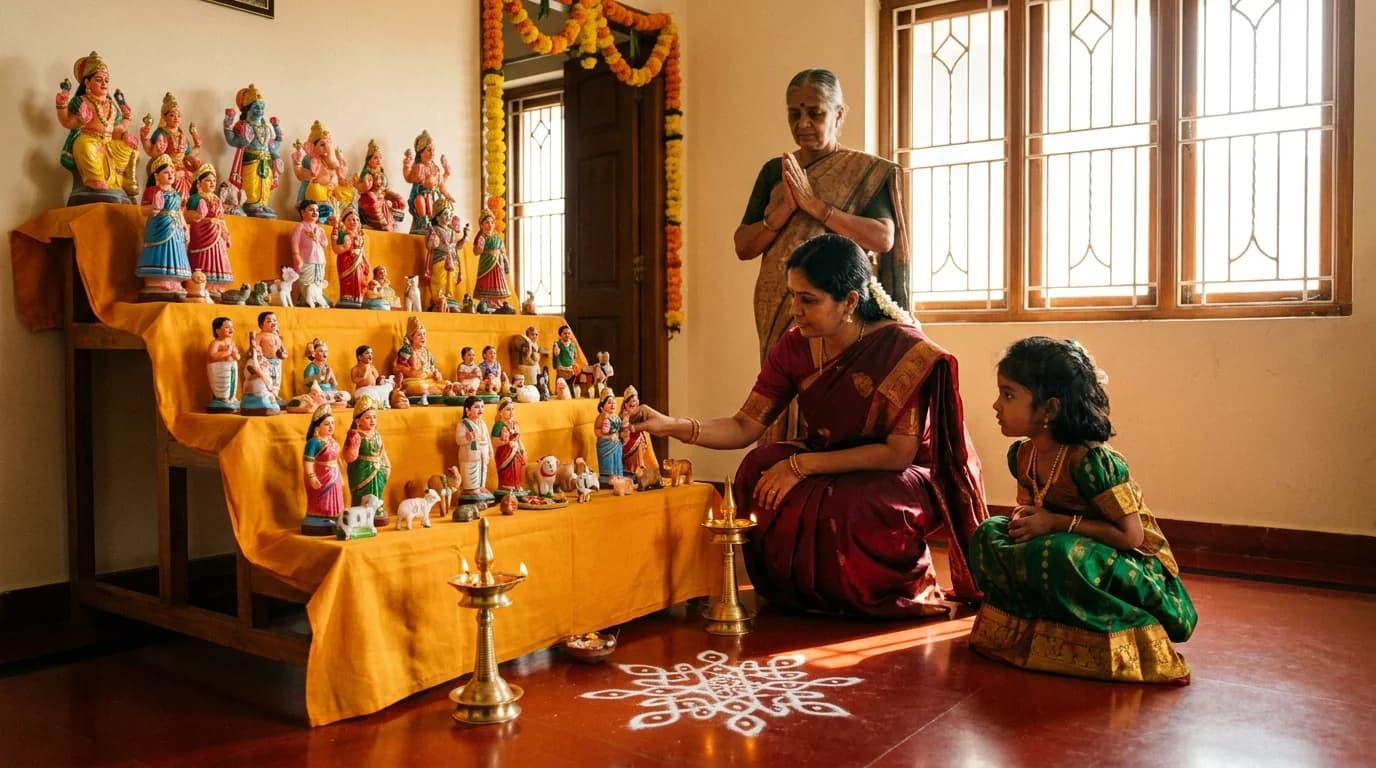
In the south Vijayadashami closes the Golu, the Bommai Kolu of Tamil Nadu and the Gombe Habba of Karnataka. The dolls have been climbing their padi since the first day, and on Dashami you lay one of them down to sleep before the packing begins. Use that last afternoon: call the neighbourhood in for a final viewing between four and six and send everyone home with thamboolam. And please vary the sundal. By day ten nobody wants another bowl of chana, so make the last one sweet. If you happen to be in Mysuru, the city hosts on your behalf and all you have to do is get everyone a spot along the Jamboo Savari route by mid-morning.
In Maharashtra it is apta leaves and shrikhand puri. You walk out at dusk, cross the old boundary of the settlement, pull a handful of leaves and hand them round as gold: sone ghya, sonyasarkha raha. It costs nothing and takes ten minutes, and every child in the building will want in. Dasara is also one of the sade teen muhurat, so if you have been putting off buying something or starting something, this is the day the whole family will approve of it.
Ayudha Puja is the easiest gathering of the lot, and the most fun to photograph. Tools and machines get cleaned, garlanded and blessed on Navami or Dashami depending on where you are: the car, the sewing machine, the tabla, the laptop somebody stares at twelve hours a day. Put a line on the invite asking people to bring the thing they work with. You will get a violin, a cricket bat, a laptop with a cracked hinge and somebody's autorickshaw parked across the gate.
And if there is a three or four year old in the family, Vijayadashami morning is Vidyarambham, the first letters traced in a tray of rice with an elder guiding the finger. Don't schedule that around your lunch. Everything else moves around it.
Feed people what the fast took away
Whoever kept the vrat has spent nine days on sabudana, kuttu ka atta, singhare ki puri and a great deal of fruit. On Dashami they are not hoping for one more bowl of fruit chaat. Lead the menu with everything the fast forbade. Real rice and a masala with onion and garlic in it. Something fried that nobody has to justify.
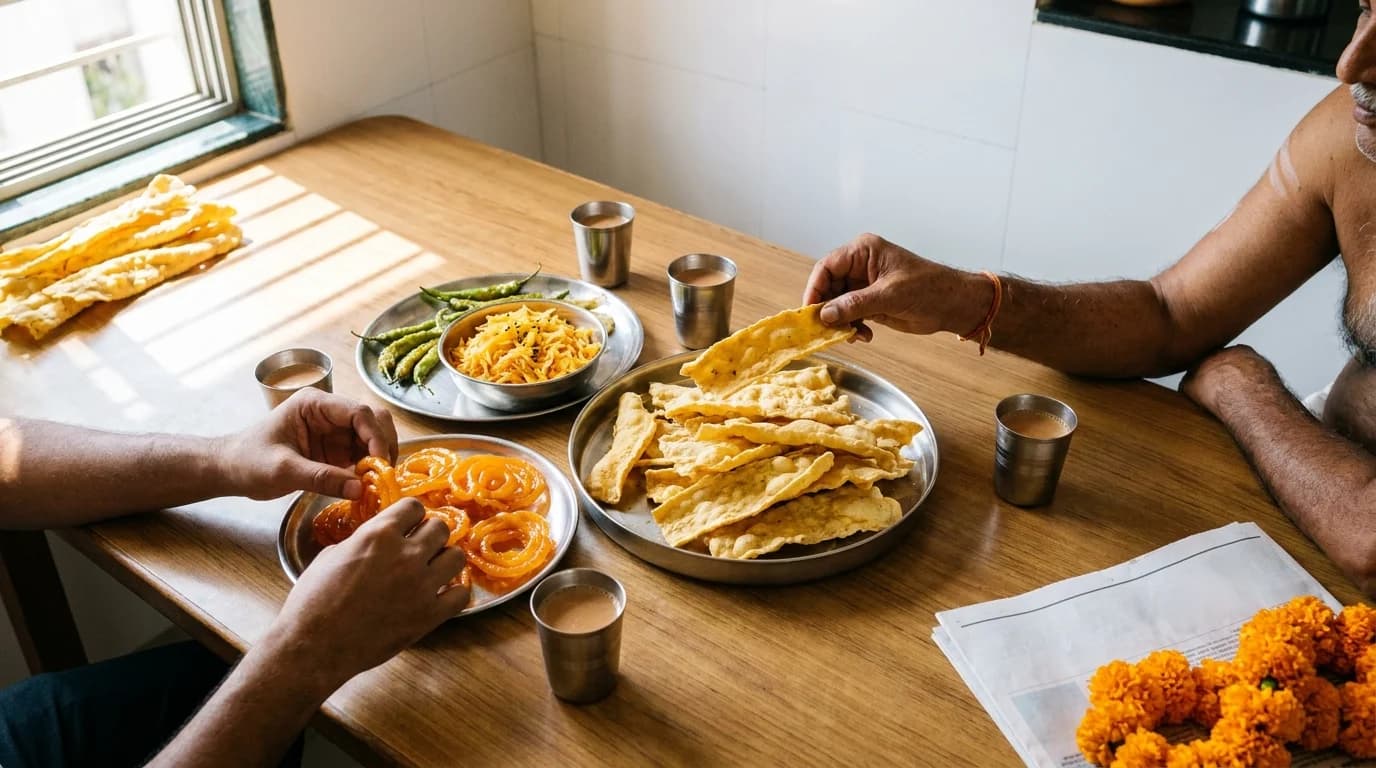
Gujarat has the best answer in the country and it happens before ten in the morning: fafda and jalebi, with sambharo and a few fried chillies, eaten standing in the kitchen while the newspapers are still on the table. If you host one thing this Dussehra, host breakfast. It is cheap and it is done by noon, which leaves the entire evening free for the maidan.
For a late sitting after the burning, cook things that survive being kept warm. Puri and aloo sabzi hold up better than anything else I have tried. A degchi of chole can sit on the lowest flame you own all evening and only get better. Buy the jalebi hot at nine, because by eleven it is a sad ring of syrup. Don't attempt a fifteen-dish thali at nine thirty unless you enjoy plating food while your guests yawn at you.
Split the cooking out by naming actual dishes, the same way you would for a house full of people over Ganpati at home. Ask for "something sweet" and four people will bring raita anyway. I have watched it happen.
Send an invite that survives the festival group chat
By the second week of October your family WhatsApp is a wall of garba reels and photos of other people's pandals. A dinner plan typed into that at eleven at night is gone by breakfast. Half your relatives never see it and the other half see it and forget, which is how you end up cooking for an unknown number on the one week of the year the sweet shop stops taking last-minute orders.
So I send a proper invitation now. I describe what I want to Lemonvite's design engine, usually something close to "Dussehra at home, marigold and deep red, bow and arrow motif, brass lamp light, touches of gold," and it designs the festive invitation in seconds. It goes out by text, because a text gets opened. Each guest taps once to RSVP, so I know whether I am ordering two kilos of fafda or six.
Then write the thing plainly. Give the date and the real hour. Say whether you are eating before the dahan or after it, and say whether the group is walking to the grounds together and from where. Vagueness on Dashami is how half your guests end up at the maidan while the other half stand at your gate texting them.
Scattered families are the norm now, so the same invite goes to the cousin in Bengaluru and the one in Toronto. Indian numbers and everyone overseas get it over WhatsApp, so nobody misses Dashami over a country code. Then chase the quiet ones before the mithai order closes; my guide to following up with guests who haven't RSVPed has the wording I use, which is better than sending "confirm karo na" five times.
Diwali is nineteen days behind it
Dussehra and Diwali sit nineteen days apart in 2026, which puts Diwali on 8 November. That is close enough that the goodwill from Dashami has somewhere to go. The evening people leave your house full and smelling faintly of smoke is the evening to say out loud that you're doing something for Diwali too, and to get that invitation out while they are still in your doorway hunting for their chappals.
Ravana burns whether you are organised or not. Whether the people you love are standing beside you when he does is the part you get to decide. Put your invite out in the first week of October, before that long weekend gets claimed by somebody else's plan, and you can build the whole thing on Lemonvite in less time than the queue at the mithai shop takes to move.