
Garba and Dandiya Night Ideas for the US
The first garba I organized in this country ended at 10:40 PM, which anyone who has done garba will recognize as the moment it should be getting good. Middle school cafetorium outside Naperville, ninety people, a rented PA on a folding table. A custodian named Rich flipped on the house lights while the dhol was mid-fill. My contract said 11 PM. It meant swept, stacked and locked by 11 PM.
Nobody had explained the difference, and that gap is most of what hosting a garba and dandiya night in the US teaches you. Back home the night runs until the sky changes color and nobody signs anything. Here it runs on a facilities agreement, a fire marshal's occupancy sheet, and whether Monday is a school day for half the room. The dancing is the easy part.
So this is the practical version for an Indian-American host doing it for the first time. The nine nights and the goddess forms live in my Navratri garba hosting notes. What follows is the room, the clock, the sticks and the food.
Navratri 2026 gives you exactly one Saturday
Navratri 2026 opens on Sunday, October 11 with Ghatasthapana, the morning the garbo goes up and the javara is sown. Nine nights later it closes into Dussehra, which most panchangs place on Tuesday, October 20, though plenty of communities mark it on Wednesday the 21st. Check the calendar your temple prints before promising anyone a date for the tenth day, which is its own kind of evening and gets its own guide.
Now hold the nine nights against an American work week. The weekend evenings inside Navratri are Sunday the 11th, Friday the 16th, Saturday the 17th and Sunday the 18th. One Saturday. October 17 is the night every temple hall and banquet room in your metro is already spoken for. The dhol players worth hiring were booked in July.
So either you move on the 17th today, or you deliberately give it up. I've come around to giving it up. Friday the 16th catches everyone already committed to Saturday's big community event who'd still like somewhere to dance. A Sunday afternoon garba is a gift to families with five-year-olds who cannot do a 10 PM start. And a Sharad Purnima raas on Saturday, October 24 is a tradition in its own right, with the full moon the next night.
Book the room before you book anything else
Nearly every garba here happens in a borrowed building: a temple hall, a school gym, a rec center, a banquet room in the plaza with the Indian grocer. My guide to picking a venue covers the ordinary questions. These four are specific to garba, and I've gotten each wrong.
The floor. A school gym comes with a floor covering requirement almost every time, and garba is a barefoot-or-mojri event, so a "no street shoes" sign won't save you. Ask whether the cover is included or rented; sometimes the tarp costs more than the room.
What time the music has to stop. That's a different number from the one printed on the rental agreement, and the printed one will lie to you. Work backward from it: if sound is off at 10:30, your last fast round starts at 10:15 and the closing aarti at 10:25.
Open flame. The garbo is a perforated clay pot with a lamp burning inside it, and a great many school districts will not permit that under any circumstances. Find out in September; six PM on the night is how I found out. An LED diya inside the pot looks right once the room goes dark, and a proper aarti thali is usually negotiable if you ask the facilities manager first.
Real dance capacity. An occupancy card reading 250 means 250 humans in a room. Garba wants floor, in rings, turning. I plan on half the posted number, or the outer circle stops moving.
The dandiya sticks conversation nobody has in advance
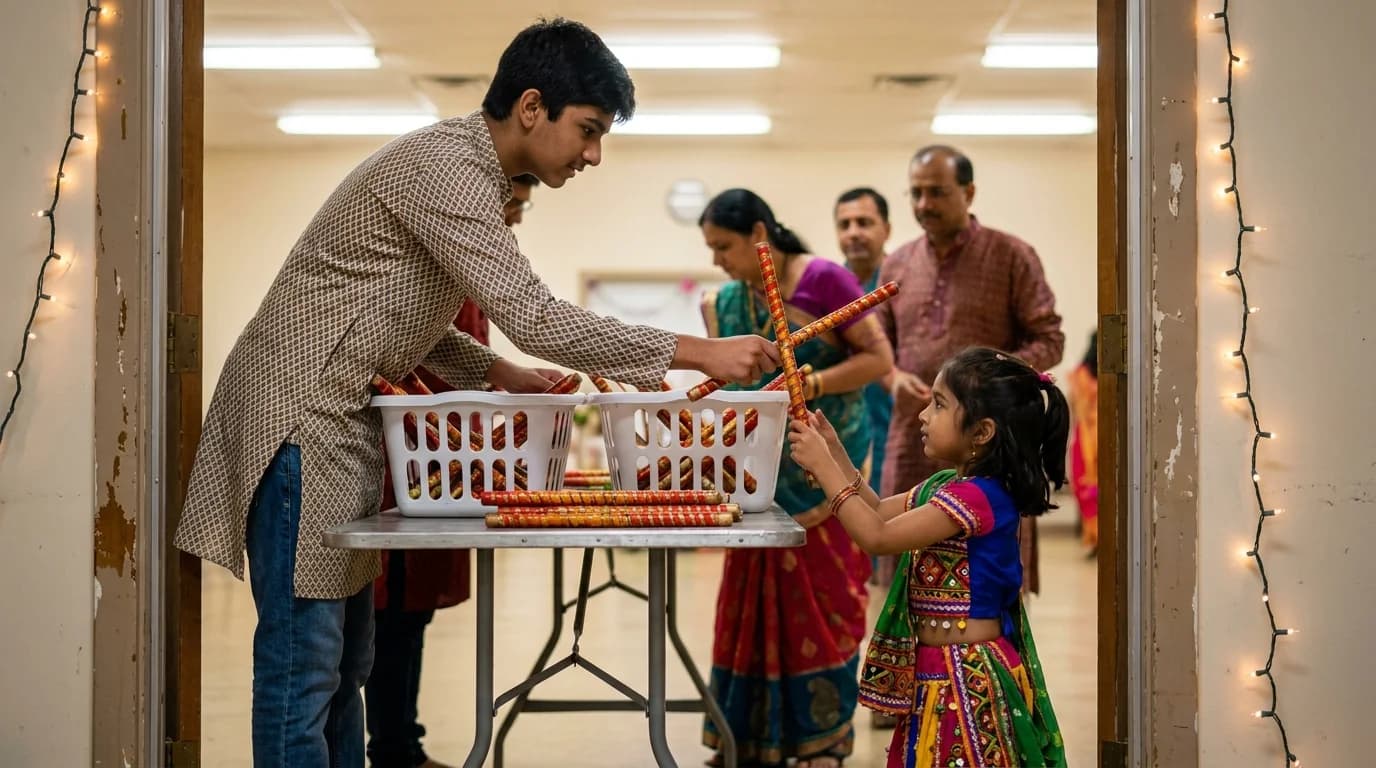
Order in bulk and order more than you think. Pairs vanish into car trunks. Kids snap them, and someone always shows up with six cousins nobody mentioned. I buy one and a half pairs per adult and keep them in bins by the door, with a teenager on returns duty.
Get the short padded ones for anyone under about ten; an eight-year-old with a full-length lacquered stick and real enthusiasm is a trip to urgent care. Then give the ten-second safety talk from the mic before raas. Strike at waist height and aim at the stick rather than the hand. If you're new, follow the beat of the person across from you.
One opinion I'll defend: keep the dandiya off the tables until the circles are already moving. Sticks available at 7:30 turns your first hour into a sword fight in the parking lot.
Run a garba and dandiya night in the right order
A garba has a shape, and the shape is the whole point. Build your evening along it.
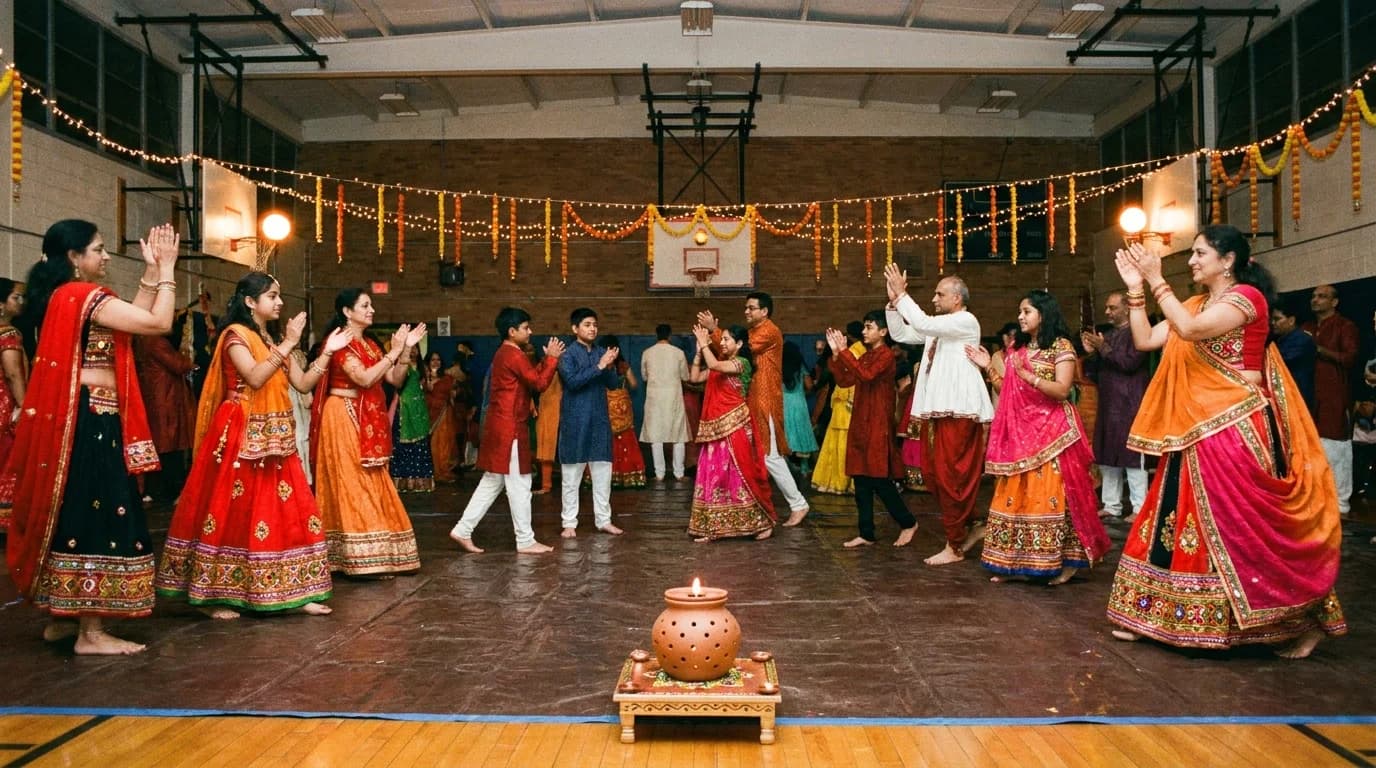
Aarti first, around 7:30, everyone circling the garbo. Then open with slow two-clap garba while the room is still shy and the beginners work out where their feet go. Sanedo and the fast hinch can wait until the floor is full. Bring in the dandiya raas around nine, when people are warm.
Save the Bollywood remix block for twenty minutes near the end, and hold it there. It fills the floor, sure. It also empties it of everyone who came for actual garba, and those are the people who stack chairs afterward.
Teach the basic step from the mic in the first ten minutes. Two claps, right foot, turn. Ninety seconds, and it's the kindest thing you can do for the non-Gujarati spouses and the coworker who accepted out of curiosity and is now standing near the samosas in a borrowed kurta. Nobody has ever learned garba from a folding chair.
If you can get a live singer with a dhol and a keyboard, get one; live music changes a room in a way a laptop cannot. If the budget says DJ, hire one who knows a two-clap track from a three-clap track.
Feed the half of the room that's fasting
A large share of your guests are keeping upvas across all nine nights: no grains, no onion or garlic, often no regular salt. No venue will flag that for you, and a food table that's only pav bhaji and a chaat station shuts out a third of the room.
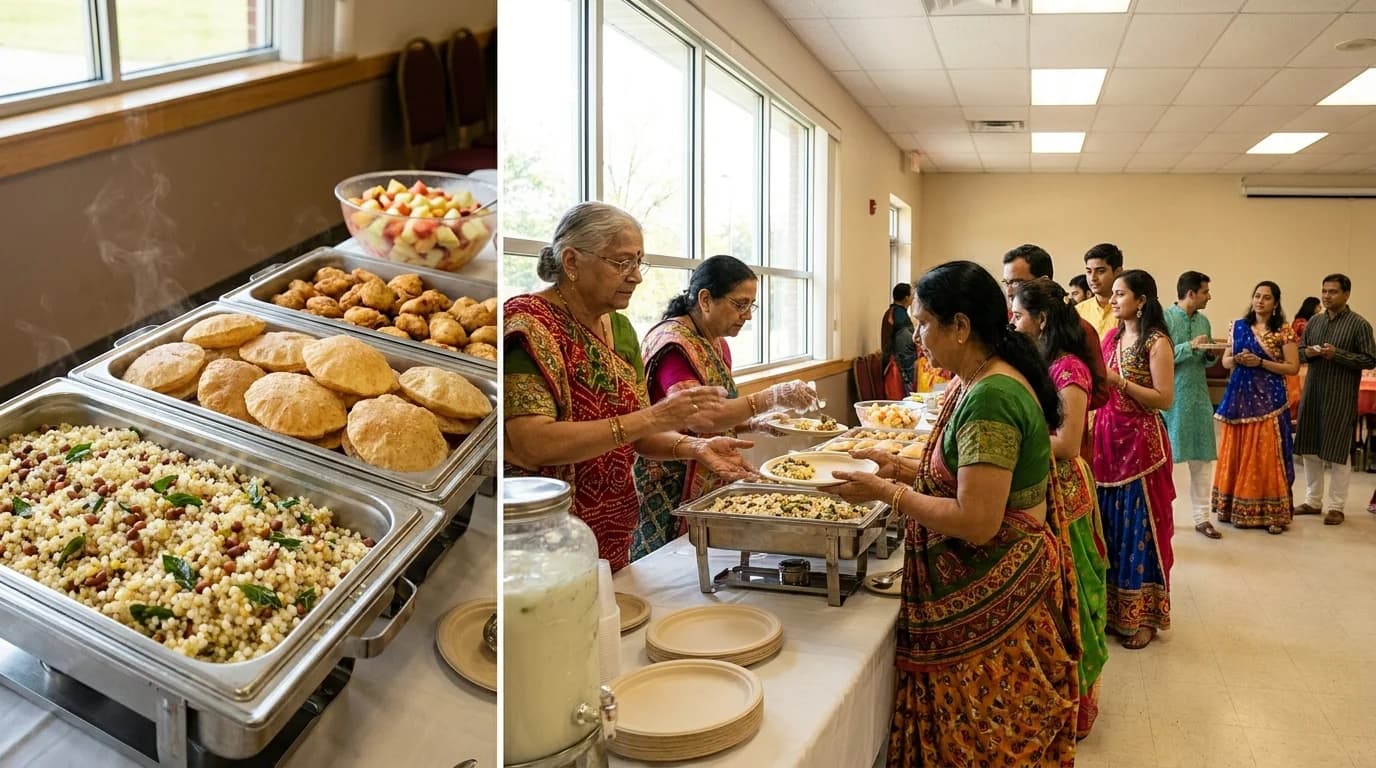
So lay out a real farali spread beside the regular food. Sabudana khichdi is the workhorse. Add rajgira puri, farali pattice, a sukhi bhaji and plenty of cut fruit, with cold chaas in a dispenser. Say "farali" to your caterer explicitly and get it in writing, because "we'll accommodate dietary needs" from a hall kitchen means a fruit plate and an apology.
Serve late. Garba runs on an empty stomach, and a full one is a liability by the third hinch. Chai at 9:30 and food from 9:45 has worked every time. If families are splitting the cooking instead of catering, my potluck guide has the method for dividing a menu by category. It matters double here, or the farali column goes unfilled and four households bring dhokla.
One more opinion, and I'll take the emails: no bar. These are nine nights of fasting and worship for a lot of your guests, and a cash bar at a garba is a wedding reception in a borrowed chaniya choli. Chaas and masala chai, plus Thums Up if your store carries it.
What people wear, and where it comes from now
Chaniya choli for the women, kediyu and kafni for the men, plus enough oxidized silver to trip a metal detector. Getting there used to require a suitcase from Ahmedabad. Mostly it doesn't anymore.
If there's an Indian plaza within driving distance, go in September and go early; the good chaniya cholis are picked over by the last week of the month. Oak Tree Road in Edison, Devon Avenue in Chicago, the Mahatma Gandhi District in Houston and the strip malls of Fremont all stock hard for Navratri. Plenty rent as well as sell, which is right for a nine-year-old who'll outgrow it by Diwali.
Put the dress note on the invite and be specific, because "traditional attire" makes a first-timer panic and skip it. Mine says: chaniya choli or kurta if you own one, anything you can spin in if you don't, bare feet either way because the floor is covered.
Get a headcount, because everything here is priced per head
A garba spreads through exactly the channels that lose people: a flyer photo forwarded into three WhatsApp groups, then an aunty who tells eleven families and remembers telling four. You end up guessing between sixty and a hundred and forty, which is the difference between one caterer order and two.
So send an actual invitation. I describe what I want to Lemonvite's design engine, something like "Navratri garba night, chaniya choli reds and marigold orange, mirror-work border, dandiya sticks, warm lantern light," and it designs the festive invitation in seconds. It goes out by text, where people actually look, and each guest taps once to RSVP. I watch the number move all week and call the caterer with a figure I believe.
Then write the details plainly, or a beautiful invite still generates forty texts. The aarti time and the doors time are different numbers, so print both. Say whether it's ticketed and whether sticks are provided. And put the hard stop on there, so nobody drives forty minutes to walk in at 10:15.
Rich the custodian and I are on decent terms now. Last October he asked what the clay pot with the lamp in it was for, and I got to explain the garbo to a man in a school district polo while ninety people did a three-clap behind us. That's the version I'd wish on anybody: enough control over the room to enjoy the last twenty minutes.
Pick your night this week, before the halls go. Order the sticks while it's still September. And get the invite onto phones early, because a garba fills or empties on how many people saw it in time to hold the date. You can build one on Lemonvite in less time than it takes to teach your father-in-law the three-clap.