
Full-Month (Mun Yue) Baby Celebration Planning Guide
My cousin Ling texted me four days after her son was born, already overwhelmed: "Do I dye the eggs myself or just buy them? And how many? My mother-in-law says odd number, my mum says don't bother counting."
Welcome to the full-month celebration. The baby is barely a week old, the parents are running on no sleep, and somehow there is already a guest list, a restaurant deposit, and a small family debate about red eggs.
If you have a Mun Yue baby celebration coming up, here is the good news: the tradition is warmer and more forgiving than the pressure around it suggests. You do not need to get every old custom exactly right. You need to honour the meaningful parts, feed people well, and make sure the relatives who matter actually show up.
What the full-month celebration actually marks
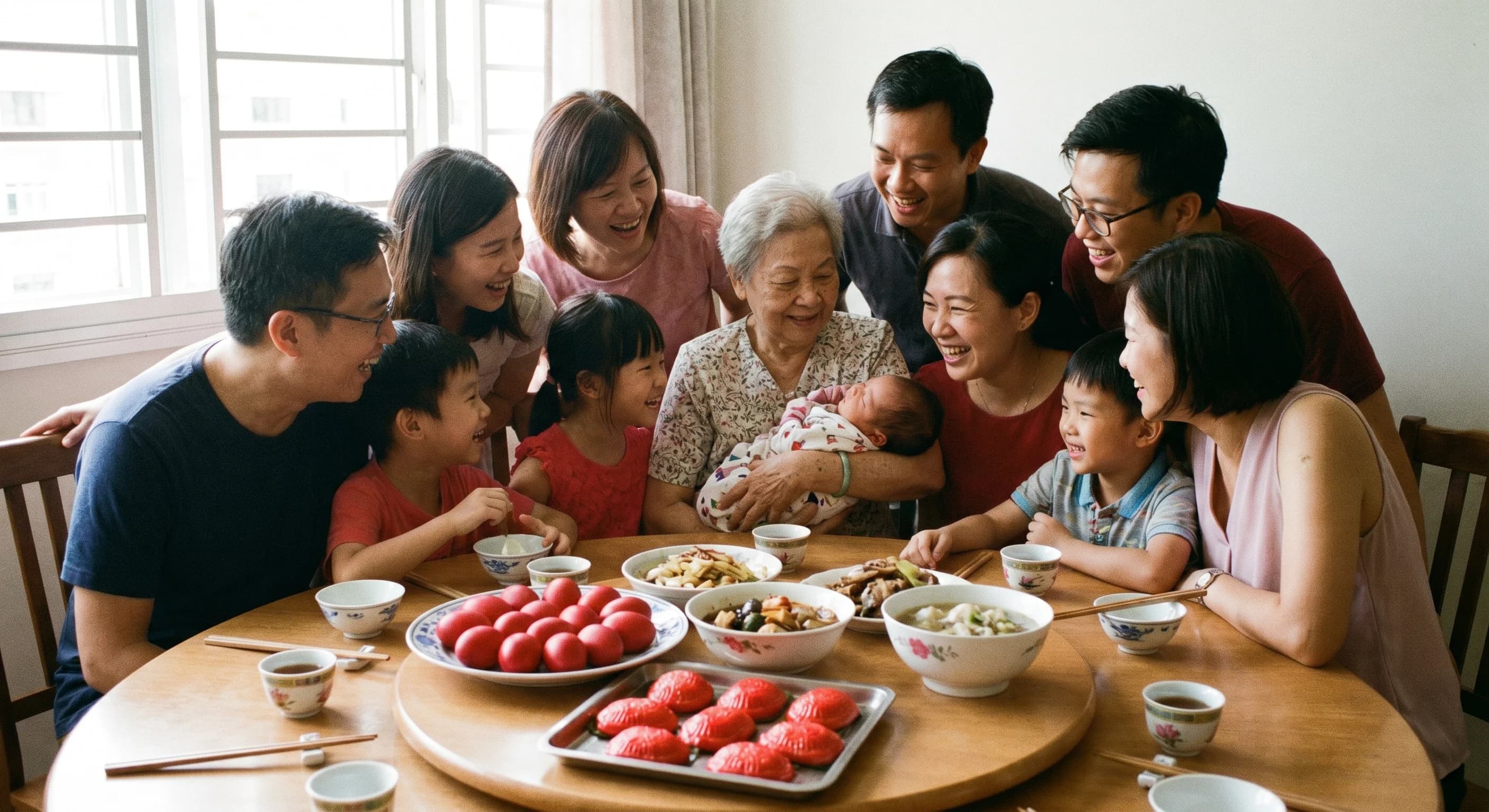
The full-month celebration is called Man Yue or Mun Yue (满月, "full month"). It marks the baby's first thirty days of life.
That number is not arbitrary. In the generations before modern medicine, a newborn surviving the first month was a genuine relief, not a given. The first month is also when the mother completes her confinement, the rest-and-recovery period Chinese families call zuo yue zi. So the celebration does double duty: it welcomes the baby into the wider family and, just as much, says "she made it through too."
Traditionally the party lands on the thirtieth day. Some dialect groups count slightly differently, and some families mark a girl's full month a day or two earlier than a boy's. In practice, most Singapore families now just pick the nearest weekend so working relatives can come. Nobody is checking the lunar calendar with a ruler. Choose the date that gets the most grandparents, aunties, and uncles in one room.
This is also when some families do the baby's first head-shave and bring offerings to thank their ancestors and deities. Those are optional and personal. The parts almost everyone keeps are the food, the gifts, and the gathering.
The foods and gifts, and what they mean
This is the heart of it. Get these right and the rest is just logistics.
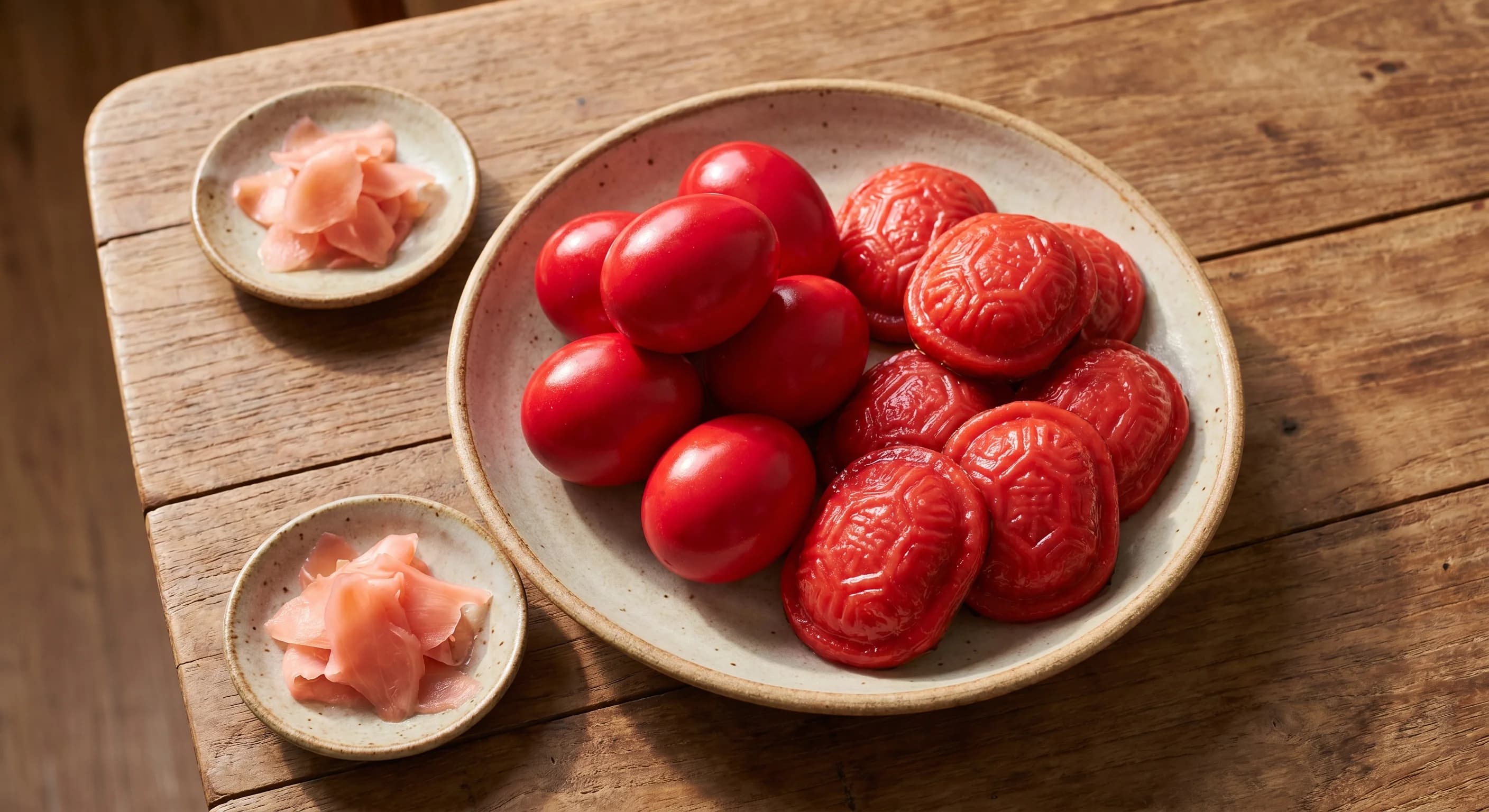
Red eggs. Hard-boiled eggs dyed a deep, glossy red. The egg is a symbol of new life and fertility; the red is for joy and good fortune. They show up on the celebration table and inside the gift boxes you send out. Tradition says an odd number for a boy and an even number for a girl, though plenty of families have stopped keeping count. If your mother-in-law is counting, let her count. It costs you nothing and it makes her happy.
Ang ku kueh. The red, glistening glutinous-rice cakes pressed into a tortoise-shell shape, usually filled with sweet mung bean or peanut. The red means luck; the tortoise stands for long life. In some families the shape signals the baby's gender, a pointed top for a boy and a rounded one for a girl. You can order these from any decent kueh stall in Singapore. Do not attempt to make them from scratch the week your household has a newborn in it.
The full-month gift packages. This is the custom outsiders find most charming. The new parents send out boxes to relatives, close friends, and often colleagues to announce the baby and share the blessing. The classic box holds red eggs, ang ku kueh, and glutinous rice, often with pickled ginger and a sponge cake or huat kueh. These days most people just order a ready-made full-month bakery box: swiss rolls, little cakes, ang ku kueh, all packed and ready to give. Far easier than assembling sixty boxes by hand, and nobody minds.
The celebratory meal. Whether it is a restaurant banquet or a spread at home, the food leans auspicious: a whole fish for abundance, longevity noodles, something with prawns, red-dyed touches throughout. Pickled ginger and the "heaty" foods of confinement cooking often make an appearance too.
Restaurant or at home: how Singapore families host it now
Two roads, and both are fine.
The restaurant banquet. Book a Chinese restaurant, order a set menu, let the staff handle the rest. This is the low-stress option, and for new parents that counts for a lot. You turn up, the food arrives, someone else washes the dishes. The trade-off is cost and a fixed headcount you need to lock in early. A lunch sitting is gentler on a newborn's schedule than a long dinner, and the older relatives appreciate an early finish.
The home gathering. Cosier, cheaper, and more flexible on timing, but the work lands on the household that is already the most tired. If you go this way, cater the mains rather than cooking them. Order the ang ku kueh and red eggs, get a confinement caterer or a nearby zi char to handle the hot dishes, and keep your own job to drinks, fruit, and welcoming people at the door.
Whichever you pick, keep it shorter than you think it needs to be. A newborn has a hard limit on how much celebration they can tolerate before the meltdown, and so, frankly, does a month-postpartum mother. Two hours is plenty. The same instinct that makes a tight, warm gathering better than a sprawling one applies here just as much as it does at a baby shower, and it is the same lesson that carries straight through to the first birthday: fewer people, more warmth, an end time everyone can see coming.
Inviting the family without the group-chat chaos
Here is where full-month planning usually falls apart. You have the baby, the date, the restaurant. Then the invitation goes out as a forwarded WhatsApp message that three aunties miss, two uncles assume is for someone else, and somebody's cousin only sees the day before.
For a full-month celebration, the headcount is not a nice-to-have. The restaurant needs your numbers to set tables. A loose guest list means you are either paying for empty seats or turning away your husband's grandmother because the room filled up.
So I tell every new parent the same thing: send a real invitation, and let it collect the replies for you.
You can describe the feeling you want and have it designed for you, no template hunting. For Ling's son, she typed something like "soft red and gold, a little tortoise motif, warm and modern, not too traditional" into Lemonvite's design engine and got back an invitation that looked commissioned. If you have a colour you love from the nursery or a photo of the ang ku kueh you ordered, you can hand that over as a starting point too.
Then it goes out by text, not buried in email. Texts get opened. The relatives tap the link, see the date and the restaurant, and RSVP right there, so your headcount assembles itself over a weekend instead of leaking in over two weeks of chasing. Turn on the notes field and you catch the things that matter before the day: "I'm coming with my helper," "Auntie can't take spicy," "we'll be 15 minutes late from church." When the start time shifts or the parking at the restaurant is confusing, one message to everyone who said yes sorts it out, instead of forwarding the same update to twelve separate chats.
If you want the wording to sound right rather than stiff, the lines in our baby shower invitation wording guide adapt easily; swap "shower" for "full-month celebration" and you are most of the way there.
When you are ready, build the invite on a baby shower invitation on Lemonvite, point it at your full-month details, and let it handle the delivery and the follow-ups. The tradition is about gathering the people who love this baby into one room to share red eggs and a good meal. Spend your energy on that part. Let the invitation do the chasing.