
Annaprashan and First-Birthday Invitation Wording
My aunt called me about my niece's annaprashan with one problem solved and one wide open. She had booked the priest and picked the muhurat. The hall was reserved. What she had not done, with two weeks to go, was write a single line of the invitation. "Is it like a birthday card? Is it like a wedding card? It's a baby eating rice, beta. What am I supposed to say?"
That question is the whole reason this guide exists. Annaprashan (the first-rice ceremony) and the first birthday are the two big celebrations Indian families throw a proper do for in a baby's first year, and the invitation wording for both trips people up for the same reason. Each one is half religious ceremony and half family feast, and the words have to set up both without sounding like a temple notice or a kids' party flyer. So here is wording you can lift straight off the page for the annaprashan and the first birthday, formal for the elders and loose for the cousins' WhatsApp, plus the customs worth getting right before you send anything.
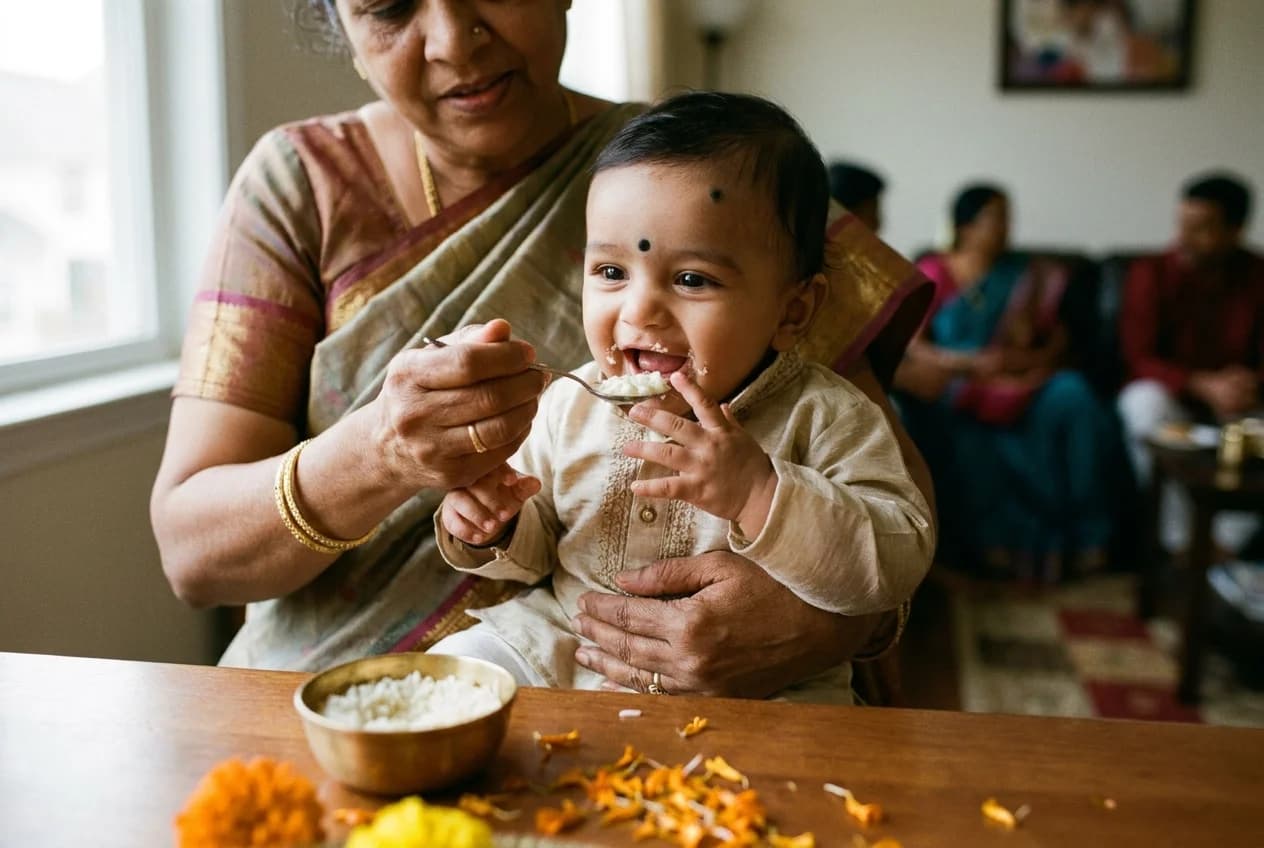
What annaprashan actually is
If you've never hosted one, the annaprashan can feel mysterious in a way a birthday doesn't. It's the ceremony that marks the baby's first taste of solid food, usually rice cooked into a soft kheer or payasam, after six months of nothing but milk. An elder feeds the first spoonful, and in Bengal that honour traditionally falls to the maternal uncle, the mama.
The name changes as you travel. In West Bengal it's Mukhe Bhaat. In Kerala, Choroonu. Up in the Himachal and Garhwal hills you'll hear Bhaat Khulai. Across much of the rest of the country it's simply Annaprasana. Same milestone, same plate of rice, different word in every household, which is the first thing to settle so your invitation calls it what your family calls it.
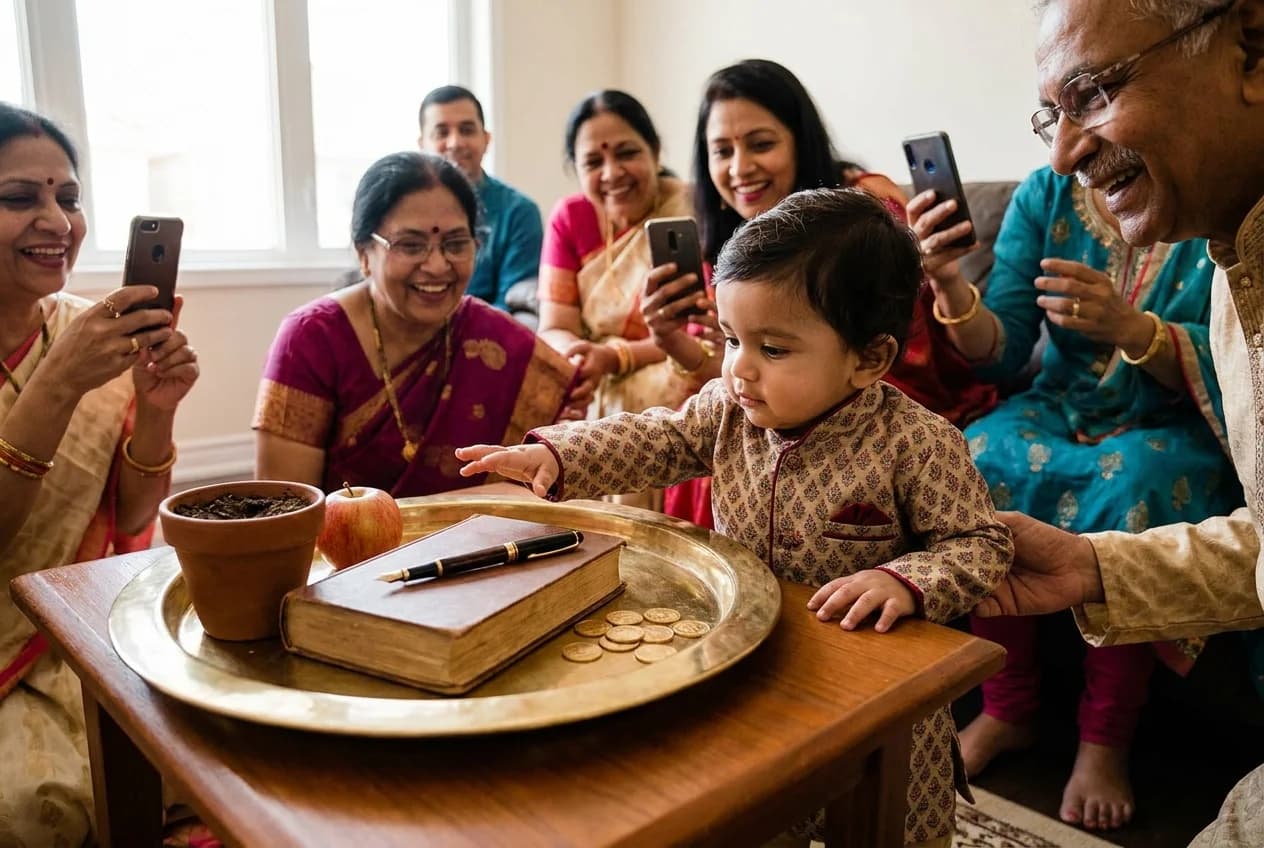
The timing isn't a free choice. The ceremony lands on a muhurat the priest sets, generally in an even month for a boy and an odd month for a girl, so the date often arrives before the venue does. After the feeding there's usually a game the older relatives love more than anyone: the baby is set in front of a tray holding a book, a pen, a pinch of clay, some coins, and a little food, and whatever the baby grabs is read as a wink at their future. The book means learning, the pen wisdom, the clay land, the coins wealth, the food a generous heart. Nobody takes it entirely seriously, and everyone has their phone out for it.
Why does any of this change the wording? Because a ceremony has a fixed sacred start time, and guests tend to treat a party as something they can wander into at half past whenever. The invite has to carry that difference without going stiff.
Annaprashan invitation wording: the formal version
For the printed card or the version the grandparents will keep, the one that names the family as hosts and opens with a note of blessing. This is close cousin to the sangeet invitation wording elders approve of, just gentler and built around a baby.
- "With the blessings of our elders, the Sharma family request the pleasure of your company at the Annaprashan of Baby Aarav as he takes his first grain of rice. Lunch to follow."
- "Two generations, one spoonful. Join the Iyer family for Choroonu, our little Vihaan's first-rice ceremony, followed by a traditional sadhya."
- "It is with great joy that we invite you to the Mukhe Bhaat of our grandson. Come bless him as he tastes rice for the first time, and stay for the feast that follows."
Notice the host line does the work. Like a wedding card, a formal annaprashan invite names the family extending the welcome, and "join us" or "share in" keeps it gracious no matter which side is hosting. If your family uses the regional name, use it on the card. A cousin in the US once sent "first rice ceremony (Annaprashan)" so both her Bengali relatives and her husband's Tamil side knew exactly what they were coming to.
Annaprashan invitation wording: the WhatsApp version
Most of these invites don't travel in an envelope anymore. They travel in the family group chat, somewhere between a forwarded good-morning flower and a photo of someone's lunch. The wording should match that room: short and warm, with the one detail people will scroll back up to find made obvious.
- "Baby Aarav is eating rice for the first time and we'd love you there! Annaprashan on Sun 12th, 11 am sharp (priest won't wait). Lunch after. Come hungry, come blessing."
- "It's first-rice day for our little one. Quick ceremony, long lunch, lots of photos of a baby making a mess. Saturday at the hall, details below."
- "Our Ananya's annaprashan is finally here. The muhurat is 10:30 so please be seated by 10:15. After that it's all food and gossip, your two favourites."
- "Come watch Vihaan grab a fistful of rice and possibly a pen (we're hoping for the pen). Choroonu this Sunday, sadhya to follow."
The trick with the casual version is to stay clear about the sacred start time even while you're being funny. "Be seated by 10:15" inside a warm, chatty message is a kindness, because half the family treats every event as starting an hour after the printed time, and a muhurat genuinely does not wait.
First-birthday invitation wording, the Indian way
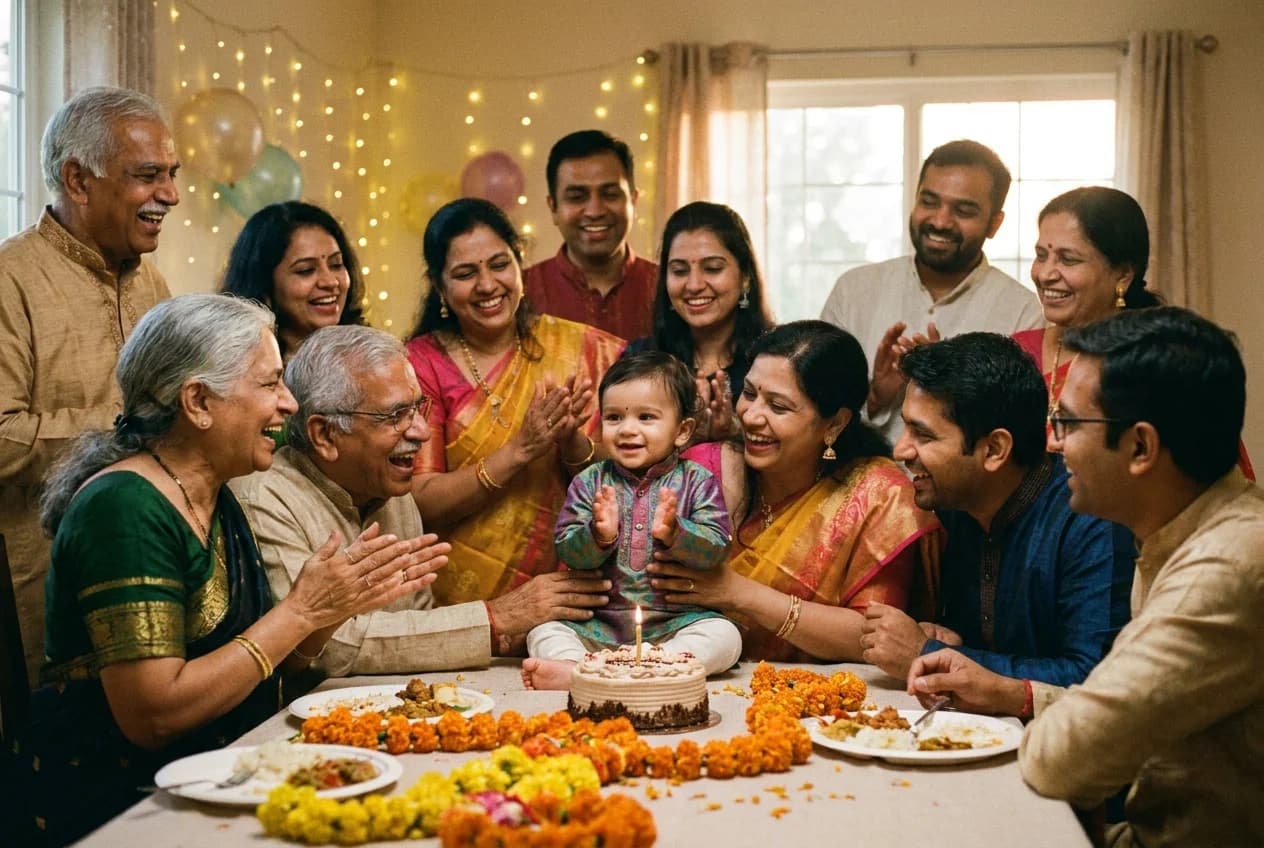
The first birthday is its own occasion, and in a lot of Indian homes it carries more than cake. Many families mark it with an Ayush Homa, a havan asking for the child's long life and health, and some pair it with a mundan, the first head-shave, when the timing falls in an auspicious odd year. Turning one was a real milestone for generations, a sign the child had come safely through the riskiest year, and the celebration still holds that weight under the balloons.
So the wording can flex. Some first-birthday invites lead with the puja and the blessing; others lead with the party. Match it to the day you're actually throwing.
- "One whole year of Saanvi! Join us as we celebrate her first birthday with an Ayush Homa in the morning and a proper party after. Blessings welcome, gifts not necessary."
- "Our little Reyansh is turning one. We'd be honoured to have you for the havan and the feast that follows. Come shower him with the only thing he really needs: love (and maybe a nap)."
- "She's one! Cake, chaos, and a baby who has no idea why everyone's singing. Join us Saturday to celebrate Aria's first birthday."
- "First birthday, full heart. We're gathering everyone who loves him to bless Kabir as he turns one. There will be lunch, and there will be far too many photos."
For the party itself, a lot of the planning travels across cultures even if the customs don't. I pull ideas from a few different places, including the very honest first birthday party ideas post in this series, which is built on the truth that the baby won't remember a second of it and the party is really for the grown-ups who survived the year.
What every invite has to say
The vibe can be warm and loose. The logistics can't, especially with a priest and a muhurat involved. Whether you go formal or WhatsApp, the invitation has to answer these without anyone texting you back.
The date and the ceremony start time, separately. A birthday can start when guests arrive. An annaprashan or a havan starts when the priest says, so spell out the muhurat and add a line like "please be seated fifteen minutes before." This is the single most-missed detail and the one that strands relatives in the car park.
Whether there's a puja before the food. Some guests will want to be there for the ceremony itself; others are really coming for the lunch, and may dress quite differently for it. Say plainly that there's a havan at 10 and the meal at noon so people can choose and plan.
The meal, and roughly when. Indian celebrations feed everyone, but a sadhya or a sit-down lunch runs on its own clock. Say it's coming so nobody eats first, and flag if it's pure veg or a specific cuisine.
A one-tap RSVP with a real deadline. You need a headcount for the caterer and the hall, and "let me know na" has never once produced a number. The same goes for any welcome celebration, right down to the full-month baby celebration some families mark.
Sending it without losing your mind
This is where doing it on paper falls apart. Indian family guest lists balloon, half your relatives live three time zones away, and "of course Pinky aunty's whole family is coming" is a sentence that adds nine people without warning. For a first-rice ceremony or a first birthday, the wording is the easy part and the wrangling is the rest.
This is the bit I'd not go back on. Describe what you want, "marigold and gold, a little brass detailing, soft and traditional," to Lemonvite's design engine and it designs the annaprashan invite for you, no template-hunting and no cousin who "knows Photoshop" going quiet for a week. Then it goes out by text rather than email, which matters here more than almost anywhere: a chunk of your guest list will never open mail from an address they don't recognise, but they'll open a text. For the relatives abroad, it reaches guests outside the US and Canada over WhatsApp, so the grandparents in Pune get the same invite the cousins in New Jersey do.
The RSVPs then gather themselves into one list instead of scattering across four group chats and a phone call from your mother. When the muhurat shifts by twenty minutes or the hall changes its parking rule, one broadcast message reaches everyone who said yes. The notes field catches the "we're bringing my father, he's visiting" and the "is the food Jain?" before either becomes a day-of surprise, the same way it would for the christening on the other side of the family. You can build it as a birthday invitation and let it run while you go memorise which spoon holds the rice.
Get the wording right for the day you're actually throwing, name the ceremony what your family names it, and let the invite chase the headcount. Your job is to hold the baby and hope they reach for the pen.