
How to Plan the Office Christmas Do
The worst office Christmas do I have ever been to was a shared party night at a hotel off the M6 near Haydock. Three companies in one function suite, something like four hundred people, a set menu built around a turkey crown, and a table plan that split our team of fourteen across two round tables at opposite ends of the room. Fifty-two quid a head. The DJ opened with Slade at twenty to nine. I spent most of the evening talking to a man from a double-glazing firm in Wigan who was, in fairness, excellent company.
Nobody chose that. Someone in ops started ringing round in the second week of November and found that everything decent within twenty miles had gone back in September. What was left had availability.
If you're the person who ended up with this job, you're probably also the person who organises every leaving do in the building. Same job, considerably more turkey. So here's the order I'd work through it in, starting earlier than feels reasonable.
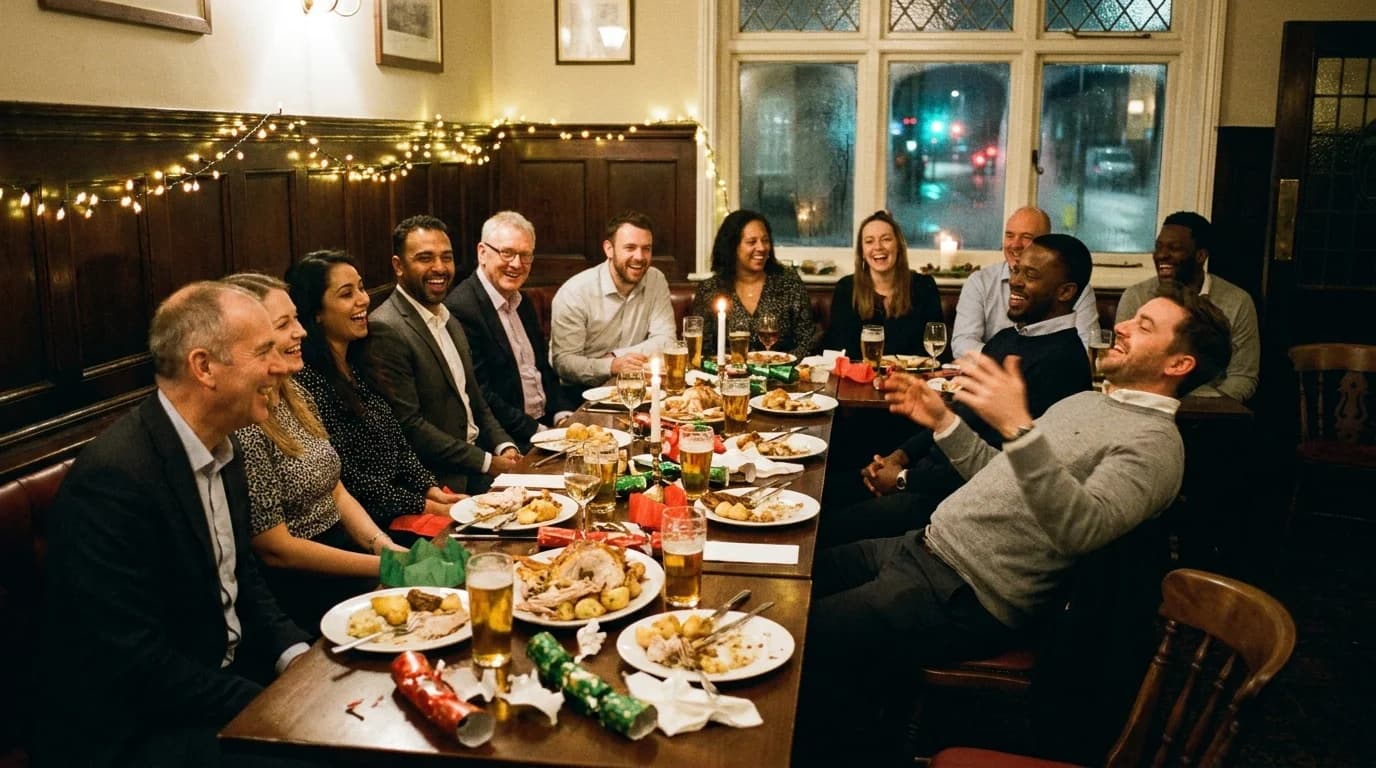
Sort the date first, and mind what December 2026 does to you
Christmas Day falls on a Friday this year. Boxing Day is the Saturday, so the bank holiday shunts along to Monday the 28th. Your last proper working day is Thursday 24 December, which most places run as a half day anyway.
That leaves Friday 18 December as the last night anyone will be up for a party. Which is precisely why you shouldn't book it.
Every company in the country wants the last Friday before Christmas. The pubs have a name for it. You'll pay a premium for the privilege, and the restaurant will want your table back by half nine for the second sitting. Then at midnight fifteen of you stand in the rain watching a surge price climb on somebody's phone.
Take Thursday 10 December instead. It's usually ten or fifteen pounds cheaper a head, and the venue's staff haven't been run into the ground yet. A school-night finish does you a favour, too, because people go home at a sensible hour under their own steam.
And if you have left it too late for any of that, move the whole thing to the second week of January. I've done this twice and both times it was the best do we'd had. January is cheap and nobody's diary is full. A party in the worst week of the year is worth about three times what the same one is worth in December. You lose the tinsel. In four years, no one has complained about that.
Shared party nights, and other venue traps
The joint party night is the default for anyone booking late, and I'd swerve it unless your team is small enough that a big room is a mercy. You get a set menu chosen in July and a disco you didn't pick. There's a hard finish too, because the coaches are booked.
What works better is duller and far more reliable. A private room in a decent pub, with food ordered off the normal menu, beats almost anything sold to you as a package. A long table at a restaurant that'll take a deposit and a pre-order is the step up from that.
When you ring round, ask the two questions people forget. Is the room ours all evening, and if not, what time do we lose it? And is there a bar in the room, or is everybody queueing at the main bar behind the general public? A "private area" that turns out to be a roped-off corner of a boozer on the 18th is not a private area.
The option nobody takes seriously enough: do it in the daytime. Book a long lunch from one o'clock and finish at five. Parents can come. Anyone who doesn't drink isn't stranded at nine with three hours still to go. And a Thursday lunch costs noticeably less than a Thursday night. My guide to choosing a venue covers the questions that apply to any booking, but the daytime slot is the lever only December really rewards.
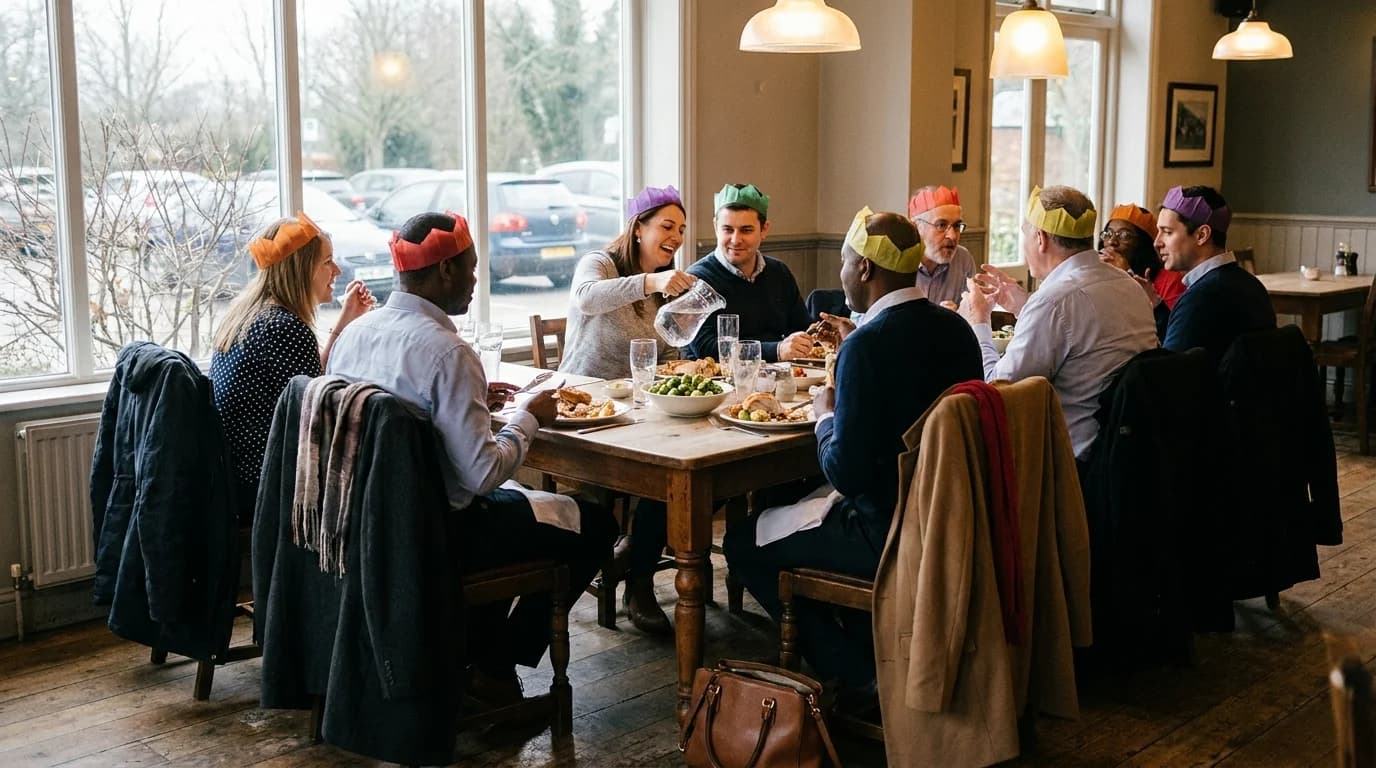
What an office Christmas do actually costs
Rough per-head numbers, before anyone gets excited about a chocolate fountain.
Under £25 gets you a private room in a pub, food off the menu, a drink on arrival and a cash bar after. £35 to £50 gets a restaurant set menu with a deposit paid and a tab behind the bar with an agreed limit. £70 and up buys a venue with a package name and a cloakroom, plus a photographer nobody asked for.
The jump from the first band to the second buys you something real: a table nobody has to fight for, and food that arrives while it's hot. The jump to the third band mostly buys atmosphere you could have made yourselves. Put the difference towards a much better present for whoever ends up organising the whole thing.
Secret Santa needs rules, or it becomes a bin of novelty socks
Set a floor as well as a ceiling. Ten to fifteen pounds is the range I use. A ceiling on its own gets you one person spending thirty and one person handing over a bag of Haribo bought at a petrol station on the way in, and both land badly.
Draw the names in one sitting. Not folded paper in a mug in the kitchen over three days while four people are on annual leave. One draw, everyone in it, results out the same afternoon.
Name a spare buyer. Somebody always forgets. If one person is holding a wrapped emergency gift, that forgetting costs the recipient nothing.
Ban the tat. Nothing bought within an hour of the do. No mugs with slogans on. A twelve-pound present someone chose on purpose beats a twelve-pound present someone panicked over, every single time.
Make it opt-in and mean it. December is expensive and some people on your team are counting. A quiet opt-out with no follow-up question is the whole of the etiquette here.
For teams over about twenty-five, swap Secret Santa for the steal version. Everyone brings one wrapped gift and numbers get drawn, then each person either opens something new or nicks a present that's already been unwrapped. Twenty minutes of proper chaos, and it kills the buying-for-a-near-stranger problem that makes big-team Secret Santa so bleak.

Drink, and the Monday morning after
Get food on the table early. Half seven at the latest. The entire reputation of the British office Christmas do rests on the gap between the first drink and the first plate of food, and every story you've heard happened in that gap.
A tab with an agreed limit beats a free bar, and it comfortably beats drinks tokens, which make grown adults feel like they're at a school fete. Whatever you settle on, put it on the invite. Discovering at the bar that the free bit ended forty minutes ago is a small sour moment people remember longer than the meal.
Make sure one senior person is on the soft drinks, and rotate that job each year so it isn't always the same poor sod. Check the last train. If there isn't one, book a couple of taxis in advance rather than leaving people to fight over an app at midnight.
The do is still work. You don't need to say that out loud to a room of adults, but you do need to have thought about it before agreeing to four hours of free bar. And don't put anything in the diary before ten the next morning. Costs you nothing, buys you a lot.
Who's invited, said out loud
Decide on partners early and put it on the invite in plain words. Half the team bringing someone and half not is the worst version of this, because the ones who came alone spend the evening watching couples.
Then check the edges of your list. Part-timers who aren't in on the day you picked. The contractor who's been with you eight months. Anyone remote who needs notice to book a train. Shop-floor or warehouse staff, if the do has drifted into being a head-office event without anyone deciding that.
Get dietary requirements in writing, with a deadline on it. A restaurant pre-order wants them three weeks out, and "I'll ask around" is how somebody ends up with a plate of steamed vegetables and an apology.
Nobody RSVPs to a calendar invite
The standard method is an Outlook invite titled Christmas Party 2026 with a reply-all thread hanging off it. Accepted in a calendar is not a yes. It's the same click people use for a quarterly review, which is why your headcount is fiction until about four days beforehand. Then there's the pre-order, which becomes a spreadsheet on a shared drive with a tab per table, chased for three weeks by one person slowly starting to hate everybody.
Send a proper invitation instead. I describe the do to Lemonvite's design engine as something like "office Christmas dinner, dark green and gold, a bit deco", and what comes back looks like somebody designed it for us. It goes out by text, which people open on the bus home, and they tap through to reply without logging into anything.
Two bits matter for a work do in particular. You get a live headcount you can ring the restaurant with, plus-ones included where you've allowed them, so the number you book against is the number that walks in. And guests can leave a note when they reply, which is where the main course choice and the nut allergy go. When the deposit deadline gets close, message only the people who haven't answered instead of firing off a fourth all-staff email that irritates everyone who already replied. There's a whole post on chasing non-responders without becoming the office nag.
Start from the holiday party invitations page and it's built before your next stand-up.
Ring three venues tomorrow and take the Thursday. Draw the Secret Santa names in the last week of November and get the invite out the same week, while your team's diaries are still emptier than they'll be in a fortnight. If you're hosting at home in December as well, Christmas party ideas is the domestic version of this argument.
Do that much and the night itself asks nothing of you. Eat while it's hot, and let the man from the double-glazing firm be somebody else's problem this year.