
Hogmanay Party Ideas (A Proper Scottish New Year)
The last thing my gran did every 31st of December was carry the bin bags down the close and then scrub the sink like she was prepping for surgery. The house had to be redd out before the bells. Not tidy. Redd. One year she made my uncle Kenny drive a dismantled bookshelf to the tip on Hogmanay morning because she wasn't, in her words, taking that into 1998 with her.
I thought it was daft. Now I host my own, and most Hogmanay party ideas you'll find online turn out to be an English New Year's Eve with a bit of tartan thrown over the top: countdown, fizz, everyone in a taxi by half twelve. A proper Scottish one is built to a different shape. It runs for days rather than hours, and the best part of it happens well after midnight.
Here's how I run mine.
Hogmanay 2026 is a four-day weekend
Hogmanay lands on a Thursday this year. Scotland then takes both the 1st and the 2nd of January as public holidays, and because the 2nd falls on a Saturday in 2027, the substitute bank holiday shifts to Monday the 4th. Your guests are looking at Friday through Monday with nothing in the diary.
That one fact should shape everything. Nobody's clock-watching for work on the Friday. Nobody needs to be sensible.
So stop trying to cram it all into the 31st. I run that night as the main event: doors from nine, no stated finish. The 1st then stays deliberately horizontal. If people are travelling to you, say on the invite that Ne'erday is part of the deal, because otherwise they'll book the 09:40 home and miss the half of it that people actually remember afterwards. My mate Ewan drove up from Carlisle two years running and both times left before the pie came out. He has since been spoken to.
If you're hosting the whole festive stretch, the same logic that makes a Boxing Day gathering work applies here. Low ambition, long duration, food that doesn't need you standing over it.
Redd the house, then stop
Redding the house means clearing the old year out of it. Bins emptied, dishes done, that pile of post on the hall table that's been there since October finally dealt with. Some folk take it further and change all the bedding. Some settle every debt they owe before midnight, which is the origin of the best ten minutes of theatre I've ever added to a party.
Square up before the bells. Around half ten, anyone who owes anyone anything from the past twelve months settles it on the spot. Bank transfer, coins off the mantelpiece, whatever. The rule is that you have to say out loud what it was for. "Fiver, that taxi from Sarah's back in March." It's much funnier than it sounds. It also clears about nine months of low-grade admin guilt out of a friendship group in one go, and every single year somebody discovers they've been owed forty quid since Easter.
Where I draw the line is the oven. Nobody is inspecting your oven at midnight. Redd what's visible, put the good lamps on, then go and get changed.
Hogmanay party ideas for the hours before midnight
You've got about three hours to fill, and unlike a standard New Year's Eve you aren't building towards a peak at twelve. You want petrol left in the tank at one in the morning, when the first-foots start knocking. My general New Year's Eve hosting plan still holds here, but a Hogmanay tilts everything later.
A kitchen ceilidh, and only two dances. You don't need a band, and you definitely don't need a caller who takes himself seriously. What you need is a phone, a decent speaker, the rug rolled against the wall, and two dances everyone half-remembers from a school gym: the Gay Gordons and the Dashing White Sergeant. Twenty minutes at half ten, then stop. Go past that and someone's cousin is on the floor with a turned ankle before the bells.
A dram table with an honest second lane. Put out a few bottles with a wee handwritten card beside each one saying what it tastes like in plain English rather than the tasting notes off the box. "This one's basically a bonfire" tells a guest more than "maritime, with hints of iodine." Then set an equally good alcohol-free option right beside them, at eye level, in the same glasses. A Hogmanay where the non-drinkers get handed a warm can from the back of the fridge is a badly hosted Hogmanay.
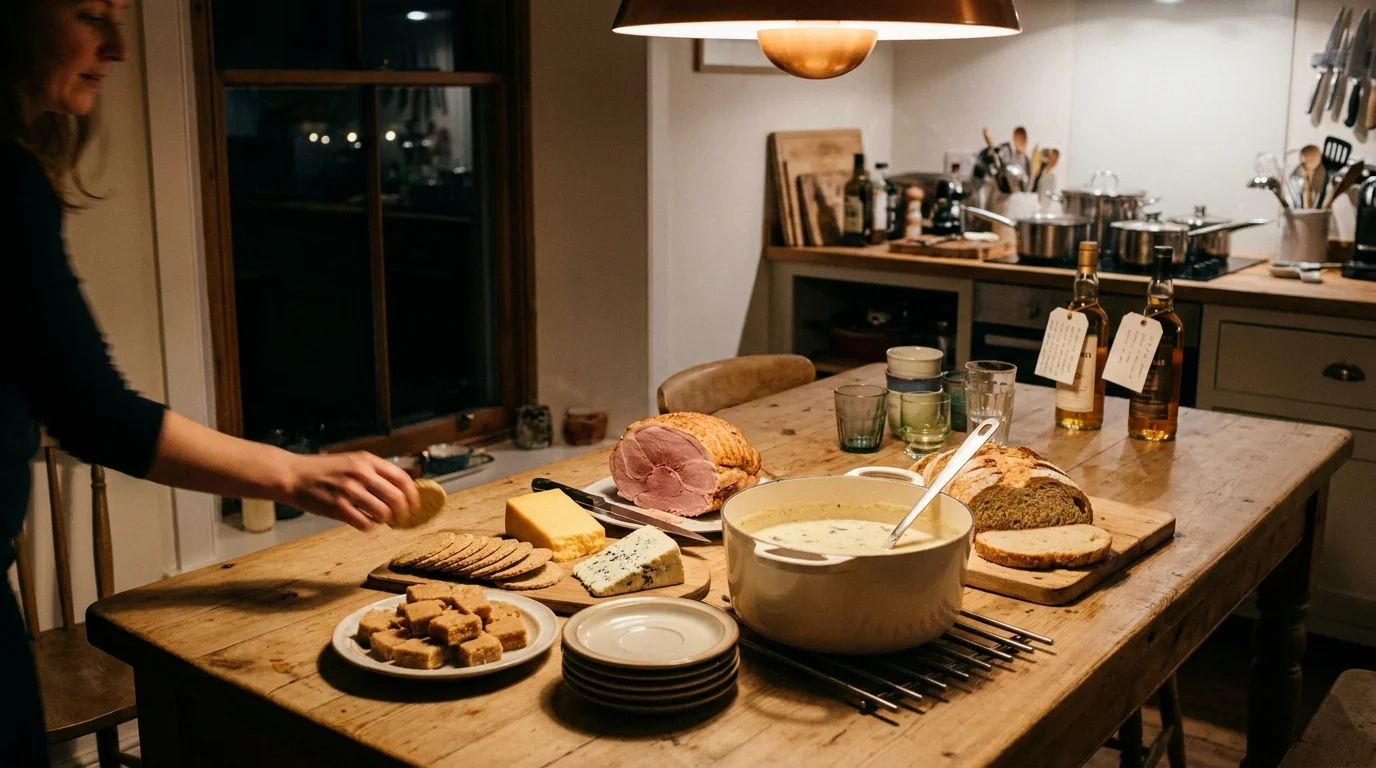
Feed people standing up. A sit-down dinner on the 31st is a mistake. It pins everyone to a chair for the exact hour the party should be finding its feet. I do a long table of things that survive four hours out: a big pot of cullen skink or lentil soup on the hob for people to help themselves, good bread, a whole cold ham, oatcakes and cheese, and a plate of tablet that I hide until eleven because otherwise it's gone by nine. My numbers on how much food and drink per guest scale to this easily if you'd rather not guess.
The bells: ten minutes that everything hangs on
At 11:50 I do the same four things every year, because I've been burned on all of them.
Glasses get charged at ten to, never at one minute to. The back door gets opened at midnight to let the old year out and the front door to let the new one in, which is how I was taught and I'm not improvising now. The countdown comes off a radio or a clock you've checked against your phone, because a streamed feed running forty seconds behind real time will have you counting down to nothing while the neighbours' fireworks go off outside your window. Ask me how I know.
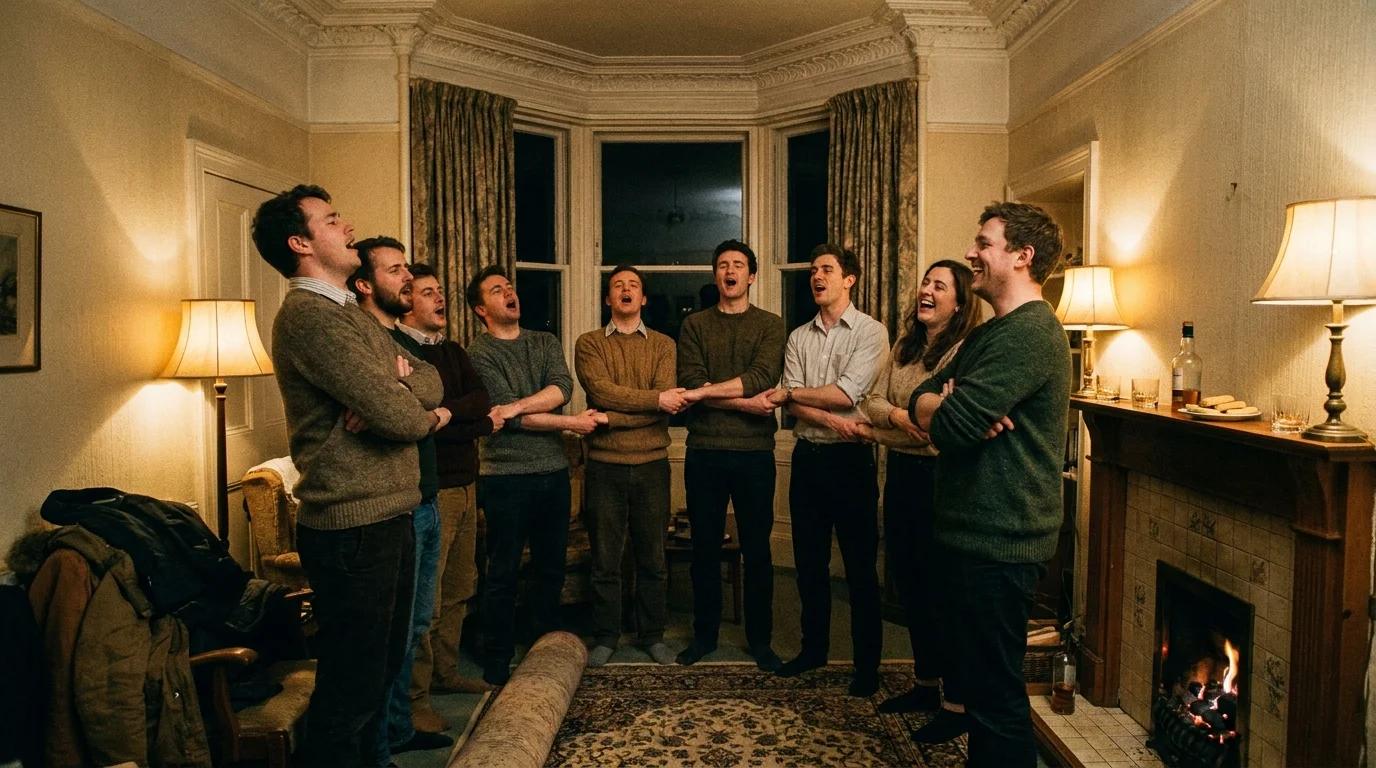
And Auld Lang Syne. Sing it properly. You stand in a circle holding hands normally, and you only cross your arms at the start of the last verse, on "and there's a hand, my trusty fiere." Crossing them from the first line is the English way of doing it and it will be noticed, loudly, by at least one person in your kitchen. And nominate somebody who knows the words past the first verse, because the collective mumble around line three is a sad way to enter a year.
First-footing, and how to do it without being a nuisance
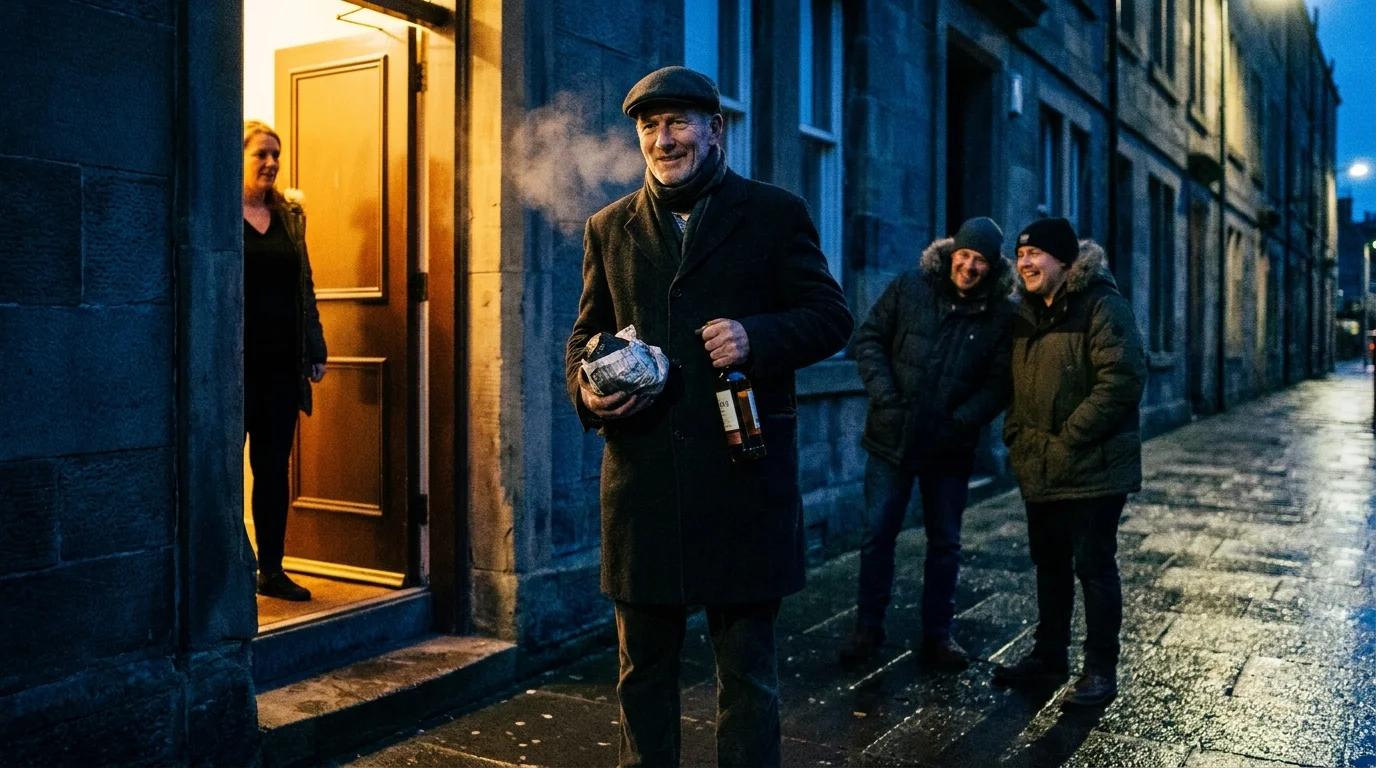
The first person across your threshold after midnight sets the luck of the house for the year. Traditionally you want a tall, dark-haired man, a leftover from not wanting a fair-haired Norseman at your door, which is a wonderful thing to have to explain to a confused guest at half twelve.
The first-foot brings something. Coal for warmth, shortbread or black bun for food, whisky for good cheer, and salt if you're being properly old-school, though hardly anyone bothers with the salt now. I keep a box by the door all week with a wrapped lump of coal in it and two bars of shortbread, so anyone heading off to first-foot somebody else leaves my house properly equipped.
Two bits of modern etiquette the tradition doesn't cover. Text before you go: turning up unannounced at one in the morning was fine when everybody's granny was awake anyway, but a house with a six-month-old in it won't thank you. And if you're the one being called on, keep the hall light burning and something to hand back. Being first-footed by four freezing pals with nothing to offer them but tap water is embarrassing.
Ne'erday: the pie and the dook
New Year's Day in Scotland means steak pie. I don't make the rules. Order it from a butcher in early December with a headcount, because the good ones take orders all month and the queue on the 30th is a serious commitment. Pie, mash, peas, and a full afternoon of doing nothing.
The other Ne'erday institution is the dook. The famous one is at South Queensferry, where people in fancy dress wade into the Firth of Forth under the bridges. Organised dooks change hands and change format from year to year, so check what's actually running before you promise anyone a swim. Smaller ones happen up and down the coast on the morning of the 1st. If half your guests are staying over, a cold-water dip and a bacon roll afterwards beats another four hours indoors, and everybody gets to feel virtuous for approximately one hour.
The invite: Hogmanay has an open door, but you still need numbers
Hogmanay is traditionally an open-door night. People drop in, people move between houses, a group of four becomes a group of nine at half one. That's the charm of it, and it's also why hosts end up with either eleven leftover ham rolls or a queue at the soup pot.
So invite properly, then leave room for the drop-ins. I send mine in the last week of November, before the office Christmas do season eats everyone's ability to make a decision, and I make the invite specific enough to say yes to. "Ours from 9, ceilidh at half ten, pie on Ne'erday, stay over if you want" gets a real answer. "Hogmanay at ours?!" gets three question marks and a maybe.
I describe the night to Lemonvite's design engine and let it draw the thing. Last year I typed something about a Glasgow tenement in deep green and brass with a 1920s poster feel, and got back a design I'd happily have framed. It goes out as a holiday party invitation by text, where people actually read it, rather than into a group chat where it sinks under everyone's Christmas photos. Replies land on one page, so I can see the yeses and the wobblers and the folk who never opened it, which tells me exactly who gets a friendly nudge on the 28th. When six became fourteen the year before last, one broadcast message moving the ceilidh to the back room took ten seconds to send.
Order the pie in early December, learn the second verse, keep a lump of coal by the door, and get the invite out while your pals' calendars are still empty. You can build it on Lemonvite some wet evening in November and forget about it until the bin bags need carrying down. Lang may yer lum reek.