
Cocktail Attire, Explained (A Guest's Guide)
Unpopular opinion: "cocktail attire" is the most useful dress code we have, and hosts keep ruining it by being vague about everything else on the invitation.
The code itself is simple. Cocktail attire means dressier than work, less formal than black tie. A knee-to-midi dress or sharp separates; a suit, or at minimum a jacket with real trousers. That's it. That's the whole rule. The reason you're nervous anyway is that the invitation said "cocktail attire" and nothing about whether it's in a backyard, a hotel ballroom, or somebody's loft with a broken radiator. Context is the hard part, and that's what this guide is actually about.
I've been the overdressed guest (sequins, daytime, a garden) and the underdressed one (linen shirt, candlelit restaurant, everyone else in jackets). Both are survivable. But let me save you the walk of mild shame.
What cocktail attire means, in one paragraph each
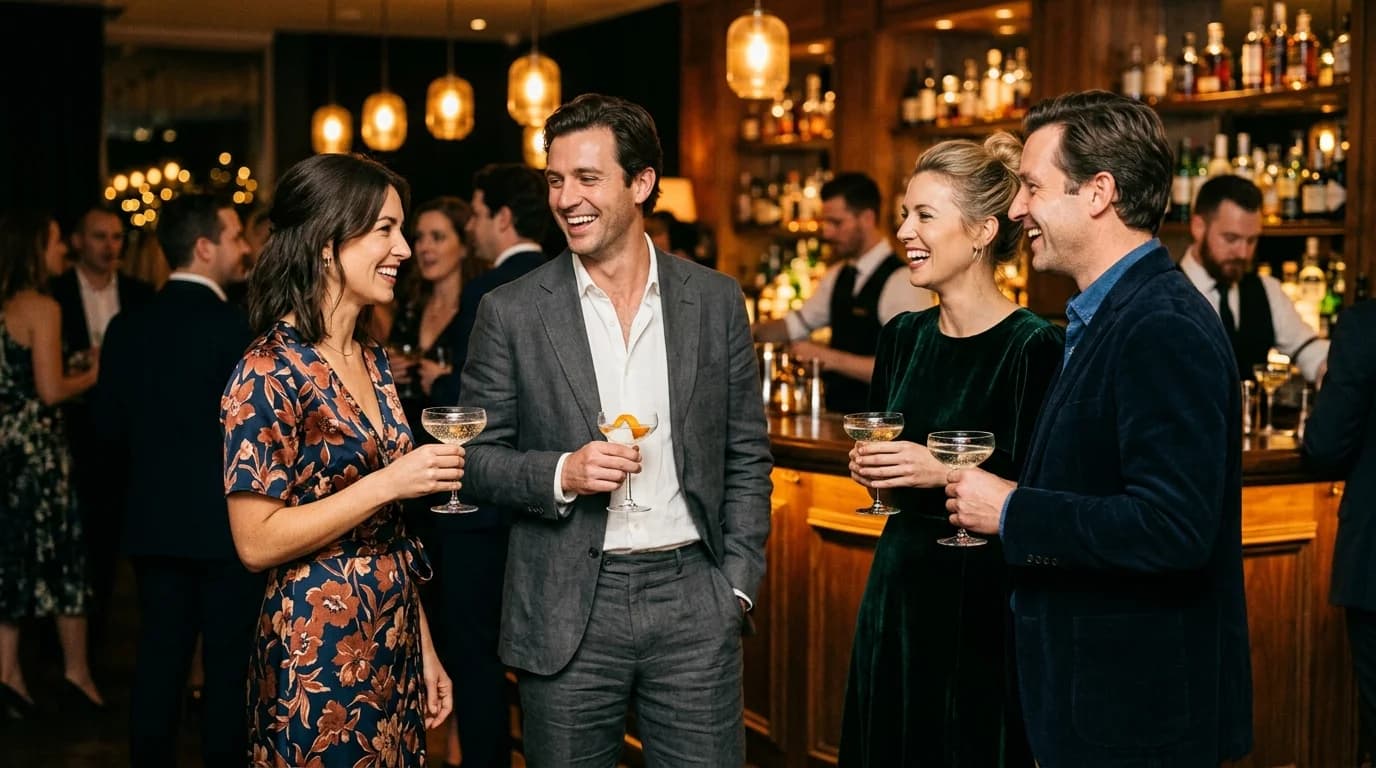
For women (or anyone dressing on that side of the rack): A dress that lands somewhere between the knee and mid-calf is the eternal safe answer. A slip dress with heels, a wrap dress, a structured midi. Tailored jumpsuits are fully accepted now and nobody serious disputes this. Dressy separates work too: silk top, good trousers, a heel or a polished flat. What's out: floor-length gowns (that's formal), anything you'd wear to the office without changing, and casual sundresses unless the event is explicitly outdoors in July.
For men (same caveat): A suit in a darker or richer color, no tie required. If a full suit feels like too much, the floor is a blazer, trousers that are not chinos you've worn to brunch forty times, a collared shirt or fine-gauge knit, and leather shoes. Loafers are perfect. Sneakers are a no unless you know the host's crowd cold, and even then, I'd skip it. Cocktail attire fails downward more often than upward for men, so when unsure, add the jacket.
That's the core. Now the part invitations never tell you.
Reading the event, not just the dress code
Same two words, very different outfits. Here's how I decode it.
Evening wedding reception, indoors. The dressiest version of cocktail. Richer fabrics (satin, crepe, velvet in winter), real shoes, a suit rather than a blazer-and-trousers improv. This is not the night to test "are dressy sneakers fine?"
Backyard or garden party. Soften everything. Block heels or wedges instead of stilettos, because grass eats stilettos and I've watched it happen at three consecutive weddings. Lighter fabrics, brighter colors. A man can drop the tie and even the jacket if it's hot, as long as the shirt and trousers are doing the work.
Holiday office party. Cocktail with a modesty governor. Whatever you'd wear to a friend's party, dial the neckline and hemline back ten percent, because you'll be standing next to your VP holding a shrimp. Velvet blazers were made for exactly this room.
Rooftop or summer evening. Dress for the photo, pack for the wind. A wrap or light jacket, a hemline that won't betray you, and hair you can surrender to the breeze.
Winter anything. The coat counts. Showing up in a perfect outfit under a ski parka reads strange; a wool overcoat or a dressy topcoat completes the look and gets checked at the door anyway.
"Cocktail attire" at a restaurant dinner party. Usually the host means "please don't wear jeans." Aim slightly under wedding-level: nice dress or good trousers and a jacket, and you'll match the room.
The questions everyone secretly googles in the parking lot
Can I wear black? Yes. Even to weddings now, almost everywhere. Black is the cockroach of cocktail attire; it survives everything.
Can I wear jeans if they're really nice jeans? No. I know. I'm sorry. The phrase "cocktail attire" exists specifically to head this off.
Is a tie required? No. A tie moves you toward formal; cocktail is the dress code where the open collar is the point.
What about a short dress? Short is fine if it's dressy-short, not beach-short. Fabric and structure decide it, not inches.
Can I rewear what I wore to the last one? Obviously. Anyone who notices is telling on themselves.
What does "festive cocktail" mean? Cocktail with permission to have fun. Velvet, jewel tones, a metallic shoe, the red dress you keep saving. December invitations love this phrase, and it means the same thing every time: dress up, then add one thing that sparkles.
What about "cocktail casual" or "dressy casual"? The host blinked. These hybrid codes mean "nicer than jeans, less than a suit," so aim for the bottom edge of everything above: dress without the heels, blazer without the suit trousers. You cannot really miss inside that band.
If you're the host: say more on the invite
A plea from the other side. If you're hosting and you write "cocktail attire," add one clarifying clause. "Cocktail attire; we'll be on the lawn, so plan shoes accordingly." "Cocktail attire, festive colors encouraged." "Cocktail-ish; a blazer is plenty." One sentence kills forty anxious group-chat messages.
The dress code line belongs in the event details where nobody can miss it, not buried in a reply-all. I keep a whole post on how to write an event description that covers where this stuff should live. And if your party is the sit-down kind, the dress code should match the menu's ambition; my dinner party ideas post gets into setting that tone from the first touchpoint.
The first touchpoint being, of course, the invitation itself. An invite that looks like a candlelit evening tells guests what to wear before they read a word. When I host anything dressy, I generate the invitation to match the mood (dark, candlelit, a little gold) so the dress code is half-communicated by the artwork alone.
Don't overthink it
Truly. If you're standing in front of your closet spiraling, here's the exit: dark midi dress or dark suit, one interesting accessory, shoes you can stand in for three hours. You will be appropriately dressed at 95% of cocktail-attire events on earth, and the remaining 5% will be too fun to care.
The host invited you because they want you in the room. The outfit is set dressing.
And if you're the one doing the inviting, make the invitation carry the mood for you: describe the evening to Lemonvite's design engine, put "cocktail attire" right under the time, and send it by text so nobody can claim they never saw the dress code.