
The Death of the Template: Why Your Party Deserves Better Than Cookie-Cutter Designs
You know the routine. You've got a clear picture in your head (vintage Italian summer, maybe, or a neon 90s pizza vibe), so you head to a big invitation site and type in "Summer." Then come hundreds of options that are mostly cheesy and never quite right.
You find one with the right colors but the wrong font. You find the perfect font, but it's wrapped around a watermelon and you're serving pasta. So you give up and pick something close enough, and your invitation becomes a small compromise before the party has even started. That's what templates have trained us to accept, and it's time to stop.
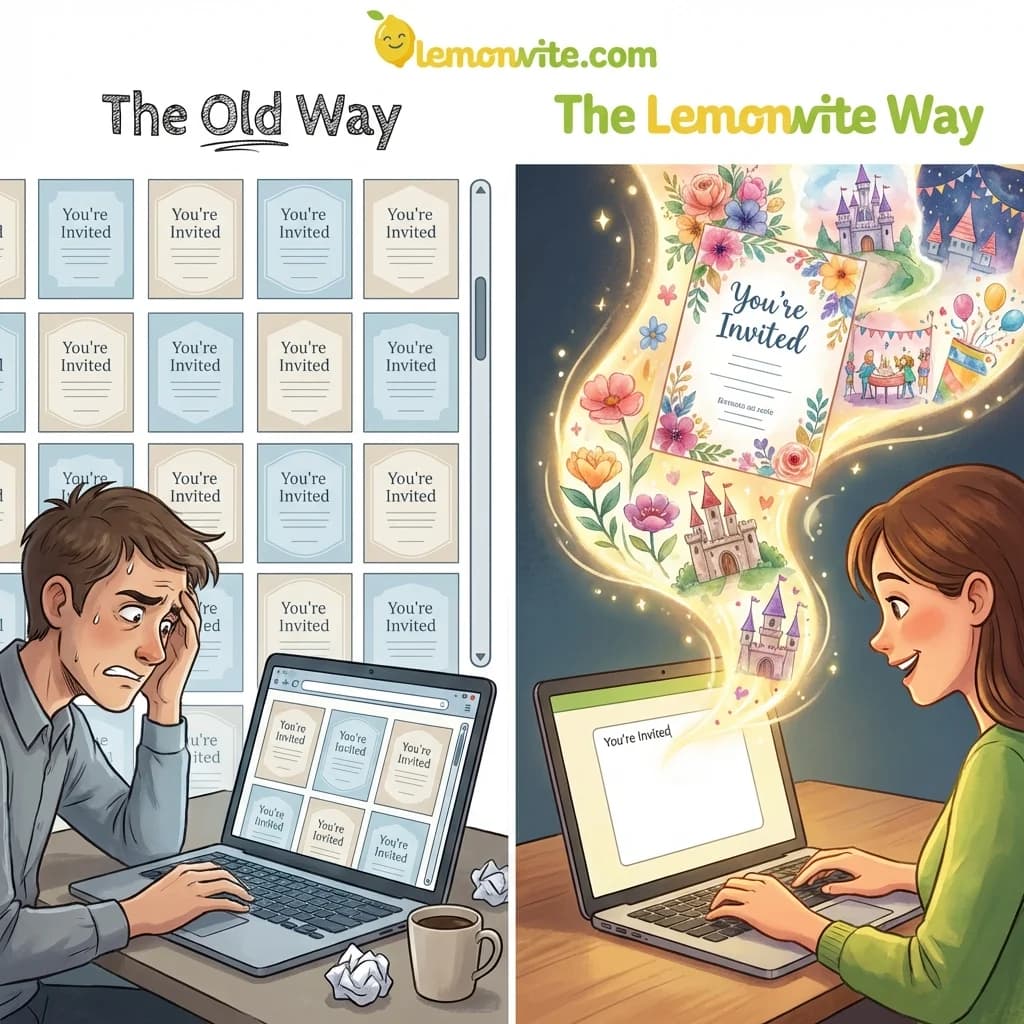
Why "Pick One From the Library" Stopped Working
Templates were a brilliant invention back in 1998. They solved a real problem: most of us can't draw, and a template let you skip to something finished. The trade-off was sameness. When everyone designs from the same shelf of fifty "Birthday" layouts, every event starts to look like every other event.
It's the digital version of showing up to a wedding in the same dress as three other guests. Your party has a personality and a specific taste behind it, and the invitation is the first thing guests see. A template flattens all of that into whatever the platform happened to stock, when the card should carry that personality instead.
Describe It Instead of Searching for It
This is the part we rebuilt at Lemonvite. Instead of digging through a library, you describe what you want, and our design engine builds the card from your sentence. A few real examples of what people type:
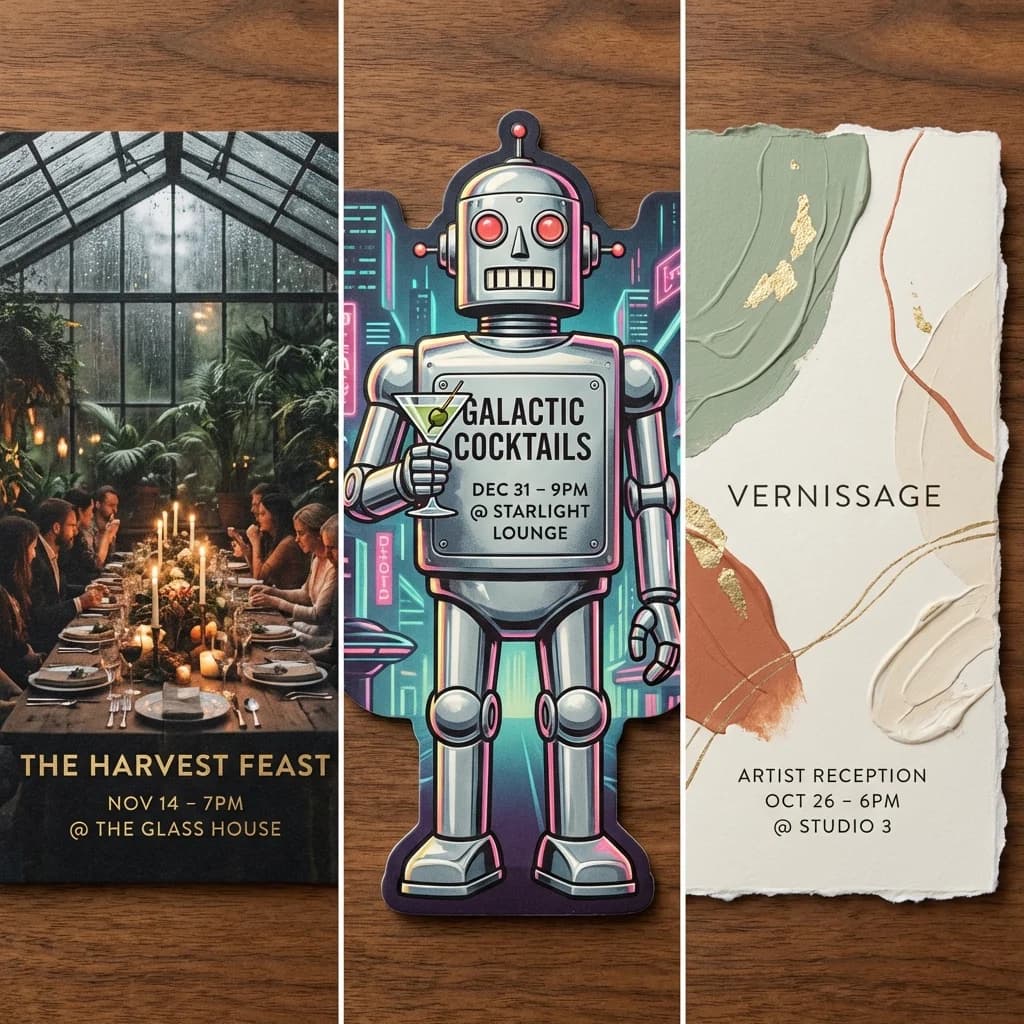
- "A moody, candlelit dinner party in a greenhouse with rain on the glass."
- "A retro sci-fi cocktail hour with chrome robots holding martinis."
- "A minimalist abstract composition with sage green and terracotta shapes."
You type it, and the design tools render it from scratch, made for your event and nobody else's. The same instinct from our guide to writing a great event description applies: be specific, and the result gets sharper. You can see the range of what it produces in our invitation design examples.
The Real Test Is the Weird Theme
Any platform can handle "Birthday Party." The honest test is the niche theme nobody stocks a template for.
Say you're throwing a disco cowboy bachelorette. A traditional site has a cowboy hat in one collection and a disco ball in another, but a card that marries the two? You'll hunt for an hour, then settle on a generic "Let's Party" layout and explain the theme in the body text, hoping people get it.
With a descriptive engine, you type "a sparkling disco ball wearing a cowboy hat, desert sunset background, vibrant pink and orange colors," and you have what you pictured in seconds. The same goes for the unconventional party themes templates have never heard of.
From Your Head to the Screen
All of this removes the gap between your idea and the finished card. You don't need to know Photoshop or hire an illustrator, just to know what you like.
You can also feed it a reference image. Have a photo of the venue or a mood board from Pinterest? Upload it as inspiration, and the engine builds a matching design around it, so your starting point becomes the actual look of the invite.
Your Party Is One of a Kind
Every gathering is worth framing well, from a casual Thursday hang to a milestone you've been planning for months. A generic template sets the tone before you've poured a single drink, and you don't have to let it. Describe the party you actually want to throw, and build the invitation on Lemonvite in a few minutes.