
The Psychology of the RSVP: Why Guests Flake (And How to Fix It)
You send the invite, watch the "Read" receipt appear, and then nothing happens. No yes, no no, just a guest in limbo while you're trying to give the caterer a number. That non-answer is the most maddening part of hosting, because you can't book a venue or buy the food around a maybe that never resolves.
I've hosted events for years: kids' birthdays, cookouts, poker nights. The silence used to bug me, and I assumed people were being rude. It turns out behavioral scientists have a better explanation, and it has almost nothing to do with whether your friends like you. It comes down to friction and social dynamics, and once I understood what was actually stopping my guests from replying, getting an RSVP got a lot easier.
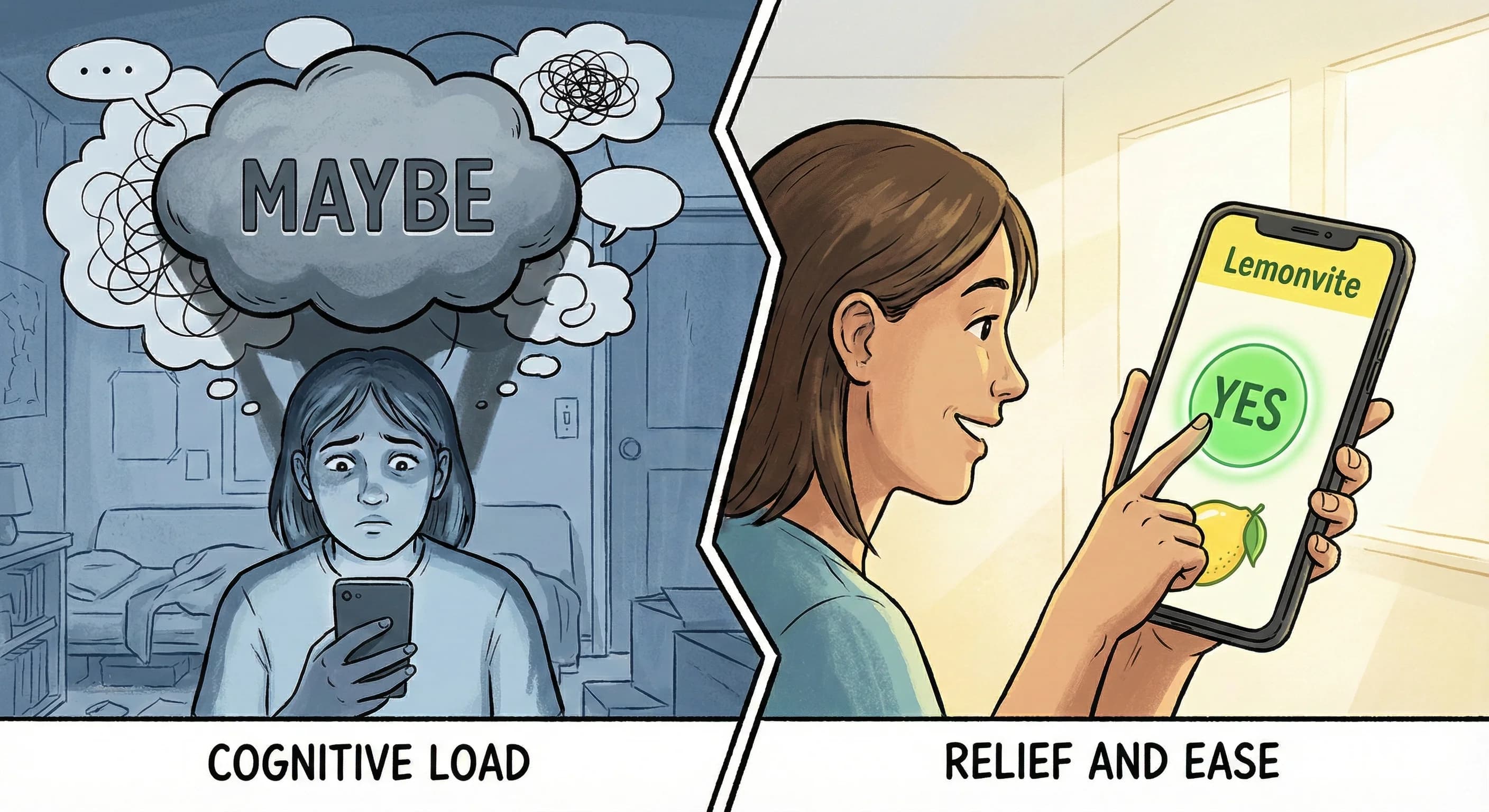
Decision fatigue: why guests put your invite on the "later" pile
By the time your invitation lands at 6 PM, your guest has made a few thousand decisions that day and their brain is running on fumes. If responding requires them to open an email, click through to a website, remember a password, and then check their calendar, they will quietly punt. The reply goes on the "later" pile, and later usually means never, because the email gets buried by morning. I've done this exact thing to other people's invitations.
The fix is to strip the steps out. I built Lemonvite around SMS for this reason: a text shows up where your guest already is, with no app to download and no login to forget, and the Yes and No buttons sit right at the top. Cut the process from four steps to one tap and your completion rate jumps. It's the same logic behind why SMS invitations work. Reduce friction for your guests.
The bystander effect: why nobody answers the group chat
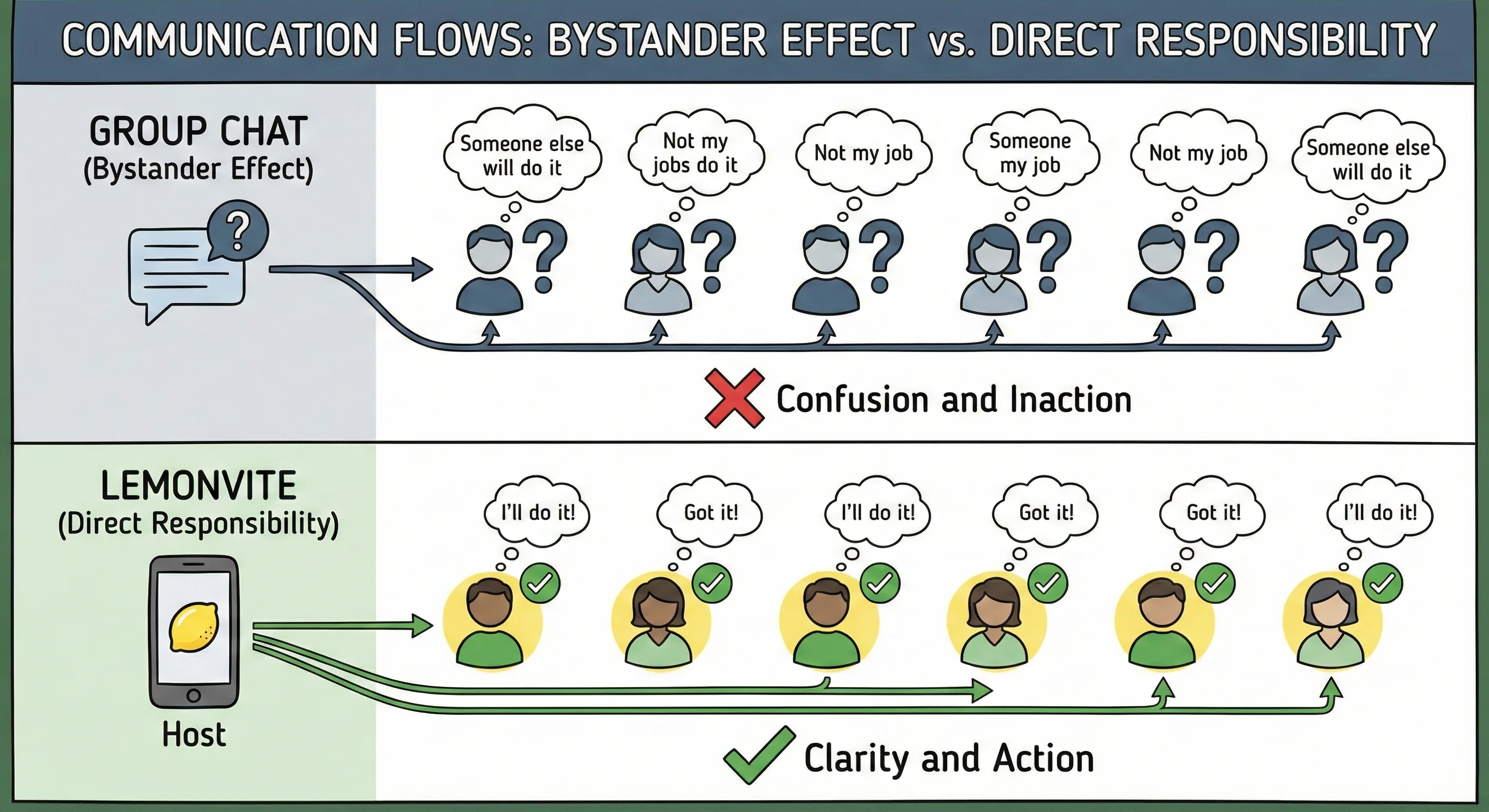
Drop a link into a WhatsApp or Messenger group and you trigger what psychologists call the bystander effect. Everyone sees it, and everyone assumes someone else will reply first. In a crowd it's easy to assume your own silence won't be noticed, so responsibility gets diffused across the thread until it lands on no one.
I've watched this play out in real time: twenty people in a chat, the invite link sitting there, nothing but tumbleweeds for two days. It's a big reason I keep telling people to stop using group chats for events.
The answer is to make the ask personal even when the guest list isn't. Lemonvite sends each guest their own link, and when they open it the invitation speaks to them directly and shows their status is still pending. That puts personal responsibility back where it belongs, without you texting fifty people one by one.
Social guilt: why a forgotten invite turns into silence
Sometimes a guest simply forgets, and that's where it gets sticky. As the days pile up, forgetting curdles into guilt. They figure it's been three days since they saw the text, so replying now feels like admitting they ignored you, so they keep avoiding it. Chasing them is no better: a "hey, are you coming?" text feels needy at best, and I hate sending it.
The way out is to take yourself out of the loop. An automated reminder from the platform reads very differently than a personal nudge from you. When Lemonvite sends "Reminder: please RSVP for Jake's birthday by Friday," it lands as a neutral system message, which lets a guilty guest just tap Yes and be done. If you do want to chase someone yourself, here's how to follow up on an RSVP without souring the friendship.
The takeaway
Getting people to RSVP is less about having more reliable friends and more about removing the things that stop reliable friends from answering: the friction, the diffused responsibility in a group thread, the guilt of a late reply. Account for all three and you can build an invitation flow that fits how people actually behave.
I learned this the slow way, after one too many headcount surprises that left me with a mountain of leftover potato salad. Now I bake these principles into every event I host. Don't let a fried brain at 6 PM cost you a headcount. Build your next invite on Lemonvite and make replying the easy choice.