
RSVP Etiquette in 2026: The New Rules Everyone Should Know
I got into a debate at a dinner party recently. Someone said it was rude to RSVP "Maybe" to a wedding. Someone else said it was rude to even expect an RSVP more than a week in advance. A third person admitted she hadn't responded to an invitation in over a year because she "forgot how."
The conversation made one thing very clear: nobody agrees on RSVP etiquette anymore. The rules your grandmother followed don't fit a world of group texts and forwarded screenshots, and nobody has bothered to write down what replaced them. So here they are.
What Does RSVP Actually Mean?
Before we get into the modern rules, a quick refresher. RSVP stands for "Respondez s'il vous plait," which is French for "respond, please." That's the whole ask. Someone wants to know if you're coming so they can plan accordingly, and a one-word reply settles it.
The original RSVP etiquette was simple: you received a paper invitation, you mailed back a response card within a week, and you were done. But we don't live in that world anymore. Invitations arrive by text, by email, in an Instagram DM, in a group chat, sometimes as a screenshot of a Canva flyer forwarded six times. The delivery method keeps changing while the core expectation stays put. If someone asks you to respond, you owe them a response.
That said, the RSVP rules for 2026 look very different from those your grandmother followed. Here's what I think everyone should know.
Rule 1: Respond Within 48 Hours (Even If It's a Maybe)
The old standard was one week. In 2026, that's too long. Hosts decide faster now because venues hold tighter cancellation windows and catering minimums have to be locked in early, so a week of silence can genuinely cost them money.
If you get an invitation, respond within 48 hours. Period. You don't have to commit to attending in that window. You just have to acknowledge the invitation and give the host something to plan around.
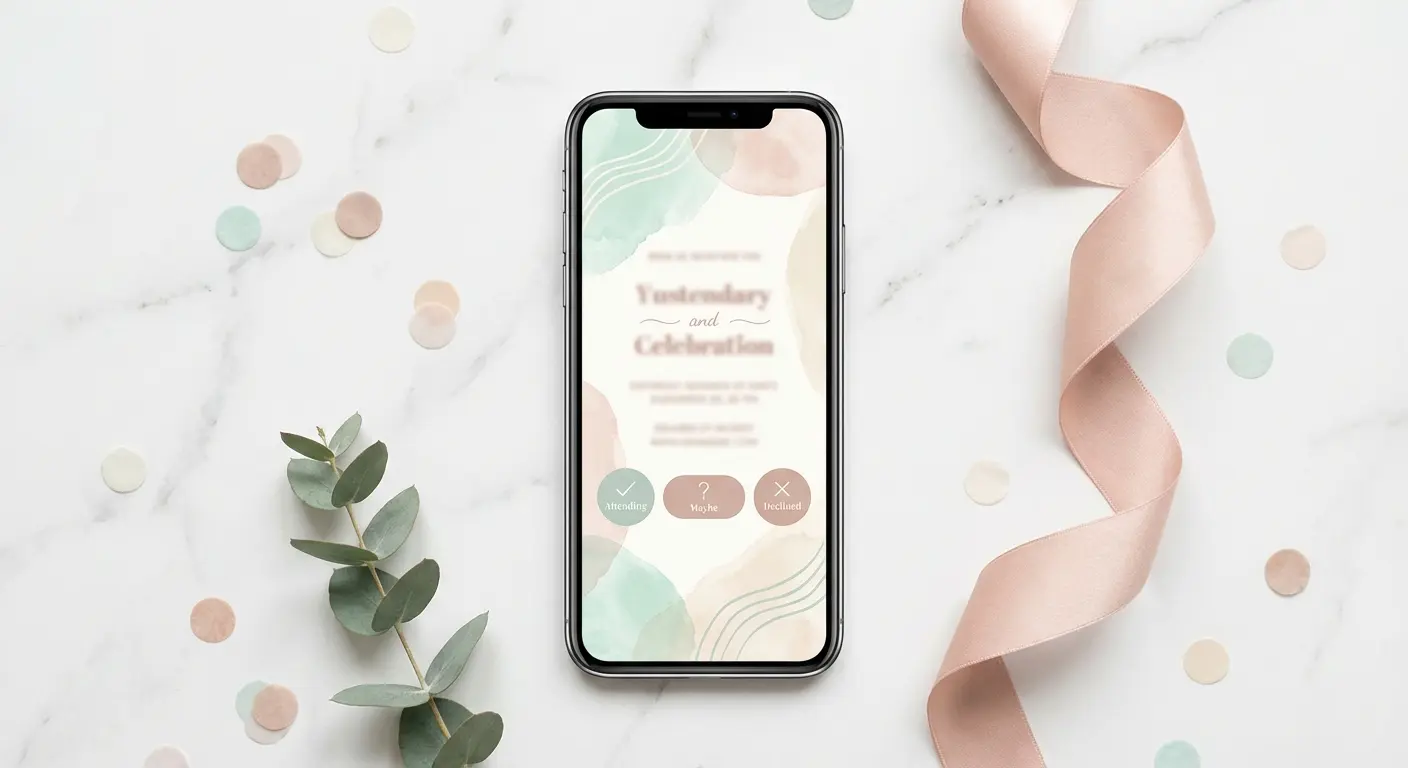
"Attending" is great, "Declined" is fine, and "Maybe" is perfectly acceptable. The only response that fails the host is silence, because it leaves them guessing at a number they can't confirm and chasing people who never meant to leave them hanging.
The 48-hour window is a courtesy to the person who took the time to plan something and put you on the list. Treat their effort the way you'd want yours treated.
Rule 2: "Maybe" Is Not Rude. Ghosting Is.
This is the hill I will die on. A "Maybe" response is honest and genuinely useful. It tells the host that you saw the invitation, you're interested, and there's some real-world thing you're still sorting out before you can commit. That's a lot of information packed into one tap.
Ghosting tells the host nothing at all. It leaves them stuck guessing whether the invitation even reached you, or whether you're quietly dodging it, and that's the worst spot to put someone who is trying to plan around your answer.
I built a one-tap RSVP system at Lemonvite specifically to make this easier. Guests respond Attending, Maybe, or Declined with a single tap, no account and no app download involved. The whole interaction takes about five seconds, which leaves no real excuse to leave a host hanging.
If you're on the fence about an event, say so. Your host will appreciate the honesty far more than the silence.
Rule 3: Hosts, Set a Clear Deadline
This one is for the planners. If you want timely RSVPs, you need to give your guests a deadline. "RSVP by March 15th" is clear. "Let me know if you're coming" is vague and easy to ignore.
A good RSVP deadline lands one to two weeks before the event. That window gives you enough runway to lock your headcount and adjust food orders before the catering minimum or the grocery run forces your hand.
Put the deadline right in the invitation where nobody can miss it. Don't bury it three sentences deep in a paragraph of logistics. A specific date that's hard to overlook gets answered; "let me know soon" gets ignored.

Rule 4: Follow Up With Non-Responders (Without the Guilt Trip)
Even with a deadline, some people won't respond, and it almost never means they're snubbing you. They opened the message while half-distracted by something else, and your invitation slid under 47 other notifications before they could reply. People are busy and forgetful, which is a much more common explanation than malice.
The best follow-up is targeted and free of guilt. Don't send a group text that says "HELLO, DID ANYONE SEE MY INVITATION?" That reads as passive-aggressive, and it punishes the people who already did the right thing and replied.
Instead, reach out specifically to the people who haven't replied. This is where view tracking earns its keep. Lemonvite shows you who opened your invitation but hasn't responded yet, and separately who never opened it at all. Those two groups need different handling: the person who saw it and forgot just needs a gentle nudge, while the person it never reached needs a resend. The broadcast feature lets you message only the non-responders, so the friends who already RSVP'd never get pinged again.
Rule 5: If You Say Yes, Show Up
This sounds obvious, but it needs to be said. An RSVP of "Attending" is a commitment. The host is counting on you. They ordered a portion with your name on it and may well have turned someone else away to keep your seat open. Your yes shaped real decisions.
If something genuinely comes up and you can't make it, that's understandable, but tell the host the moment you know. Vanishing without a word is the part that stings. A quick "I'm so sorry, something came up and I can't make it" takes 15 seconds and spares your host from holding a seat for a guest who's never walking through the door.
The RSVP notes field exists for exactly this kind of communication. On Lemonvite, guests can add a note when they respond, so they can say things like "Coming, but I'll be 30 minutes late" or "Can I bring a plus-one?" It keeps the host informed without requiring a separate conversation.
Rule 6: Don't Bring Surprise Guests
Unless the invitation specifically says "plus-ones welcome," assume it's just for you. An unannounced extra person puts the host in a corner. They may be short a portion and a chair, and now they're scrambling to seat someone they never planned for while keeping a smile on. (If you're the host trying to head this off in the first place, my full take on plus-one etiquette goes deeper.)
If you want to bring someone, ask first. The RSVP notes field works, or a quick text, whatever's easiest. Most hosts are happy to make room for an extra guest when they get a heads up. The key word is "advance."
Rule 7: Stop Using Group Chats as RSVPs
Group chats are where RSVPs go to die. Someone posts "Who's coming Saturday?" and you get 45 messages of "maybe," "depends," "what time again?", plus seven unrelated memes. Two hours later nobody has a clean headcount and the original question is buried under the noise.
A proper RSVP system gives each guest their own response the host can track on its own, which keeps the social chatter separate from the actual logistics. Keep the group chat for jokes and hype if you love it. Just don't make it carry your headcount. (I've made the longer case for why you should stop using group chats for anything you actually care about.)
Rule 8: SMS Beats Email for Invitations
Call this a practical tip more than an etiquette rule, but it shapes whether anyone responds at all. Email invitations have abysmal open rates. They slide into the promotions tab or the spam folder and sit there unopened until the party is over. Text messages get opened at a rate north of 90%. People actually see them.
If you're serious about getting responses, send your invitations via SMS. It meets your guests where they already are, on their phones, in their most-checked app. Lemonvite delivers every invitation by text for exactly this reason, and for guests outside the US and Canada the same invitation arrives over WhatsApp, so the reach holds no matter where your list lives. When your invitation lands in someone's text messages instead of their cluttered inbox, they're far more likely to actually open it and respond.
The Bottom Line on RSVP Etiquette in 2026
The rules around RSVPs keep shifting while the principle underneath them stays the same: mutual respect. Guests respect a host's time by answering promptly. Hosts respect their guests' crowded lives by making the answer a two-second tap and following up without the guilt trip.
In my experience, the friction of outdated invitation tools causes more etiquette failures than actual rudeness does. When responding is a chore, people put it off and forget. When it's effortless, they just do it.
That belief is baked into how Lemonvite works. Guests get a custom-designed invitation by text, tap once to reply, and add a note if they need to. You watch the headcount fill in live and nudge only the stragglers. It runs $5 per event. Events with larger phone guest lists may need additional credits to cover texting costs.
Set up your next event on Lemonvite and watch how many more answers you get back when responding stops being work.