
How to Plan a Game Night That People Actually Show Up To
I love game night. Board games, card games, party games, the whole deal. There is something about sitting around a table with friends, trash-talking over Catan or getting betrayed in Secret Hitler, that no streaming service or bar tab can replicate.
The hardest part of planning a game night is not choosing the games. It is getting people to actually show up.
You send a text to the group chat. "Game night Friday?" You get three thumbs-up emojis, a "maybe," and radio silence from the rest. Friday rolls around and you are sitting at a table set for eight with two people and a half-eaten bag of Doritos.
I have been there more times than I want to admit. Your friends are not bad people. The issue is that casual events feel optional, and people treat optional things like they are optional.
So I worked out a system that fixes this. The whole thing comes down to treating game night like a real event rather than a loose suggestion lobbed into a group chat.
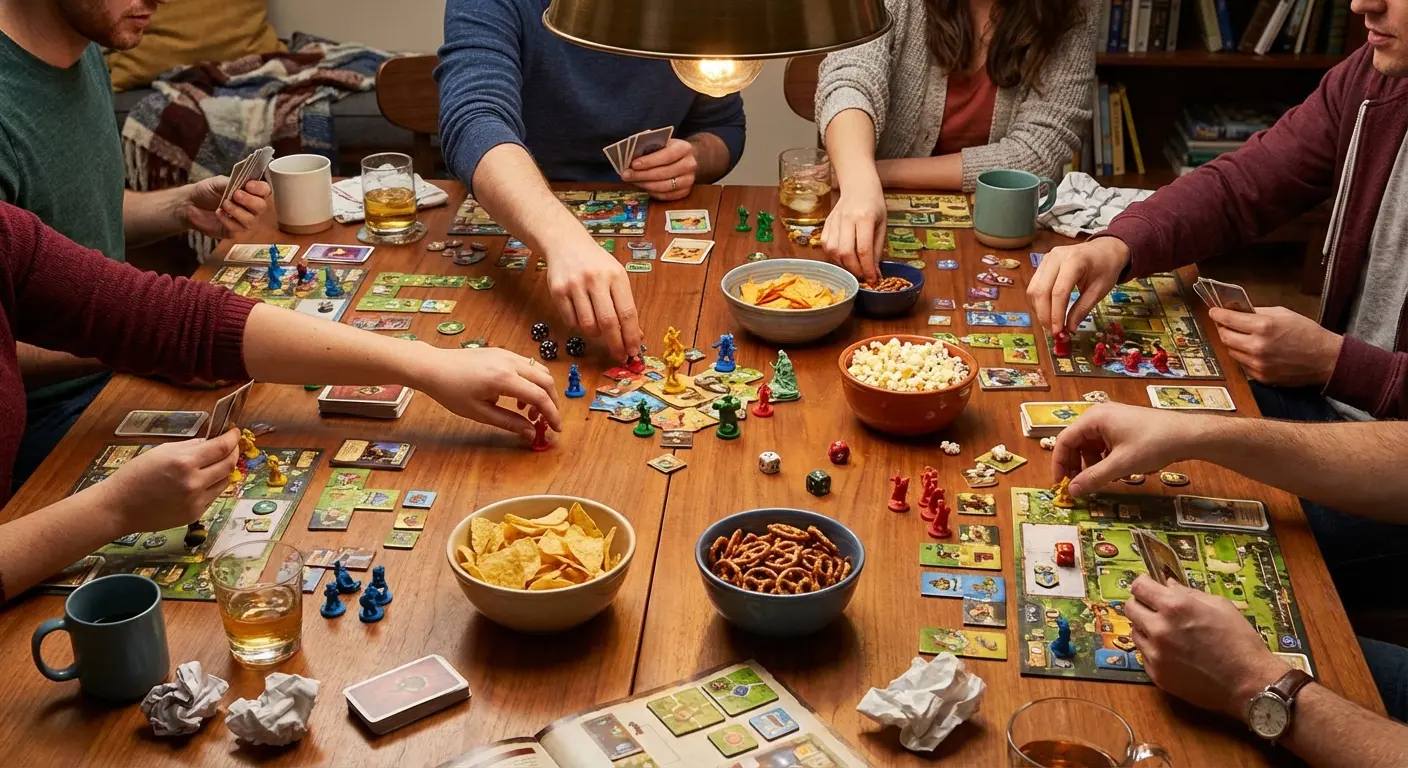
Send a Real Invitation Instead of a Group Text
There is a massive psychological difference between "anyone want to hang Friday?" and a proper invitation that lands in someone's phone.
A text in a group chat is easy to ignore. It sits there between memes and complaints about work, slowly scrolling out of sight. A dedicated invitation with a date, a time, a location, and a design that someone clearly thought about signals that this is real. The social contract kicks in, and people feel like they owe you an answer.
This is why I stopped using group chats for game night and switched to Lemonvite. I describe a vibe to the design engine (something like "retro board game night, warm colors, dice and card illustrations, playful and fun") and get back a custom invitation that looks like I hired a graphic designer. It takes about 30 seconds.
Then I send it by text, straight to each person's phone, instead of burying a link in an email or a group thread. SMS gets opened almost every time. And if a friend's number is outside the US or Canada, the same invitation reaches them over WhatsApp now, so the out-of-towners in your gaming crew get the exact same nudge. That same plan dropped into a group chat usually gets scrolled right past.
When the invite shows up as a text, it reads as personal and intentional, which is exactly the energy you want before a Friday night.
Make the RSVP Force a Real Answer
Casual plans fall apart at the same spot every time: nobody actually commits.
In a group chat, "I'll try to make it" and "sounds fun" pass for RSVPs, but they are polite non-answers that let people off the hook. When Friday arrives, "I'll try" turns into "something came up" without a second thought.
A real RSVP system changes the dynamic. Your guests tap the link and pick one option: Attending, Maybe, or Declined. No account to create, no app to download, just a clear answer.
The part that matters most for you as the host is visibility. Your dashboard shows who said yes, who is on the fence, and who has not even opened the invite yet, so you stop guessing and stop sending those awkward "so are you coming or...?" follow-ups.
I check my RSVP list a few days before game night. Six confirmed and I know the table is full. Three confirmed and four maybes, and I know exactly who needs a nudge.

Nudge the Maybes With Broadcast Updates
This is the feature that changed my game nights more than any other.
Lemonvite lets you send broadcast updates to your guest list and target them by RSVP status. Two days before the event, I send a message to everyone who marked "Maybe" that reads something like:
"We have 6 people locked in and I just picked up Wingspan and Betrayal at House on the Hill. It is going to be a great night. Would love to have you there."
That targeted nudge converts maybes into yeses at a shocking rate. When people can see the momentum building, they do not want to be the one who sat it out. Naming the specifics, the count and the actual games on the table, is what makes it land instead of feeling like a guilt trip.
I also send a broadcast to confirmed guests the day before with logistics: "Doors open at 7, first game starts at 7:30. Street parking is free after 6. Buzz apartment 4B."
This eliminates the barrage of "what time again?" and "where do I park?" texts that clog up your afternoon.
Coordinate Who Brings Which Games
The other logistical nightmare of game night is the game selection itself. If you are the sole game owner, you are limited to your collection. But if you ask people to bring games in a group chat, you get one of two outcomes: everyone brings Monopoly, or nobody brings anything because they assumed someone else would.
This is where the "What to bring" feature comes in. When I set up the event, I add a section listing what we need: "2-3 board games (strategy or party), a deck of cards, snacks, drinks." Guests can claim items right alongside their RSVP.
So when Sarah RSVPs yes, she also notes "Bringing Codenames and a six-pack." When Marcus commits, he claims "I got Ticket to Ride and chips." You can see the whole picture building in real time. No duplicate games, no table full of nothing but pretzels.
I also use the RSVP notes field to ask guests to mention their game preferences. "Are you more into strategy or party games?" This helps me plan the lineup so we are not stuck debating what to play for 45 minutes after everyone arrives.
Set a Real Start Time (And Stick to It)
One more tip that has nothing to do with technology: pick a start time and honor it.
"Come over whenever" is the enemy of game night. Board games need a quorum. If you tell people to drift in between 7 and 9, you will spend the first two hours making small talk while waiting for enough players, and by the time you finally start a game, someone has to leave at 10.
I put the start time in the invitation and I am specific: "First game starts at 7:30 sharp. Be here by 7:15 to grab food and settle in." The add-to-calendar button means it is on their phone's calendar with a reminder. No excuses.
And because Lemonvite tracks who has viewed the invitation, I know who has seen the details and who might need a quick "did you get my invite?" text.
The Plus-One Question
Game nights live and die by player count. Too few and you can not play most games. Too many and you are splitting into awkward sub-groups.
I usually turn on plus-one support but mention in the description that space is limited. Something like: "Plus-ones welcome, but let me know so I can plan the right games for our group size." This way I can see the real headcount, including extras, and pick games that work for that number. If you are unsure how generous to be with the policy, my guide to handling plus-ones walks through where to draw the line.
If I want to keep it tight, I just turn off the plus-one option. Simple.
Make It Recurring
The best game nights are the ones that happen regularly. Once you run one successfully, ride the momentum. "First Friday of every month" is easy to remember and gives people something to look forward to.
After each game night, I save the guest list in my address book on Lemonvite and use it for the next event. Creating the follow-up invitation takes less than a minute because the contacts are already there. Just describe a fresh design, pick the date, and send.
Why $5 Per Event Is Worth It
Look, I get it. Paying for an invitation to a casual game night feels like overkill at first. So think about what the $5 actually buys you.
The pretty picture is a nice bonus, but what you are really paying for is commitment. It is the system that turns "maybe Friday?" into six people sitting around your table at 7:30, snacks out and the first game already getting set up.
At $5 per event, Lemonvite costs less than the bag of chips you are going to buy anyway, and it fixes the one thing that kills more game nights than anything else: the gap between people saying yes and people showing up.
So next time you want to host one, skip the group chat. Create a real invitation, send it straight to people's phones, and watch how differently casual plans land when they feel like real plans.
Your table will be full. I promise.