
The End of 'Maybe': Why Facebook Events Are Dying (And What's Next)
Around 2012, a Facebook Event actually meant something. You'd get a notification, click Join, and then show up. It was how people organized everything from a Tuesday house party to a protest march. It felt communal and alive.
Now think about the last time you genuinely opened your Events tab. I can't remember mine.
For most of us, that tab is a graveyard of "Interested" taps for things we have no intention of attending. The notification is one more red dot in a sea of red dots. The magic drained out years ago, and if you're the host counting on it, you're planning for an empty room.
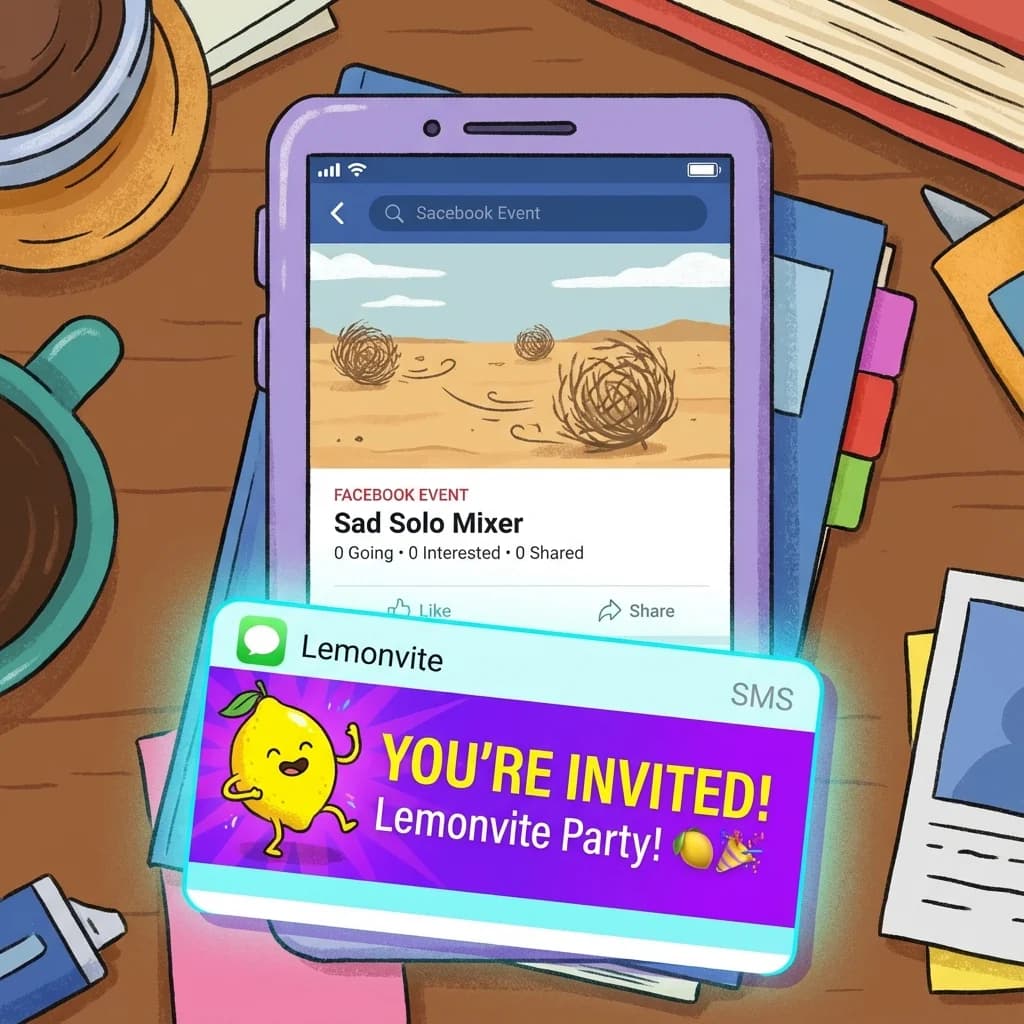
The Maybe button breaks your headcount
The deepest problem with social media events is that the Interested button costs the guest nothing. Tapping it is a way to be polite without committing. It's the digital version of "we should totally grab coffee sometime" from someone you both know you'll never schedule.
For a host, that's a planning nightmare. You'll have 45 people marked Interested and 3 marked Going. Do you buy 45 burgers, or 3? There's no honest signal to act on.
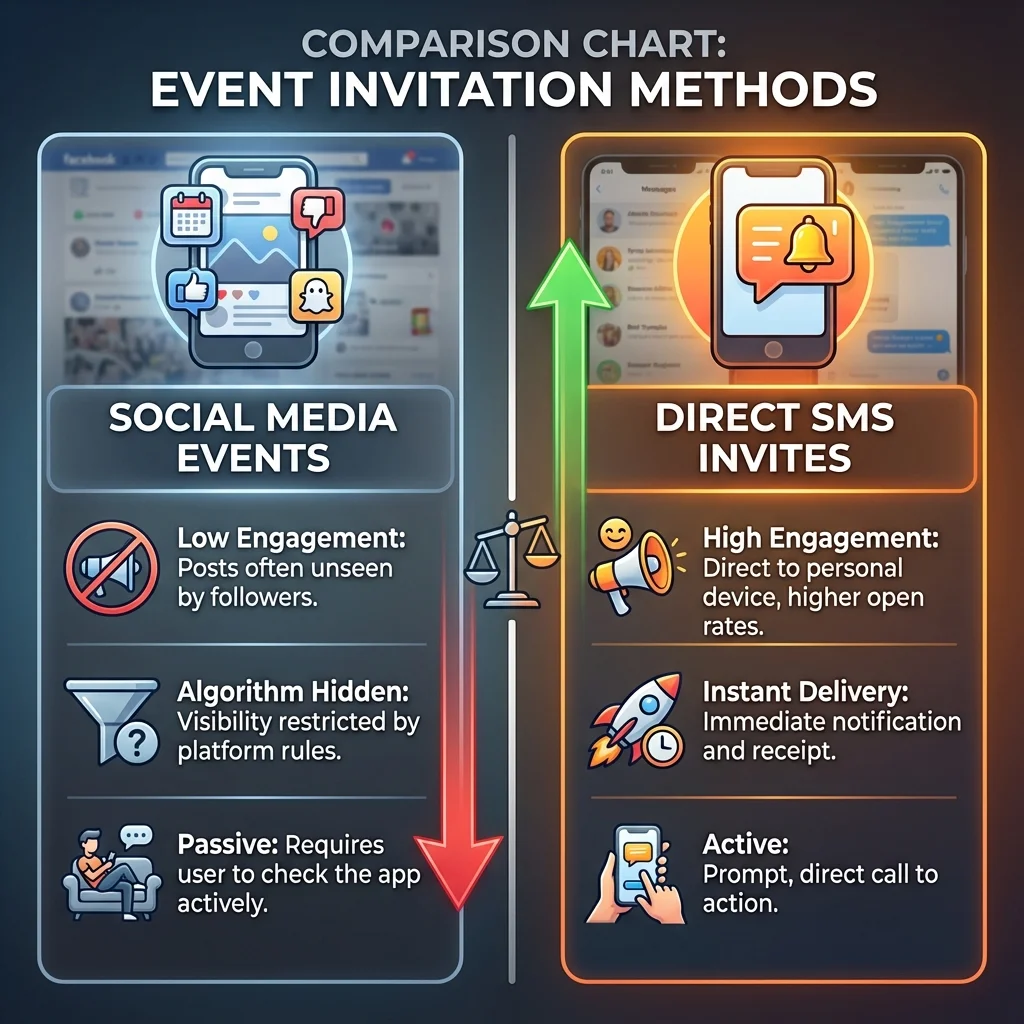
It gets worse because the platform buries your invite under everything else. Ads, algorithm suggestions, game requests, a friend's vacation album. Your genuine invitation to a birthday dinner has to fight all of it to be seen. This is the same reason no one is RSVPing to your event: the channel itself is working against you.
Half your friends aren't even on Facebook anymore
Here's the other reality check. The people you want at the party have left the platform.
Gen Z never really showed up to begin with. A lot of Millennials have either deleted the app or keep an account purely for Marketplace. Organize your event exclusively on a social network and you've quietly excluded a big chunk of your actual social circle.
I tried to put together a reunion last year and ran straight into this. Half the group had no account. The other half had deleted the app to protect their attention spans. I ended up screenshotting the event page into a group chat, which became its own small disaster. (If you've done the same, you already know why screenshots make terrible invites.)
Why direct invites beat the feed
The shift happening now is away from passive, feed-based invites (the kind you post and hope someone scrolls past) toward direct invites that land in front of a specific person.
That's why texting and direct messaging are taking over. When you send a text, you're not fighting an algorithm for placement. You land in the one inbox everyone actually checks. It's personal, and it cuts straight through the noise. Send a text invite now.
A direct link does things a broadcast never could. It says "I specifically want you there," instead of "I sprayed this at 500 acquaintances." It's much harder to ghost a text from a friend than a generic event notification you can swipe away. And everyone has a phone number, even the holdouts who haven't opened a social app in years. Guests in the US and Canada get it as a text, and anyone outside those countries gets the same invitation delivered over WhatsApp, so the people you've lost to Facebook are reachable wherever they are. For more, see why SMS invitations win.
Lemonvite keeps the organization, drops the platform
We built Lemonvite because we missed the organization of a Facebook Event page but wanted the delivery of a text message.
Group chats are great for chatting and terrible for logistics, since the date and address get buried under reaction emojis within minutes. Social feeds are great for broadcasting and terrible for an accurate headcount. Lemonvite sits in the gap between them.
You get a real webpage for your event, with maps, details, and a one-of-a-kind custom design. You send it directly over SMS or whatever messenger your guests use. And your guests tap once to RSVP, with no account to create, no login, and no Interested limbo to get stuck in. It respects your guests' time by not forcing them onto a platform, and it hands you a real number to plan around.
The one thing old Facebook Events genuinely got right was the wall underneath. People asked what to bring and sorted out rides in the comments, and all of it stayed attached to the event instead of scattering. Your Lemonvite event has that now. Guests see the wall on their own invitation and reply right there. You decide with a switch whether they can start their own threads or only answer yours. What it does not have is an algorithm ranking those posts or a red dot for every single one of them. A guest writing "can't wait!" does not turn into a notification on forty phones. When something does need to reach people fast, you flip on email and text before you post and that update arrives as a message they'll actually open.
The future is personal
The mass-blast invite is on its way out. We're drifting back toward smaller, more deliberate gatherings, where you'd rather reach ten people who'll actually come than five hundred who might scroll past. People want to feel personally invited again.
So if you're tired of squinting at an "Interested" column and guessing who'll really walk through the door, stop shouting into the feed. Send the invite straight to the people you want there, and make it feel like it was meant for them.
Create your next event on Lemonvite and see how different it feels when your invitation actually lands.